A cap of £2,500 from October 1 for average household energy bills in England, Scotland and Wales has already been announced by the government. PA

UK businesses call on government to outline support amid '500%' energy bill increase


Soraya Ebrahimi
  • English
  • Arabic

As Jacob Rees-Mogg, the UK's secretary of state for business, energy and industrial strategy, puts the finishing touches on his package to help struggling companies with their energy bills, businesses are calling for certainty about the type of support they will receive.

On Wednesday, Mr Rees-Mogg is expected to announce how companies, schools, hospitals, charities and other non-domestic consumers will be spared some of the pain of rising gas and electricity bills.

A cap of £2,500 ($2,841) from October 1 for average household energy bills in England, Scotland and Wales has already been announced by the government, but while businesses have been promised equivalent support, they have been waiting for details as officials have been drawing up a bespoke programme.

As businesses have not benefited from the existing energy price cap and are not always able to fix their energy price through fixed deals, many are reporting projected increases in energy costs of more than 500 per cent.

The government is planning a six-month programme for all non-domestic energy users, but this will then be replaced with a targeted system focused on the most vulnerable industries.

Prime Minister Liz Truss suggested pubs could be covered by the longer-term support.

“The business secretary is conducting a review of exactly which businesses will be included — that review will be completed within three months,” she told ITV News in New York.

“I can reassure people who own pubs that they are exactly the type of businesses that will get that longer-term support.”

Green energy sources — in pictures

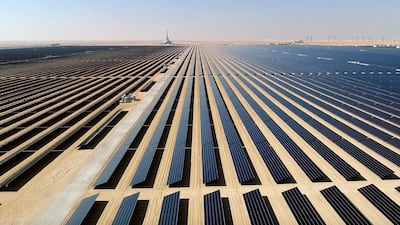
  • The Mohammed bin Rashid Al Maktoum Solar Park is located about 50 kilometres south of Dubai. AP
    The Mohammed bin Rashid Al Maktoum Solar Park is located about 50 kilometres south of Dubai. AP
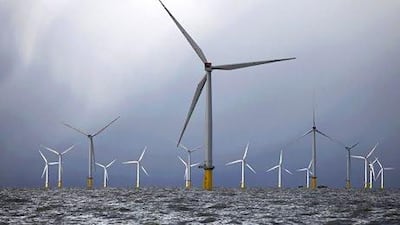
  • Masdar, the Abu Dhabi clean energy company, owns a one-fifth stake in London Array, the offshore wind farm in the Thames estuary. Chris Ratcliffe / Bloomberg News
    Masdar, the Abu Dhabi clean energy company, owns a one-fifth stake in London Array, the offshore wind farm in the Thames estuary. Chris Ratcliffe / Bloomberg News
  • A hydro plant in Himachal Pradesh, India. Photo: Abu Dhabi National Energy Company (TAQA)
    A hydro plant in Himachal Pradesh, India. Photo: Abu Dhabi National Energy Company (TAQA)
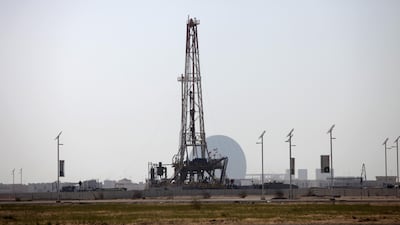
  • The Geothermal Pilot Project drills 4km beneath Masdar City in search of boiling temperatures to generate electricity and fuel the city's cooling system. Nicole Hill /The National
    The Geothermal Pilot Project drills 4km beneath Masdar City in search of boiling temperatures to generate electricity and fuel the city's cooling system. Nicole Hill /The National
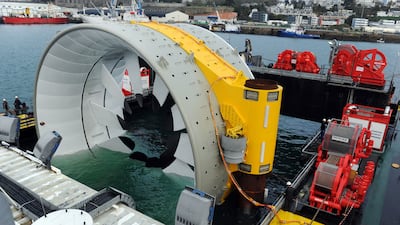
  • A hydroelectric motor at a tidal farm in the harbour of Brest, in western France. AFP
    A hydroelectric motor at a tidal farm in the harbour of Brest, in western France. AFP

“Our latest research shows near two thirds of small firms are paying more for energy this year compared to last year, with two in five seeing double, triple or even higher increases in their bills,” said Tina McKenzie, policy chair of the Federation of Small Businesses.

“We hope the energy price guarantee means an equivalent amount of support per unit of energy, to the support which households are receiving.

“It should give businesses some degree of certainty over their energy prices for six months, so they can plan confidently for the winter.

“At the moment, they cannot plan and they are awaiting the announcement tomorrow to be the moment when they can.”

Business Extra: What next for the UK's energy crisis? — video

The complexity of setting up a new programme has led to concerns support for firms may not be in place by October 1, and the federation said help should be backdated if the system is not up and running by then.

“Many small firms have October 1 as their start date for new contracts, so we’d like to see the price guarantee comes into effect then for those who sign new contracts from then, but also those who have been locked into contracts since prices in quotes rose astronomically in recent months,” Ms McKenzie said.

“There should also be a backdating commitment now, especially if it’s not rolled out until November.”

She also raised concerns about the prospect of a “cliff edge” in six months for businesses which may not qualify for ongoing support.

“There are no such things as ‘vulnerable sectors’ and ‘non-vulnerable sectors’ when it comes to these energy hikes, so we will be encouraging government to take a broader approach to this so that all those that continue to be deeply affected are covered,” Ms McKenzie said.


Explained: UK's energy crisis — video

Ten tax points to be aware of in 2026

1. Domestic VAT refund amendments: request your refund within five years

If a business does not apply for the refund on time, they lose their credit.

2. E-invoicing in the UAE

Businesses should continue preparing for the implementation of e-invoicing in the UAE, with 2026 a preparation and transition period ahead of phased mandatory adoption. 

3. More tax audits

Tax authorities are increasingly using data already available across multiple filings to identify audit risks. 

4. More beneficial VAT and excise tax penalty regime

Tax disputes are expected to become more frequent and more structured, with clearer administrative objection and appeal processes. The UAE has adopted a new penalty regime for VAT and excise disputes, which now mirrors the penalty regime for corporate tax.

5. Greater emphasis on statutory audit

There is a greater need for the accuracy of financial statements. The International Financial Reporting Standards standards need to be strictly adhered to and, as a result, the quality of the audits will need to increase.

6. Further transfer pricing enforcement

Transfer pricing enforcement, which refers to the practice of establishing prices for internal transactions between related entities, is expected to broaden in scope. The UAE will shortly open the possibility to negotiate advance pricing agreements, or essentially rulings for transfer pricing purposes. 

7. Limited time periods for audits

Recent amendments also introduce a default five-year limitation period for tax audits and assessments, subject to specific statutory exceptions. While the standard audit and assessment period is five years, this may be extended to up to 15 years in cases involving fraud or tax evasion. 

8. Pillar 2 implementation 

Many multinational groups will begin to feel the practical effect of the Domestic Minimum Top-Up Tax (DMTT), the UAE's implementation of the OECD’s global minimum tax under Pillar 2. While the rules apply for financial years starting on or after January 1, 2025, it is 2026 that marks the transition to an operational phase.

9. Reduced compliance obligations for imported goods and services

Businesses that apply the reverse-charge mechanism for VAT purposes in the UAE may benefit from reduced compliance obligations. 

10. Substance and CbC reporting focus

Tax authorities are expected to continue strengthening the enforcement of economic substance and Country-by-Country (CbC) reporting frameworks. In the UAE, these regimes are increasingly being used as risk-assessment tools, providing tax authorities with a comprehensive view of multinational groups’ global footprints and enabling them to assess whether profits are aligned with real economic activity. 

Contributed by Thomas Vanhee and Hend Rashwan, Aurifer

The%20specs
%3Cp%3E%3Cstrong%3EPowertrain%3A%20%3C%2Fstrong%3ESingle%20electric%20motor%0D%3Cbr%3E%3Cstrong%3EPower%3A%20%3C%2Fstrong%3E201hp%0D%3Cbr%3E%3Cstrong%3ETorque%3A%20%3C%2Fstrong%3E310Nm%0D%3Cbr%3E%3Cstrong%3ETransmission%3A%20%3C%2Fstrong%3ESingle-speed%20auto%0D%3Cbr%3E%3Cstrong%3EBattery%3A%20%3C%2Fstrong%3E53kWh%20lithium-ion%20battery%20pack%20(GS%20base%20model)%3B%2070kWh%20battery%20pack%20(GF)%0D%3Cbr%3E%3Cstrong%3ETouring%20range%3A%20%3C%2Fstrong%3E350km%20(GS)%3B%20480km%20(GF)%0D%3Cbr%3E%3Cstrong%3EPrice%3A%20%3C%2Fstrong%3EFrom%20Dh129%2C900%20(GS)%3B%20Dh149%2C000%20(GF)%0D%3Cbr%3E%3Cstrong%3EOn%20sale%3A%3C%2Fstrong%3E%20Now%3C%2Fp%3E%0A
How to register as a donor

1) Organ donors can register on the Hayat app, run by the Ministry of Health and Prevention

2) There are about 11,000 patients in the country in need of organ transplants

3) People must be over 21. Emiratis and residents can register. 

4) The campaign uses the hashtag  #donate_hope

Updated: September 21, 2022, 3:55 AM