

The weakest yen in decades, a mountain of national debt and a giant central bank bond portfolio that’s about half the size of the Japanese government securities market.
The legacy of Abenomics will continue long beyond the life of its architect, former prime minister Shinzo Abe, who died after a shooting on Friday.
On the plus side, companies logged record profits, shareholder returns climbed and wages went up. More women and seniors entered the labour market, and at one point, the ratio of available jobs to applicants reached a four-decade high. Japan’s 2.6 per cent unemployment rate is a figure most advanced economies can only dream of.
The complicated fallout of Abe’s audacious growth programme, both good and bad, continues to ripple through markets and the economy. It is also tinged with irony. One of its key goals was to achieve stable price gains but, when 2 per cent growth was reached earlier this year, it was deemed to be the wrong kind of inflation.
“While Abenomics fell short, ultimately, of its goal to deliver sustained reflation, it still prompted important changes,” said Fred Neumann, chief Asia economist at HSBC Holdings.
“After years of deflation and stalled growth, Abenomics amounted to a bold attempt to shake the economy loose and put it back on the path of sustained growth.”
A national election on Sunday may now see a surge in support in a wave of sympathy for Mr Abe’s ruling Liberal Democratic Party, which was already poised to win a majority with its coalition partner against a divided opposition.
The upper-house vote could give Prime Minister Fumio Kishida a fresh mandate, amid concerns about the rising cost of living and a tumbling yen.
It’s unclear whether the tragic death of Mr Abe, who had retained sway by remaining head of the LDP’s largest faction, may affect policy-making. Mr Kishida has championed a “new capitalism” that addresses inequality and other social issues that got little attention in the Abenomics framework.
Mr Kishida will also in coming months have the opportunity of reshaping the leadership of the Bank of Japan, with governor Haruhiko Kuroda’s term ending in spring 2023. Mr Abe hand-picked Mr Kuroda and key lieutenants who in 2013 launched an unprecedented wave of monetary stimulus.
-
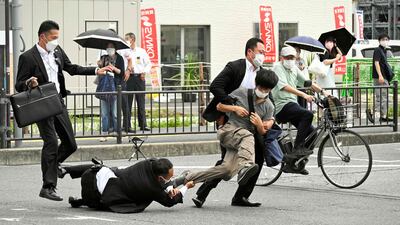
A man suspected of shooting former Japanese prime minister Shinzo Abe is tackled to the ground by police at Yamato Saidaiji Station in Nara. Abe was pronounced dead in hospital. AFP -

A man believed to be former Japanese prime minister Shinzo Abe is carried on a stretcher upon arrival at a hospital in Kashihara, Nara Prefecture, in western Japan. Reuters -
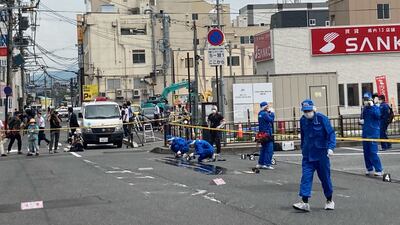
Police officers at the scene where Abe was shot at a political event in Nara on Friday. Bloomberg -
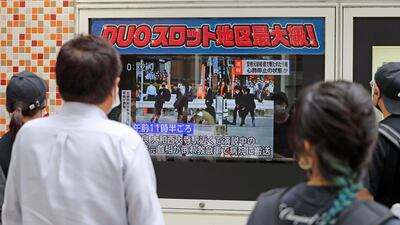
People watch TV news reports on Abe's condition after the shooting. AP -
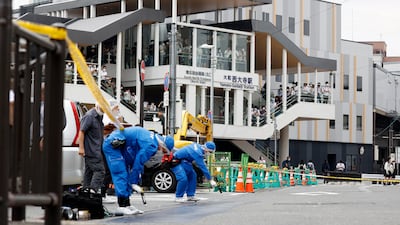
The shooting shocked a nation where gun violence is rare. AP -
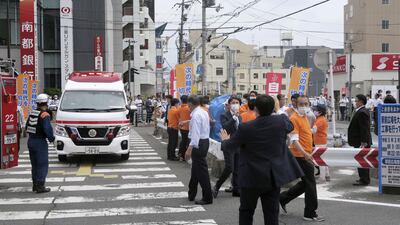
Abe suffered a cardiac arrest and was taken to the hospital. Reuters -
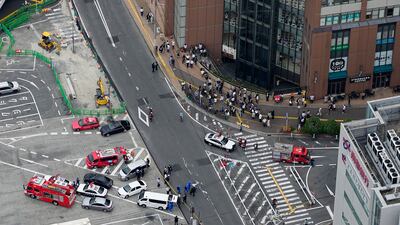
He was not showing any vital signs of life upon being admitted to hospital, officials said. AP -
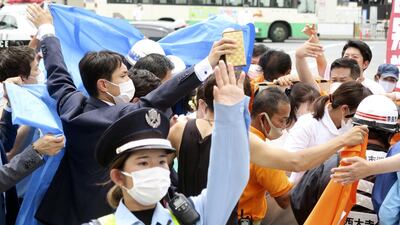
He was shot during a campaign rally before Sunday's vote to elect politicians to Japan's upper house of Parliament. Reuters -
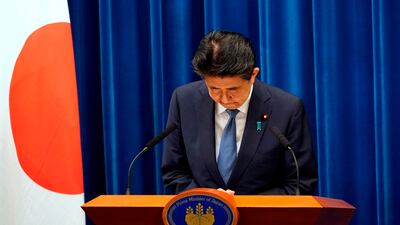
He stepped down as prime minister in 2020 due to health problems. Reuters -
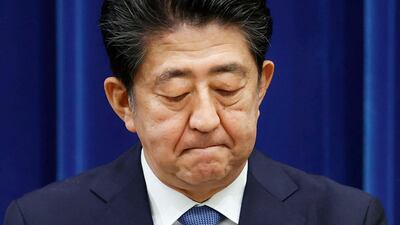
Abe's term made him Japan's longest-serving prime minister. AP


The death of Mr Kuroda’s key political champion could even raise the odds of a shift in the BoJ’s super-stimulative monetary stance before 2023, in the initial speculation of some market analysts.
But Kishida’s fiscal plans rely on holding down borrowing costs — all the more vital given Japan’s bloated debt burden — so any dramatic BoJ policy change is far-fetched, observers said.
“With more fiscal spending expected, it would be hard to imagine the BoJ tightening policy by increasing borrowing costs,” said Takahiro Sekido, chief Japan strategist at MUFG Bank and a former BoJ official. “That would be very unsettling for markets.”
“The lasting legacy of Abenomics is the close policy coordination between the government and the central bank set out in the joint policy statement of January 2013," Bloomberg economist Yuki Masujima said.
“Mr Kuroda’s bazooka played a vital role in supporting exports and inflation with the tailwind of weaker yen and also enabled monster fiscal stimulus at a low cost.”
principal economist at Mitsubishi UFJ Research & Consulting
As time passes, the market moves associated with Abenomics — a weaker yen and a revived equity market — could fade as policy makers set fresh goals.
“This may have an impact in the medium to long-term, and the markets will see a considerable appreciation of the yen and a decline in stock prices,” said Tomoichiro Kubota, senior market analyst at Matsui Securities.
Mr Abe swept into office in late 2012, promising to restore momentum in Japan with a “three-arrowed” approach of monetary easing, flexible spending and regulatory reforms.
He was confronting an economy that had yet to fully recover from the global financial crisis and the blow of a devastating 2011 earthquake and tsunami. Manufacturing was getting hollowed out by a super-strong yen, trading past 80 per dollar. Deflation seemed entrenched.
Mr Abe oversaw a wholesale revamp of the BoJ, which went on to buy government bonds at a scale that dwarfed counterparts abroad. The yen tumbled, manufacturing stabilised and deflation effectively ended. Japan’s gross domestic product hit a record high.
Companies were prodded to improve governance and returns to shareholders while lifting pay for workers.
Mr Abe also championed womenomics, calling for an increased role for women in the workforce. Female labour participation did increase, even though a goal to put women in 30 per cent of leadership positions went unmet.
“One could see how women and older workers have been encouraged to enter and return to the labour force — this has helped deal with the hostile demographic trend in Japan,” said Stephen Jen, chief executive of Eurizon SLJ Capital. “All of the above are lessons for much of the rest of the world.”
-

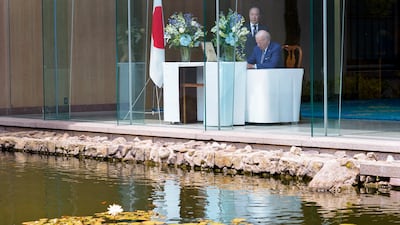
US President Joe Biden is embraced by Japan's ambassador to the US Tomita Koji on Saturday, a day after Japan's former prime minister Shinzo Abe was fatally shot. Reuters -
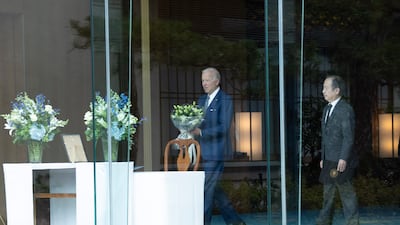
Mr Biden arrives at the Japanese embassy in Washington. EPA -
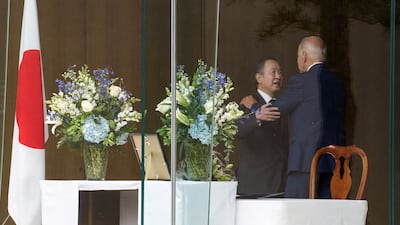
Mr Biden is embraced by Mr Koji. Reuters -
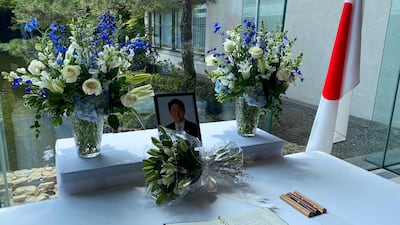
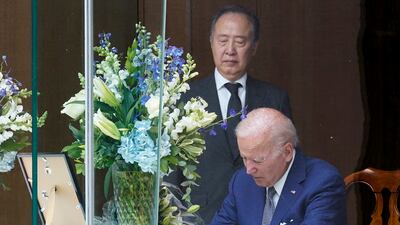
Mr Biden's signature in a condolence book for Mr Abe. Reuters -
Mr Biden ordered flags in the US to be flown at half mast. AP -
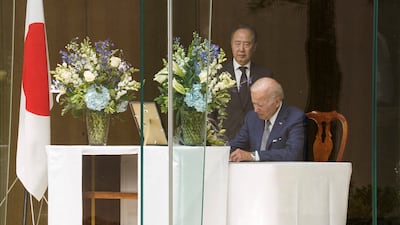
Mr Biden signs a book of condolence. Reuters -
Abe was president of Japan's Liberal Party and the longest-serving prime minister in Japanese history. AP -
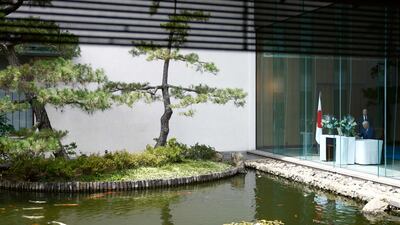
Mr Biden at the Japanese ambassador's home in Washington. AFP -
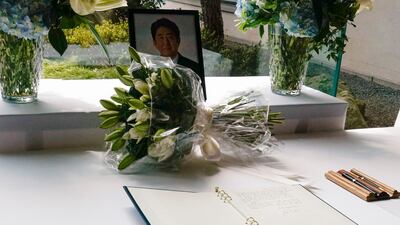
Mr Biden's bouquet of lilies sits opposite the book of condolence. AP -
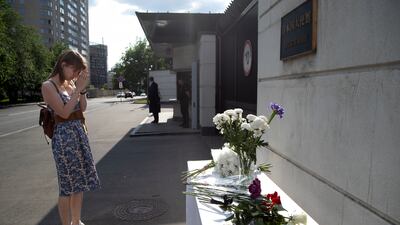
There were even mourners in the Russian capital Moscow. AP -
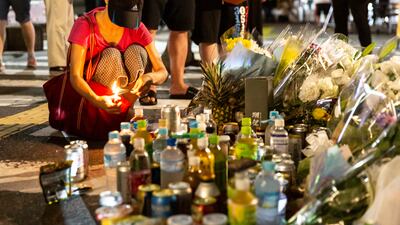
A woman lights joss sticks outside of Yamato-Saidaiji Station where Mr Abe was shot. Getty Images -
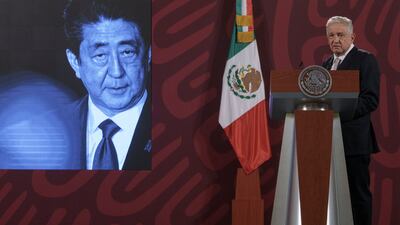
Mexican President Andres Manuel Lopez Obrador offers his condolences at the National Palace in Mexico City. AP -
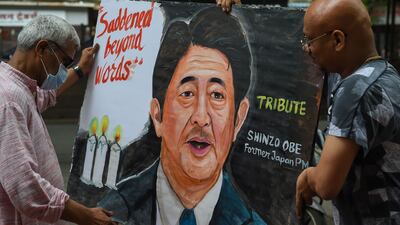
Artists carry a painting of Mr Abe in Mumbai. AFP -
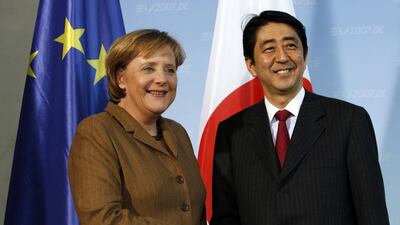
Angela Merkel, then Germany's chancellor, shakes hands with Mr Abe in Berlin in January 2007. Bloomberg


Tourism was another focus, as Mr Abe sought to encourage fresh sources of spending in the face of a shrinking domestic population. Reforms including relaxed visa requirements helped to almost quadruple the number of foreign visitors, to nearly 32 million a year before the pandemic hit. The 2020 Tokyo Olympics were set to be a crowning achievement before Covid-19 interfered.
Critics blame a 2014 sales-tax increase for arresting momentum the economy was just beginning to build. Employers also failed to embrace the scale of wage increases that policy makers wanted. The third arrow of Abenomics was supposed to boost productivity through sweeping structural reforms but never quite materialised.
And inflation has never reached, on a sustained basis, the 2 per cent goal the Abe administration had agreed on with the BoJ in an historic pact in early 2013. Instead, surging energy costs and the weakening yen’s hit to household purchasing power are undermining support in some quarters for that same inflation target.
“The rusty wheels of the economy began to move for the first time in a long while — but they never quite recovered full momentum,” said Shinichiro Kobayashi, principal economist of Mitsubishi UFJ Research & Consulting. “Abenomics revealed how deeply rooted Japan’s economic problems are and how hard it is to solve them.”
At the same time, many around the world give Abe credit for implementing a bold change in policy that set ambitious goals. American economic luminaries Paul Krugman and Lawrence Summers — who’ve disagreed sharply with each other on US economic policy — had a similar assessment Friday of Abe’s economic project.
Mr Krugman, a Nobel laureate who at one point advised Mr Abe, said in comments on Twitter that the late former prime minister was “an innovative economic leader, willing to break with fiscal and monetary orthodoxy in an attempt to break Japanese deflation".

