

As the world grapples with climate change, the UAE stands at an enviable yet challenging crossroads. As the first country in the Gulf to set ambitious net-zero targets, the UAE is not just embracing global efforts to mitigate climate impact, it is also spearheading them.
This commitment was echoed by Dr Sultan Al Jaber, President-designate of Cop28 and UAE’s Special Envoy for Climate Change, at the recently concluded Adipec, Abu Dhabi’s annual energy conference.
“We don’t shy away from challenges. We address them by adopting a positive mindset and by working out solutions with like-minded partners,” Dr Al Jaber, who is also the Minister of Industry and Advanced Technology, said.
Cop28, which will start on November 30 in Dubai, epitomises this ethos, aiming to bring world leaders, scientists and activists together under one roof to address one of humanity’s most pressing challenges.
And, to fulfil its role as a climate champion, the UAE is trying to foster a powerful alliance between its corporate entities and financial institutions. Together they can accelerate the road map towards decarbonisation and sustainable development.
The imperative for businesses and banks to collaborate on this issue is not just about ticking off a box on the corporate social responsibility checklist. It is about harnessing the power of financial instruments and market-driven incentives to facilitate a green transition that is both rapid and scalable.
Financial institutions have the leverage to guide capital towards environmentally beneficial projects, while companies can provide the technological innovation and workforce needed to implement these green solutions on a mass scale.
Capital markets and the surge of ESG financing
Since the outbreak of the Covid-19 pandemic, corporates have been quick to heed the increasingly urgent call to save our planet, with capital markets playing a key role in financing the energy transition and helping to stem the impact of climate change.
For instance, global issuance of sustainable bonds almost doubled to more than $1 trillion in 2021 from 2020, according to our analysis of Bloomberg data.
Yet, while the size of total green and sustainable issuances from the Middle East and Africa remains relatively small, the rate of growth in the region is outpacing the world, with more than $17 billion generated in 2021, an almost threefold increase from approximately $6 billion in 2020, according to the same data.
It is important to note that this growth has also been aided by Shariah-compliant investing, a long-standing mainstay of regional markets that incorporates ESG principles and has a shared vision of responsible and ethical investment.
In the UAE, specifically, the growth of ESG financing has also been bolstered by the fact that policymakers in the Emirates have had the foresight to be regional first movers, creating a benchmark with their commitment to reduce carbon dioxide emissions by 70 per cent and increase clean energy use by 50 per cent by 2050.
Green financing
There is a great desire by UAE companies to develop sustainable frameworks and make more allocations to green investments, even if the size of ESG financing in the region is still developing compared to peers in the developed world.
Since the launch of the UAE Climate-Responsible Companies Pledge initiated by the Ministry of Climate Change and Environment in 2022, an impressive roster of more than 21 private-sector firms, including industry heavyweights like Aldar Properties, Majid Al Futtaim Group, and Masdar, have formally committed to expediting their paths to decarbonisation.
The sustainable bonds issued by these corporates are being used to finance sustainability projects that are supporting both their own net-zero ambitions and the wider aims of the UAE government.
The volatility in global financial markets over the past year has not dented the appetite for sustainable issues. Similarly, banks in the region remain flush with liquidity and are keen to support corporates in achieving their net-zero action plans.
In the past couple of months alone, Emirates NBD Capital has led a flurry of sustainable issues, including a $650 million bond by Abu Dhabi Commercial Bank, $500 million sukuk by Aldar, $500 million bond for Commercial Bank of Dubai, $500 million bond for Bank of China, $1.5 billion inaugural sukuk by DP World, $350 million bond for Five Holdings, as well as $1 billion bond for the Abu Dhabi National Energy Company, better known as Taqa.
The strong demand by investors for green and sustainable issues is reflected in the fact that the size of Taqa's sustainable bond attracted more than $7.25 billion in orders, leading to a reduction in the pricing and making it one of the most sought-after issues in the GCC this year.
Navigating the choices
As we inch closer to Cop28, the outlook for green and sustainable transactions continues to strengthen. Corporations are not only increasingly recognising the importance of embedding ESG initiatives into their foundational business strategies, but they are also showing a growing enthusiasm for engaging in debt capital markets.
-
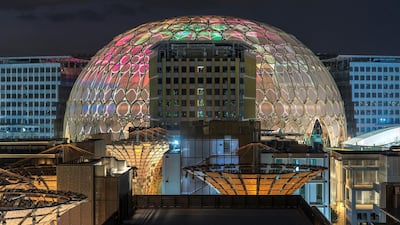
The Rove Expo 2020 will be in the blue zone with access for accredited delegates during the global climate summit. Photo: Rove Hotels -
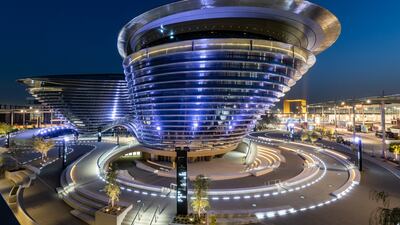
Alif - the Mobility Pavilion in Dubai will be open to the public during Cop28. Photo: Expo 2020 Dubai -
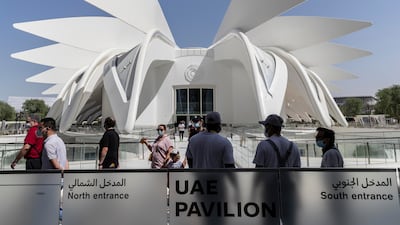
The Expo 2020 falcon-winged UAE pavilion will go by a different name and serve as a cultural venue during Cop28. Photo: Antonie Robertson / The National -
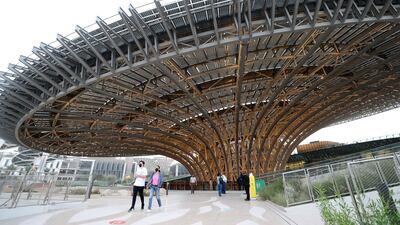
Terra - the Sustainability pavilion, which is covered with hundreds of solar panels, will be open to the public for Cop28. Chris Whiteoak / The National -

The Terra, Alif, Vision, Women’s and Stories of Nations pavilions and Latifa’s Playground will be shut from November 18-29 to incorporate changes for Cop28. EPA -
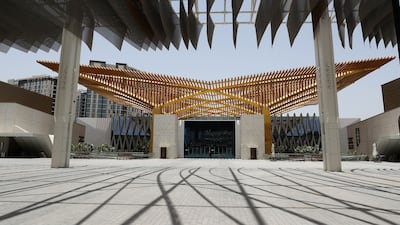
The Expo 2020 metro station serves the Dubai Exhibition and Convention Centre. Cop28 organisers have asked visitors to use the Dubai Metro. Pawan Singh / The National -
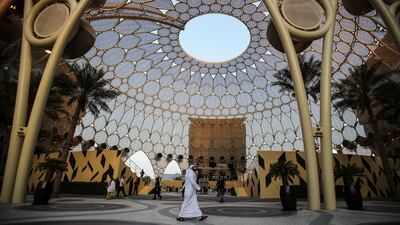
The central Al Wasl Plaza at Expo City Dubai will be in the Cop28 green zone and accessible to the public during the summit. EPA -
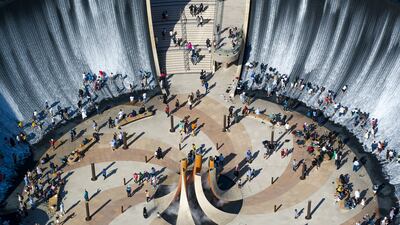
Surreal, a popular Expo 2020 Dubai water feature, will be open to the public during Cop28. Photo: Expo 2020 Dubai -
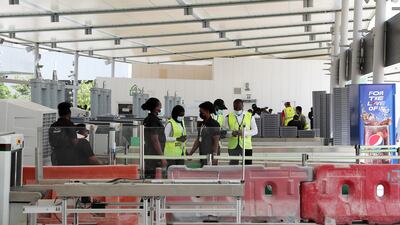
Airport-style security gates will be installed for entry into the Cop28 summit's blue and green zones, much like the screening at the Expo 2020 site. Pawan Singh / The National -
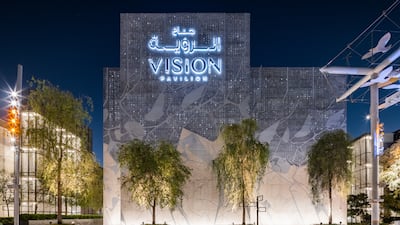
A night view of the Vision Pavilion that will be open to the public during Cop28. Photo: Expo 2020 Dubai -

The Garden in the Sky attraction will be shut from October and will not operate during Cop28. Pawan Singh / The National. -
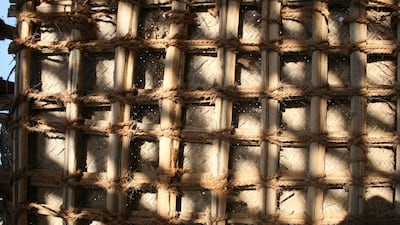
Arish, traditional architecture using dried palm leaves, will feature across the Cop28 site. Photo: Sandra Piesik -

As well as dried palm leaves, the age-old arish technique also uses fibre from the trunk and husk to construct homes and weave ropes. Photo: Sandra Piesik


However, before doing so, they must first put in place a robust sustainable framework and decide which form of financing they are seeking. Today, that choice is between a “use of proceeds bond”, specifically designed to finance green or social projects, or “sustainability-linked bonds”, where interest rates are determined by the issuer’s ability to achieve a pre-agreed set of targets.
Such considerations and other important factors, including investor targeting, can be decided with the aid of an adviser and finding a good one should be the top priority of companies wanting to tap debt capital markets.
By putting in place meticulously planned decarbonisation plans and participating in the sustainable debt capital market, UAE companies will not only be playing their role in combating climate change, but they will also be enhancing their reputation with customers, investors and other key stakeholders.
Even though decarbonisation comes with a cost, including more disclosures, the investment is well worth it. In the long run these companies will widen their debt and equity investor base, providing them with competitive rates of financing and relatively more share price resilience if they are publicly traded.
Nonetheless, joining the sustainable debt market should not be seen as just a tactical measure but instead as a long-term strategic move that will above all support the creation of a cleaner environment for future generations.
Hitesh Asarpota is chief executive of Emirates NBD Capital

