


The Organisation of Petroleum Exporting Countries, which produced 34 per cent of global oil last year and said it holds 80 per cent of global crude oil reserves, is often spoken of as the international commodity group par excellence.
What, then, about the critical mineral producers of the future, where reserves, production and refining are often much more concentrated? Is it time for them to band together?
Almost 90 per cent of the world's mined lithium comes from Australia, Chile and China. Three-quarters of rare earths are extracted in China. While 70 per cent of mined cobalt comes from the Democratic Republic of Congo, more than half of tin comes from China and Indonesia, and nearly half of nickel from Indonesia.
China dominates the processing of most of these minerals. And its companies are key players overseas, in mining cobalt in Congo, and mining and refining nickel in Indonesia. They have developed some crucial proprietary techniques.
These materials, plus others such as graphite, silver and copper, are components of the emerging global energy economy.
They are used in wiring, generators and motors for electric vehicles and wind turbines, in solar panels, long-distance electricity transmission, hydrogen electrolysers, and batteries that store variable renewable energy or drive electric cars.
-
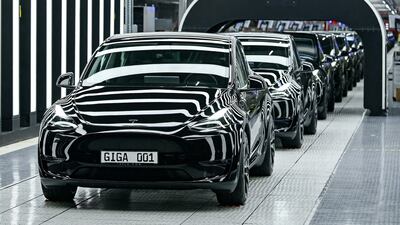
1. Tesla Model Y. Reuters -

2. Tesla Model 3. Reuters -

3. Kia e-Niro. Getty Images -
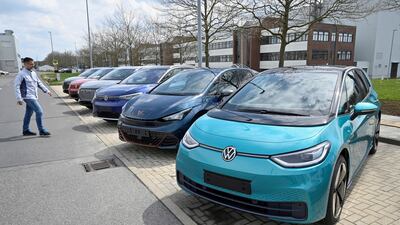
4. Volkswagen ID.3. Reuters -
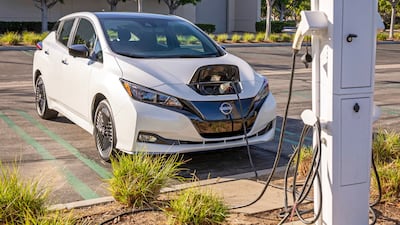
5. Nissan Leaf. AP -

6. Mini. Getty Images -
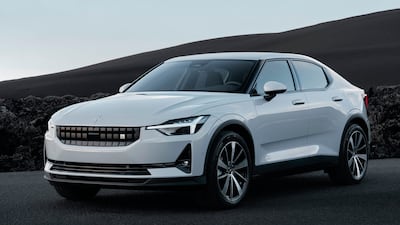
7. Polestar 2. AP -

8. MG 5. Photo: MG -

9. BMW i4. AP -

10. Audi Q4 e-tron. Reuters


This dominance of such minerals by a few countries is more concentrated than in Opec, or even the expanded Opec+ group, which produces a bit over half of the world's oil.
Opec has 13 members and Opec+ adds 10. The producers’ organisation says it is not a cartel, colluding to raise prices: it points to its role to ensure market stability and consistent investment.
Commodities producers have worked together before.
The International Tin Council was founded in 1956, predating Opec. Despite an impressively large membership, it collapsed when it could no longer support the tin price in 1985.
The Intergovernmental Council of Copper Exporting Countries was formed in 1967, including Chile, Peru, Zaire (now DRC) and Zambia. It tried to cut back production in 1974, but did not meet its goals either on output reduction or higher prices.
Yet the possibility of renewed collaboration between critical minerals miners is not idle speculation. Bahlil Lahadalia, investment minister of Indonesia, has proposed a similar model to Opec for nickel and other battery metals.
Chile, Bolivia, Argentina and Brazil, which hold more than 60 per cent of known lithium resources, have been discussing forming a “kind of lithium Opec”, as Bolivia’s president, Luis Arce, described it in March. Mexico is thought to have large lithium resources too, although no production as yet. Its president Andres Manuel Lopez Obrador nationalised lithium in February and has also backed the idea of the Latin American lithium organisation.
-
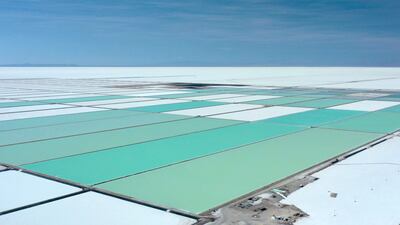
Evaporation pools at the new state-owned lithium extraction complex in the southern zone of Uyuni Salt Flat, Bolivia. AFP -
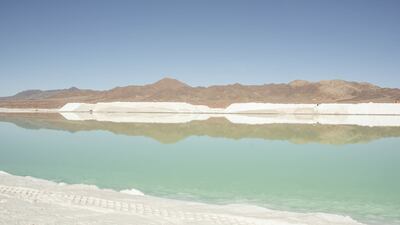
A brine pool at the Albemarle Corp lithium mine in Calama, northern Chile. Albemarle is the world's biggest producer of lithium. Bloomberg -
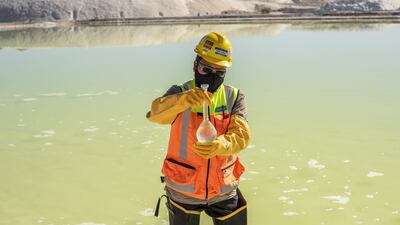
A mine worker takes water samples from a brine pool at the Albemarle lithium mine in Calama. Bloomberg -
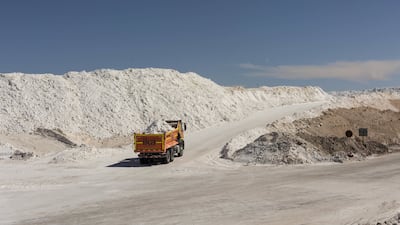
A lorry carries a load of potassium chloride at the Albemarle lithium mine in Calama. Bloomberg -
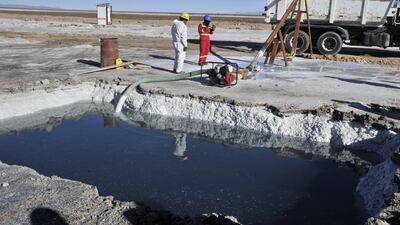
Workers at the Llipi pilot plant at Uyuni Salt Flat, south of Bolivia's capital La Paz. The country has more than 40 per cent of global lithium reserves. AFP -

Brine pools at SQM lithium mine on the Atacama Salt Flat in the Atacama Desert of northern Chile. Reuters -
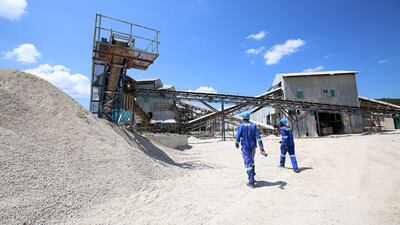
Bikita Minerals' mining plant in Bikita, 340 kilometres south of Zimbabwe's capital Harare. It is the only mine in Africa that produces world-class lithium pegmatite. Zimbabwe is the sixth-largest producer of lithium. EPA -
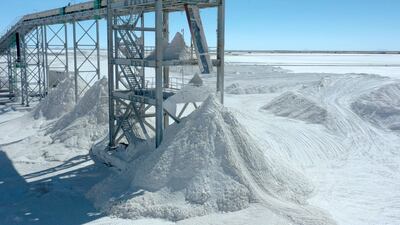
Piles of salt, a byproduct of lithium extraction, at the new state-owned lithium extraction complex at Uyuni Salt Flat, Bolivia. AFP -

Mountains provide a stunning backdrop to a lithium mine brine pool at the Atacama Salt Flat in Chile. Reuters


Producers have at least four good reasons to co-operate.
First, they can act as a classic cartel, strangling output to drive up prices.
Second, they can collectively squeeze better terms from investors and downstream processors, ensuring that they cannot be undercut individually. That was Opec’s main original task from its foundation in 1960, one it achieved very successfully.
Third, they can demand a bigger value-add from the industry, with technology transfer for advanced extraction techniques, and the location not just of mines but of processing facilities and linked industries in their territory.
Fourth, they can exercise geopolitical power: implementing or resisting boycotts or sanctions against unfriendly states. Famously, members of the Organisation of Arab Petroleum Exporting Countries cut off oil supplies to the US and Netherlands, backers of Israel, following the 1973 October War.
Mr Arce referred to fears of foreign resources grabs, notably by the US, saying, “We don't want our lithium … to be a reason for destabilising democratically elected governments or foreign harassment.”
The growing co-operation of countries such as Bolivia with China, the past example of Chile’s 1973 coup, and the current situations of Venezuela and Iran, make it understandable that resource-rich states are worried about being caught up in Sino-American confrontations.
Such geopolitical collaboration would be most imposing when backed by major powers who cannot easily be coerced. The Brics countries could be a core around which commodities co-operation could cohere.
The Brics bloc recently invited six new members: three important in oil (Saudi Arabia, Iran and the UAE), and one in lithium (Argentina). The original group contains four metals powerhouses: Brazil, Russia, China and South Africa, which are leading producers variously of gold, nickel, palladium, platinum and iron ore.
But the challenges of an effective commodities organisation are daunting. Opec’s long existence and enduring importance, despite periods of struggle, are the exception, not the rule. Which minerals would be targeted? Lithium, cobalt, nickel, copper, or all of them together?
How would the group reconcile the interests of those who mine the minerals, those who process them (particularly China), and those who import them (notably India, within the Brics)? And Opec has faced enough hostility in its time; how would the world react if a group of countries appears to be holding back the essential green transition?
A new commodity organisation would face the same challenges that all market managers contend with. Restricting supply or tightening investment terms encourages output elsewhere, and the search for alternatives. The US and Canada are trying to build domestic, non-Chinese supply chains for critical minerals including rare earths. Oil companies are looking into extracting lithium directly from underground waters.
Lithium iron phosphate batteries are gaining ground, sacrificing some performance but using no nickel or cobalt. Sodium ion batteries could replace lithium in some uses. Copper can, to some extent, be substituted with readily-available aluminium.
For these reasons, a minerals organisation should focus on co-operation: building expertise and technology, developing domestic industries, and growing the size of its market rather than trying to restrict it.
It should focus on the national interests of members, not on illusory geopolitical goals.
And it should prioritise environmental protection and the green transition.
Its investors and customers will then welcome, not fear it.
Robin M. Mills is chief executive of Qamar Energy and author of The Myth of the Oil Crisis

