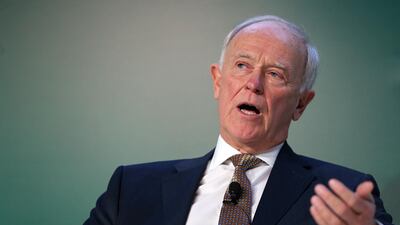

More airlines could have collapsed or consolidated globally without government intervention amid the Covid-19 pandemic and the aviation industry will see a decline in passenger traffic as well as the number of aircraft used by carriers once the crisis subsides, Emirates president Tim Clark said.
"It might have happened had there not been massive state intervention over the last months," Mr Clark said in an interview with The National. "You would have seen companies that would have ordinarily sought to merge, amalgamate with others to relieve themselves jointly of the financial predicament they face.
“That would have happened, but then of course things started to accelerate, and the financial state of the business became exponentially bad. The first port of call was not to each other but to either to the shareholders and or to the states to intervene and that is clearly what has happened.”
Airlines across the globe are facing severe liquidity problems after the pandemic triggered country movement restriction measures and crushed air travel demand.
Carriers are taking unprecedented measures to protect their existence with dramatic capacity reductions and preserving cash as revenue withers. Last month, 10 US airlines reached an agreement with the American government to accept financial support from the $58 billion (Dh213bn) allocated for carriers out of the $2.2 trillion coronavirus stimulus approved in March.
Meanwhile, Air France-KLM is set to receive €7bn (Dh28.04bn) in the form of loans and loan guarantees from the French government and the Dutch government has pledged another €2-€4bn of loans and guarantees to KLM.
“Had the natural laws of supply and demand survival of the fittest worked, I think we would have seen the culling of many airlines. I thought about 85 per cent would go bust had there been no state intervention,” Mr Clark said.
-
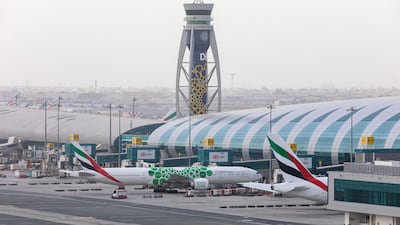
Passenger aircraft operated by Emirates stand beside the terminal building at Dubai International Airport in Dubai during March. All photos by Bloomberg -
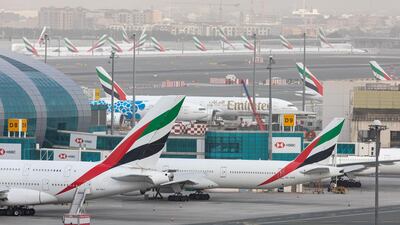
Passenger aircraft operated by Emirates stand beside the terminal building at Dubai International Airport. -
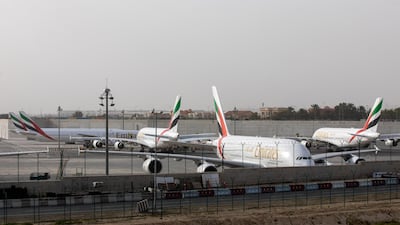
Multiple Airbus SE A380-800 aircraft, operated by Emirates, stand in a parking zone at Dubai International Airport. -

Emirates Boeing Co. 777-300 aircraft are seen in a parking zone at Dubai International Airport. -
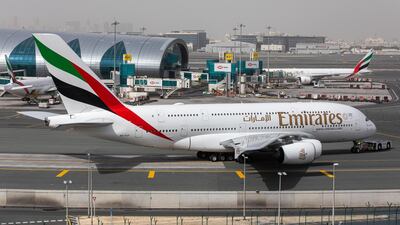
An Airbus SE A380-800 aircraft, operated by Emirates, taxis past the terminal. -
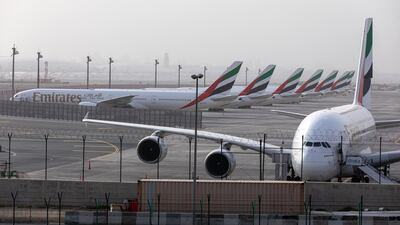
An Airbus SE A380-800, right, and a line of Boeing Co. 777-300 aircraft, operated by Emirates, stand in a parking zone at Dubai International Airport. -
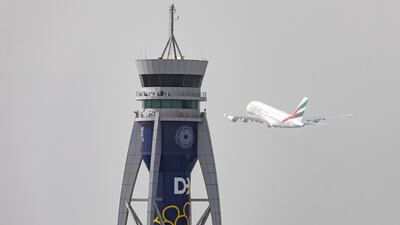
An Airbus SE A380-800 aircraft, operated by Emirates, takes off past the control tower. -
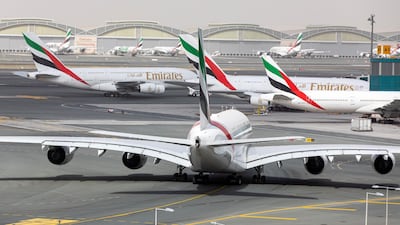
An Airbus SE A380-800 aircraft, operated by Emirates, taxis at Dubai International Airport. -
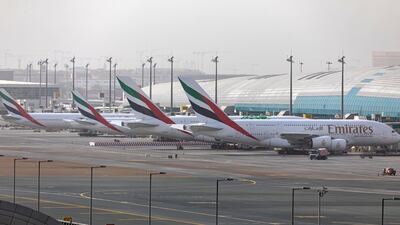
An Airbus SE A380-800 aircraft, right, stands alongside a line of Boeing Co. 777-300 aircraft at Dubai International Airport. -
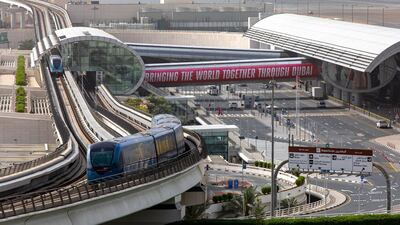
An airport access train departs the arrivals hall in Terminal Three at Dubai International Airport.


“There wasn’t room for more consolidation,” he added. “State intervention has kept that from happening and it has stopped some of the smaller carriers going out of existence. How long that will go on for I don’t know. I am still not optimistic about the survivability of quite a few carriers.”
The International Air Transport Association (Iata) estimates airlines will lose $314bn in revenue this year – 55 per cent less than 2019, due to the coronavirus impact – and will require $200bn in government aid. Iata has urged governments to quickly implement pledges of financial support for carriers, warning that 25 million jobs are at risk in a scenario where three months of travel restrictions are combined with a plunge in air travel demand.
Mr Clark said he views the pandemic as a black swan event for the airline industry.
“I think that is what’s best describes it in my experience," he said in response to the characterisation.
"If you go back to any of the major interventions, disruptions that the world has faced since the Second World War; if you took the aggregate of all of those, they wouldn’t be the equivalent to what has happened here," Mr Clark added. "It’s hugely serious and it’s devastating for the business. I don’t see any way forward at the moment.”
Global passenger demand for air travel more than halved in March, the biggest slump in more than a decade, according to Iata. Passenger demand, measured in total revenue passenger kilometres, or RPKs, fell 53 per cent from the same period a year earlier. In seasonally adjusted terms, global passenger volumes slumped to their lowest level in 14 years.
“March was a disastrous month for aviation,” Alexandre de Juniac, Iata’s director general and chief executive, said last month, adding that conditions have further deteriorated in April and most signs point to a slow recovery.
Mr Clark said demand for air travel will be subdued for the coming years due to the fallout from the crisis.
“We have just got to accept that in the next year or two, perhaps a bit longer, demand for air travel is going to be tempered in many respects,” he said. “What emerges from this will be in my view almost perhaps 20 or 30 per cent less than what we were experiencing prior to the coronavirus kicking in.”
Mr Clark was unsure of an industry rebound this summer in July and August, on the back of heavy hotel discounts and people wanting to travel before schools resume in September, as Michael O'Leary the chief executive of Ryanair alluded to in the past week.
“It’s anybody’s guess as to what is going to happen, what people will do this summer,” he said. “Frankly if it was me, I’d write it off, and if you get anything good for you, that’s great. But don’t think it’s going to come back like a tsunami because I don’t think it will.”
On the future of air travel and passenger traffic trends, Mr Clark said the industry is set to change.
“The nature of the segmentation, the demand characteristics of all the segments that for instance Emirates carries and others carry, they’re going to change. They are changing,” he said.
“So, what will emerge from this will be quite interesting. How it pans out what the type, the size and fit of an asset to a residual network of some of the carriers will be, is anyone’s guess," he said.
"One thing is for sure, the network carriers, and to an extent the domestic carriers, are all having a major rethink as to what is likely to happen," he added. "Demand will fall in the time being, the demand for the number of aeroplanes flying prior to the coronavirus will also fall, airlines will ground old aircraft and concentrate on some of the new ones coming to market.”
Asked if the downturn of the global economy, which is set to slide into the deepest recession since the Great Depression of the 1930s, and projections for lower passenger traffic following the crisis, will reduce the appetite of carriers for wide-body planes, Mr Clark said that is likely.
“We know the A380 is over, the 747 is over but the A350 and the 787 will always have a place. They may not be ordered soon, they may have orders deferred and pushed back, but eventually they will come back, and they will be a better fit probably for global demand in the years post the pandemic,” he said.
“Do I see demand for these bigger aircraft slowing, yes I do,” he added. “The numbers I would suggest will be lower in the next three to five years and I think Boeing and Airbus recognise that and are already slowing their production now. You can’t fly from Dubai to San Francisco in a 737 non-stop but you can on a 787 and you can on an A350 and very comfortably.”
The idea of reconfiguring planes, removing seats on planes or permanently factoring in spacing requirements in the future – in line with social distancing measures – is untenable and not sustainable, Mr Clark said.
“My view is basically two-fold. One, it wouldn’t surprise me if this virus disappeared completely by the end of summer. But if it doesn’t, then the pursuit of the vaccine is the only way we are going to be able to deal with it when it comes to international travel, and to some extent hospitality and other kinds of transport,” Mr Clark said.
“My own view, my gut feel is telling me that by the summer of next year we could be well on our way to mass global inoculation … and therefore things will change. If that happens all this business about spacing on aeroplanes, on buses, trains and restaurants and hotels goes away,” he added. “In the meantime of course, as long as this is going on, and if it’s another year then we are going to have to live with the agonies as far as air transport is concerned … with countries … taking down lockdown procedures.”
Mr Clark was set to retire from Emirates at the end of June 2020 after more than three decades with the airline, which has played a seminal role in the development of Dubai’s economy and anchoring the emirate as a commercial and international travel hub.
He declined to say if he was extending his stay at the carrier, but said the airline has a well-equipped team to navigate the future following his departure.
“At the moment my concentration is trying to find a way through this pretty difficult situation. I have basically said I will stay for the time that it takes the management group that I am working with to get a way forward and then we’ll see after that how it goes on,” Mr Clark said.
-
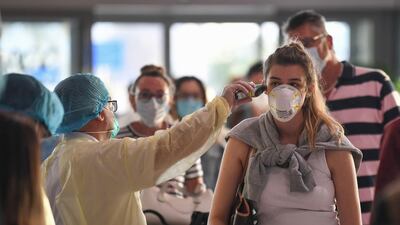
A health worker checks the body temperature of passengers bound for Frankfurt at Dubai International Airport. -
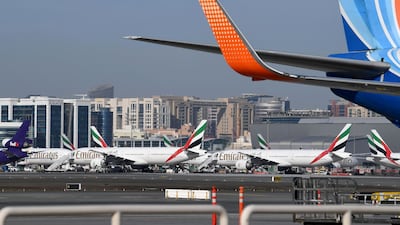
Emirates Boeing 777 aircraft are seen on the tarmac at Dubai International Airport. -
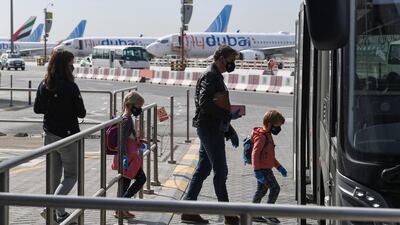
Passengers bound for Frankfurt board a shuttle bus at Dubai International Airport. -
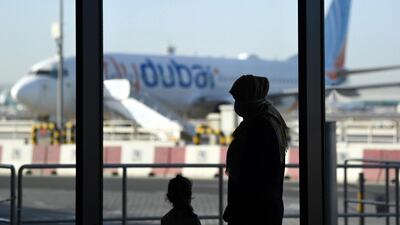
A flydubai aircraft is parked on the tarmac of Dubai International Airport. -
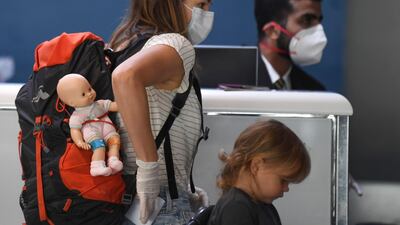
Passengers check in at Dubai International Airport. -
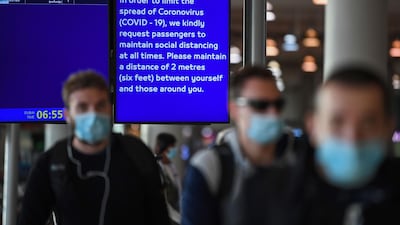
An information board displays an alert for passengers to maintain distance from others at Dubai International Airport. -
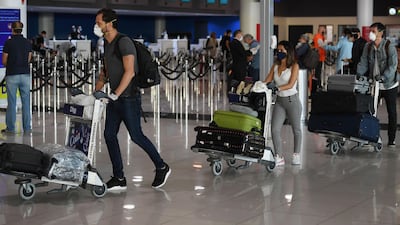
Mask-clad passengers bound for Frankfurt walk past check-in counters at Dubai International Airport. -
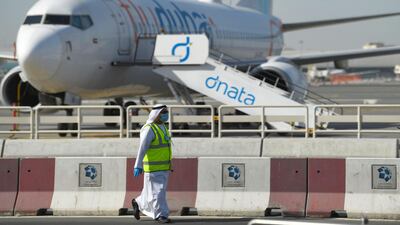
A mask-clad employee walks in front of a flydubai aircraft on the tarmac of Dubai International Airport. -
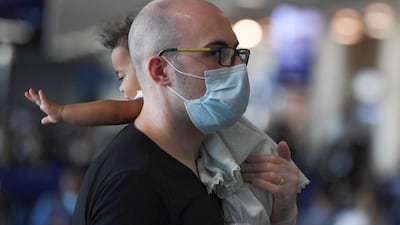
Passengers bound for Frankfurt wait at a terminal of Dubai International Airport. -
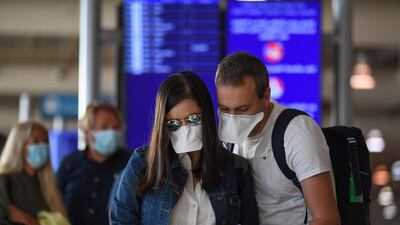
Passengers bound for Frankfurt wait at a terminal of Dubai International Airport. -
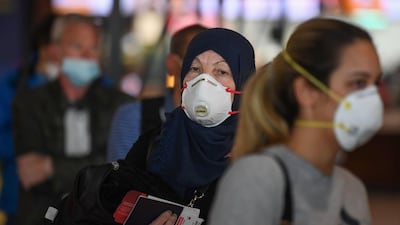
Passengers bound for Frankfurt wait at a terminal of Dubai International Airport. -
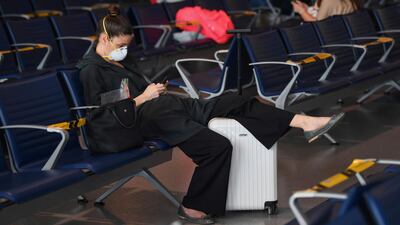
Passengers wait at a terminal at Dubai International Airport, as Emirates resumed a limited number of outbound passenger flights. -
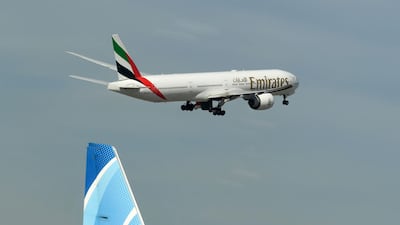
An Emirates aircraft takes off from Dubai International Airport. -

Emirates Airbus A380 and Boeing 777 aircraft are seen on the tarmac at Dubai International Airport as the airline resumed a limited number of outbound passenger flights. -

Passengers are assisted at the check-in counter in a terminal at Dubai International Airport. -
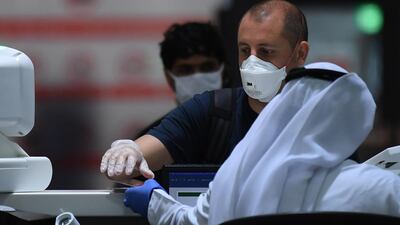
Passengers have their travel documents checked before departure at Dubai International Airport. -

Passengers have their travel documents checked before departure at Dubai International Airport.


“I am probably fairly useful still because I have the experience and my instincts; generally when we’re up against it, I tend to fall back on my instincts and very often I’m pleased to say they got us out of the hole,” he added.
“It’s not just about me, it's about the government who is the owner of Emirates. When the time is right, and I think everything is OK I will just carry on [with my plans]. We have a good team of people … they have worked with me for a long time, they know the way. It’s a difficult one because no one has been in this position ever in the airline industry today.”

