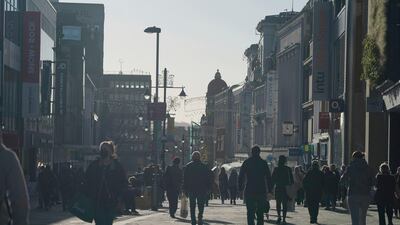
Deserted streets in Liverpool on England's last day before lockdown. AP

How England’s new lockdown rules work


  • English
  • Arabic

Boris Johnson has plunged England into another national lockdown to avert a “medical and moral disaster” caused by rapidly rising coronavirus cases.

People have been ordered to stay at home unless there is a specific reason to leave.

However, the key difference from the spring lockdown is that schools and universities will remain open.

When do the rules come into force?

The national lockdown runs from midnight on November 4 until December 2.

England will then return to its tiered restrictions - where areas fall under medium, high or very high alert levels based on the infection rate.

Police have the power to issue fines and break up gatherings.

Are people allowed to leave home?

People are told to stay at home unless they have a specific reason to be outside.

Those reasons include work if you cannot work from home, education if it is not provided online and exercise.

People can also leave the house if they are carrying out “essential activities” such as visiting the supermarket or attending a medical appointment.

Support bubbles, where a household with one adult joins another household, remain in place.

People buying or renting a property may also leave their home.

What about meeting others?

In general, people must not meet socially.

However, the government says people can exercise or meet in a public outdoors space with people in their household or support bubble.

England's lockdown rules.

Individuals are also allowed to meet with one other person not from their household or in their support bubble outdoors.

People are not allowed to meet in a private garden unless they live with them or they are from their support bubble.

Workplaces, support groups, childcare centres and funerals are all allowed to host larger groups of people.

What businesses will close?

Non-essential shops, leisure and entertainment venues will all be closed.

Retail outlets, hairdressers and beauty salons will all not be welcoming customers.

And gyms, swimming pools and dance studios are among the sporting and leisure centres to shut their doors.

Restaurants, cafes and pubs will close unless operating a takeaway service.

Hotels, hostels and other accommodation should only be open for those who have to travel for work, or other reasons such as providing beds for the homeless.

What will stay open?

All essential shops such as supermarkets, pharmacies and other food outlets will remain open.

The NHS and medical services such as GPs, along with job centres and courts, will stay open.

Schools, colleges and universities will all remain open.

However, students living away from home will not be able to return home during term time but can go back for Christmas.

Are people still allowed to travel?

People are not allowed to travel overseas or within the UK unless for work, education or other legally permissible reasons.

Other exemptions include caring responsibilities, visiting those in your support bubble or exercise.

People are encouraged to avoid public transport.

Why is only England going into lockdown?

Scotland, Wales and Northern Ireland have introduced individual measures for their own countries.

The “firebreak” lockdown in Wales will end on November 9, while Scotland is sticking with its five-tier restrictions for now.

Northern Ireland’s enhanced restrictions are due to end on November 13.

What is different to the spring lockdown?

Boris Johnson has said England’s second lockdown will be less severe than the shutdown imposed in spring.

This time, schools and universities will remain open, while people will be allowed out for exercise more than once a day.

Televised sport including the Premier League will continue to play without crowds.

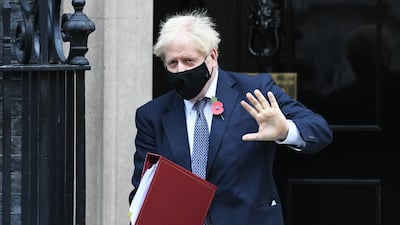
  • Prime Minister Boris Johnson leaves 10 Downing Street. Following the weekly Prime Minister's Questions session in the House of Commons, MPs will vote on the government's month-long lockdown in England. Getty Images
    Prime Minister Boris Johnson leaves 10 Downing Street. Following the weekly Prime Minister's Questions session in the House of Commons, MPs will vote on the government's month-long lockdown in England. Getty Images
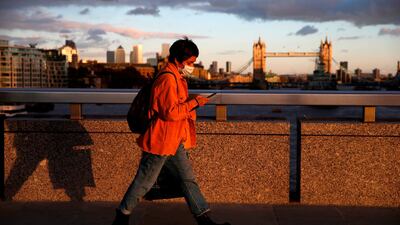
  • A pedestrian wearing a mask crosses London Bridge with Tower Bridge in the background in central London. England is preparing to head into a second coronavirus lockdown. AFP
    A pedestrian wearing a mask crosses London Bridge with Tower Bridge in the background in central London. England is preparing to head into a second coronavirus lockdown. AFP
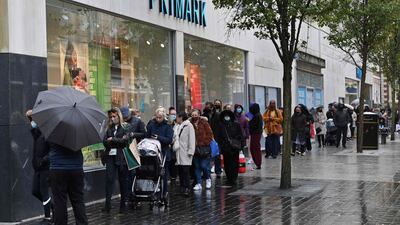
  • Shoppers queue to enter a Primark store in Liverpool. AFP
    Shoppers queue to enter a Primark store in Liverpool. AFP
  • Shoppers in Northumberland Street ahead of a national lockdown for England which begins on Thursday, in Newcastle. AP Photo
    Shoppers in Northumberland Street ahead of a national lockdown for England which begins on Thursday, in Newcastle. AP Photo
  • A sign reading ' HOPE' is seen inside Peterborough Cathedral. Reuters
    A sign reading ' HOPE' is seen inside Peterborough Cathedral. Reuters
  • A shopper has his temperature taken at the entrance to the Apple store in Regent Street, central London. AFP
    A shopper has his temperature taken at the entrance to the Apple store in Regent Street, central London. AFP
  • Shoppers queue to enter a branch of the luxury fashion retailer Hermes in central London. AFP
    Shoppers queue to enter a branch of the luxury fashion retailer Hermes in central London. AFP
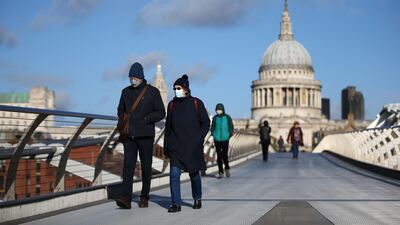
  • Pedestrians wearing masks cross Millennium Bridge with St Paul's Cathedral in the background in central London. AFP
    Pedestrians wearing masks cross Millennium Bridge with St Paul's Cathedral in the background in central London. AFP
  • A man wearing a protective face mask is seen in Bristol. Reuters
    A man wearing a protective face mask is seen in Bristol. Reuters
UK's plans to cut net migration

Under the UK government’s proposals, migrants will have to spend 10 years in the UK before being able to apply for citizenship.

Skilled worker visas will require a university degree, and there will be tighter restrictions on recruitment for jobs with skills shortages.

But what are described as "high-contributing" individuals such as doctors and nurses could be fast-tracked through the system.

Language requirements will be increased for all immigration routes to ensure a higher level of English.

Rules will also be laid out for adult dependants, meaning they will have to demonstrate a basic understanding of the language.

The plans also call for stricter tests for colleges and universities offering places to foreign students and a reduction in the time graduates can remain in the UK after their studies from two years to 18 months.

Real estate tokenisation project

Dubai launched the pilot phase of its real estate tokenisation project last month.

The initiative focuses on converting real estate assets into digital tokens recorded on blockchain technology and helps in streamlining the process of buying, selling and investing, the Dubai Land Department said.

Dubai’s real estate tokenisation market is projected to reach Dh60 billion ($16.33 billion) by 2033, representing 7 per cent of the emirate’s total property transactions, according to the DLD.

Ten tax points to be aware of in 2026

1. Domestic VAT refund amendments: request your refund within five years

If a business does not apply for the refund on time, they lose their credit.

2. E-invoicing in the UAE

Businesses should continue preparing for the implementation of e-invoicing in the UAE, with 2026 a preparation and transition period ahead of phased mandatory adoption. 

3. More tax audits

Tax authorities are increasingly using data already available across multiple filings to identify audit risks. 

4. More beneficial VAT and excise tax penalty regime

Tax disputes are expected to become more frequent and more structured, with clearer administrative objection and appeal processes. The UAE has adopted a new penalty regime for VAT and excise disputes, which now mirrors the penalty regime for corporate tax.

5. Greater emphasis on statutory audit

There is a greater need for the accuracy of financial statements. The International Financial Reporting Standards standards need to be strictly adhered to and, as a result, the quality of the audits will need to increase.

6. Further transfer pricing enforcement

Transfer pricing enforcement, which refers to the practice of establishing prices for internal transactions between related entities, is expected to broaden in scope. The UAE will shortly open the possibility to negotiate advance pricing agreements, or essentially rulings for transfer pricing purposes. 

7. Limited time periods for audits

Recent amendments also introduce a default five-year limitation period for tax audits and assessments, subject to specific statutory exceptions. While the standard audit and assessment period is five years, this may be extended to up to 15 years in cases involving fraud or tax evasion. 

8. Pillar 2 implementation 

Many multinational groups will begin to feel the practical effect of the Domestic Minimum Top-Up Tax (DMTT), the UAE's implementation of the OECD’s global minimum tax under Pillar 2. While the rules apply for financial years starting on or after January 1, 2025, it is 2026 that marks the transition to an operational phase.

9. Reduced compliance obligations for imported goods and services

Businesses that apply the reverse-charge mechanism for VAT purposes in the UAE may benefit from reduced compliance obligations. 

10. Substance and CbC reporting focus

Tax authorities are expected to continue strengthening the enforcement of economic substance and Country-by-Country (CbC) reporting frameworks. In the UAE, these regimes are increasingly being used as risk-assessment tools, providing tax authorities with a comprehensive view of multinational groups’ global footprints and enabling them to assess whether profits are aligned with real economic activity. 

Contributed by Thomas Vanhee and Hend Rashwan, Aurifer