


Planes operating in desert climates ingest up to 10kg of dust per 1,000 flights, contributing to disrupted airflow and overheating, resulting in accelerated engine wear, a study has found.
Most dust is ingested by planes while they are circling to land, according to a new global study, which found the largest amounts were at airports close to the Sahara, the Middle East and northern India.
Levels are higher when planes perform holding patterns, with the greatest quantities consumed at low altitudes of 1km, where peak dust concentrations often occur.
To study the effects, scientists examined 17 years of atmospheric and satellite data to calculate the quantity of sand and dust swallowed by jet engines at 10 major international airports: Phoenix, US; Canary Islands, Spain; Marrakesh, Morocco; Niamey, Niger; Dubai; Delhi, India; Beijing, China; Hong Kong; Bangkok, Thailand and Sydney, Australia.

Researchers found summer flights into Delhi topped the list, with an average of 6.6g of dust per arrival in the run up to monsoon season and 4.4g upon departure.
Delhi was followed by Dubai and Niamey, Niger, at 4.3g and 4.7g per arrival respectively, while flights into Beijing consumed 2.9g on average.
Dr Claire Ryder, from the University of Reading and lead author of the study, told The National there was previously a concern among scientists that Sydney and Phoenix were among the worst affected by dust.
“This work shows that really they suffer the occasional large dust storm that probably hits the news but nothing like the regular ingestion that you get in parts of Africa, the Middle East and India, which have really high loads,” she said.
This dust belt, which stretches from west Africa through the Middle East, all the way to the Gobi Desert in China, includes some desert regions, like Dubai, and other locations, such as Beijing, that are not located in desert areas, specifically, but they are frequently affected by the long range transport of dust.
She added: “You get these atmospheric winds that transport dust particles from the desert in certain directions, but it’s dependent on the weather systems and the atmospheric flow.
“For Beijing that is brought by the Gobi desert. For Delhi there are some deserts in north-west India. But Delhi and northern India can also be impacted by Middle Eastern dust.”
Many people will be familiar with the risk of flying through volcanic ash. Sand does not have the same impact. Planes affected by dust are “not going to fall out of the sky”, she said.
“This is really a long-term wear issue,” added Dr Ryder.
“Dust and sand are dangerous to aircraft because dust melts to form glassy deposits on blades or hard mineral crusts inside engines. These crusts disrupt airflow and cause overheating, resulting in accelerated engine wear,” said Dr Ryder.
Although the amount of dust ingested per flight is not huge, she said, it quickly adds up.
“A plane consuming 5g of dust per arrival and departure will eat 10kg of dust over 1,000 flights. Planes will consume more dust when they are at lower altitudes waiting to land, though this depends on the local weather which affect the height of a dust plume in the atmosphere,” Dr Ryder added.
Sand and dust storms hit parts of the Mena region – in pictures
-
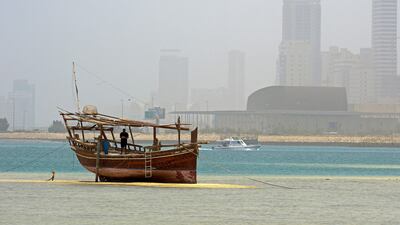
A picture taken from Muharraq Island shows a sandstorm engulfing the skyline of Bahrain's capital Manama. The Middle East's sandstorms are becoming more frequent and intense, a trend associated with overgrazing and deforestation, overuse of river water and more dams. AFP -
Massive dust and sand storms have descended on the Gulf this week, bringing extraordinarily high levels of dust and pollutants, particularly in Kuwait, Saudi Arabia and Iraq. Bahrain's capital Manama (pictured) has been similarly affected. AFP -
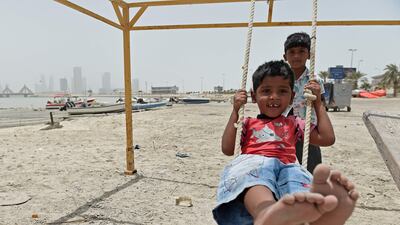
Children play outside during a sandstorm on Muharraq Island, north of the Bahraini capital Manama. People in the Mena region are being advised to stay indoors, especially babies and at-risk groups, and to avoid physical exercise. AFP -
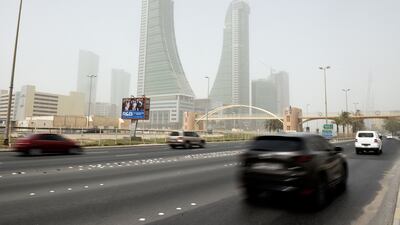
Cars on a highway in the Bahrain Financial Harbour area during a dust storm in the capital Manama. People in the Gulf are accustomed to frequent sand and dust storms and have attached the Arabic word “Shamal”, which means northern, to the phenomenon owing to the direction of the winds. AFP -
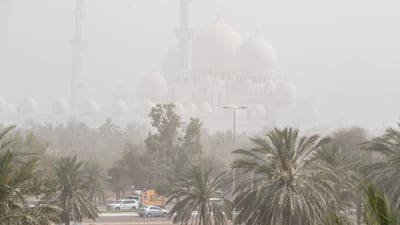
Sheikh Zayed Grand Mosque is obscured by a haze of sand and dust in Abu Dhabi. Winds have reached 40 kilometres an hour in the capital. Victor Besa / The National -
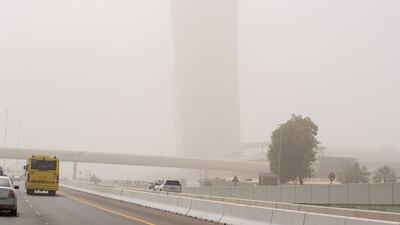
The Abu Dhabi National Exhibition Centre is almost hidden by dust. Visibility was down to a few hundred metres in the city. Victor Besa / The National -
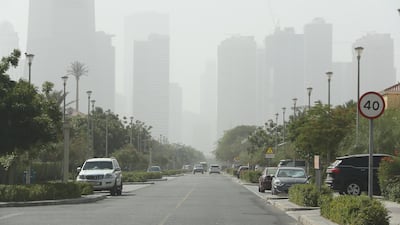
Jumeirah Lakes Towers in a hazy Dubai. Pawan Singh / The National -
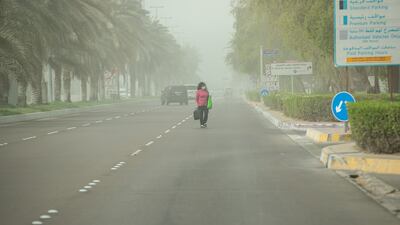
Strong winds stir up dust and sand in Abu Dhabi. Victor Besa / The National -
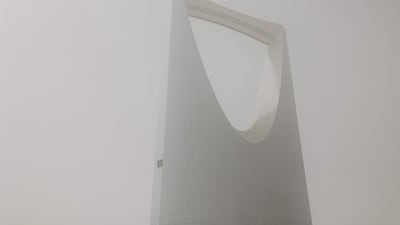
The Kingdom Centre skyscraper in Riyadh during a dust storm. AFP -
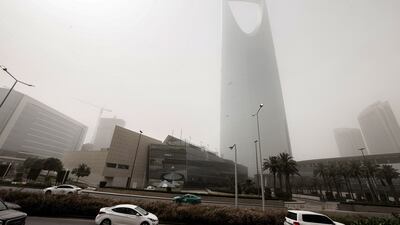
The 302-metre building is almost obscured by dust. AFP -
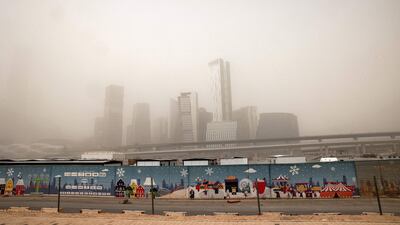
Saudi Arabia's National Centre for Meteorology issued alerts for large parts of the kingdom, including Riyadh and the Eastern Province. AFP -
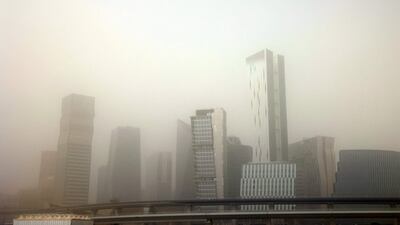
A haze of dust covers Riyadh's skyline. AFP -

Dust storms created hazardous conditions for drivers in Kuwait City, where winds reached 50kph. EPA -

A man waits to cross a road in Kuwait City as orange-red dust blows in the air. AFP -
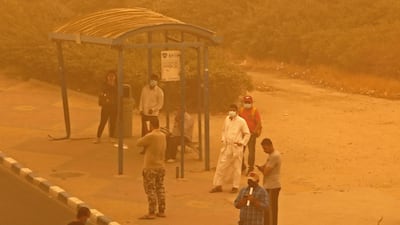
Kuwait's Ministry of Interior urged the public to exercise caution as dust severely reduced visibility. AFP -
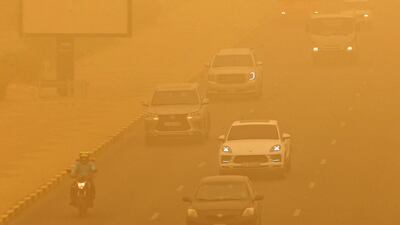
Schools in Kuwait were closed owing to the weather. AFP -
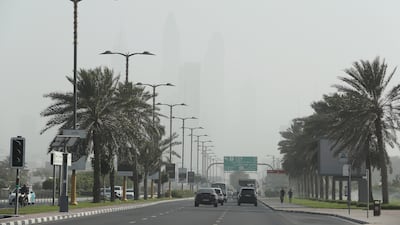
Towers in Dubai Marina are hard to see through the dust. Pawan Singh / The National -
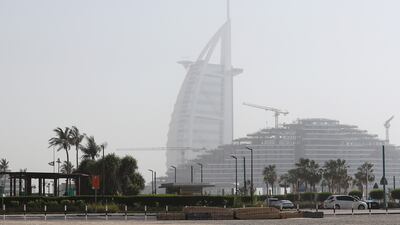
Dubai's Burj Al Arab hotel in the haze. Pawan Singh / The National -
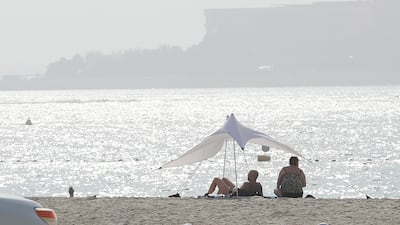
Beachgoers view a hazy skyline at Palm Jumeirah in Dubai. The conditions appear to be the tail of a storm that covered Iraq. Pawan Singh / The National -
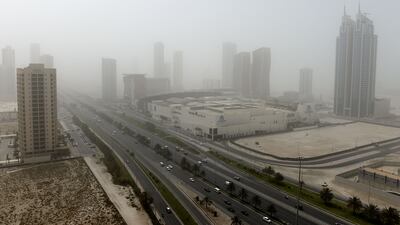
Cars drive on a highway in the Seef district during a dust storm in Bahrain's capital Manama. AFP -
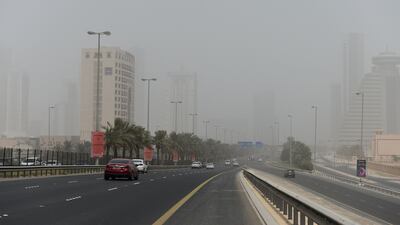
Cars drive on the main highway during a dust storm in the Bahraini capital Manama. AFP -
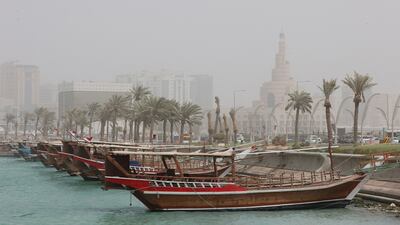
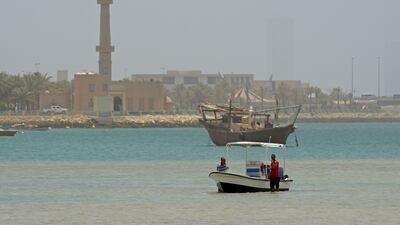
Haze obscures the dhow harbour in Doha, Qatar, during a heavy dust storm. AFP -
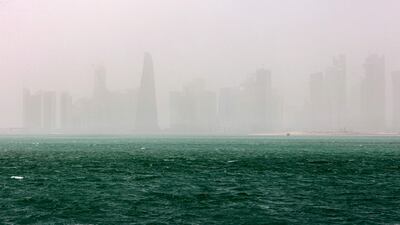
Haze obscures Doha's skyline. AFP -
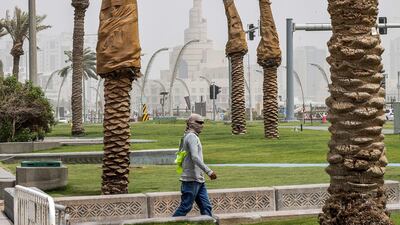
A man covers his face with a scarf in Doha during a heavy dust storm. AFP -
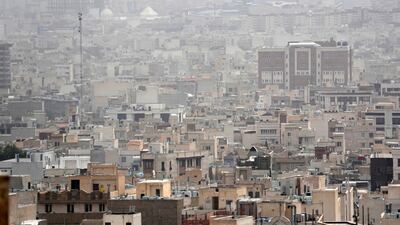
A sandstorm covers Tehran, Iran. Schools and government offices closed in the Iranian capital and elsewhere in the country. AP Photo -
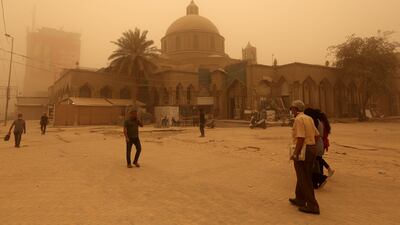
Iraqis walk along a street at the Shorja market shrouded in heavy dust in central Baghdad. EPA -

People with breathing problems are treated at a hospital during a sandstorm in Baghdad. AP Photo -

People travel along a street during a sandstorm in Baghdad. AP Photo -
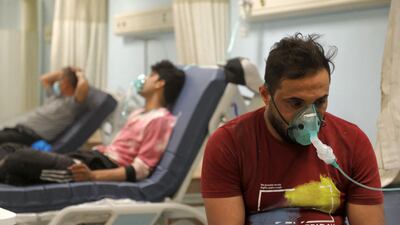
A patient suffering from breathing problems at a hospital in the city of Nasiriyah in Iraq's southern Dhi Qar province. AFP -

People walk on a street in Baghdad during a sandstorm. AP -
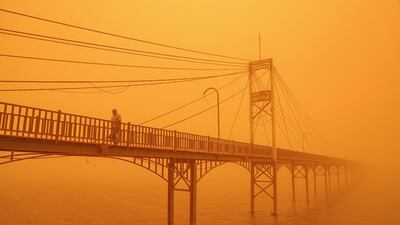
A man walks along the Euphrates river in Nasiriyah in Iraq's southern Dhi Qar province during a heavy dust storm. AFP -

The dust has affected visibility at Abu Dhabi's Corniche. Khushnum Bhandari / The National -
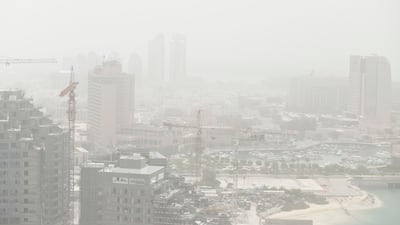
Abu Dhabi city is difficult to see through the dust. Khushnum Bhandari / The National -
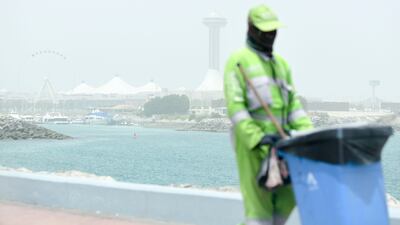
The Marina Mall area in Abu Dhabi is obscured by the dust. Khushnum Bhandari / The National -

Adnoc headquarters in the capital amid the dust storm. Khushnum Bhandari / The National -
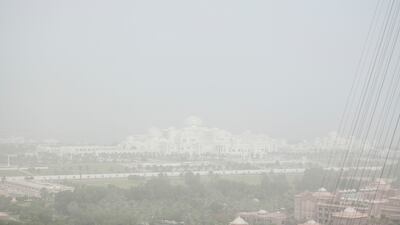
Qasr Al Watan is obscured by a haze of sand and dust in Abu Dhabi. Khushnum Bhandari / The National -
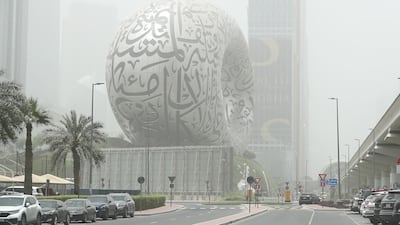
Museum of the Future during the dust storm in Dubai. Pawan Singh / The National -
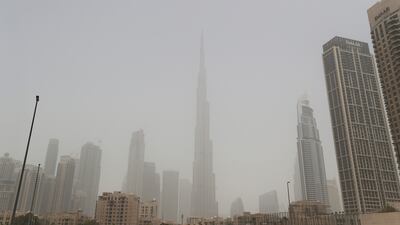
Burj Khalifa obscured by the dusty and hazy weather in Dubai. Pawan Singh / The National -

Abras on Dubai creek during the dusty weather. Pawan Singh / The National


Climate change could potentially lead to a dustier world, she said.
“Climate models do not currently provide a consensus on whether global warming will mean a dustier world, as dust emissions depend on a lot of factors, such as soil moisture, precipitation, surface wind patterns and vegetation cover,” Dr Ryder said.
“Ongoing research at the University of Reading is working to improve the ability of climate models to predict dust emissions and transport through the atmosphere.”

Holding patterns of 10-15 minutes at a 1km altitude can lead to more dust ingestion than during the take-off, climb and taxi phases of a flight, researchers said.
At Delhi airport during summer, holding at a 1km altitude contributes 50 per cent to total dust ingestion, they said. By changing the holding pattern altitude away from the dustiest layers, ingestion could be cut by 41 per cent.
Another option to reduce exposure is to change flight schedules to avoid peak dust times. Moving flights at Delhi and Dubai to night time could reduce engine dust ingestion by more than 30 per cent, researchers said.

