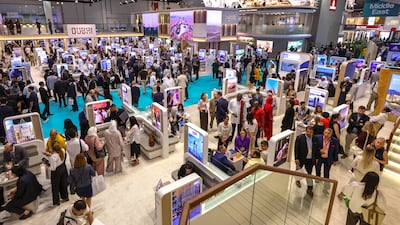
International hotel brands operating in the Middle East have been moving swiftly to deal with the shock caused by the Iran war.
They have cut costs wherever possible, shifting to focus on the local market by offering deals and packages for staycations. Others have temporarily shut some hotels for refurbishment.
“We did not furlough any team members, not in the field, not in the office,” said Haitham Mattar, managing director for India, Middle East and Africa at IHG Hotels and Resorts.

“We did have to temporarily close some hotels, but we opened right back up, and that temporary closure was taken advantage of, whether it's refurbishment, renovations, deep cleaning. But we have actually managed, [and] we haven't necessarily cut down salaries.”

Accor's UAE hotel occupancy rates "dropped substantially" to 20 per cent in March, compared to 80 per cent in January and February, said Duncan O'Rourke, the group's chief executive for the Middle East, Africa and Asia Pacific.
Booking cancellations by corporate travellers and European leisure travellers were “immediate”.
In response, Accor, which operates 90 hotels in the UAE, cut room rates by 15 to 20 per cent in some properties, closed six of its hotels for full refurbishment, offered free booking cancellations and initiated a "profit-protection programme".
That included offering senior management vacation time, moving employees to hotel pre-opening events in other locations and pivoting to the domestic and Gulf markets. "We didn't lay anybody off, we learnt from Covid," Mr O'Rourke said.
-
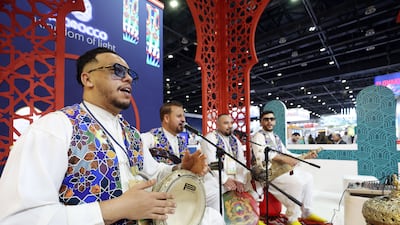
The Morocco stand at the Arabian Travel Market, at Dubai World Trade Centre. Chris Whiteoak / The National -

A first-class seat for Etihad Airways' Airbus A321LR. Chris Whiteoak / The National -
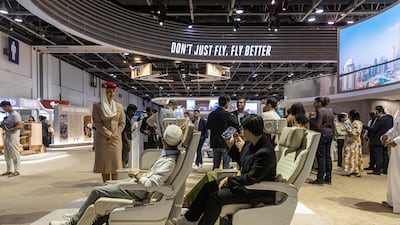
The Emirates airline stand. Antonie Robertson / The National -
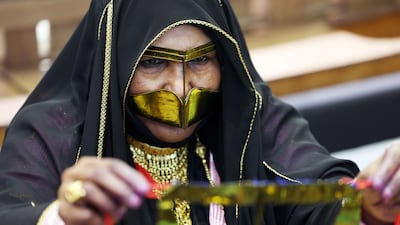
An exhibitor. Chris Whiteoak / The National -
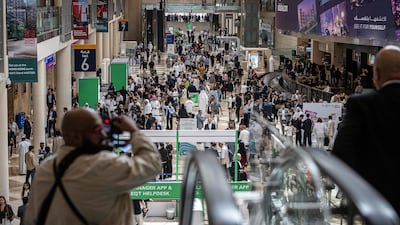
The show floor at the Arabian Travel Market. Antonie Robertson / The National -

The Morocco stand. Chris Whiteoak / The National -
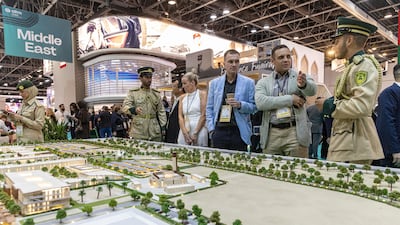
The Dubai Police stand. Antonie Robertson / The National -
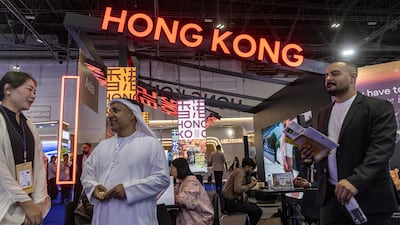
The Hong Kong stand. Antonie Robertson / The National -
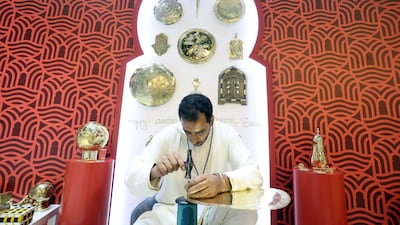
More from the Morocco stand. Chris Whiteoak / The National


The main priorities for Wyndham Hotels and Resorts after the war broke out were ensuring safety, keeping the lights on at its hotels and making sure there were no job cuts, said Dimitris Manikis, the company's president for Europe, the Middle East and Africa.
He said when the conflict first began on February 28, “we all thought this is going to last only a few weeks, and it didn't”.
“When we all realised that it's going to last longer, what we've done, we looked at staycations, we looked at enhancing our food and beverage proposition because people need to still go out and eat,” Mr Manikis added.
The company lowered its rates by about 30 to 40 per cent “to be competitive, but that helped us keep the occupancy”, he said.
Last month, Wyndham's average occupancy stood at about 85 per cent. “We have a debate internally about how, when the rebound comes, we can bring the rates back. Because obviously, when you drop the rates, it's very difficult to bring them back. But we are very hopeful that the recovery will bring a lot of demand.”

For Wyndham, which operates 750 properties across Europe, the Middle East, Eurasia, and Africa, including 80 in the Middle East and Pakistan, keeping its hotels open was key. “The worst thing that you could do is shut the doors because then, when the time comes, it will be very difficult to open them again. And at the same time, we realised that people still need to travel,” he said.
Dubai-based JA Resorts and Hotels has been repositioning itself as far more than a traditional hotel operator to cushion the impact on its business.
“Instead of joining a race to the bottom on price, we’re doubling down on experiences – from our new integrated sports and shooting complex and expanded Mice [meetings, incentives, conferences and exhibitions] offerings in Jebel Ali to packaging Hatta for adventure and offsites,” said Phil Dickinson, vice president of sales at JA Resorts. The new complex will include six Fifa-standard football pitches, two cricket ovals, and a 28-lane shooting range.
JA Resorts has nine properties, of which six are in Dubai, two in Scotland and one in the Maldives.
“Based on regional instability, I think the priority is to focus on what you have at the moment, just to make sure we're getting that stabilised, rather than sort of looking any further than that right now,” he said.
Staycation mode on
With many international airlines suspending flights to the region and a drop in leisure tourism, most hotel operators shifted to focus on bringing in more local and regional travellers.
“We have pivoted very much towards where we believe we can capture as much business as we can, which right now is very much around local business,” said Mr Dickinson.
“We have always been popular with the staycation market, but we have put even more focus on capturing that.” International source markets are beginning to recover, too, for JA Resorts, led by Russia and the Commonwealth of Independent States (CIS) region, and the UK. There has been some recovery also from France, Mr Dickinson said.
“So they are coming back … not at the volumes that we are used to, but [business] is certainly starting to recover,” he added.
IHG, which operates 226 hotels across India, the Middle East and Africa, including 39 in the UAE, is also focused heavily on offering incentives to local guests.
“One big change we saw is people are looking for value. But value doesn't mean cheap," Mr Mattar said.
"So even if your rates were still somewhere reasonable, not necessarily fully discounted, but you gave them incentives, whether it's a spa treatment, breakfast, something for the kids, whether it's in the amenities in the room, they saw value in it.”
Accor’s properties experienced a surge in guest volumes as UAE residents booked staycations during the summer weekends, Mr O'Rourke said, before a "huge recovery" as occupancy rates hit 65 per cent in August, when visitors from the CIS, the Gulf states and India flocked to the hotels.
Delays, but no cancellations
For now, the projects in the pipeline for all of the hotel chains remain unchanged, although they acknowledge there will probably be some delays.
Wyndham last year teamed up with Le Park Concord to open 100 of its Super 8 budget hotels in Saudi Arabia over a 10-year period.
“So, we had a bit of delays. We have identified at least four sites with our partners where we're going to develop the first Super 8,” Mr Manikis said.
“We might not get 100 in 10 years, but there will be a very strong pace, because they are easier to build and cost effective.
“Our signings are growing. We just opened another hotel about a month ago in Saudi Arabia. We have a very strong pipeline. We have great plans for the region,” he added.
IHG, which has a pipeline of 259 hotels in the Middle East and Africa, including 12 in the UAE and 62 in Saudi Arabia, is also sticking to its pipeline.
“We do see a slowdown in openings, and the reason is, a lot of that disruption caused delays in what we call the FF and E [furniture, fixtures and equipment], so furniture and fixed assets coming into these hotels have been delayed,” said Mr Mattar.
“So, there has been slippage, not cancellation, but hotels that were supposed to open in the first quarter are now opening in the fourth quarter. Hotels were meant to open in the fourth quarter now open first quarter next year.”
Investors and owners are looking at the disruption as a short-term conflict, Mr Mattar said.
“They all have a long-term view on hospitality. Investing in hotels isn't something short-term. And when you sign a deal, it takes at least two to three years to open these hotels,” he added.
Accor's pipeline of new projects in the region is also intact, with hotel openings and signings proceeding, Mr O'Rourke said. The company’s pipeline for the Middle East and Africa stands at more than 190 hotels, including 11 in the UAE.
"We haven't stopped anything because hotel owners and Accor take a long-term view here. Nothing has changed," he said. However, Accor's initial plans for 10 to 15 hotels in Syria by 2030-2031 have been pushed back to 2033-2034 for 10 properties as conversations with hotel developers are taking longer due to the Middle East crisis.
"People are not as quick to invest and start building quickly again, specifically with what's happening now, but is Syria going to rebound one day? Yes. Is it going to be an important market again? Yes," Mr O'Rourke said. He added that rebuilding infrastructure, restoring air links and reforming the financial system are helping to stimulate enthusiasm for investing in Syria.
The outlook for the fourth quarter of 2026 and first quarter of 2027 is "challenging", Mr O'Rourke said. "If the momentum carries on, it should be positive, but there's one factor that can change everything: Donald Trump."
But operators expect the regional market to rebound strongly once international airlines resume flights to the UAE and the region and tourism picks up again.
“I believe when the Middle East rebounds, it will rebound in flying colours because this is one of the best markets in the world,” Mr Manikis said.

