
The UAE has launched two major tourism initiatives aimed at positioning the country as a premier global destination.
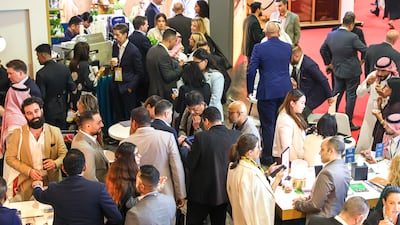
The Visit UAE identity and the UAE Grand Tour platform were unveiled at the Arabian Travel Market (ATM), being held this week at the Dubai World Trade Centre.
Visit UAE marks the country's first unified national tourism identity at federal level, consolidating the offerings of all seven emirates under a single, integrated brand.

The drive is designed to present the UAE as one cohesive destination while highlighting the distinct experiences each emirate offers.
The UAE Grand Tour platform, developed in collaboration with Rocket International and tourism authorities across the emirates, offers itineraries of up to 14 days spanning the entire country.
The concept, described on the UAE Grand Tour website as “one country, seven journeys”, offers themed programmes from eco-friendly and wellness to adventure and cultural heritage.
The initiatives were announced by Abdulla bin Touq, Minister of Economy and Tourism.
“Through Visit UAE, we are unifying the UAE's national tourism offering and showcasing the diversity of destinations and experiences across the seven emirates, while the UAE Grand Tour platform represents an integrated tourism product that encourages visitors to choose from a range of itineraries,” he said.

The ministry also announced plans to expand World's Coolest Winter, its flagship domestic tourism campaign, into international markets for the first time since its launch in 2020.
This year's event will target key international markets, highlighting the UAE's desert and coastal experiences, festivals and mild winter weather.
Speaking earlier in the week at ATM, Mr Bin Touq said the time for “descending is over”.
“Let's prepare for ascending,” he said. “We're going to take off. Our tourism sector is yet to begin from the date of today onwards. We have the beautiful months coming ahead.”
He said the sector's survival through a difficult period was structural strength. “What had been built in the last 50 years is a foundation of what we saw in the last couple of months. We saw the storm. We were in the middle of the storm and we managed to manoeuvre ourselves perfectly. Whenever the storms hit our shores, we’re ready to take it on.”
Demand on the up
Demand for travel to the UAE remains very strong, said Siddharth Sudhakar, general manager for the Middle East and North Africa market at Trip.com. “There is particularly significant growth on demand from its neighbours,” he said.

Across the Gulf Co-operation Council, flight orders to the UAE increased by more than 60 per cent year-on-year in the first half of 2026, Mr Sudhakar said. “Hotel bookings grew by 130 per cent, and attraction and activity bookings increased by 120 per cent.”
Saudi Arabia is a particularly important source market, he added. “Further afield, the UK remains our leading international source market for bookings to the UAE, followed by Russia, France, the US and India.
“Overall, the data points to a very healthy and diversified inbound market for the UAE and, importantly, the growth is extending beyond flights into hotels, attractions and experiences.”
One of the clearest travel trends is GCC travellers directing more attention towards intraregional travel and staycations, said Mr Sudhakar. “When international travel becomes more uncertain, people look for experiences that are closer to home, easier to access, thus offering greater confidence and flexibility.”
Emirates bullish
At Emirates, the winter season is approaching with the airline operating at around 93 per cent of its pre-Iran-war capacity and booking momentum building across a widening range of markets.
The airline carried more than 8.6 million passengers over July and August, with arrivals into Dubai in the second half of August alone up 7 per cent on the same period last year.
Emirates has accelerated a sweeping product upgrade, with 104 planes now retrofitted and premium economy available on 137 of its aircraft. Helsinki joins the network on October 1, while second daily services are being added to Accra (Ghana), Tokyo Narita (Japan), Ho Chi Minh City and Hanoi (both Vietnam).

Meanwhile, low-cost airline flydubai is expanding, crossing the 100-aircraft threshold with 11 new Boeing 737 MAX deliveries planned before the end of the year and launching a retrofit programme from September that will add lie-flat business-class seats to 21 planes over the next 12 months.
“Growing our fleet beyond 100 aircraft is a significant milestone for flydubai and shows how far we have come,” said Ghaith Al Ghaith, chief executive of flydubai.
Diversification key
The one persistent complication is the way travellers are booking. Shorter lead times – a pattern established during the Iran war disruption – have not yet fully unwound, making revenue forecasting difficult and placing a premium on flexibility.
Emirates responded by introducing one free date change across its entire network and unlimited free date changes for Dubai journeys.
The business events sector is also a way to stabilise growth, said Iyad Rasbey, vice president of destination tourism development at Ras Al Khaimah Tourism Development Authority. “Destinations shouldn't look at developing [meetings, incentives, conferences and exhibitions] in isolation,” he said at an ATM panel session.
“In Ras Al Khaimah, it's part of the development of the destination. While we are investing in our infrastructure – the venues, the hotels – the [business events] development goes in parallel. And this is what we have been doing for the last decade.”
Ultimately, diversification across revenue streams is crucial to the country’s recovery. “Diversification is the key to success in low demand periods,” said Mr Tannous.

