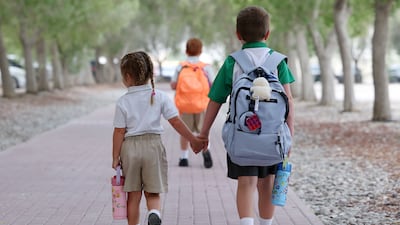

Schools in the UAE have started the academic year with tighter rules on what pupils can wear, how they can groom themselves and what they should bring for lunch.
Parents and pupils have been informed about restrictions on hairstyles, including the qaza style for boys, where parts of the head are shaved down to the skin while other sections are left longer.
Schools said the approach is not simply about appearance and principals have described uniform and grooming standards as part of broader expectations concerning behaviour, responsibility and respect.

At Gems Royal Dubai School, principal and chief executive Jan Steel said expectations around uniform and personal presentation are set before each academic year and reinforced through daily checks.
Boys are expected to keep their hair "clean, neat, natural in colour and suitable for school”, she said. Extreme, patterned or sharply contrasting styles, including qaza-style cuts, do not fit the school's standards.

"Families are therefore asked to choose an evenly blended, conventional style that supports a smart and respectful appearance," Ms Steel added.
The American Academy for Girls has adopted a lighter approach to the start-of-year reminders.
"Our house captains created fun fashion-show videos showing the 'dos and don’ts' of the dress code," school superintendent Lisa Johnson said. "We also shared photographs of acceptable uniform choices in our back-to-school newsletters."
The school's expectations cover uniforms, hairstyles, shoes and jewellery, as well as make-up and general appearance.
"Make-up can sometimes require extra clarification," Ms Johnson said. As such, the school has handled questions about cosmetics from older pupils through examples, respectful conversations and reminders.
The school has applied a merit system. "Students not in uniform receive demerits unless there is an extenuating circumstance. We also keep a uniform closet when there is an issue," Ms Johnson added.
Michelle Thomas, principal and chief executive at Gems Al Barsha National School, said: "As a British curriculum school rooted in Emirati and Islamic values, we believe that how students present themselves contributes to a positive school culture, while our approach to implementing expectations should always be respectful, proportionate and supportive."
The rules are communicated to pupils and their families, and reinforced at school assemblies, through tutor time and daily routines, said Ms Thomas. New pupils are given time to settle in and understand what is expected.
"Students and parents need to know what is expected and see those expectations applied fairly across the school,” Ms Thomas added.
However, she said enforcement does not mean punishment. When a pupil comes to school with a hairstyle that is not permitted, the school speaks to the student and family and offers an opportunity to change. "We approach such matters through education and partnership rather than embarrassment or confrontation," she said.

Schools also view uniform as more than merely a dress requirement.
Ms Thomas said a common uniform contributes to a sense of identity, equality and belonging, while helping pupils understand responsibility and respect for their school community.
"All expectations are applied consistently, with particular attention to items that most clearly affect safety, safeguarding, cultural appropriateness and a smart, uniform appearance," Ms Steel said.
Ms Johnson said a shared uniform could reduce pressure around clothing and help pupils focus on learning, while themed days and cultural celebrations give them opportunities to express their personal style and heritage.
In a letter seen by The National, schools also reminded parents to pack nutritious lunches and avoid caffeinated drinks, ultra-processed food or those with high levels of salt.
Dubai school canteen food adheres to strict nutritional guidelines and regulations set by the Dubai Municipality and the Knowledge and Human Development Authority to promote good health.
The Abu Dhabi Education Authority enforces a strict ban on processed junk food, sugary drinks, energy drinks, confectionery, deep-fried items, nuts and processed meat, such as sausages, in schools.

