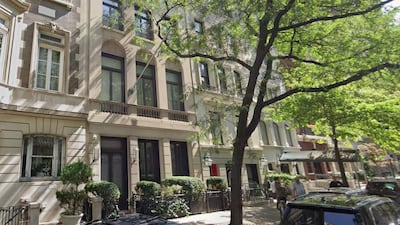

The government of Niger has settled a decades-long dispute with a Middle East airport provider, preventing a $35 million New York mansion it owns from being seized.
The African nation had been ordered to pay $7.6 million to Menzies Aviation, which has a regional office in Dubai and operates in Iraq, Jordan and Egypt.
Menzies' dispute with Niger dates back to 2004, when it was awarded a 10-year contract to run ground-handling services at the country’s airports, US court documents show.

But Niger cancelled the contract midway through and created its own ground-handling unit at the country's main airport. It requisitioned Menzies Aviation personnel and equipment without compensation.
Menzies sued and eventually won an arbitration case at the International Centre for the Settlement of Investment Disputes (ICSID), which is part of the World Bank.
Niger initially challenged ICSID's jurisdiction but later ceased all involvement in the arbitration proceedings and was declared to be in default.

Menzies went to court in the US to confirm the award but Niger failed to appear. A judge granted a default against Niger and awarded Menzies $7.6 million last year.
With payment not forthcoming, in July the company persuaded a judge at a New York court to allow it to seize a property owned by Niger in the affluent Upper East Side of New York.
The multistorey mansion, bought by Niger in 1977, is valued at about $35 million, Judge Jesse Furman said in his decision. The property was originally used as the official residence of Niger's ambassador to the UN until the late 1990s.
However, a financial and diplomatic crisis left Niger's government unable to send funds to its mission at the UN. The country then started renting out the property so it could afford to keep a mission running.
Under the terms of the lease, the tenant sends rent directly to the mission, which deposits it in a New York bank account and uses the money to pay for the salaries of local staff.
Judge Furman said the Foreign Sovereign Immunities Act allows the property of overseas governments in the US to be seized if it is being used for commercial activity.
He dismissed Niger’s claim that the property is immune from seizure because it funds its diplomatic presence in New York. The judge granted Menzies' motion for a writ of execution on the mansion, allowing for the seizure of the property to secure debt repayment.
At that point, Niger wrote to the court asking for proceedings to be halted “as it was in discussions aimed at a full and final settlement of the matters at issue in the case”.
A notice issued by a court in the District of Columbia now reveals that “the parties have entered into a confidential settlement agreement that provides for the full resolution” of the default judgment.
The sum Niger has paid has not been revealed but it has “performed its financial obligations” under the terms of the deal, with all “interest and costs … now deemed paid in full”.

