Ahmed Al-Khateeb, Saudi Arabia's Minister of Tourism and SFD chairman, with the Central Bank of Turkey Governor Sahap Kavcıoglu. Photo: Saudi Fund for Development

Saudi Arabia deposits $5bn in Turkey's central bank


Massoud A Derhally
  • English
  • Arabic

Saudi Arabia has deposited $5 billion at the Central Bank of Turkey through the Saudi Fund for Development.

Ahmed Al-Khateeb, the kingdom's Minister of Tourism and chairman of the Saudi Fund for Development, signed an agreement with the governor of the Central Bank of Turkey, Sahap Kavcioglu, the fund said on Monday.

The deposit was made on instructions of King Salman and Crown Prince Mohammed bin Salman.

The move is "a testament to the close co-operation and historical ties" between the two countries and of Saudi Arabia's "commitment to supporting Turkey's efforts to strengthen its economy and to promote social growth and sustainable development", the fund said.

The funds will help bolster the Turkish economy and reflect Saudi Arabia's "strong support for the Turkish people and its confidence in the future of the Turkish economy".

Turkey's central bank's gross reserve assets fell 2.6 per cent to $125.3 billion in January 2023 from the previous month, according to the regulator's website.

The central bank's foreign currency reserves decreased by 10.9 per cent to $67.2 billion in January 2023 and gold reserves increased 10.3 per cent to $50.6 billion.

Saudi Arabia's deposit comes after 7.8-magnitude earthquake on February 6, followed by more than 7,500 aftershocks and two additional quakes, inflicting the largest disaster on the country in more than 80 years.

About 50,000 people were killed and more than 105,000 buildings damaged.

Turkey's reconstruction and recovery costs may exceed $68 billion as a result of the disaster, the World Bank estimates.

The country sustained an estimated $34.2 billion in direct physical damage from the February 6 disaster, equivalent to about 4 per cent of its 2021 gross domestic product, the Washington-based lender said in its 50-page rapid damage assessment report last month.

The estimate does not represent the approximate cost of indirect or secondary effects on Turkey’s economy and is not an estimate of the impact on the growth of its economy, it said.

GDP losses associated with economic disruption will also add to the cost and further aftershocks are expected to increase the cost of damage over time, the bank said.

Ahmed Al-Khateeb, Saudi Arabia's Minister of Tourism and SFD chairman, with the Central Bank of Turkey Governor Şahap Kavcıoglu. Photo: Saudi Fund for Development

Economic damages are estimated in excess of $20 billion by Verisk while JP Morgan put the cost at about $25 billion and Karen Clark and Company's estimate is about $20 billion.

Moody’s RMS, a catastrophe risk modelling and solutions company, estimates economic losses will exceed $25 billion, with the road to recovery expected to take several years.

The Turkish Enterprise and Business Confederation has published an estimate of $84 billion, based on a comparison with the country's 1999 earthquake in Izmit.

In 2021, the UAE formed a $10 billion fund to support investments in Turkey following talks between President Sheikh Mohamed and Turkish President Recep Tayyip Erdogan.

That fund is focused on increasing support for the Turkish economy and will focus on sectors such as energy, health and food.

Last week, the UAE and Turkey signed a comprehensive economic partnership agreement (CEPA), to boost trade between the two nations.

The agreement, which is expected to come into effect from the middle of this year, will create 25,000 highly skilled jobs in the UAE and 100,000 jobs in the Turkish market in the next 10 years, Dr Thani Al Zeyoudi, Minister of State for Foreign Trade, told The National.

As part of Operation Gallant Knight 2, the UAE's humanitarian mission to help the quake-hit countries, it sent 194 relief flights and delivered 5,514 tonnes of aid.

An army of volunteers in the UAE have also lent a vital hand to the continuing relief effort.

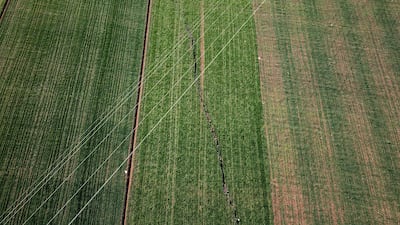
  • Cracks on a farm in Kahramanmaras, the epicentre of the first 7.8-magnitude earthquake, in south-eastern Turkey. AFP
    Cracks on a farm in Kahramanmaras, the epicentre of the first 7.8-magnitude earthquake, in south-eastern Turkey. AFP
  • The ground has cracked open in various areas as a result of the earthquake in Turkey and neighbouring Syria. AFP
    The ground has cracked open in various areas as a result of the earthquake in Turkey and neighbouring Syria. AFP
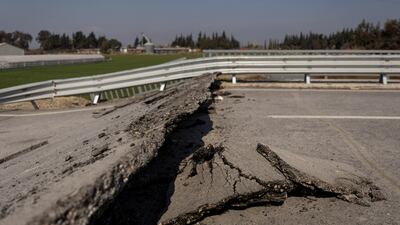
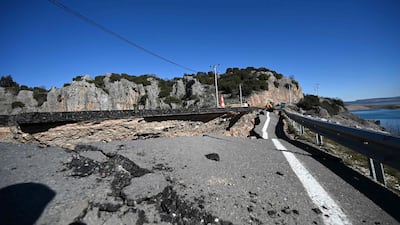
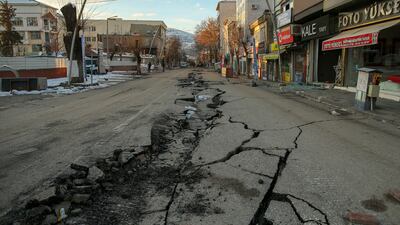
  • A motorway damaged by the quake, in Hatay, Turkey. Reuters
    A motorway damaged by the quake, in Hatay, Turkey. Reuters
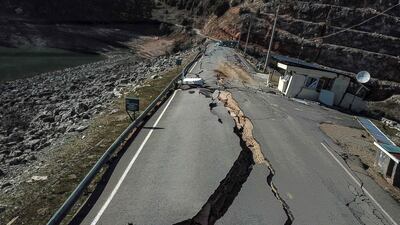
  • A destroyed road near Koseli village, in Kahramanmaras. AP
    A destroyed road near Koseli village, in Kahramanmaras. AP
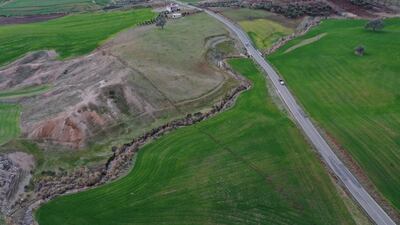
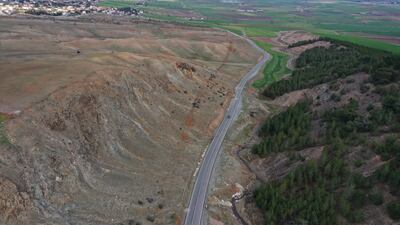
  • Grasslands and a motorway split in two, near Tevekkeli village, in Kahramanmaras. Reuters
    Grasslands and a motorway split in two, near Tevekkeli village, in Kahramanmaras. Reuters
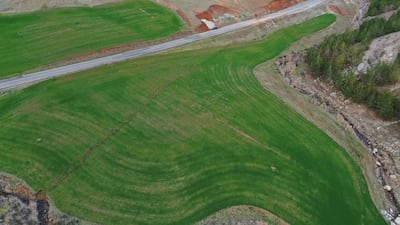
  • Cracks in the ground, near Tevekkeli village, in Kahramanmaras. Reuters
    Cracks in the ground, near Tevekkeli village, in Kahramanmaras. Reuters
  • A road near the quake’s epicentre, in Pazarcik, Kahramanmaras. AFP
    A road near the quake’s epicentre, in Pazarcik, Kahramanmaras. AFP
  • Land on either side of the ruptures moved in opposite directions up to seven metres in some locations, according to data from the California Institute of Technology. AFP
    Land on either side of the ruptures moved in opposite directions up to seven metres in some locations, according to data from the California Institute of Technology. AFP
  • Villages such as Tevekkeli, above, and small towns directly above the fault line suffered some of the most severe shaking. Reuters
    Villages such as Tevekkeli, above, and small towns directly above the fault line suffered some of the most severe shaking. Reuters
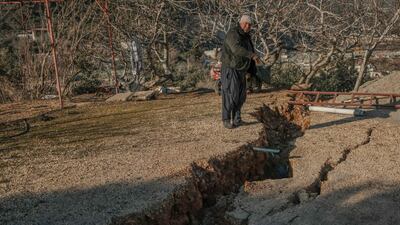
  • A resident shows the giant cracks next to his home in Nurdagi. AFP
    A resident shows the giant cracks next to his home in Nurdagi. AFP
  • A damaged road in Golbasi, Adiyaman province. AP
    A damaged road in Golbasi, Adiyaman province. AP
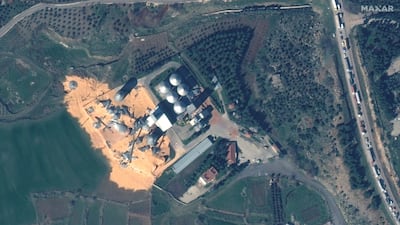
  • Grain silos damaged by the earthquake, in Nurdagi. Reuters
    Grain silos damaged by the earthquake, in Nurdagi. Reuters
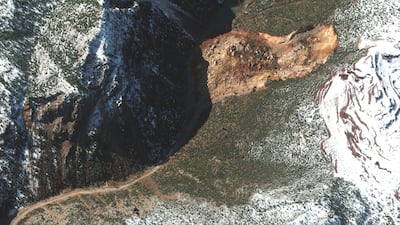
  • A blocked road after a landslide caused by the earthquake, in the Islahiye region of Turkey's Gaziantep. AP
    A blocked road after a landslide caused by the earthquake, in the Islahiye region of Turkey's Gaziantep. AP

Mercer, the investment consulting arm of US services company Marsh & McLennan, expects its wealth division to at least double its assets under management (AUM) in the Middle East as wealth in the region continues to grow despite economic headwinds, a company official said.

Mercer Wealth, which globally has $160 billion in AUM, plans to boost its AUM in the region to $2-$3bn in the next 2-3 years from the present $1bn, said Yasir AbuShaban, a Dubai-based principal with Mercer Wealth.

Within the next two to three years, we are looking at reaching $2 to $3 billion as a conservative estimate and we do see an opportunity to do so,” said Mr AbuShaban.

Mercer does not directly make investments, but allocates clients’ money they have discretion to, to professional asset managers. They also provide advice to clients.

“We have buying power. We can negotiate on their (client’s) behalf with asset managers to provide them lower fees than they otherwise would have to get on their own,” he added.

Mercer Wealth’s clients include sovereign wealth funds, family offices, and insurance companies among others.

From its office in Dubai, Mercer also looks after Africa, India and Turkey, where they also see opportunity for growth.

Wealth creation in Middle East and Africa (MEA) grew 8.5 per cent to $8.1 trillion last year from $7.5tn in 2015, higher than last year’s global average of 6 per cent and the second-highest growth in a region after Asia-Pacific which grew 9.9 per cent, according to consultancy Boston Consulting Group (BCG). In the region, where wealth grew just 1.9 per cent in 2015 compared with 2014, a pickup in oil prices has helped in wealth generation.

BCG is forecasting MEA wealth will rise to $12tn by 2021, growing at an annual average of 8 per cent.

Drivers of wealth generation in the region will be split evenly between new wealth creation and growth of performance of existing assets, according to BCG.

Another general trend in the region is clients’ looking for a comprehensive approach to investing, according to Mr AbuShaban.

“Institutional investors or some of the families are seeing a slowdown in the available capital they have to invest and in that sense they are looking at optimizing the way they manage their portfolios and making sure they are not investing haphazardly and different parts of their investment are working together,” said Mr AbuShaban.

Some clients also have a higher appetite for risk, given the low interest-rate environment that does not provide enough yield for some institutional investors. These clients are keen to invest in illiquid assets, such as private equity and infrastructure.

“What we have seen is a desire for higher returns in what has been a low-return environment specifically in various fixed income or bonds,” he said.

“In this environment, we have seen a de facto increase in the risk that clients are taking in things like illiquid investments, private equity investments, infrastructure and private debt, those kind of investments were higher illiquidity results in incrementally higher returns.”

The Abu Dhabi Investment Authority, one of the largest sovereign wealth funds, said in its 2016 report that has gradually increased its exposure in direct private equity and private credit transactions, mainly in Asian markets and especially in China and India. The authority’s private equity department focused on structured equities owing to “their defensive characteristics.”

COMPANY PROFILE
Company name: BorrowMe (BorrowMe.com)

Date started: August 2021

Founder: Nour Sabri

Based: Dubai, UAE

Sector: E-commerce / Marketplace

Size: Two employees

Funding stage: Seed investment

Initial investment: $200,000

Investors: Amr Manaa (director, PwC Middle East) 

Updated: March 07, 2023, 4:10 AM