



Saudi Arabia's economic diversification efforts under its Vision 2030 plan, which seeks to reduce the kingdom's reliance on oil revenue and nurture local industries, feature a number of big projects that are well under way around the country.
They are set to open up new areas of economic activity and create thousands of jobs, with a stronger focus on the future.
Here's what's in store for the kingdom:
Neom
A central project in Saudi's Vision 2030 and the most ambitious is the $500 billion Neom smart city in the north-western part of the kingdom.
It will be powered entirely by clean energy as the kingdom moves away from an oil-based economy.
First unveiled by Crown Prince Mohammed bin Salman in 2017, it will challenge the traditional concept of cities and lifestyle with its offerings.
So far, four major projects within Neom have been announced — The Line, Trojena, Oxagon and Sindalah.
The Line
It doesn't get much more ambitious than this.
Residents will live in a 170km-long, 500m-tall city designed to house nine million people. The structure is planned to have a mirrored facade.
It will be a new way of living in interconnected societies run by artificial intelligence.
Work is under way, with drone footage released in October showing heavy equipment clearing the site ready for construction.
The Line project is the first time in 150 years that a major urban development has been designed around people, not roads.
All essential daily services — such as schools, medical clinics, leisure centres and green spaces — will be within a five-minute walk.
-
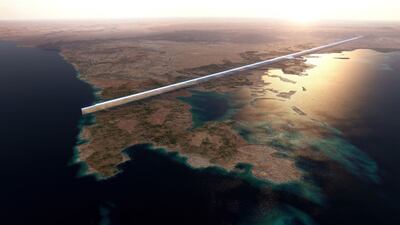
The Line is one of the 10 districts of Saudi Arabia's megaproject Neom, envisioned as the world's largest city at a site in the north-west of the kingdom. Photo: Neom -
Plans for The Line show a vertical city encased in mirrored walls, which extends from the Red Sea into the desert. -
Saudi Arabia's Crown Prince Mohammed bin Salman said The Line will "embody how urban communities will be in the future". Photo: Spa -
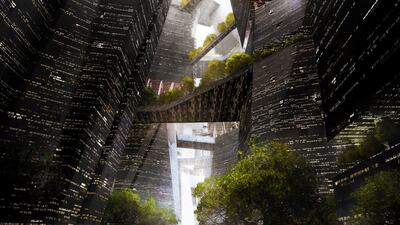
The plan is for the city to be 170 kilometres long and 500 metres tall. Photo: Neom -
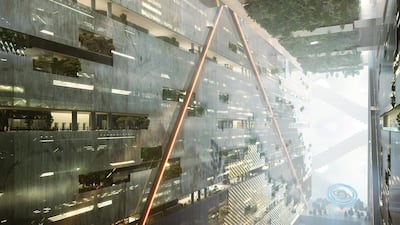
The Line envisions urban living without any cars or roads. Photo: Spa -
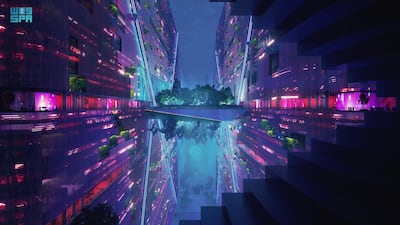
“The Line will be the first city in the world to be powered by renewable energy including wind, solar and hydrogen,” Giles Pendleton, executive director of development at The Line in Neom, told 'The National' in August. -

A rendering shows man-made waterfalls inside The Line. Photo: Spa -
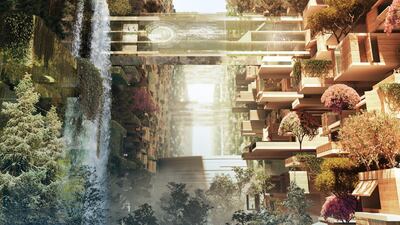
The aim is to eventually accommodate nine million people. Photo: Spa -
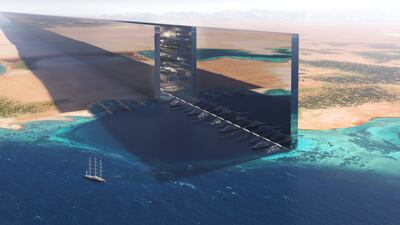
All amenities would be available within a five-minute walk, officials say. Photo: Spa -
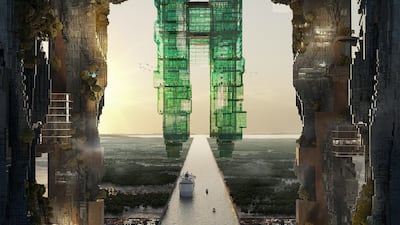
A rendering shows boats entering The Line. Photo: Spa -
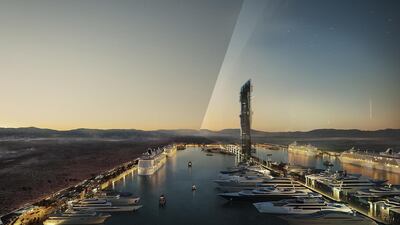
A port at The Line. Photo: Spa -
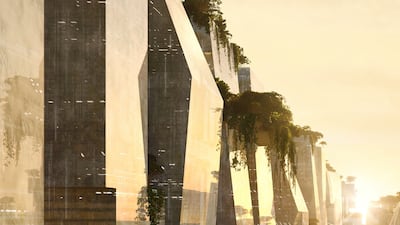
The lush city will have green spaces and rooftop gardens. Photo: Spa -
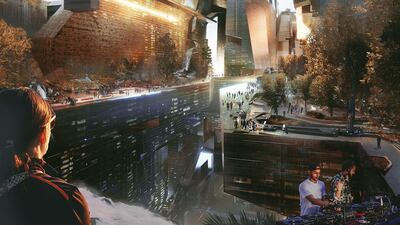
There will be high-speed rail, with an end-to-end transit of 20 minutes. Photo: Spa -
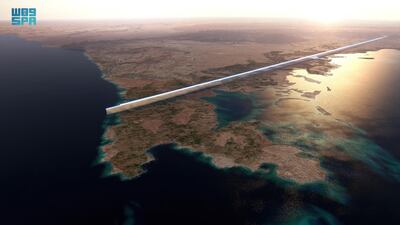
The Line will be built in the north-western region of Saudi Arabia. Photo: Spa -
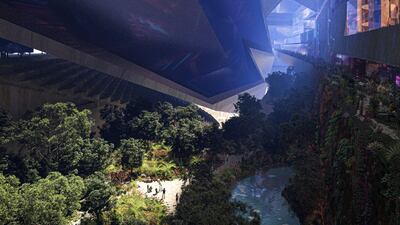
The city aims to run on 100 per cent renewable energy. Photo: Spa -
The plan shows that 95 per cent of the land will be preserved for nature. Photo: Spa


Sindalah
This is set to be the first destination in Neom that will be open to the public.
It is a resort island and yachting paradise spread across about 840,000 square metres in the Red Sea, with views over the Neom mainland, luxury hotels, a large marina, beach club, yacht club, spa and wellness centre.
Sindalah is set to open early in 2024. The island is expected to receive 2,400 visitors a day by 2028. About 3,500 jobs are expected to be created in the process.
Trojena
Skiing in a desert region? Yes, that's right.
Tabuk province is mountainous, with snowfall in the winter. And Neom is taking advantage of the climate to offer outdoor sports and what will be the first major outdoor skiing destination in the GCC.
Trojena will host the 2029 Asian Winter Games, making it the first nation in western Asia to do so, with more than 32 countries due to take part.
The project's planners have divided Trojena into distinct districts and expect to attract different types of tourists, according to the time of year.
Bechtel, one of the world's largest industrial contractors, has been appointed as the project management consultant for Trojena.
Oxagon
The final segment of Neom (for now) is a futuristic industrial city, which is planned to be the largest floating industrial complex in the world.
“It will contribute to Saudi Arabia’s regional trade and commerce, and support creating a new focal point for global trade flows,” said Prince Mohammed.
It is expected to have a population of 90,000 and create 70,000 jobs by 2030.
As with the rest of Neom, Oxagon will be a net-zero city fully powered by clean energy.
AlUla
The heritage site with its preserved tombs and sandstone outcrops is already a popular tourist destination, but there is more to come.
Nine new hotels are set to open, including a boutique resort at Unesco-listed Hegra.
AlUla is expected to contribute about 120 billion riyals ($32 billion) to Saudi Arabia’s economy.
The Royal Commission for AlUla forecasts that the population of the area will triple to 130,000 by 2035, generating about 38,000 new jobs.

Red Sea Project
A key part of Saudi's tourism movement, the project is set in a 28,000-square-kilometre area that includes an archipelago of 92 islands, 50 dormant volcanoes, mountain ranges and sand dunes.
The first phase is due to open this year, with 16 hotels offering 3,000 rooms, an international airport, a marina, an 18-hole championship golf course, luxury second homes and retail and entertainment centres.
It has been labelled “one of the world’s last true hidden treasures” by developer Red Sea Global, and it is expected that 75 per cent of the destination’s islands will be preserved for conservation.
Amaala
Another tourism-focused project, this one will feature yachting and wellness activities, and have a strong sustainability ethos.
Located on the north-western coast, it will be within three hours flying time for 250 million people.
The first phase of development, Triple Bay, is set for completion in 2024 and will consist of six hotels and more than 1,000 rooms.
When fully complete in 2027, it will offer about 3,000 rooms in about 25 hotels, as well as 200 high-end retail establishments, fine dining, and wellness and recreational amenities, set across three communities.
Qiddiya
The Public Investment Fund project is set to become the capital of entertainment, sports and arts, and is expected to become a global tourism destination.
Its features will include a Six Flags theme park, a Jack Nicklaus championship golf course, a water park, a speed park and a sports stadium.
The developed area, located outside Riyadh, will encompass 223 square kilometres and is set to have a metro line linking it to the capital.
Ad Diriyah
The 300-year-old city, considered to be the birthplace and capital of the first Saudi state, is being transformed into an educational, cultural, recreational and hospitality centre.
One of the main objectives of the project is to preserve and protect the Unesco World Heritage Site of At-Turaif, the mud-brick city.
There are plans for a new 20,000-seat performance arena, a new opera house, a contemporary Saudi art museum and a new convention centre.
Diriyah Gate I will feature 18 hotels within the mixed-use traditional urban community that is to be created in an authentic Najdi architectural style, typical of Saudi villages, using the same mud bricks and plaster used centuries ago while providing modern amenities.
Diriyah Gate II is envisioned as a Parisian scale, pedestrian-focused, mixed-use development with all the cultural entertainment assets, while Diriyah Gate 3 will have a huge residential aspect.
Ad Diriyah was once an ancient trade and pilgrimage route and a meeting point for those travelling to or from Asia, Africa or Europe.
The $50.6 billion heritage mega project has set a target of 27 million domestic and international visitors by 2030.
King Salman Park

King Salman Air Base, formerly Riyadh Airport, is being transformed into one of the biggest city parks in the world.
Last year, excavation work and construction activities for the Visitors Pavilion and the Royal Arts Complex were completed. Bridges and tunnels will be completed this year, plus the first-phase infrastructure.
The park is envisioned as Riyadh's “green lung” and will stretch to 16 square kilometres, with sports amenities, a golf course and an equestrian centre.

