

Live updates: follow the latest news on Russia-Ukraine
Fitch and Moody's Investors Service downgraded Russia's sovereign credit rating to "junk" status due to a wave of US and EU sanctions that have been imposed on the country in response to its military offensive in Ukraine.
Moody's cut Russia's long-term issuer and senior unsecured debt ratings six notches to non-investment grade B3 from Baa3 and they remain on review for further downgrade. A B3 rating is given to entities that are undergoing financial instability or may not have adequate cash reserves relative to their business needs and financial obligations, which makes them speculative and considered high credit risk.
Fitch Ratings downgraded Russia's long-term foreign currency default rating to B from BBB. It also placed the country's ratings on a "rating watch negative". On Friday, S&P Global Ratings also lowered Russia’s credit rating to junk, downgrading it to BB+, below investment grade, from BBB-.
While the EU has barred Russia from accessing its capital markets, the cut in ratings will also make it difficult for Russia and Russian companies to raise funding globally.
The downgrade of Russia's ratings is driven by "heightened risk of disruption to sovereign debt repayment given the severe and coordinated sanctions and significant concerns around Russia's willingness to service its obligations," Moody's said.
The rating agency also said the cut is also a result of the "likelihood of a sustained disruption to the economy and financial sector from the sanctions that limit access to Russia's international reserves intended to buffer Russia from adverse shocks. The scope and severity of the sanctions announced to date have gone beyond Moody's initial expectations and will have material credit implications".
______________________
From Apple to BP: major western companies exit Russia amid Ukraine crisis
-

Sony's game division and Nintendo said they have suspended shipments of software and hardware to Russia. Nintendo said it is suspending shipping all products to Russia "for the foreseeable future... due to considerable volatility surrounding the logistics of shipping and distributing physical goods." AFP -
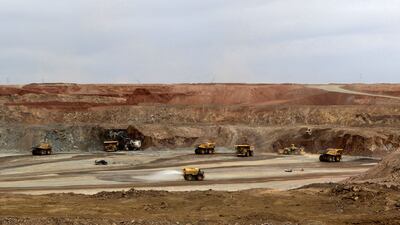
Rio Tinto said it "is in the process of terminating all commercial relationships it has with any Russian business". It has an alumina joint venture with Moscow-based United Rusal International. Reuters -

McDonald's is temporarily closing all 847 of its restaurants in Russia. AFP -

Starbucks is suspending all business activity in Russia, including shipments of its products and cafes run by licencees. AFP -
Coca-Cola is suspending sales in Russia. Coca-Cola said its business in Russia and Ukraine contributed about 1 to 2 per cent of the company's net operating revenue in 2021. Reuters -
PepsiCo is suspending sales of its sodas in Russia. It said it would continue to sell daily essentials, such as milk and other dairy offerings, baby formula and baby food, in Russia. Getty Images / AFP -

Yum Brands, behind KFC and Pizza Hut, also said it was suspending investment in Russia. Reuters -

Toyota is halting production at its plant in St Petersburg, and will halt vehicle shipments to Russia. Reuters -
Ikea said it would suspend its activities in Russia and Belarus, affecting nearly 15,000 employees, 17 stores and three production sites. AFP -

Honda will stop exports of cars and motorcycles to Russia. EPA -
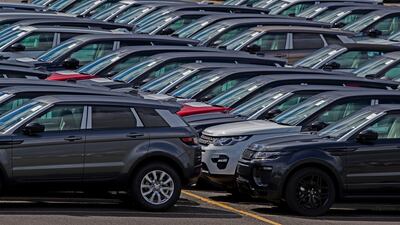
Jaguar Land Rover has paused the delivery of its cars to Russia due to "trading challenges". -
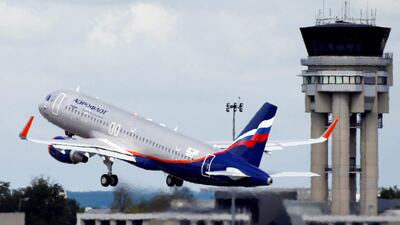
Airbus is suspending sale of parts and support services to airline customers in Russia. Reuters -
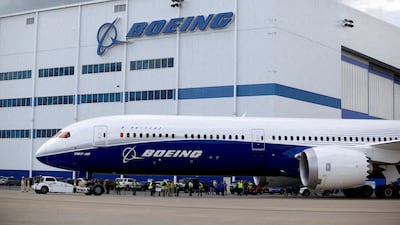
Boeing has suspended major operations in Moscow and temporarily closed its office in Kyiv. It is also suspending parts, maintenance and technical support services for Russian airlines. Reuters -

Nike has made merchandise purchases on its website and app unavailable in Russia as it cannot guarantee delivery of goods to customers in the country, an update on the sportswear maker's website showed. Bloomberg -
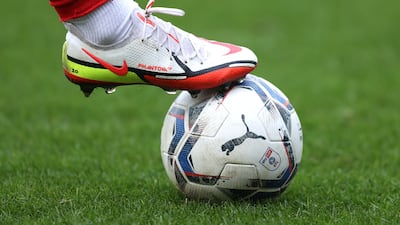
German sportswear company Puma has stopped deliveries to Russia, but its 100 stores are open. Getty Images -
Shell is to exit all its Russian operations, including a major liquefied natural gas plant. The company also plans to end its involvement in the Nord Stream II gas pipeline from Russia to Germany. PA -
BP is exiting its 19.75 per cent shareholding in Russian oil giant Rosneft after pressure from the UK government. BP has operated in Russia for more than 30 years. Reuters -
ExxonMobil will cease operations in Russia and refrain from making new investments in the country. It holds a 30 per cent stake, alongside Rosneft, Japan's Sodeco and India's ONGC Videsh, in the Sakhalin Island oil and gas fields in Russia’s far east. Its business in the country is valued at more than $4 billion. AFP -
Eni said it would withdraw from the Blue Stream gas pipeline linking Russia to Turkey, in which it has a 50 per cent stake. The company controls the gas pipeline -- which links the two countries via the Black Sea -- equally with Russian energy giant Gazprom. Reuters -
British Gas owner Centrica has said it will exit gas supply agreements with its Russian counterparts, including Gazprom. Centrica said it currently has a medium-term contract with Gazprom Marketing and Trading, the Russian energy company's UK entity, through which gas can be sourced from the open market. Reuters -
Norwegian energy group Equinor said it will start the process of divesting from its joint ventures in Russia. Reuters -
HSBC said it was starting to wind down relations with a host of Russian banks including the second-largest, VTB, one of those targeted by sanctions, a memo seen by Reuters showed. AFP -

Volkswagen suspended deliveries of cars to dealers in Russia. 'Deliveries are to resume as soon as the effects of the sanctions imposed by the European Union and the United States have been clarified', a VW representative said. AP -
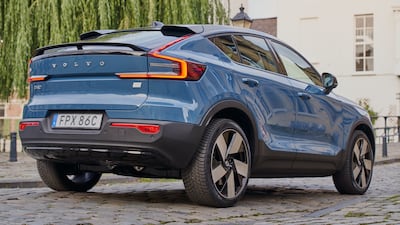
Swedish automaker Volvo Cars said it would suspend car shipments to the Russian market until further notice, becoming the first international car maker to do so. Supplied -

GM said it would suspend all vehicle exports to Russia until further notice. The Detroit company does not have plants in Russia, only sells about 3,000 vehicles annually in the country and has limited supply-chain exposure. AFP -
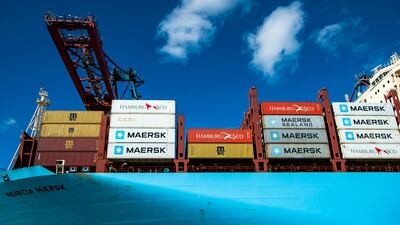
Danish shipping giant Maersk said that it would stop taking new non-essential orders to and from Russia, owing to sanctions imposed over Moscow's invasion of Ukraine. AFP -

Singapore-headquartered container shipping company Ocean Network Express has suspended bookings to and from Russia. Reuters -

AerCap Holdings, the world's biggest plane lessor with about 5 per cent of its fleet leased to Russian airlines, said it will stop trading with Russian customers. Reuters -
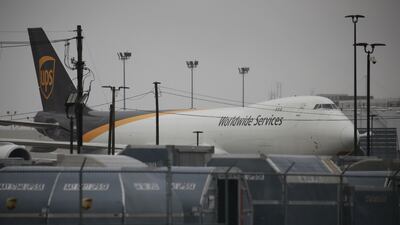
US-based United Parcel Service said it is halting delivery services to Russia and Ukraine. Bloomberg -
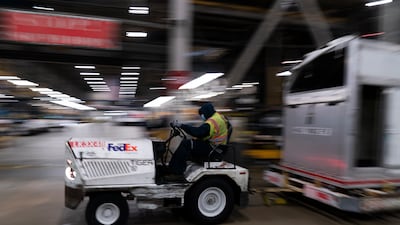
FedEx also said it is temporarily suspending inbound and outbound services to Ukraine and inbound services to Russia until further notice. AP -

Microsoft said it would remove Russian state-owned media outlet RT's mobile apps from its Windows App store and ban ads on Russian state-sponsored media. Reuters -

Google has barred RT and other Russian channels from receiving money for ads on websites, apps and YouTube videos. Reuters -
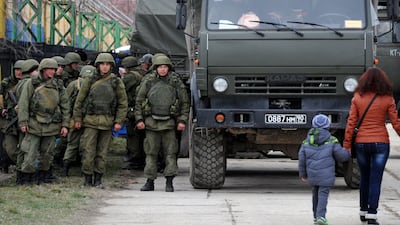
German heavy-goods vehicle group Daimler Truck has said it will cease its co-operation with Russian lorry-maker Kamaz. AFP -
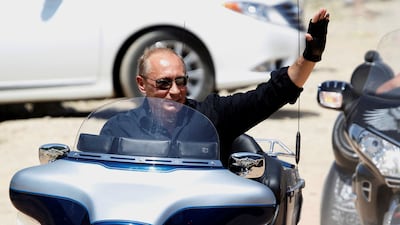
Motorcycle maker Harley-Davidson has suspended shipments of its bikes to Russia. Pictured, Russian President Vladimir Putin. Reuters -

Facebook owner Meta Platforms has restricted access to accounts run by Sputnik and RT in the EU. Reuters -

Apple has paused all product sales and limited the functionality of other services in Russia. Reuters


______________________
Russia’s economy has taken a hit after the US and its allies took punitive actions against Moscow following its decision to undertake a military operation in Ukraine. Russian companies and oligarchs in President Vladimir Putin's inner circle face having their assets frozen, while European countries have closed their airspace to Russia's private and commercial aircraft.
Some Russian banks have also been barred from the Swift global financial network, while the US Treasury prohibited Americans from engaging in transactions with the Bank of Russia, the Russian Direct Investment Fund and the country's Ministry of Finance.
Russia’s central bank imposed capital controls on Monday and more than doubled interest rates to 20 per cent, their highest in nearly two decades, to support the currency. The Bank of Russia also restricted the transfer of coupon payments to foreign holders of rouble bonds and kept the Moscow stock exchange closed for a fourth day.
"Severe and coordinated sanctions imposed on Russia together with its retaliatory response in recent days have materially impaired its ability to execute cross-border transactions, including for sovereign debt payments," Moody's said.
"Russia's prohibition on transfers of foreign currency outside of the country in response to the sanctions, which appears at this stage not to apply to repayments of legacy debt, undermines Russia's track record of willingness to service its debt and leaves debt servicing flows highly vulnerable to further intervention."

On Wednesday, Russian lender Sberbank said it is exiting European markets as a result of big cash outflows and threats to its staff and property. On Wednesday, the European Union said it will also ban seven major Russian banks out of the Swift messaging system that facilitates global financial transactions effective March 12.
On Thursday, the London Stock Exchange suspended trading of 28 securities linked to Russia. Global index providers MSCI and FTSE Russell are also excluding Russian equities from their indexes tracked by investors with trillions of dollars of assets under management, stemming the flow of investments into Russia from a large segment of the investment-fund industry.
The majority of market participants deem Russia’s equity market “uninvestable” and its securities will be removed from emerging markets indexes effective March 9, MSCI said. FTSE Russell will be removing Russia equities from its index at a zero value on March 7.
The Russian rouble tanked as much as 28 per cent, falling to a record low of 118 against the US dollar at the start of trading on Monday, well above its 75 mark. The currency's freefall appeared to come to a halt on Tuesday but it fell again on Wednesday to 107.50 against the greenback. On Thursday it was 97.9 to the dollar at 7.11am UAE time.
The imposition of severe and co-ordinated sanctions led to "a significant confidence shock, which will likely result in a prolonged disruption to the economy and financial sector," Moody's said.
"A sustained depreciation of the rouble will have severe economic consequence in the form of higher inflation, a marked deceleration of economic activity and lower living standards. Significant deposits withdrawals that reduce liquidity in the banking system would add to the risks to financial stability and could require the government to step in to support the banking sector."
The review period for a potential further downgrade will allow Moody's to assess the extent of disruptions to forthcoming sovereign debt repayments, the agency said. It will continue to monitor further indications around Russia's willingness to pay, including the possibility of a further tightening of restrictions on foreign-currency transactions.
Russia has eurobond coupon payments of $117 million due on March 16, which if it fails to make or is delayed in paying, may lead to further changes to its ratings.
-

Damage after the shelling of buildings in central Kharkiv, Ukraine. EPA -
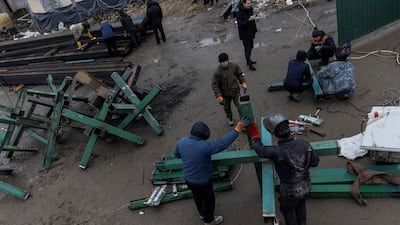
Workers from a local construction company weld anti-tank obstacles to be placed on roads around Kyiv as Russia's invasion of Ukraine continues. Reuters -
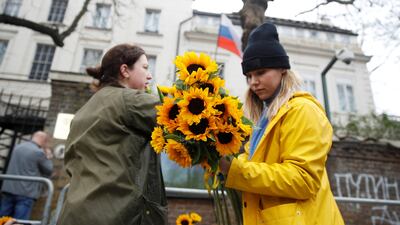
Anti-war protesters attach sunflowers to barriers in front of the Russian embassy. Reuters -
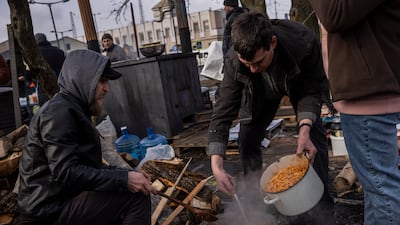
Ukrainian volunteers prepare food for displaced people outside Lviv railway station in western Ukraine. AP -
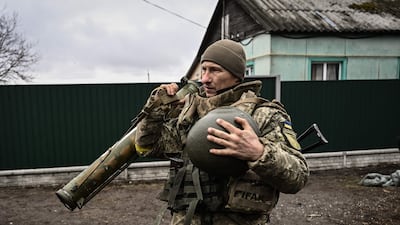
A Ukrainian soldier holds an anti-tank launcher north-east of Kyiv. AFP -
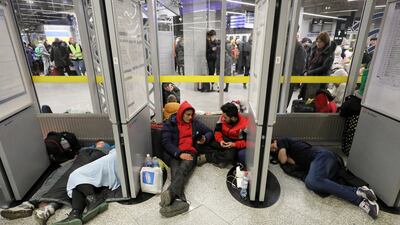
Ukrainian refugees rest at Warsaw East train station in Poland. EPA -
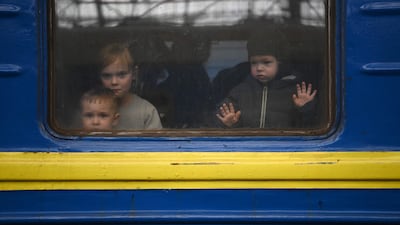
Children look out from a carriage window as a train prepares to depart from a station in Lviv to the town of Uzhhorod near the border with Slovakia. AFP -

A girl who fled Ukraine is reunited with her father in Medyka, south-eastern Poland. AP Photo -
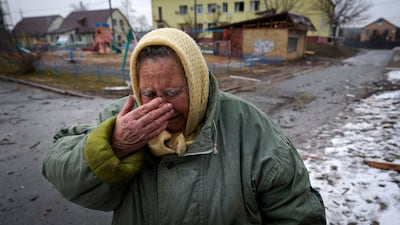
Tears outside a house damaged by a Russian airstrike in Gorenka, on the outskirts of Kyiv. AP Photo -
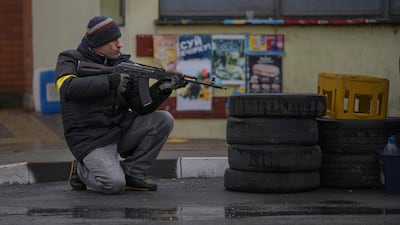
A civil defence member is poised to shoot as a vehicle approaches a checkpoint in Gorenka. AP Photo -

A Ukrainian civil defence member in the garden of a house damaged by a Russian airstrike. AP Photo -

Members of the US Army 3rd Infantry Division board a plane bound for Germany in Savannah, Georgia. EPA -
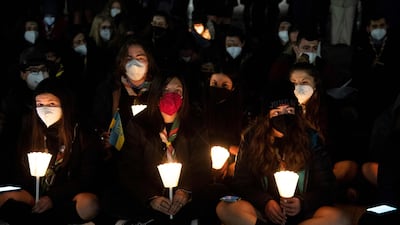
Prayers for peace in Ukraine at the Vatican's Saint Peter's Square. AFP -
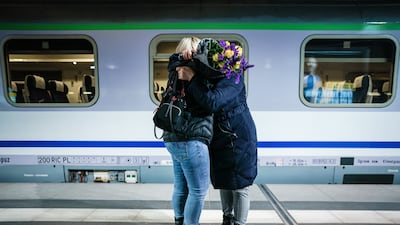
A woman (right) hugs an arriving passenger from a train carrying refugees at Berlin's central station. EPA -

Firefighters battle a blaze in a Kharkiv police building hit by shelling. AFP -
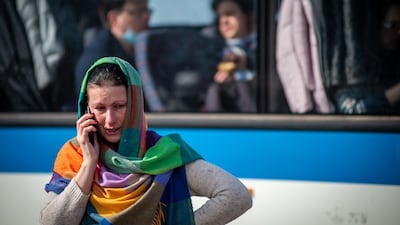
A Ukrainian woman makes a phone call after crossing the Slovakian border. AFP -

A doctor takes shelter in the basement of a Kyiv perinatal centre. Reuters -

Debris which locals say was caused by shelling in separatist-controlled Horlivka, Donetsk. Reuters -
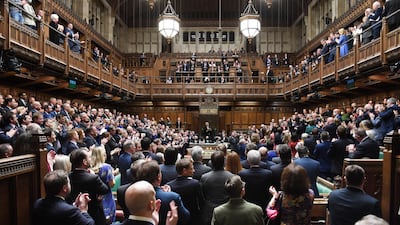
MPs in London give a standing ovation to Ukraine ambassador Vadym Prystaiko, who was in the public gallery. AP -
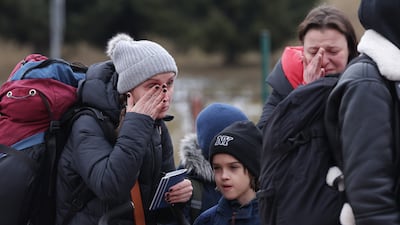
Distraught women and children fleeing Ukraine wait to enter Poland at the Korczowa crossing. Getty -

Newborn Ivan lies next to his mother as they shelter in the basement of a Kyiv perinatal centre. Reuters -

Firefighters hand water to people in a Ukrainian train full of refugees in Przemysl, Poland. Reuters -
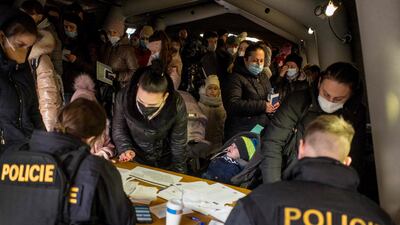
Ukrainian refugees queue to file for residency permits at Prague's police headquarters. AFP -
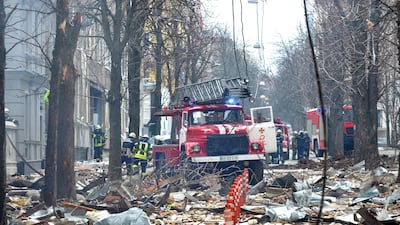
Firefighters work to contain a blaze in buildings housing the Kharkiv regional police department. AFP -
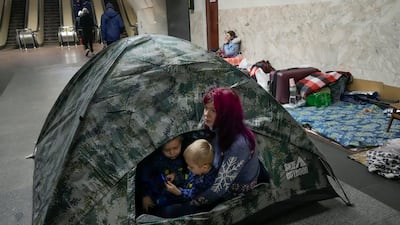
A woman and her children sit in a tent in the Kyiv subway, using it as a bomb shelter. AP -
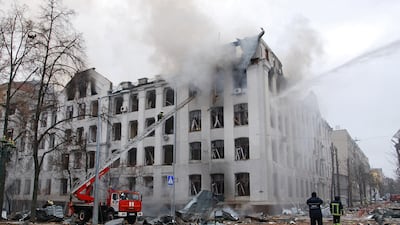
Firefighters work to extinguish a blaze at the Kharkiv National University building, which city officials said was damaged by Russian shelling. Reuters -
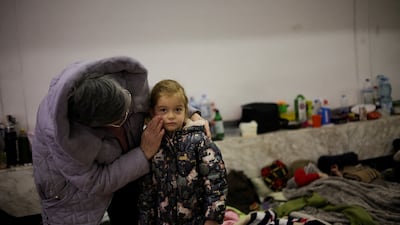
An elderly woman comforts a child as they take shelter inside an underground station in Kyiv. Reuters -
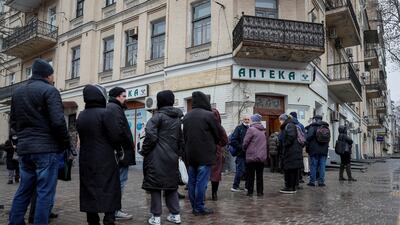
People queue at a pharmacy in central Kyiv. Reuters -
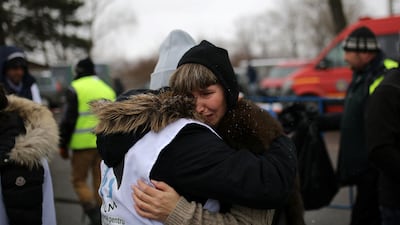
A woman is consoled by a volunteer after fleeing from Russia's invasion of Ukraine, at the border crossing in Siret, Romania. Reuters -

A Ukrainian civilian in the city of Zhytomyr practises throwing petrol bombs. Reuters -
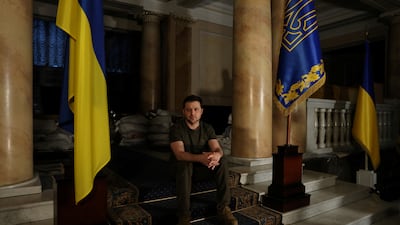
Ukrainian President Volodymyr Zelenskyy poses after an interview with Reuters in Kyiv. Reuters -
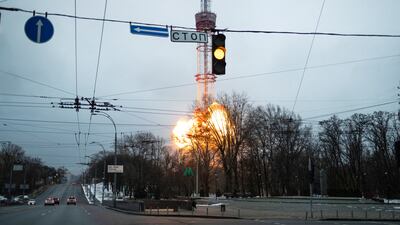
A blast is seen at Kyiv's TV tower. Reuters -
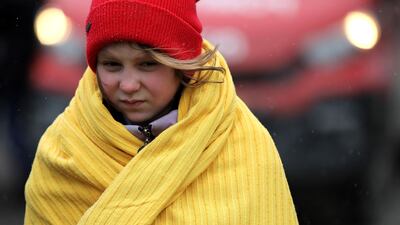
A girl in Siret, Romania, covers herself with a blanket after fleeing from Ukraine. Reuters -
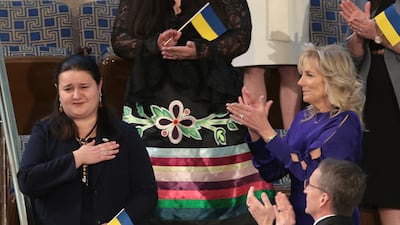
Ukraine's ambassador to the US, Oksana Markarova, acknowledges applause from US first lady Jill Biden as they attend President Joe Biden's first State of the Union address in Washington. AFP -
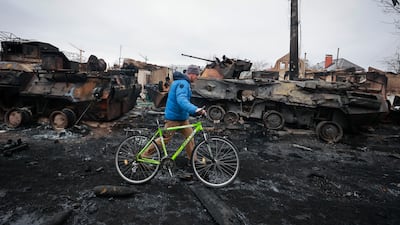
A man walks past the remains of Russian military vehicles in Bucha, close to Kyiv. AFP -
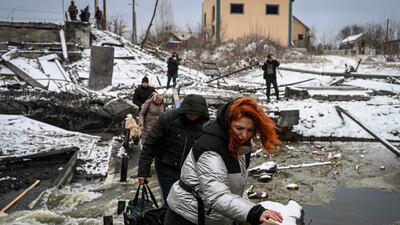
Civilians cross a river on a blown-up bridge on Kyiv's northern front. Defending the capital is a 'key priority', Ukraine's president has said. AFP -
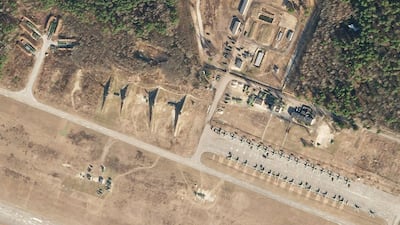
Russian aircraft on the ground at Luninets Airbase, Belarus, about 50 kilometres north of the Ukrainian border. AFP -
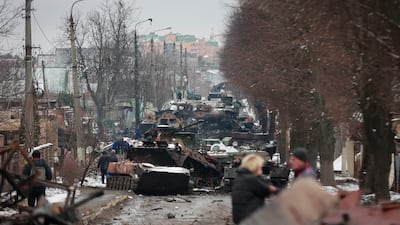
People look at the gutted remains of Russian military vehicles on a road in the town of Bucha. AP -
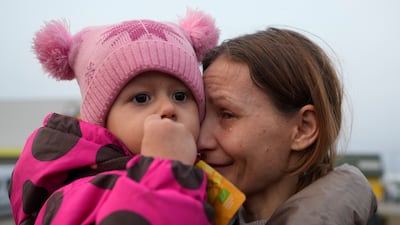
A woman with a child who fled from the war in Ukraine reunite with their family after crossing the border in Medyka, Poland. AP -
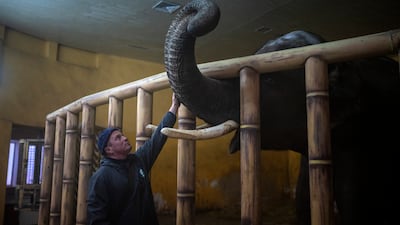
Animal keeper Kirilo Trantin comforts an elephant at Kyiv Zoo. AP -
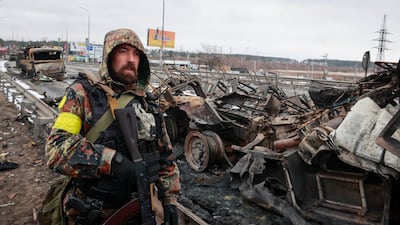
An armed man stands by the remains of a Russian military vehicle in Bucha. AP -
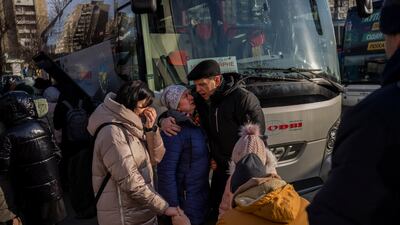
Ukrainian families say goodbye as they prepare to board a bus to Poland at Lviv, western Ukraine. AP -
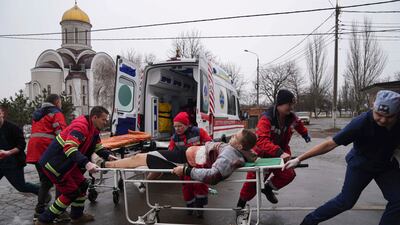
Paramedics move a man who was wounded by shelling in a residential area of Mariupol, south-eastern Ukraine. AP -
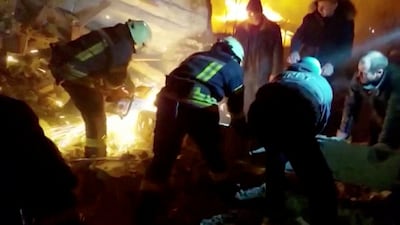
Rescuers work at the site of a Russian strike in Zhytomyr. Reuters -
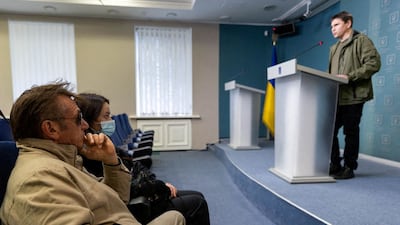
US actor and director Sean Penn attends a press briefing at the Presidential Office in Kyiv. Reuters -
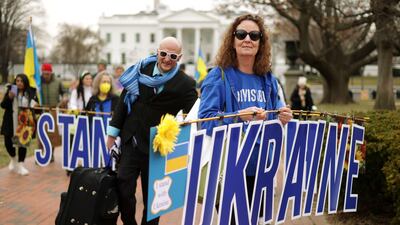
Demonstrators participate in a protest against Russia’s invasion of Ukraine at Lafayette Square in Washington. AFP -

Ukrainian soldiers rest while others eat near the front line with Russian troops in northern Kyiv. AP -
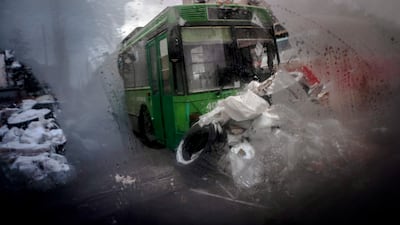
A barricade made of trams, buses and sand bags is seen through the window of car in the northern part of Kyiv. AP -
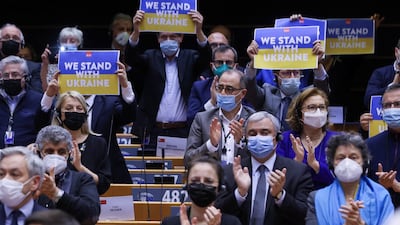
Members of the European Parliament applaud after Ukrainian President Volodymyr Zelenskyy's speech at a special session to debate its response to the Russian invasion of Ukraine. Reuters -
Ambassadors and diplomats walk out as Russia's Foreign Minister Sergey Lavrov (on screen) speaks during a recorded message at the 49th session of the UN Human Rights Council in Geneva. EPA



