


Live updates: Follow the latest on Israel-Gaza
Israel faces a test of public opinion on Thursday as it competes in the semi-finals of the Eurovision Song Contest, where its power ballad vocals could be drowned out by boycotts and protests over the war in Gaza.
While organisers have resisted calls to ban Israel from Eurovision, audiences could choose to send it packing in the vote to qualify for Saturday’s grand final in Sweden.
Best known for sparkly outfits, cheesy Europop lyrics and pull-out-all-the-stops flamboyance, the contest has always had political overtones extending from artists to the voting public.
Ukraine triumphed in 2022 with one of the highest scores in Eurovision history, riding a wave of public sympathy in Europe only weeks after it was invaded by Russia.
As well as shunning Israel, viewers could vent anger at allies such as Germany or reward Palestine-friendly voices such as Ireland, said Felix Berenskoetter, a political scientist who studies identity and power in Europe.
“The Israeli-Palestinian conflict has been there for a long time, but it has never galvanised public opinion like it has this year,” said Dr Berenskoetter, of London’s School of Oriental and African Studies.
“I’m not saying it will be the only issue, but I think the voting must be influenced this year by this. I think Germany will take a massive hit in this regard, for instance.”
Eurovision 2024 semi-finals - in pictures
-
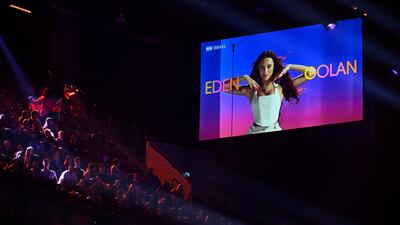
Singer Eden Golan is representing Israel with a song called Hurricane, changed from its original title of October Rain. EPA -
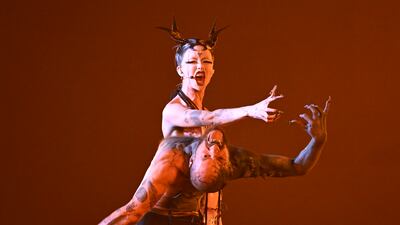
Irish contestant Bambie Thug performs the song 'Doomsday Blue' during the first semi-final of the 68th edition of the Eurovision Song Contest. EPA -
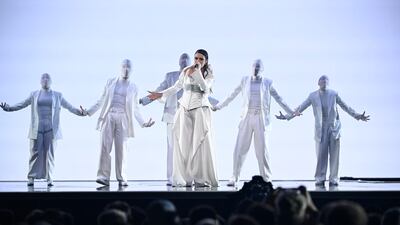
Iolanda, representing Portugal, with the song 'Grito' during the first semi-final of the song contest. EPA -

Baby Lasagna, representing Croatia, with the song 'Rim tim tagi dim' during the first semi-final. EPA -

Left to right, Jerry Hall and Alyona Alyona, representing Ukraine at the song contest. EPA -

Olly Alexander, representing Britain, performs his song 'Dizzy' during the first semi-final. EPA -

Benjamin Ingrosso, who represented Sweden in 2018, entertains in the middle act during the first semi-final of the Eurovision Song Contest, in Malmo. Reuters -
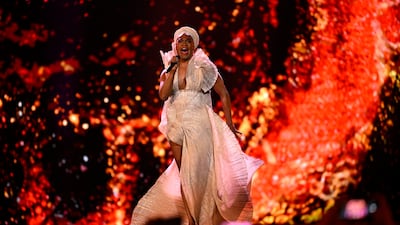
Electric Fields, representing Australia, with the song 'One milkali (One blood)' during the first semi-final of the 68th Eurovision Song Contest. EPA -
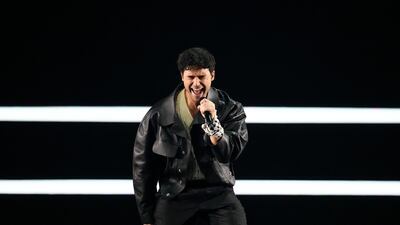
Eric Saade performs the song Popular wearing a keffiyeh wrapped around his wrist during the opening of the first semi-final at the Eurovision Song Contest in Malmo, Sweden. AP -

Iolanda of Portugal celebrates qualifying for the Eurovision grand final. AP Photo -

Fahree featuring Ilkin Dovlatov, representing Azerbaijan, takes to the stage at the Malmo Arena. EPA -

Luxembourgish singer Tali performs her song, 'Fighter', during the first semi-final of the 68th edition of the Eurovision Song Contest. AFP -
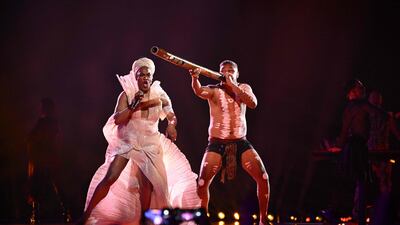
Australian singer Michael Ross and Zaachariaha Fielding, members of the band Electric Fields representing Australia, during the first semi-final at the Malmo Arena. AFP -

Finnish visual artist and DJ Teemu Keisteri, also known as Windows95man, is representing Finland with the song 'No rules!'. AFP -
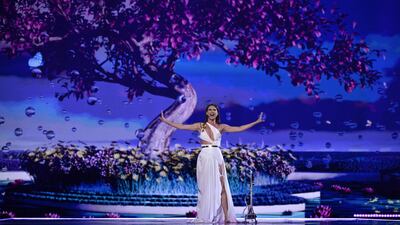
Natalia Barbu, representing Moldova, performs her song 'In the Middle' during the first semi-final. AFP -
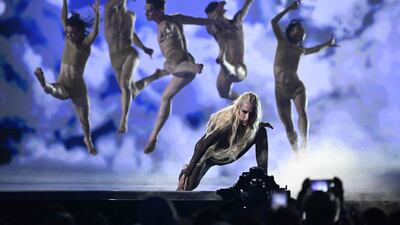
Slovenian singer Raiven performs her song 'Veronika' during the first semi-final of the 68th edition of the Eurovision Song Contest. AFP -
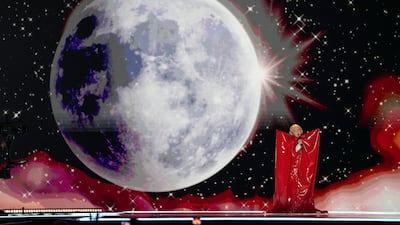
Polish entry Luna performs the song 'The Tower' during the first semi-final. AP Photo -
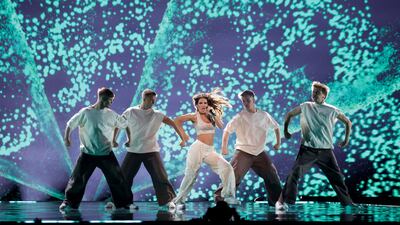
Silia Kapsis, representing Cyprus, during the first semi-final of the Eurovision Song Contest. Reuters


Israel has been a member of the European Broadcasting Union, which runs Eurovision, since 1957 and has won the contest three times, most recently hosting it in Tel Aviv in 2019.
Under Eurovision rules, half the points come from professional juries while the other half are awarded by viewers, with results announced in a dramatic TV finale.
Lyrics change
Israel’s initial Eurovision entry for 2024, October Rain, was widely taken as a reference to Hamas’s October 7 attacks and deemed too political by EBU officials.
After Israeli President Isaac Herzog stepped in to say the country should compete, broadcaster Kan agreed to change the lyrics. The entry by singer Eden Golan is now called Hurricane.
Government social media channels in Israel describe her as a “symbol of strength and resilience” in the face of death threats and fears of unrest at the Malmo venue.

Israel’s desire to take part despite the risk it will be knocked out in the semi-finals reflects its efforts to undermine the global Boycott, Divestment and Sanctions movement, said Dr Berenskoetter.
“A non-participation of Israel would have been a victory for the BDS movement and it was very clear from the Israeli state’s perspective that that was not going to happen,” he said.
“If it does make it to the final, the solidarity vote in the popularity contest may mean that it’s not going to be good for its identity. But I think it’s more important for Israel to be in than what happens, whether it’s last or third-last.”
Russia’s ban from Eurovision after it invaded Ukraine has led to the EBU facing questions about why the same measure is not applied to Israel over its offensive in Gaza.
One factor is that EBU members such as Finland and Estonia threatened to quit the 2022 contest if asked to share a stage with Russia, piling pressure on Eurovision bosses in a way no country has done over Israel.

The EBU says Eurovision is “not a contest between governments” and that Israel’s entrants have not broken any rules, unlike Russian stations that walked out of the union.
While Russia has shown little desire to re-engage with Europe, let alone the song contest, Israel is more eager to proclaim the liberal values championed by Eurovision.
“The driving force behind [Eurovision] has always been about what it means to be European,” said author Chris West, who wrote a book about the history of Eurovision.
“The song that won in 1990 was called Together: 1992. ‘Unite, Unite Europe’, was the chorus. That wasn’t banned for being too political but it was a blatantly political song.”
He said the EBU had been “handed a poisoned chalice” over Israel’s inclusion this year, after the October Rain lyrics change closed the door to quietly screening it out.
“Normally what happens is the country takes umbrage and says ‘I’m not changing my song for you, we’ll sit it out this year,’” he said. “Israel didn’t do that.”

With Israel allowed to compete, pressure has piled on individual artists to take a stand, despite them being banned from making overt political statements or waving national flags other than their own.
The EBU said it “regrets” Swedish artist Eric Saade’s performance with a keffiyeh on his arm during Tuesday’s first semi-final. It also asked Irish contestant Bambie Thug to remove a piece of pro-ceasefire body paint.
Organisers say they support people’s right to protest peacefully in Malmo but are confident they can “create a safe event for all participants and visitors”.
Some TV viewers have said they will boycott Eurovision in protest at Israel’s participation, leading to screenings being cancelled. Pro-Israeli voices are urging audiences to vote for Hurricane.
Thursday's semi-final could give us the first sign of whether this is the year of the pro-Palestinian voter.

