

The Academy of Motion Picture Arts and Sciences, the organisation behind the Oscars, has responded to the incident that took place at the awards ceremony on Sunday night.
During the show, Will Smith smacked Chris Rock after he made a joke about his wife, Jada Pinkett Smith.
Amid rumours that Smith will be stripped of his Oscar, which he won for Best Actor in a Leading Role for his turn in King Richard, the Academy tweeted a brief statement condemning the violence, but not directly commenting on Smith's award.
Oscars 2022 best-dressed men: dapper gents walk the Academy Awards red carpet
"The Academy does not condone violence of any form. Tonight we are delighted to celebrate our 94th Academy Awards winners, who deserve this moment of recognition from their peers and movie lovers around the world," the tweet read.
The New York Post has reported that the actor "may be asked to hand back his Best Actor" Oscar.
The publication quoted a source, who said: "It’s basically assault. Everyone was just so shocked in the room, it was so uncomfortable.
"I think Will would not want to give his Oscar back, but who knows what will happen now."
Best-dressed women at Oscars 2022: fashion highlights from Hollywood's biggest night
The Los Angeles Police Department has since got involved and confirmed that Rock "declined to file a police report" to Variety.
The full statement reads: "LAPD investigative entities are aware of an incident between two individuals during the Academy Awards programme. The incident involved one individual slapping another. The individual involved has declined to file a police report. If the involved party desires a police report at a later date, LAPD will be available to complete an investigative report."
What happened between Chris Rock and Will Smith at the Oscars?
-
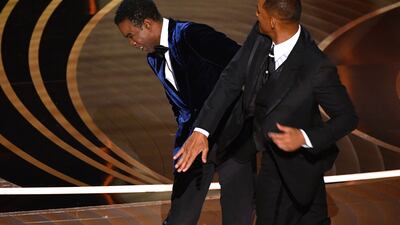
In an unexpected moment at the 2022 Academy Awards, actor Will Smith slaps comedian Chris Rock. AFP -
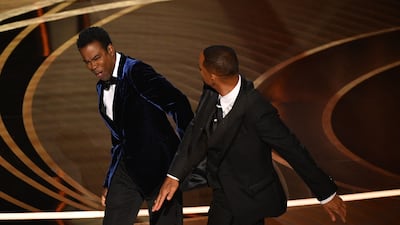
Smith confronts Rock onstage at the Oscars after the comedian made a joke about his wife, Jada Pinkett Smith. AFP -
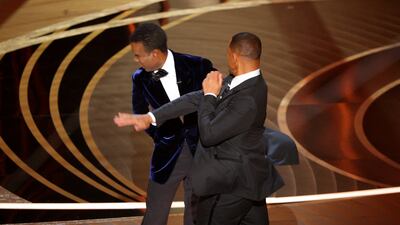
Rock likened Jada Pinkett Smith's hair to a GI Jane haircut, which prompted her husband to take to the stage to confront Rock in a seemingly unscripted moment. Reuters -
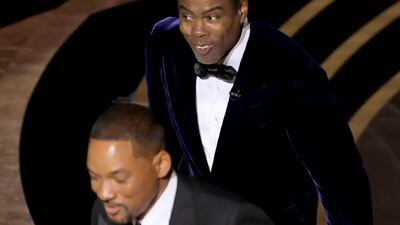
Smith leaves the stage at the Oscars after slapping Rock for a remark he made about his wife Jada. She lost her hair because of alopecia. AP -
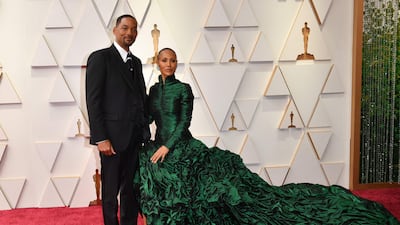
Smith and Jada arrive at the 94th Academy Awards in Hollywood, California. AFP -
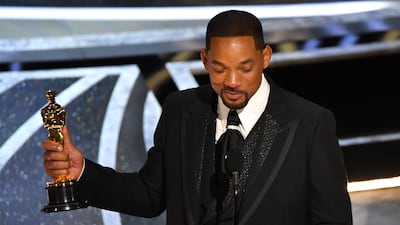
Smith wins Best Actor in a Leading Role for his performance in King Richard, at the 2022 Oscars. AFP -
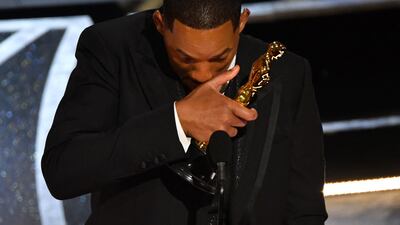
Smith, in tears, pays tribute to his wife Jada during his acceptance speech. AFP -
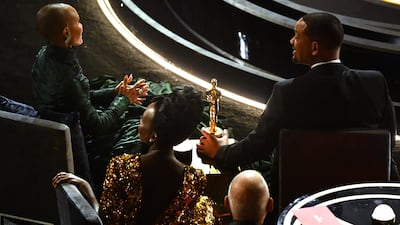
Smith with wife Jada after he won the Oscar award for Best Actor in a Leading Role. AFP -
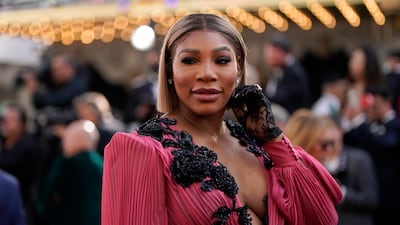
Serena Williams at the Oscar Awards on Sunday, March 27, 2022, at the Dolby Theatre in Los Angeles. AP -
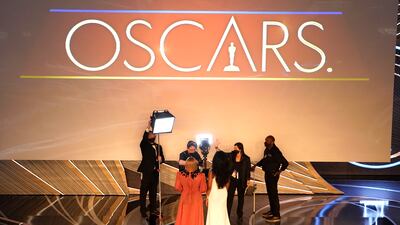
Serena and sister Venus Williams introduce a performance by Beyonce at the Oscars. AP -
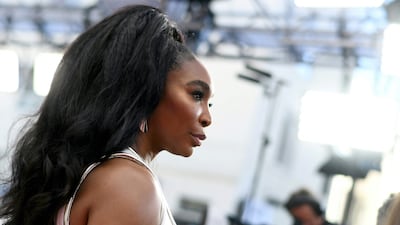
US tennis star Venus attends the 94th Oscars. AFP


Smith confronted Rock after he made a joke about Pinkett Smith's alopecia-caused hair loss. Rock was on stage to hand out the Best Documentary Oscar.
"Jada, I love you ... GI Jane 2, can't wait to see it," Rock said in his presenting slot. The camera panned to Pinkett Smith and she rolled her eyes at the joke.
When the camera was on Smith, he was laughing, but within seconds he was on stage.
Then, as Rock prepared to hand out the Oscar, Smith walked up to him and slapped his face, which prompted the presenter to shout, “Oh wow ... Will Smith just smacked the [expletive] out of me.”
Smith then sat down, but shouted from his seat, “Keep my wife’s name out of your [expletive] mouth.”
A flustered Rock attempted to brush the incident off, saying, “That was, er, the greatest night in the history of television,” before proceeding to present the award.

