
In Hollywood, dream jobs often come with a catch. If you’re a young emerging filmmaker coming off a big award win, odds are you’ll get a call from a major studio, offering you the diamond-encrusted keys to the next instalment of a beloved franchise. You can’t say no, of course. And then, years later, the finished product comes out, bearing almost no resemblance to your films that got you the job. It’s just too easy to lose yourself at scale.
Mufasa: The Lion King, directed by Moonlight's Barry Jenkins, was not going to be one of those movies. Jenkins himself was never going to let that happen. Fighting tooth and nail to ensure that was the hardest thing the Oscar winner, 44, has ever had to do – and the most rewarding.
“I think you'll feel when you see the film by the end, I won more than I lost, and that's really all you can hope for when you go into something this massive,” Jenkins tells The National. “It’s been a process. But over time, we've netted out in a place that feels very, very much a Barry Jenkins film.”
The latest Barry Jenkins film is the prequel to 2019’s The Lion King, director Jon Favreau’s live-action remake of the 1994 animated classic. These are not exactly live action, though – the films utilise new technologies to create photorealistic animated animals and inserted them into real-life locations. With the 2019 film, because it was so new, they hadn’t exactly worked out the kinks. Despite becoming the 10th highest grossing film of all time globally, it received mixed reviews.

In Jenkins’s mind, the fact that everyone involved was still trying to grapple with the potential of the tech they were dealing with was part of the draw. If no one knew what the rules were, he could help make them – and fix what went wrong.
“There’s only been four or five movies made with this technology,” says Jenkins. “The corporate machine can't control how this movie is made – there are too few people who know how to make this film. And so I had to learn how – quickly,” says Jenkins.
“But even with a learning curve, I had ample time. I made Moonlight in 25 days. This took four full years. And after a lot of time, you can see you’re in a minefield, but you learn to spot the landmines. You learn to navigate them.”
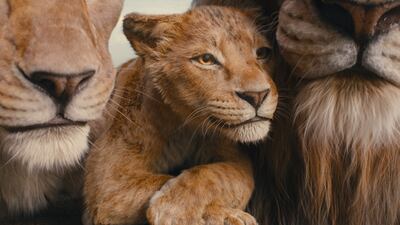
But when went wrong exactly? For one, it was the animals’ faces. In the 1994 The Lion King, the most heartbreaking moments are accentuated by the amount of feeling you can see in their expressions. When the lion Simba watches his father tumble to his death, there's visible pain in his eyes. In the same sequence in the remake, the photorealistic Simba barely moves a muscle. Jenkins knew this had to change – but the fix wasn’t so simple.
“It was the scariest thing about taking on this project,” Jenkins says. “We are just unaccustomed the limitations of the muscle movements of these animals’ faces. The 1994 film had no rules – it wasn’t realistic at all. But we had to stay realistic, and that was the greatest challenge.”
One benefit for Jenkins is that he was working with the same animators that worked on the 2019 film – and they knew better than anyone they needed to learn from their own mistakes.
“I told them, ‘I have to be able to get more out of those expressions’. It was scary, but it was very fulfilling to work with true artisans and say, ‘we need to go past the limits you guys went on the last film. We can mimic these animals faces in wild, we can land on realistic, but we’ve got to find a way to make it so humans can recognise the emotions on their faces’,” says Jenkins.

But it wasn’t just the technology that proved to be an obstacle – it was the story itself. After all, how do you live up to the standard of perhaps the most enduring modern animated story worldwide? For every generation that discovers it, The Lion King is one of the most impactful pieces of media that a child will ever encounter.
In the first film, a young lion cub named Simba, frustrated with the limitations placed upon him as the prince of the pride lands, begins to rebel – only to find himself caught in the middle of a deadly feud between his noble father Mufasa and evil uncle Scar.
Jenkins’s prequel, written by Jeff Nathanson (Catch Me If You Can, The Terminal), takes us back to the beginning of that brotherly relationship, positing that their dynamic is not as cut and dry as it seemed later in their lives.
“The film that we’re working from is very black and white,” says Jenkins. “In the original, there’s good and there’s evil. But in this film, there’s so much grey to run towards – and I just began running towards it, just a full out sprint.”
Moral ambiguity wasn’t as hard a sell to the higher-ups as you might think. The script that existed when Jenkins came on board was “already really dope”, he explains, and Disney was on board with a new vision.

“The studio had an appetite for something that wasn’t going to repeat the same mistakes or just regurgitate the same things or the same movements,” Jenkins says, referring both to the animation changes and the shift in tone.
There was pushback from executives when Jenkins began pushing his ideas as far as they could go – but that’s something he expected. It’s even something he experienced with film production company A24 on his Best Picture winner Moonlight. “Removing stuff is necessary,” he says. “It’s going to happen.”
One of the biggest points of inspiration Jenkins found was in actor Jeremy Irons’ original portrayal of the villain Scar. “You can tell there’s a deep wound in that character – there’s something dark in his past,” says Jenkins. “Some kind of heartbreak. And I relished in the opportunity to explore what that heartbreak can be.
“We’ve always assumed Scar is evil purely because of his nature – but there’s nurture in there too. And that allows us to then look into our world right now and see the way that some people are forced to live their lives, unfortunately affecting who they grow up to be.”
There were times when Jenkins had to truly fight for his vision, and he had no better weapon than the original 1994 film, which he constantly brought up as an example as to why going dark won’t alienate the audience.

“There’s just something in the DNA of this story format. You can’t make The Lion King and not deal with real grief and real loss. Those are amazingly potent, deeply human emotions.
“And anytime something began to feel too distant from that, I turned to the aftermath of the stampede scene in 1994 and said, ‘look at what you did. People love this thing. And look at the depth of what you did. I want to do something similar – so just let me do what I do.”
And why do children love it? It’s not because it’s thrilling to imagine trauma – far from it. In Jenkins’ view, it’s healthy to confront children with scary ideas, as long as it’s done so with care.
“There’s something so honourable and intense about this idea. Here’s a film where children, for the first time in their lives, have to think about what it would be like to lose a parent. And they do it in a way that doesn’t break them. It takes an experience that’s scary, and shows them that they can come through it. I think that’s why it endures.”
Mufasa: The Lion King is being released in cinemas across the Middle East on December 19

