


Mohammad Masoud, a Palestinian bookseller and former employee of Al Saqi, has started a fundraiser with the aim of launching a new space for Arabic literature and art in London, to replace the void left behind by the city’s oldest Arabic bookstore.
Masoud had been working at Al Saqi Books for two years when the landmark store announced that it would be closing after 44 years in business.
The closure was due to “unsustainable” costs, the bookstore said. While economic challenges in the UK were a factor, the cost of importing books from the Arab world was also rising, placing the shop under mounting pressure.
Al Saqi Books had survived various setbacks in the past, including smashed windows during the US invasion of Iraq and after the publishing of Salman Rushdie's controversial The Satanic Verses. Yet, recent global pressures proved insurmountable.
“Even when I was back home, I knew about this iconic place and I never thought I’d be personally working there,” Masoud says. “I moved to the UK in 2020 and started working for them a year later. It was an honour.
“I was there when they closed the doors for the last time,” he adds. “It was very heavy to try and grasp and understand all of that. I felt like I had to do something.”
Al Saqi Books was only the latest of Arab-related institutions in the UK to run aground due to the economic challenges brought on by the pandemic, Masoud says. BBC Arabic marked its last day on air on January 27, closing down after 85 years of broadcasting, whereas the TV channel Al Araby moved its headquarters from London to Qatar in 2021.
“Everything that represented us or spoke our language [in London] disappeared over a few years,” Masoud says. “It feels like this generation and upcoming ones have nowhere to go when they want to learn about their culture and background. Lots of Arabs in diaspora and lots of people interested in Swana (South West Asian/North African) culture, but there’s no place that caters to them.”
Enter Maqam Books, Masoud’s vision for a shop that supports booksellers and publishers from the Swana region. In many ways, it may be considered a spiritual successor to Al Saqi Books, but Masoud says for Maqam Books to thrive, it needs to adapt to the current times. As such, he wants Maqam Books to be more than a bookstore but a cafe, community centre and space for artists to exhibit their works.
“It will be a place where you can read, write and listen to Arabic music and attend Arabic classes,” he says. “At the same time, you’ll be able to enjoy a cup of coffee while reading a book. I’m trying to make this business as sustainable as possible.
"There will be reading events, storytelling or hakawati sessions. You can come and check out artist prints, tote bags, and so on. Unfortunately, selling books is not enough. I would always love to be a bookseller focusing on offering Arabic books, but we have to find other ways to sustain the business.”
Maqam Books will also strive to be an exhibition space for emerging and established artists with roots in the Middle East. The store, which Masoud hopes will find an address in the same neighbourhood as Al Saqi Books, will feature different artists “at least once a month” and transform with every exhibition.
“We will collaborate with different artists so they will bring their prints and works to the store,” Masoud says. “They might even change how the place looks with their works. Our focus for Maqam is for the younger generation ... I want Maqam to showcase the art and literary creativity of the younger generations.”
Much of Masoud’s vision for Maqam Books has come from things he’s picked up while working at Al Saqi, as well as lessons learnt from the closure of the famous bookshop.
“I think you really need to be online,” he says. “This was one of the main lessons I learned. We did not have a good social media or online presence. That affected us a lot. People from our background would come to Al Saqi Books in its last week and say it was the first time they heard of the bookshop. Most of them were young. The reason is we haven't been present for them. I've kind of understood that you need to go further to reach out to people.”
So far, Masoud has managed to raise almost £14,000 ($17,200) through the crowdfunding website JustGiving. To set up and run Maqam for the first year of its journey, the bookshop will need to raise £90,000 ($110,700).
Masoud has segmented the total costs into four “milestones”.
The first, at £25,000 ($30,700), will be dedicated to securing book stock, developing a website and setting up a storage unit. The second, at £50,000 ($61,500), will go to paying half a year's rent for the project. At £75,000 ($92,200), Maqam will have the resources to hire a team and cover operational and stocking costs for six months. The full £90,000 ($110,000) will sustain the business for a year.
“I am fundraising for a dream. Maqam will be a home for people who love the Arabic language and are searching for belonging,” Masoud writes on the crowdfunding page.
"This will be a space for everyone regardless of background to engage with Arabic art and literature no matter how much or little they know of it, a space where both Arabs and non-Arabs can come to learn, relearn and enjoy this wonderful and rich language.”
London's oldest Arabic bookstore Al Saqi closes — in pictures
-
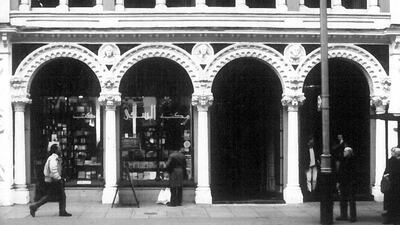
London's beloved Al Saqi Arabic-language book shop has closed after 44 years. All photos: Al Saqi Bookshop -
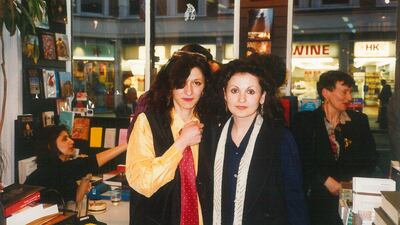
Mai Ghoussoub with Hanan Al Shaykh -

From left to right: Salwa and Lynn Gaspard -
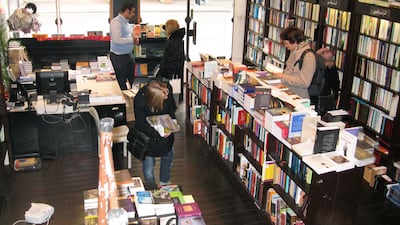
Customers browsing -
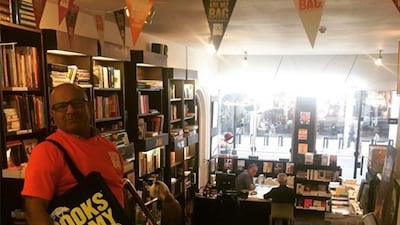
The shop played an important role in London's Arab community -
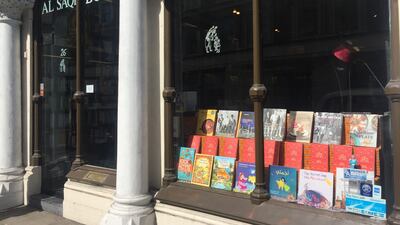
The shop was London's finest source of Arabic literature for more than four decades -

Al Saqi team, early 2000s -

Maggie Gee and Bernardine Evaristo at the launch of The White Family in the Kufa Gallery -

The beloved shop has closed after 44 years



