• Mohsin Hamid, who was born in Pakistani, has written a new book, 'The Last White Man'. Photo: Jillian Edelstein
    Mohsin Hamid, who was born in Pakistani, has written a new book, 'The Last White Man'. Photo: Jillian Edelstein
  • 'The Last White Man' is his first release in five years. Photo: Penguin UK
    'The Last White Man' is his first release in five years. Photo: Penguin UK
  • Hamid's debut novel 'Moth Smoke' cast the reader as a judge. Photo: Penguin UK
    Hamid's debut novel 'Moth Smoke' cast the reader as a judge. Photo: Penguin UK
  • The Pakistani protagonist in 'The Reluctant Fundamentalist' routinely interrupts his dramatic monologue to speak directly to the reader, cast as an American listener. Photo: Penguin UK
    The Pakistani protagonist in 'The Reluctant Fundamentalist' routinely interrupts his dramatic monologue to speak directly to the reader, cast as an American listener. Photo: Penguin UK
  • 'How to Get Filthy Rich in Rising Asia' (2013) takes the form of a rags-to-riches self-help manual, with the reader as the main character. Photo: Penguin UK
    'How to Get Filthy Rich in Rising Asia' (2013) takes the form of a rags-to-riches self-help manual, with the reader as the main character. Photo: Penguin UK
  • Hamid's last novel 'Exit West' was shortlisted for the 2017 Booker Prize. Photo: Penguin UK
    Hamid's last novel 'Exit West' was shortlisted for the 2017 Booker Prize. Photo: Penguin UK
  • 'The Reluctant Fundamentalist', based on Moshin Hamid's post-September 11 novel, was shown at the Venice Film Festival in 2012. Photo: Doha Film Institute
    'The Reluctant Fundamentalist', based on Moshin Hamid's post-September 11 novel, was shown at the Venice Film Festival in 2012. Photo: Doha Film Institute
  • Kate Hudson and Riz Ahmed starred in 'The Reluctant Fundamentalist'. Photo: IFC Films
    Kate Hudson and Riz Ahmed starred in 'The Reluctant Fundamentalist'. Photo: IFC Films
  • From left, screenwriter Ami Boghani, director Mira Nair and Hamid at the opening ceremony of 'The Reluctant Fundamentalist' in 2012. Reuters
    From left, screenwriter Ami Boghani, director Mira Nair and Hamid at the opening ceremony of 'The Reluctant Fundamentalist' in 2012. Reuters

'The Last White Man': Mohsin Hamid says new novel reflects on being Muslim after 9/11


  • English
  • Arabic

When Mohsin Hamid was a young boy, he and his friends would often live outside of reality while playing games of make-believe.

“Multiple children enter this imaginative space together, pretending they are pirates or astronauts,” he says. “To me, my novels are very much like that — they are invitations to readers to enter into a magical space.”

As an acclaimed novelist, Hamid's imagination is now more sophisticated. In his first three novels, he enlisted his reader to participate in the pretence.

His 2000 debut, Moth Smoke, casts the audience as judge. In The Reluctant Fundamentalist (2007), his garrulous Pakistani protagonist routinely interrupts his dramatic monologue to speak directly to us, his American listener. And, in How to Get Filthy Rich in Rising Asia (2013), which takes the form of a rags-to-riches self-help manual, the reader is the main character.

Recently, however, Hamid has taken more creative risks and enlarged that “magical space”. His last novel Exit West, which was shortlisted for the 2017 Booker Prize, follows Saeed and Nadia as they flee a war-torn city and search for sanctuary through a series of secret doors.

His enthralling new novel The Last White Man is a shrewd update of Franz Kafka’s 1915 novel The Metamorphosis. Anders wakes up one morning to find his skin has turned dark. While he waits for an “undoing”, he notices more and more people undergoing the same transformation and civil unrest erupting.

Hamid's upcoming book 'The Last White Man' begins with a powerful intro to grip readers. Photo: Penguin UK

Speaking to The National from New York, Hamid explains he has become more interested in bending reality in his novels. “On the one hand, I believe that fiction is not real,” he says. “It’s this imagined experience co-created by readers and writers. The words from one are animated in the imagination of the other.

“But I think to a very large extent what we call reality is also not real. The potency of this unreal environment of fiction and the way that it can actually help us understand the unreal environment of what we call reality is what I play with.”

The Last White Man was a long time in the making. Hamid came up with the idea for it a year before the pandemic hit. But its real origins go even further back.

The%20Last%20White%20Man
%3Cp%3EAuthor%3A%20Mohsin%20Hamid%C2%A0%3C%2Fp%3E%0A%3Cp%3E192%20pages%C2%A0%3C%2Fp%3E%0A%3Cp%3EPublished%20by%3A%20Hamish%20Hamilton%20(UK)%2C%20Riverhead%20Books%20(US)%3C%2Fp%3E%0A%3Cp%3ERelease%20date%3A%20out%20now%20in%20the%20US%2C%20August%2011%20(UK)%3C%2Fp%3E%0A

“I was thinking about my own experience after 9/11,” he says. “As a university-educated person who had a well-paying job and lived in large cosmopolitan cities like New York and London, I thought I had a kind of partial membership of this dominant group called whiteness.

“Then suddenly I became a member of this suspect class — being pulled out of lines in airports and stopped for hours at immigration, seeing people uncomfortable around me when I showed up on the subway or tube with my backpack. It was jarring, and initially I felt this profound sense of loss.

“That led to a cascade of thinking about people who feel their British-ness or their Muslim-ness or other elements of their identity are under threat of being taken away, and how it feels to lose those things — but also how it gives a possibility to reflect on something new.”

Hamid's 2007 novel 'The Reluctant Fundamentalist' inspired a 2012 film adaptation, starring Riz Ahmed and Kiefer Sutherland. Photo: IFC Films

Hamid also derived inspiration from an unlikely source.

“There is a Sufi idea, which is that there are two different directions one takes towards enlightenment," he says. "One is that you look inside yourself and find the universe. The other, more transgressive strand says: look at the universe and find yourself reflected there. And, I think this sort of looking outside yourself and then discovering yourself in the process was something that appealed to me.

“I wanted to write a book about characters who weren’t, on the surface, me. I wanted to imagine people who were younger, older, and of a different racial background.”

Hamid describes himself as “a mongrelised, hybridised person”. He was born in Lahore, Pakistan, but has spent large parts of his life in the UK and the US. He once said he feels like “a half-outsider” in these places. Is this still the case?

“There’s still a little bit of land-sickness,” he says. “Like when you get off a ship you’ve been on for a long time, the land feels like it’s swaying.

“I can never quite slip into imagining that I can just see things from a British, American or Pakistani perspective. Not that those perspectives actually exist. I guess I’m always seeing the world from two or three different gazes at the same time.”

After years away, Hamid moved back to Lahore in 2009. Since then, he has written several illuminating, and at times excoriating, state-of-the-nation essays highlighting Pakistan’s lack of progress.

Mohsin Hamid in Lahore. Photo: Ed Kashi

For Hamid, Pakistan continues to suffer from “profound pathologies”. He is still concerned about the country but is also worried about other places where he believes there are similar pathologies at work.

“You have this search for the strong man, the breakdown of the ability to come to democratic consensus, the inability of different political parties to work together,” he says.

“There is a sense of failure many people are feeling about their countries. It lends itself to a kind of nostalgic politics, which is often quite monstrous.

“People imagine that in America there is something unique going on with the rise of xenophobia and nativism. But there are similar currents in Pakistani politics, not to mention British, Turkish, Indian, Brazilian and Russian politics.

“The rise of these figures that are talking about the true people, the real citizen. A kind of sorting mechanism where we decide who is like us, and how we become quite confrontational to those who are not like us. This is personally troubling. A world of fetishised tribal purities is not a world that is particularly hospitable to people like me.

“And so,” he says, “I wanted to write a book that dealt with that.”

Mohsin Hamid’s The Last White Man was released on Tuesday in the US and will be out on August 11 in the UK.

Book covers for 2022 International Booker Prize — in pictures

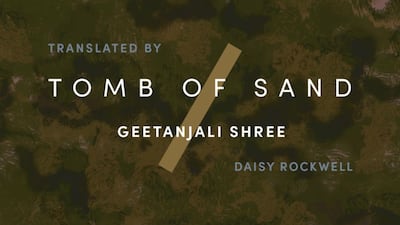
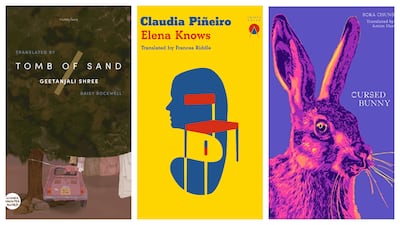
  • 'Tomb of Sand' by Geetanjali Shree is the first Hindi-language novel to be shortlisted for the International Booker Prize.
    'Tomb of Sand' by Geetanjali Shree is the first Hindi-language novel to be shortlisted for the International Booker Prize.
  • 'The Books of Jacob' by Olga Tokarczuk is one of six books shortlisted for the International Booker Prize in 2022.
    'The Books of Jacob' by Olga Tokarczuk is one of six books shortlisted for the International Booker Prize in 2022.
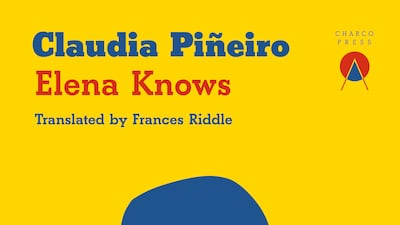
  • 'Elena Knows' by Claudia Pineiro.
    'Elena Knows' by Claudia Pineiro.
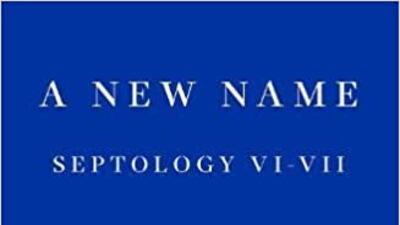
  • 'A New Name: Septology VI-VII' by Jon Fosse.
    'A New Name: Septology VI-VII' by Jon Fosse.
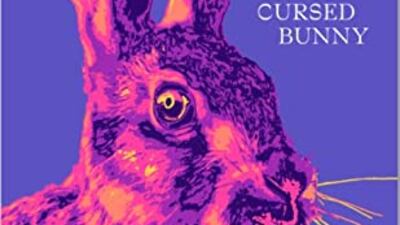
  • 'Cursed Bunny' by Bora Chung.
    'Cursed Bunny' by Bora Chung.
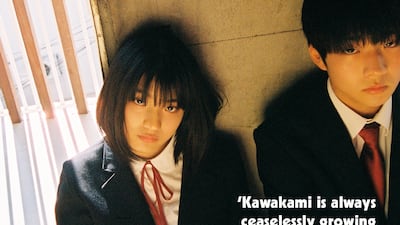
  • 'Heaven' by Mieko Kawakami.
    'Heaven' by Mieko Kawakami.
  • Six books were shortlisted for the International Booker Prize, with entries from India, Spain, South Korea, Japan, Norway and Poland.
    Six books were shortlisted for the International Booker Prize, with entries from India, Spain, South Korea, Japan, Norway and Poland.
The%20specs
%3Cp%3E%3Cstrong%3EEngine%3A%20%3C%2Fstrong%3E4.0-litre%20twin-turbo%20V8%0D%3Cbr%3E%3Cstrong%3EPower%3A%20%3C%2Fstrong%3E640hp%20at%206%2C000rpm%0D%3Cbr%3E%3Cstrong%3ETorque%3A%20%3C%2Fstrong%3E850Nm%20from%202%2C300-4%2C500rpm%0D%3Cbr%3E%3Cstrong%3ETransmission%3A%20%3C%2Fstrong%3E8-speed%20auto%0D%3Cbr%3E%3Cstrong%3EFuel%20consumption%3A%20%3C%2Fstrong%3E11.9L%2F100km%0D%3Cbr%3E%3Cstrong%3EPrice%3A%20%3C%2Fstrong%3EDh749%2C800%0D%3Cbr%3E%3Cstrong%3EOn%20sale%3A%20%3C%2Fstrong%3Enow%3C%2Fp%3E%0A
UAE currency: the story behind the money in your pockets
THE SPECS

Engine: 1.5-litre turbocharged four-cylinder

Transmission: Constant Variable (CVT)

Power: 141bhp 

Torque: 250Nm 

Price: Dh64,500

On sale: Now

The specs: Volvo XC40

Price: base / as tested: Dh185,000

Engine: 2.0-litre, turbocharged in-line four-cylinder

Gearbox: Eight-speed automatic

Power: 250hp @ 5,500rpm

Torque: 350Nm @ 1,500rpm

Fuel economy, combined: 10.4L / 100km

Multitasking pays off for money goals

Tackling money goals one at a time cost financial literacy expert Barbara O'Neill at least $1 million.

That's how much Ms O'Neill, a distinguished professor at Rutgers University in the US, figures she lost by starting saving for retirement only after she had created an emergency fund, bought a car with cash and purchased a home.

"I tell students that eventually, 30 years later, I hit the million-dollar mark, but I could've had $2 million," Ms O'Neill says.

Too often, financial experts say, people want to attack their money goals one at a time: "As soon as I pay off my credit card debt, then I'll start saving for a home," or, "As soon as I pay off my student loan debt, then I'll start saving for retirement"."

People do not realise how costly the words "as soon as" can be. Paying off debt is a worthy goal, but it should not come at the expense of other goals, particularly saving for retirement. The sooner money is contributed, the longer it can benefit from compounded returns. Compounded returns are when your investment gains earn their own gains, which can dramatically increase your balances over time.

"By putting off saving for the future, you are really inhibiting yourself from benefiting from that wonderful magic," says Kimberly Zimmerman Rand , an accredited financial counsellor and principal at Dragonfly Financial Solutions in Boston. "If you can start saving today ... you are going to have a lot more five years from now than if you decide to pay off debt for three years and start saving in year four."

FIXTURES

Monday, January 28
Iran v Japan, Hazza bin Zayed Stadium (6pm)

Tuesday, January 29
UAEv Qatar, Mohamed Bin Zayed Stadium (6pm)

Friday, February 1
Final, Zayed Sports City Stadium (6pm)

In numbers: China in Dubai

The number of Chinese people living in Dubai: An estimated 200,000

Number of Chinese people in International City: Almost 50,000

Daily visitors to Dragon Mart in 2018/19: 120,000

Daily visitors to Dragon Mart in 2010: 20,000

Percentage increase in visitors in eight years: 500 per cent

Try out the test yourself

Q1 Suppose you had $100 in a savings account and the interest rate was 2 per cent per year. After five years, how much do you think you would have in the account if you left the money to grow?
a) More than $102
b) Exactly $102
c) Less than $102
d) Do not know
e) Refuse to answer

Q2 Imagine that the interest rate on your savings account was 1 per cent per year and inflation was 2 per cent per year. After one year, how much would you be able to buy with the money in this account?
a) More than today
b) Exactly the same as today
c) Less than today
d) Do not know
e) Refuse to answer

Q4 Do you think that the following statement is true or false? “Buying a single company stock usually provides a safer return than a stock mutual fund.”
a) True
b) False
d) Do not know
e) Refuse to answer

The “Big Three” financial literacy questions were created by Professors Annamaria Lusardi of the George Washington School of Business and Olivia Mitchell, of the Wharton School of the University of Pennsylvania. 

Answers: Q1 More than $102 (compound interest). Q2 Less than today (inflation). Q3 False (diversification).

Who has lived at The Bishops Avenue?
  • George Sainsbury of the supermarket dynasty, sugar magnate William Park Lyle and actress Dame Gracie Fields were residents in the 1930s when the street was only known as ‘Millionaires’ Row’.
  • Then came the international super rich, including the last king of Greece, Constantine II, the Sultan of Brunei and Indian steel magnate Lakshmi Mittal who was at one point ranked the third richest person in the world.
  • Turkish tycoon Halis Torprak sold his mansion for £50m in 2008 after spending just two days there. The House of Saud sold 10 properties on the road in 2013 for almost £80m.
  • Other residents have included Iraqi businessman Nemir Kirdar, singer Ariana Grande, holiday camp impresario Sir Billy Butlin, businessman Asil Nadir, Paul McCartney’s former wife Heather Mills. 
Hunting park to luxury living
  • Land was originally the Bishop of London's hunting park, hence the name
  • The road was laid out in the mid 19th Century, meandering through woodland and farmland
  • Its earliest houses at the turn of the 20th Century were substantial detached properties with extensive grounds


THE%20FLASH
%3Cp%3E%3Cstrong%3EDirector%3A%3C%2Fstrong%3E%20Andy%20Muschietti%3Cbr%3E%3Cstrong%3EStars%3A%3C%2Fstrong%3E%20Sasha%20Calle%2C%20Ben%20Affleck%2C%20Ezra%20Miller%3Cbr%3E%3Cstrong%3ERating%3A%20%3C%2Fstrong%3E3%2F5%3C%2Fp%3E%0A
The%20Last%20White%20Man
%3Cp%3EAuthor%3A%20Mohsin%20Hamid%C2%A0%3C%2Fp%3E%0A%3Cp%3E192%20pages%C2%A0%3C%2Fp%3E%0A%3Cp%3EPublished%20by%3A%20Hamish%20Hamilton%20(UK)%2C%20Riverhead%20Books%20(US)%3C%2Fp%3E%0A%3Cp%3ERelease%20date%3A%20out%20now%20in%20the%20US%2C%20August%2011%20(UK)%3C%2Fp%3E%0A
Updated: August 06, 2022, 5:04 AM