Indian author Geetanjali Shree, right, and translator Daisy Rockwell share the 2022 International Booker Prize for 'Tomb of Stone'. PA Images

Who is Geetanjali Shree? Hindi author and winner of the International Booker prize


Razmig Bedirian
  • English
  • Arabic

Indian writer Geetanjali Shree and American translator Daisy Rockwell have won the International Booker Prize for Tomb of Sand, a vibrant novel with a boundary-crossing octogenarian heroine.

Originally written in Hindi, it’s the first book in any Indian language to win the high-profile award, which recognises fiction from around the world that has been translated into English. The $63,000 prize money will be split between Shree, who lives in New Delhi and Rockwell, who is resident in Vermont.

Originally published as Ret Samadhi in 2018, the novel tells the story of an Indian woman who, at the age of 80, slips into depression after her husband’s death and travels to Pakistan to confront, as the book’s blurb describes, “the unresolved trauma of her teenage experiences of Partition, and re-evaluating what it means to be a mother, a daughter, a woman, a feminist".

'Tomb of Sand' by Geetanjali Shree has been translated to English from the original publication 'Ret Samadhi' from 2018.

The work was hailed by Booker judges to be “an urgent yet engaging protest against the destructive impact of borders, whether between religions, countries, or genders".

Translator Frank Wynne, chairman of the judging panel, said the judges “overwhelmingly” chose Tomb of Sand after “a very passionate debate” and called it "an extraordinarily exuberant and incredibly playful book.”

“It manages to take issues of great seriousness — bereavement, loss, death — and conjure up an extraordinary choir, almost a cacophony, of voices,” he said. “It is extraordinarily fun and it is extraordinarily funny.”

The International Booker Prize is awarded every year to a translated work of fiction published in the UK or Ireland. It is run alongside the Booker Prize for English-language fiction.

Who is Geetanjali Shree?

Growing up in the north Indian state of Uttar Pradesh instilled a deep attachment to Hindi language and literature in Geetanjali Shree. AP

Born in Mainpur in India in 1957, Shree spent her childhood in different towns in the northern state of Uttar Pradesh, where her father was posted as a civil servant. She received her education in local English-medium schools, but growing up in Uttar Pradesh instilled a deep attachment to Hindi.

“My link to Hindi language and literature was informal and personal,” she told Indian magazine Outlook in February. “My mother spoke almost only Hindi. All around me in the Uttar Pradesh towns, there was so much of Hindi. We also read, in my childhood, more Hindi magazines for children than English-school-going kids today.”

The scarcity of English-language children’s books, Shree said, was “a blessing in disguise” as it gravitated her towards tales from the One Thousand and One Nights, the ancient Indian epics Ramayana and Mahabharata, the folk tales and fables of Panchatantra and Kathasaritsagara, and the fantasy adventure Chandrakanta Santati.

The shortlisted authors for the International Booker Prize, from left, Bora Chung, Mieko Kawakami, Jon Fosse, Geetanjali Shree and Claudia Pineiro. PA Images

Shree also has a profound relationship with her mother, she told the magazine. So much so that she adopted her mother’s name as her second name.

She moved to Delhi for her college education, studying modern Indian history but already “feeling the tug towards Hindi literature".

“In the absence of a formal Hindi education, history was the viable option, but I began doing tutorials using Hindi literature for the study of history and such like.”

Shree burst into the Hindi literary scene with the publication of her short story collection Anugoonj in 1991. Since then, she has published another collection of short stories as well as three novels. Her works have received a number of awards and have been translated into English, French, German, Serbian and Korean.

“Writing is its own reward. But getting recognition as special as from Booker is a wonderful bonus,” Shree told the The Indian Express newspaper. “The fact that there is much that is dismal all around in the world today, adds to the value of positive vibes of fields like literature.”

Rockwell had earlier described the novel as “a rich, beautiful, experimental work".

“It was an honour to work with Geetanjali Shree to create the English translation. I am beyond thrilled that the International Booker Prize jury has chosen our book for the longlist.”

The longlist

The 2022 longlist featured works by previous winners, including Olga Tokarczuk, Jennifer Croft, David Grossman and Jessica Cohen, alongside authors translated into English for the first time.

It included Paradais by Mexican author Fernanda Melchor; Heaven by Japanese author Mieko Kawakami; Love in the Big City by South Korean writer Sang Young Park; Happy Stories, Mostly by Indonesian Norman Erikson Pasaribu; Elena Knows by Argentine Claudia Pineiro; The Book of Mother by French author Violaine Huisman; More Than I Love My Life by Israeli author Grossman; Phenotypes by Brazilian Paulo Scott; A New Name: Septology VI-VII by Norwegian Jon Fosse; After the Sun by Danish author Jonas Eika; The Books of Jacob by Polish writer Tokarczuk; and Cursed Bunny by South Korean Bora Chung.

  • 'Gold Diggers' by Sanjena Sathian
    'Gold Diggers' by Sanjena Sathian
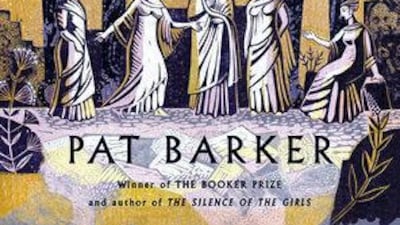
  • 'The Women of Troy' by Pat Barker (August)
    'The Women of Troy' by Pat Barker (August)
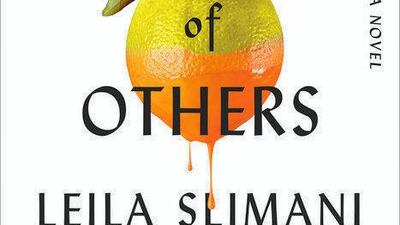
  • 'In The Country of Others' by Leïla Slimani (August)
    'In The Country of Others' by Leïla Slimani (August)
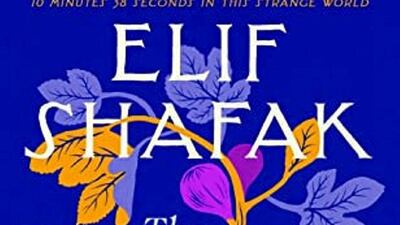
  • 'The Island of Missing Trees' by Elif Shafak (August)
    'The Island of Missing Trees' by Elif Shafak (August)
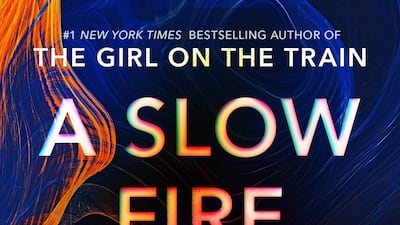
  • 'A Slow Fire Burning' by Paula Hawkins (August)
    'A Slow Fire Burning' by Paula Hawkins (August)
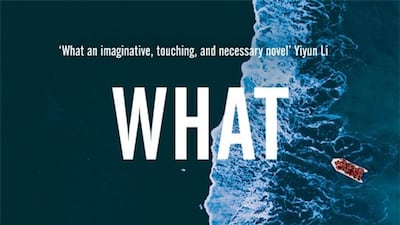
  • 'What Strange Paradise' by Omar El Akkad (July)
    'What Strange Paradise' by Omar El Akkad (July)
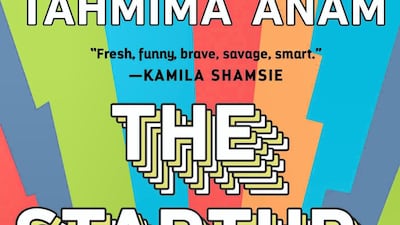
  • 'The Startup Wife' by Tahmima Anam (June)
    'The Startup Wife' by Tahmima Anam (June)
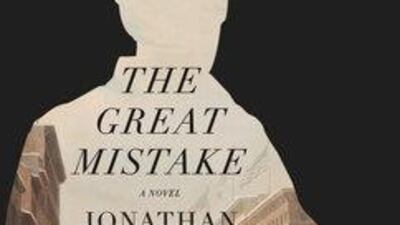
  • 'The Great Mistake' by Jonathan Lee (June)
    'The Great Mistake' by Jonathan Lee (June)
  • 'Still Life' by Sarah Winman
    'Still Life' by Sarah Winman
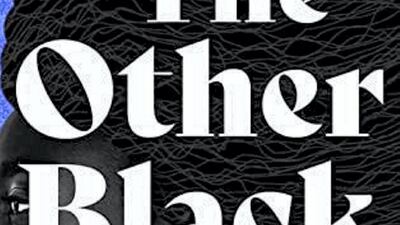
  • 'The Other Black Girl' by Zakiya Dalila Harris
    'The Other Black Girl' by Zakiya Dalila Harris

— A version of this story was first published on March 14, 2022. Additional reporting by AP

Student Of The Year 2

Director: Punit Malhotra

Stars: Tiger Shroff, Tara Sutaria, Ananya Pandey, Aditya Seal 

1.5 stars

Five expert hiking tips
    Always check the weather forecast before setting off Make sure you have plenty of water Set off early to avoid sudden weather changes in the afternoon Wear appropriate clothing and footwear Take your litter home with you
Tamkeen's offering
  • Option 1: 70% in year 1, 50% in year 2, 30% in year 3
  • Option 2: 50% across three years
  • Option 3: 30% across five years 
The National in Davos

We are bringing you the inside story from the World Economic Forum's Annual Meeting in Davos, a gathering of hundreds of world leaders, top executives and billionaires.

Some of Darwish's last words

"They see their tomorrows slipping out of their reach. And though it seems to them that everything outside this reality is heaven, yet they do not want to go to that heaven. They stay, because they are afflicted with hope." - Mahmoud Darwish, to attendees of the Palestine Festival of Literature, 2008

His life in brief: Born in a village near Galilee, he lived in exile for most of his life and started writing poetry after high school. He was arrested several times by Israel for what were deemed to be inciteful poems. Most of his work focused on the love and yearning for his homeland, and he was regarded the Palestinian poet of resistance. Over the course of his life, he published more than 30 poetry collections and books of prose, with his work translated into more than 20 languages. Many of his poems were set to music by Arab composers, most significantly Marcel Khalife. Darwish died on August 9, 2008 after undergoing heart surgery in the United States. He was later buried in Ramallah where a shrine was erected in his honour.

US tops drug cost charts

The study of 13 essential drugs showed costs in the United States were about 300 per cent higher than the global average, followed by Germany at 126 per cent and 122 per cent in the UAE.

Thailand, Kenya and Malaysia were rated as nations with the lowest costs, about 90 per cent cheaper.

In the case of insulin, diabetic patients in the US paid five and a half times the global average, while in the UAE the costs are about 50 per cent higher than the median price of branded and generic drugs.

Some of the costliest drugs worldwide include Lipitor for high cholesterol. 

The study’s price index placed the US at an exorbitant 2,170 per cent higher for Lipitor than the average global price and the UAE at the eighth spot globally with costs 252 per cent higher.

High blood pressure medication Zestril was also more than 2,680 per cent higher in the US and the UAE price was 187 per cent higher than the global price.

Your rights as an employee

The government has taken an increasingly tough line against companies that fail to pay employees on time. Three years ago, the Cabinet passed a decree allowing the government to halt the granting of work permits to companies with wage backlogs.

The new measures passed by the Cabinet in 2016 were an update to the Wage Protection System, which is in place to track whether a company pays its employees on time or not.

If wages are 10 days late, the new measures kick in and the company is alerted it is in breach of labour rules. If wages remain unpaid for a total of 16 days, the authorities can cancel work permits, effectively shutting off operations. Fines of up to Dh5,000 per unpaid employee follow after 60 days.

Despite those measures, late payments remain an issue, particularly in the construction sector. Smaller contractors, such as electrical, plumbing and fit-out businesses, often blame the bigger companies that hire them for wages being late.

The authorities have urged employees to report their companies at the labour ministry or Tawafuq service centres — there are 15 in Abu Dhabi.

Other IPL batting records

Most sixes: 292 – Chris Gayle

Most fours: 491 – Gautam Gambhir

Highest individual score: 175 not out – Chris Gayle (for Royal Challengers Bangalore against Pune Warriors in 2013)

Highest strike-rate: 177.29 – Andre Russell

Highest strike-rate in an innings: 422.22 – Chris Morris (for Delhi Daredevils against Rising Pune Supergiant in 2017)

Highest average: 52.16 – Vijay Shankar

Most centuries: 6 – Chris Gayle

Most fifties: 36 – Gautam Gambhir

Fastest hundred (balls faced): 30 – Chris Gayle (for Royal Challengers Bangalore against Pune Warriors in 2013)

Fastest fifty (balls faced): 14 – Lokesh Rahul (for Kings XI Punjab against Delhi Daredevils in 2018)


Updated: November 15, 2022, 8:26 AM