

Shaikha Mai bint Mohammed Al Khalifa, president of the Bahrain Authority for Culture and Antiquities, has been named as a member to the steering committee for the 2022 Aga Khan Award for Architecture.
She is joined by Meisa Batayneh, principal architect and founder of maisam architects & engineers in Amman, Jordan, as well as the world-renowned British architect Sir David Chipperfield.
As a member of the committee, Shaikha Mai will help select an independent master jury which, in turn, selects the award recipients from the nominated projects.
It is also responsible for establishing the eligibility criteria for project nominations, providing thematic direction to the award, and developing plans for its long-term future.
-
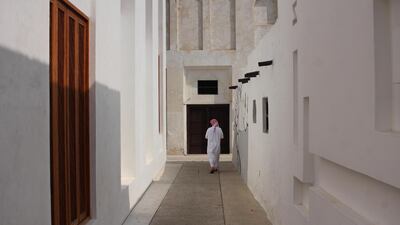
Souq Al Qaysariya forms part of the Unesco-inscribed Pearling Path. Alamy -

Studio Anne Holtrop is carefully regenerating the three Amarat Fakhro buildings. Courtesy: Studio Anne Holtrop -
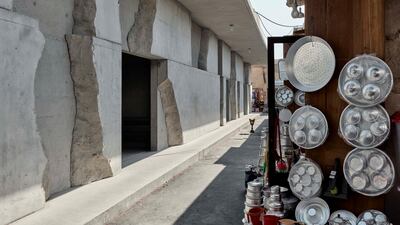
Souq Al Qaysariya is the oldest part of Muharraq's market. Courtesy: Studio Anne Holtrop -

Souq Al Qaysariya is a rich part of Bahrain's heritage. Courtesy: Studio Anne Holtrop -

The beloved souq is being lovingly restored in keeping with tradition. Courtesy: Studio Anne Holtrop


She is the founder of the Sheikh Ebrahim Bin Mohammed Al-Khalifa Centre for Culture and Research, an NGO established in Muharraq in 2002. Since its opening, it has helped conserve and rehabilitate over 25 traditional Bahraini houses and spearheaded urban regeneration in the historic city.
In 2019, under Shaikha Mai's leadership, the Revitalisation of Muharraq, a series of restoration projects highlighting the site’s pearling history, which was named one of the six winners of the prized architecture award.
Along with Sharjah's Wasit Wetland Centre, it shared the prize with the Palestinian Museum in Birzeit, the Arcadia Education Project in Bangladesh, the Alioune Diop University Teaching and Research Unit in Senegal and the Public Spaces Development Programme in Tatarstan.
The Aga Khan Award is bestowed by the Aga Khan Trust for Culture, which has its headquarters in Geneva and is run by Prince Shah Karim al-Husayni, the current Aga Khan IV, a nobleman, philanthropist and spiritual leader.
Started in 1977, the Aga Khan Award for Architecture honours innovations in Islamic architecture and design and is held on a three-yearly basis.
The Aga Khan Award for Architecture is one of the discipline’s top honours and brings with it a prize of $1 million.
Also on this year's steering committee are Istanbul's Emre Arolat, of Emre Arolat Architecture; Souleymane Bachir Diagne, director of the Institute of African Studies at New York's Columbia University; Nasser Rabbat, the Aga Khan professor and director of the Aga Khan Programme for Islamic Architecture at the Massachusetts Institute of Technology; Marina Tabassum, principal of Marina Tabassum Architects in Dhaka; and Sarah M Whiting, dean of the Harvard Graduate School of Design.
_____________
Sharjah wildlife park wins Aga Khan Award for Architecture
-
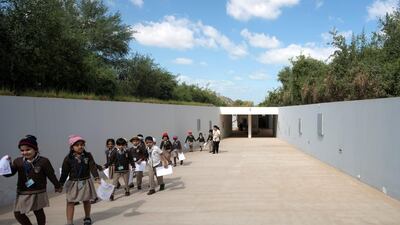
Most of the building is buried beneath ground level, leaving the landscape unspoiled. A sloping ramp gives access to its entrance. © Aga Khan Trust for Culture / Cemal Emden (photographer) -
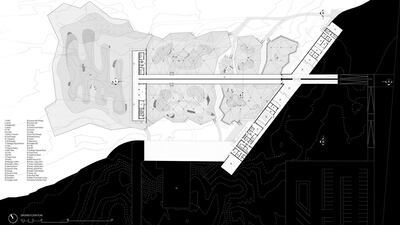
Site plan © X-Architects -
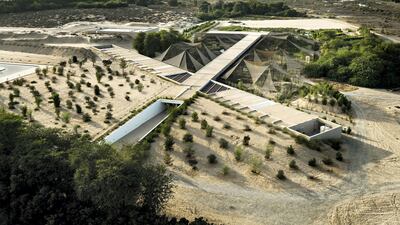
The remarkably simple building has two wings. The first one contains administrative and educational spaces, while the other accommodates the observation galleries. © X-Architects / Nelson Garrido (photographer) -
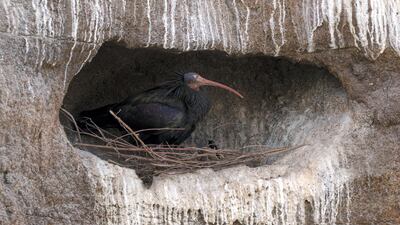
The visitors can observe birds in conditions very similar to those of their natural habitat. © Aga Khan Trust for Culture / Cemal Emden (photographer) -
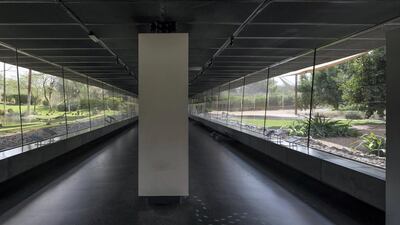
The viewing gallery is made of continuous reflective and insulated glass shaded by an overhang. It opens on the aviaries. © Aga Khan Trust for Culture / Cemal Emden (photographer) -
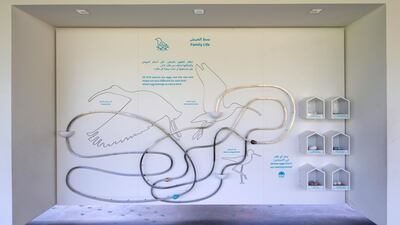
The dividing wall between the galleries hides services and provides surface for awareness and educational material for the visitors. © Aga Khan Trust for Culture / Cemal Emden (photographer) -
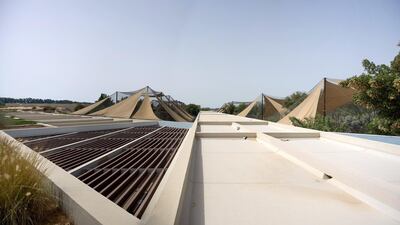
The Wasit Wetland Centre blends with the environment, minimising its visual impact on the surroundings. © Aga Khan Trust for Culture / Cemal Emden (photographer) -
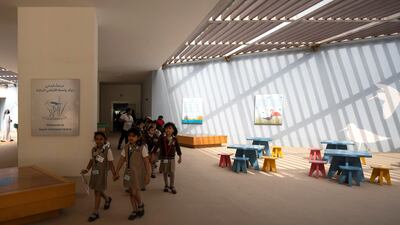
The entrance offers an area for children and schoolchildren to take part in educational activities. © Aga Khan Trust for Culture / Cemal Emden (photographer) -
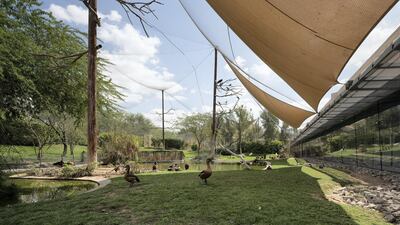
The glass walls are at a slight angle. It minimizes the sunlight glare for the viewers inside and reflects the landscape to the birds outside. © Aga Khan Trust for Culture / Cemal Emden (photographer) -
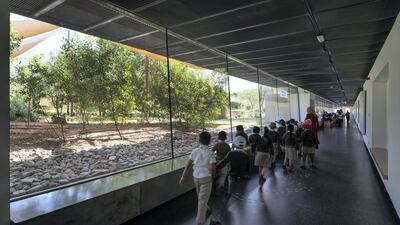
The gallery spaces are quite bare. They have an industrial feel owing to a dark metal mesh ceiling that lightly screens the steel structure and all services. © Aga Khan Trust for Culture / Cemal Emden (photographer) -
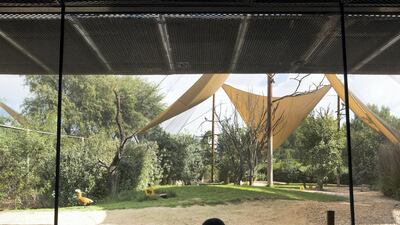
The gallery allows the visitors to have a close look at the birds, without disturbing their tranquility. © Aga Khan Trust for Culture / Cemal Emden (photographer) -
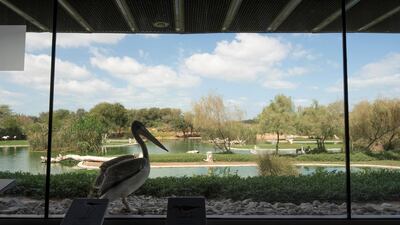
Birds tend to come near the galleries’ glass walls, allowing visitors to get a closer look at them. © Aga Khan Trust for Culture / Cemal Emden (photographer) -

The gallery was arranged in order to allow the visitors to comfortably sit, draw and take notes while they observe the surrounding landscape. © Aga Khan Trust for Culture / Cemal Emden (photographer) -

Visitors can see inside the kitchen in which the birds’ meals are prepared. © Aga Khan Trust for Culture / Cemal Emden (photographer) -
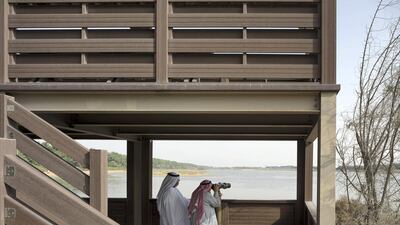
Unique in scale and shape, each bird hide offers the opportunity to observe the animals in their natural habitat. © Aga Khan Trust for Culture / Cemal Emden (photographer) -
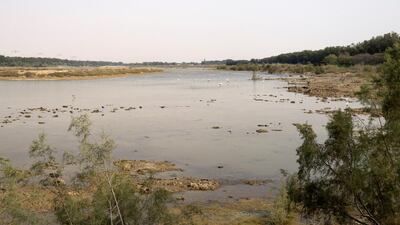
The 200,000 sqm site underwent extensive landscaping. Only indigenous trees and plants were planted, in order to encourage various types of flora and fauna to thrive in the area. . © Aga Khan Trust for Culture / Cemal Emden (photographer) -
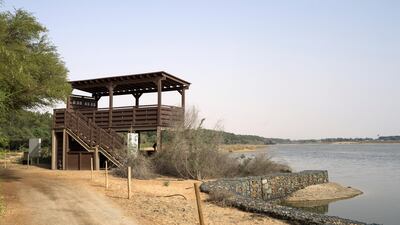
Part of the experience of the centre is being outdoors, where the visitors can walk or move around in golf carts to experience the wetlands. © Aga Khan Trust for Culture / Cemal Emden (photographer) -
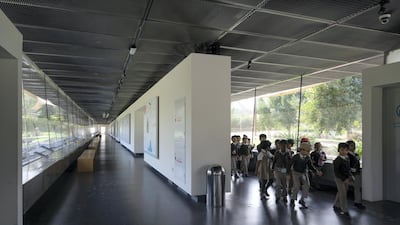
The dividing wall between the galleries hides all the services and provides surface for awareness and educational material. © Aga Khan Trust for Culture / Cemal Emden (photographer) -
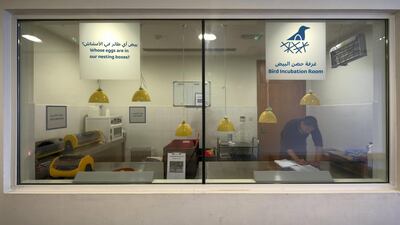
Just like the kitchen, the visitors can see the inside of the incubation room, in which it is sometimes possible to witness the birth of hatchlings. © Aga Khan Trust for Culture / Cemal Emden (photographer) -
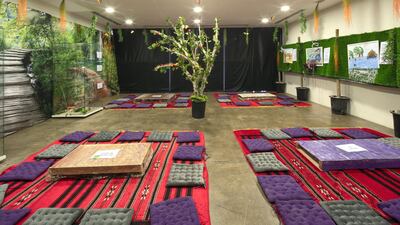
Large areas of the centre are dedicated to educational activities. © Aga Khan Trust for Culture / Cemal Emden (photographer)



