


Once regarded as the zenith of creativity, western Modern Art has become a bit like the elephant in the room no one is quite sure how to accommodate or interact with. The body of work that had been ordained as canonical by western ostiaries are largely by white male artists who have come to dominate global art history — at the expense of an inclusive narrative.
This one-dimensional history is being revised, art experts said on Tuesday during the final panel discussion at the Culture Summit Abu Dhabi. But as the elephant has long taken up too much room, many are now debating whether it’s best to start afresh.
“The canon itself is a very tricky notion,” Rafal Niemojewski, executive director of non-profit arts organisation Biennial Foundation, said. “I think it needs to be approached with caution, because it comes from a western art history. The problem is that if we continue using the vocabulary of art history, even to change it, we still somehow perpetuate the problems and the issues that came with it.”

More pragmatically, it is possible that many canons can co-exist to give a more expansive chronicle of global history. Erecting these canons are often a collaborative enterprise, requiring not only a spectacular piece of work, but also institutional, academic and ultimately, government backing.
“The rewriting of art history is definitely happening,” Niemojewski said. “It's also happening in the exhibitions, and even biennials, which in opposition to museums really are looking towards the future and try to capture the zeitgeist of today. We have been seeing an increased number of exhibitions and curators taking interest in bringing different modernisms into the fore. Three weeks ago, I was in New York, where there is an amazing exhibition about the Beirut art scene.”
What does this mean for the region and the canon of modern Arab art? For one thing, Arab artists of the past century have been enjoying more exposure and have been only starting to get their dues on an international platform.
“There’s an artwork selling by Etel Adnan in the next hour that has past £300,000 ($347,000) in an online sale in the UK,” said Sultan Al Qassemi, art academic and founder of the Barjeel Art Foundation.
“This is an artist [whose work] we bought four years ago for some £40,000 [$46,000].”
Many accomplished artists, however, are still relatively unknown by the general Arab public, and that’s where the true problem lies.

The UAE may be one of the most dedicated countries in the region to focus on its creative economy and establishing itself as a regional, if not global, art hub. There is plenty being done by local institutions to expose the Arab public to Arab art, however there still seems to be an unwavering focus on works from the western canon.
While exhibitions may have been devised with touristic appeal in mind, Al Qassemi said this was probably counterproductive in the long-run and only serves to preserve existing historical narratives.
“The reality is that 95 per cent of exhibitions are about other places,” Al Qassemi said. “Let us push art from our region against the surge of art coming to us. We have been inundated all our lives with art from the West. We need to push back. Everybody has to push back. Because to have a conversation. You can't just be sitting there listening to someone talk. You have to push back so that you have a chance to explain yourself.”
“If you go to China, and there's an exhibition dedicated to Picasso and another on Chinese Modernism, which one would you go to?” Al Qassemi said. “If you go to Brazil and I tell you there’s an exhibition dedicated to some western artists or Brazilian Modernism, which wouldn’t you want to go to?”
The goal, Al Qassemi said, is to hoist works by artists such as Marwan Kassab-Bachi, Dia Azzawi and Suha Shoman so that they are as recognisable as a Picasso or Monet, at least in the eyes of the Arab public.
“Our ambitions include displaying art from the Arab world in every corner of the world,” Al Qassemi said. “Actually, I would like to display art from the Arab world in every corner of the Arab world first.
"It's quite sad that there are major artists from the Arab world who are not on display in the Arab world. If you think of Dia Azzawi, where in the Arab world can you go to view a Dia Azzawi? You can’t. Where can you go see Marwan? You can’t. Can you imagine living in an area of 340 million people, and you cannot take your child to go see this important artist, it's so sad. But you can go see a lot of western artists, you can go see a lot of artists that are inconsequential to our parts of the world.
“My wish is to see kids recognise our artists and not recognise the Picasso but recognise the Marwan,” Al Qassemi said.
That’s not to belittle the efforts of those who are actively trying to enhance the cannon of modern Arab art and enhance public understanding of the works.
Locally, Sharjah is likely to be at the forefront of promoting artworks from the region. Manal Ataya, director-general of the Sharjah Museums Authority, said this has long been a passion for the Emirates.
“There’s the establishment of museums and various kinds of collection, including modern art,” Ataya said. “It’s something that has been part of the ecosystem in Sharjah, which is growing slowly and quietly. We’re building a whole ecosystem of artists and people involved in cultural production to continue to enhance this vision, whether that's artists from the Gulf, or the Levant, or from North Africa.
“For example, since 2010, we started the yearly exhibition called Last Impressions,” she said. “This exhibition focuses on artists from the Mena region who have been practicing for more than 40 years in their first survey show. That has included artists from the UAE including Abdul Qader Al Rais or Najat Makki. This year, we’re celebrating the Kurdish-Iraqi artist who just passed, Ismail Khayyat. These are really important artists for people to know about, for scholars to learn about, students to learn about.”
Having exhibitions, creating the publications, and the education that goes along with it is integral to adding these layers to the canon, Ataya says.
NYUAD Art Gallery recently launched Khaleej Modern: Pioneers and Collectives in the Arabian Peninsula — a breakthrough exhibition that explores the rise of contemporary art in the UAE, Saudi Arabia, Kuwait, Bahrain, Qatar and Oman.
The exhibition, curated by Aisha Stoby, highlights landmark artists from the peninsula, including Mounirah Mosly, Safeya Binzagr, Mohammed Al Saleem, the Manama Group, the Three Friends collective in Qatar, as well as early practitioners in the UAE including Al Rais and The Five, comprising Hassan Sharif, Abdullah Al Saadi, Mohammed Kazem, Mohamed Ahmed Ibrahim and Ebtisam Abdulaziz.
-
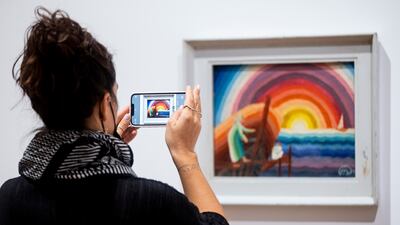
'Building of Ships' by Ibrahim Ismail on display at Khaleej Modern. All Photos: Ruel Pableo for The National -
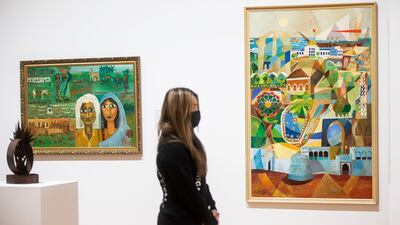
Khaleej Modern will be running until December 11. -
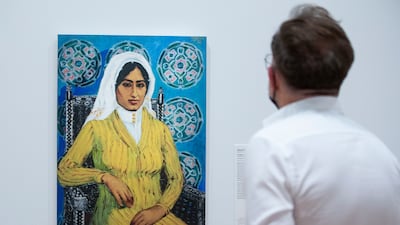
'Al Zaboun' by Safeya Binzagr. -
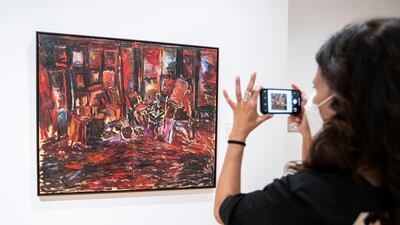
'Studio' by Mohammed Kazem. -

'Old Architecture of Manama' by Ahmed Qassim Al Sunni. -
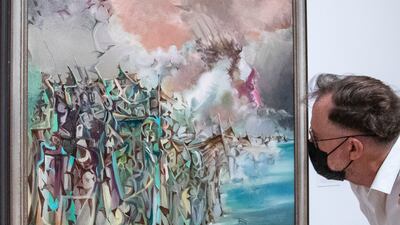
'Memories of Pearl Fishing Days' by Abdul Karim Al Bosta. -

'No to the Invasion' by Thuraya Al-Baqsami. -
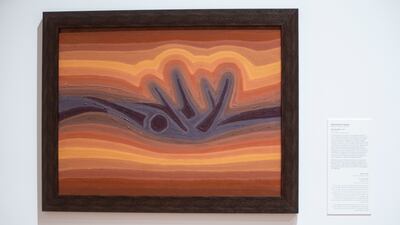
'Abstract Figure' by Mohammed Al Saleem. -
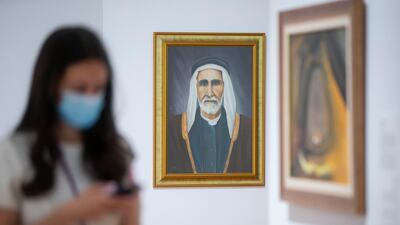
(left) 'A Portrait of Taqfiq Ahmed Al-Jarrah' by Mojib Al Dosari. -
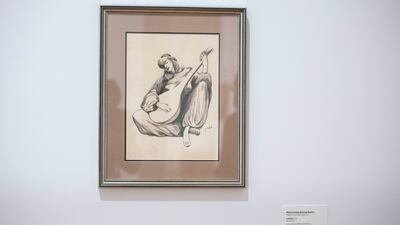
Untitled painting by Mohammed Ahmed Rasim. -
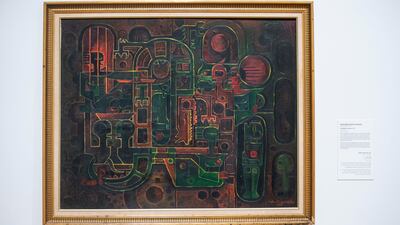
'The Darkness of Love' by Rashid Abdul Rahman Al Balushi. -

'Return from the Village' by Thuraya Al-Baqsami. -

'Fatma' by Anwar Sonya. -
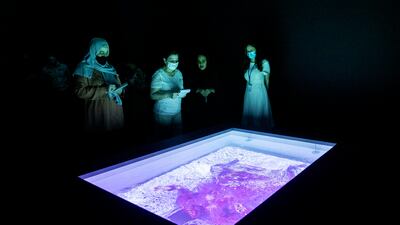
'Under the Water' by Hassan Meer.


“Khaleej Modern came about when I was in a conversation with Aisha Stoby,” said Maya Allison, executive director of the NYU Abu Dhabi Art Gallery and university chief curator.
“She and I were both talking about this issue and how this sort of invisibility begets itself. Some say there’s no art history here and that we’re making art, but that’s not true. In a way, it was setting the record straight and throwing down the gauntlet.”
However, there were still challenges. The exhibition took five years to prepare for, and Allison said it would have taken longer if it weren’t for the help of collectors. A willingness to give works on loan and making the bureaucratic process as succinct as possible will help encourage exhibitions that will build upon the Arab canon.

“Collectors make it so much easier when they commit to building a collection in the way that you have,” Allison told Al Qassemi during the discussion. "Khaleej Modern was already a five-year project to pull together these loans. Thank you for not making it a 10-year project. Lending can’t be underestimated; it really is huge.
Al Qassemi said: “I acknowledge the UAE is probably the best place in the region to be based. We have insurance companies, we have logistics, airports, creating companies, everything is based here, but the regulations are out of date.
“I want more collectors to move to the UAE, but for that to happen we have to update regulations. We had crates that went to America for an exhibition. Then the pandemic happened, and the works took longer to come back. There's a clause in the UAE regulation that says if a work leaves for a certain period, you have to pay import tax again, as if we were importing them once again, this is not acceptable. I can't afford it. I can't do a million dollars to bring back works that were originally here.
“We're advertising the UAE as a base for the culture of the region, but [these regulations] will discourage other people from moving here. We want collectors in Germany and France and India and Pakistan and Serbia and everywhere in the world to bring their collections to us. The regulations are from the 1980s and we are in 2022. With all due respect and love, please update the regulations. We can’t afford them. They are so consuming and bureaucratic.”
-
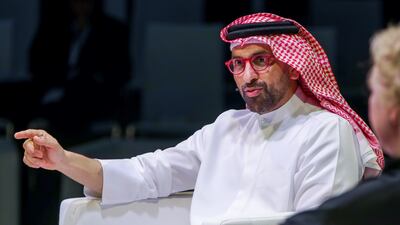
Sultan Sooud Al Qassemi, founder of Barjeel Art Foundation, takes part in the discussion on the third and final day of Culture Summit Abu Dhabi. All photos: Victor Besa / The National -

Manal Ataya, director general at Sharjah Museums Authority, also took part in the panel. -
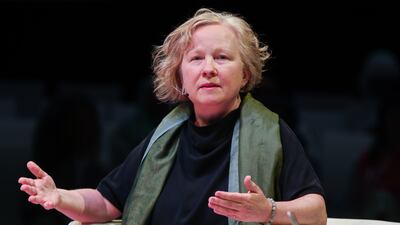
Maya Allison, executive director and chief curator at the NYU Abu Dhabi Art Gallery, joined the discussion. -
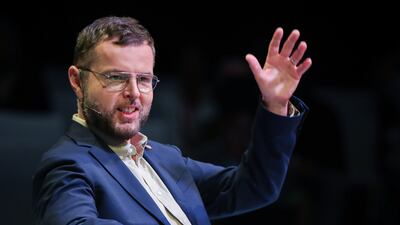
A panellist speaks during the event. -

The New Canon was one of the panels held on day three of the Culture Summit Abu Dhabi. -
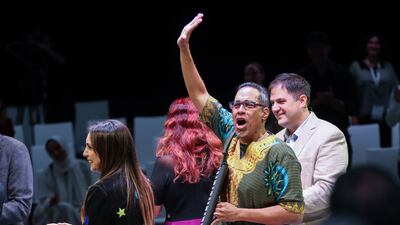
Famed pianist, composer and educator Danilo Perez waves to the crowd. -
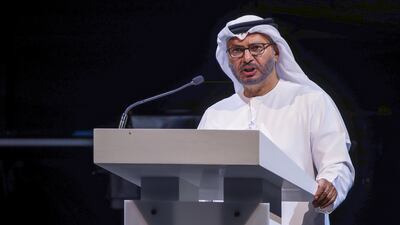
Former minister and now diplomatic advisor Anwar Gargash. Victor Besa / The National -
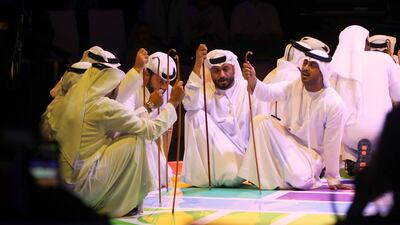
Visitors were treated to a traditional Al Ayala dance, where performers hold thin bamboo canes and move to steady drum rhythms. -
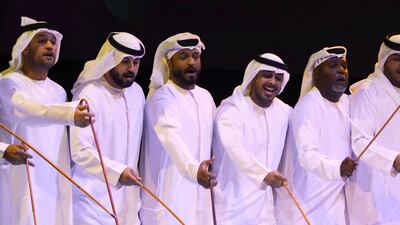
Al Ayala is often performed at weddings and other celebrations. -

Chris Dercon in conversation with architect Sir David Adjaye. -
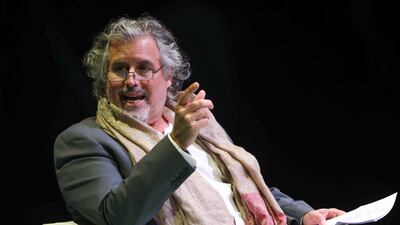
A session on Taking Bollywood Global: Dynamics of Diversity, moderated by Hans Fraikin, Abu Dhabi Film Commissioner. -
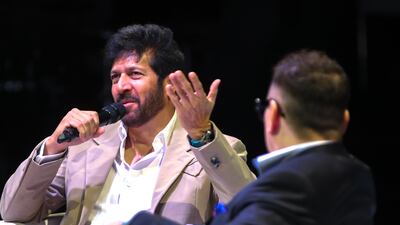
Kabir Khan, director of '83', in the conversation on Bollywood. -
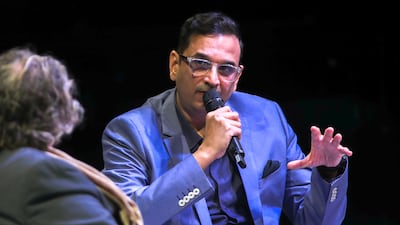
Taking Bollywood Global: Dynamics of Diversity - Aashish Singh, Chief Executive Officer, Lyca Productions. -

Andre Timmins, founder and director of Wizcraft and IIFA, as part of the discussion on Bollywood. -
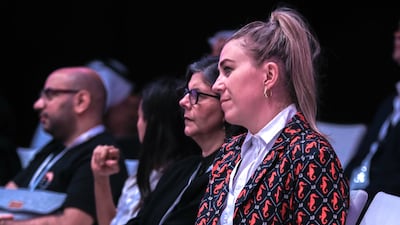
A member of the audience watching a panel called 'Taking Bollywood Global: Dynamics of Diversity'. -
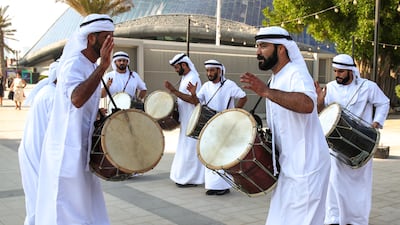
Day three of the Culture Summit Abu Dhabi opened with a traditional performance from the mountain regions. -

The event was a meeting of minds, with visitors from across various sectors sharing their thoughts on the post-Covid cultural world. -

Omar Saif Ghobash, UAE ambassador to Vatican, speaks at the event. -
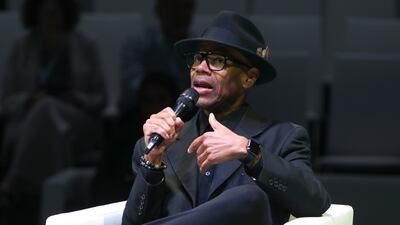
Grammy Award-winning producer Jimmy Jam discussed the regional music scene. -
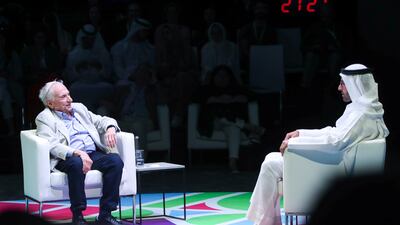
Mohamed Al Mubarak in conversation with Frank Gehry, Architect, Gehry Partners. -
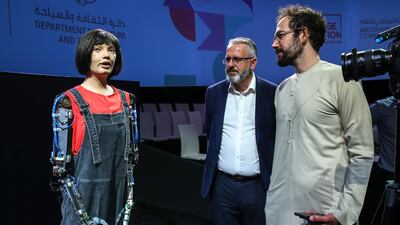
Robot artist Ai-Da, left, in conversation with The National's Hareth Al Bustani, far right, with her creator Aidan Meller, looking on. -
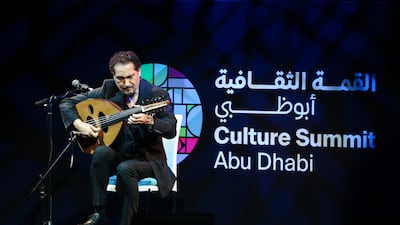
Performance by Iraqi oud virtuoso Naseer Shamma. -
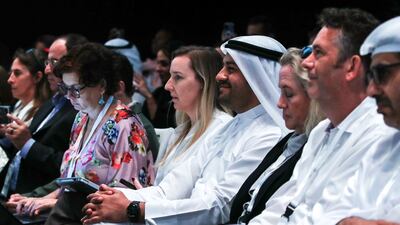
The audience listens to Mohamed Al Mubarak in conversation with Frank Gehry, Architect, Gehry Partners. -
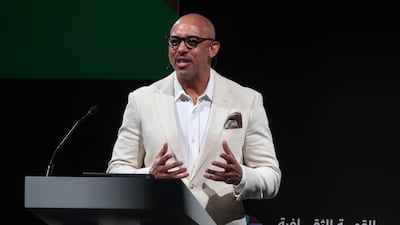
Harvey Mason Jr, chief executive of Recording Academy, lecturing on 'Music and Influence on Global Culture'. -
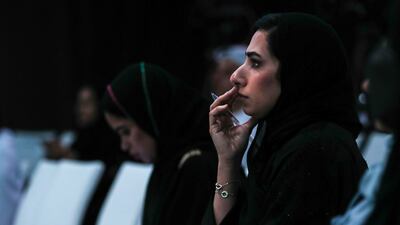
An attendee on day two of the Culture Summit in Abu Dhabi. -
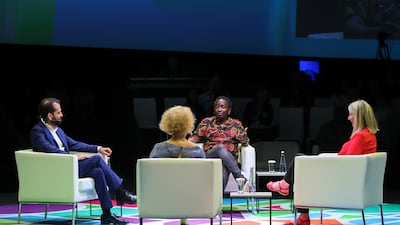
A discussion on 'Mentoring for Impact', with moderator Fiammetta Rocco, senior editor and culture editor of The Economist, and speakers Erica Love, director of Culture Central, Eric Wainaina, artist and founder of The Nairobi Musical Theatre Initiative, and Gael Hedding, director of Berklee Abu Dhabi. -
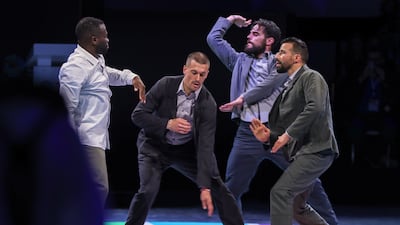
A peformance of 'The Roots' by French Algerian choreographer Kader Attou, a dance performance in which he returns to the origins of hip-hop with an acrobatic celebration of the genre. Eleven dancers perform different facets of the former underground culture and show how the body can bend to different beats: from breakdance to Smurf, electric boogie to popping. -
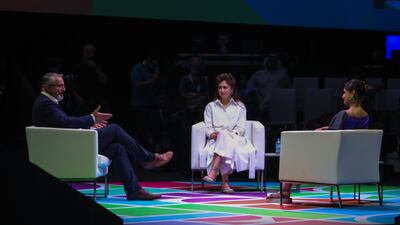
A discussion on 'AI and the Future of Culture', with moderator Priya Khanchandani, head of curatorial + interpretation at the Design Museum, and speakers Aidan Meller, director of Ai-Da Robot and Oxfordians, and Suhair Khan, founder and director of Open/Ended Design. -
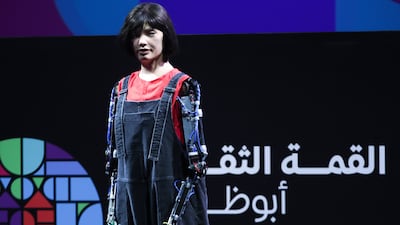
Artificial intelligence-powered robot artist Ai-Da at the Culture Summit in Abu Dhabi. Ai-Da's work reflects human aesthetic tastes and the conditions by which they are shaped. -
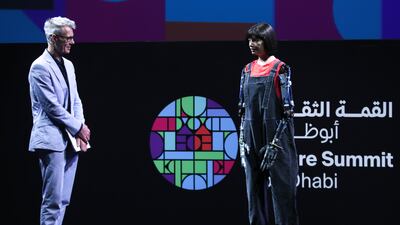
Ai-Da in conversation with Tim Marlow, chief executive and director of London's Design Museum, who analysed the creative philosophy of the world’s first humanoid artist. -
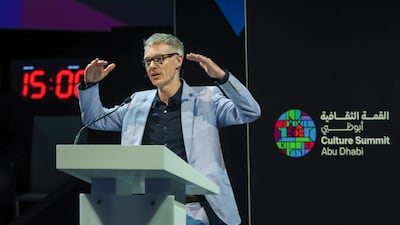
Mr Marlow introduces Ai-Da at the summit. -
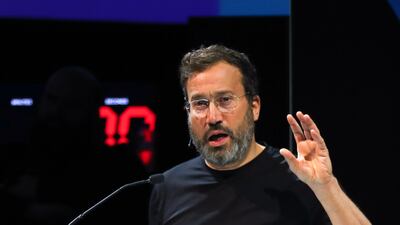
Eyal Weizman, director of research agency Forensic Architecture, speaks on the use of technology such as machine learning, as well as the importance of modelling and simulations. -
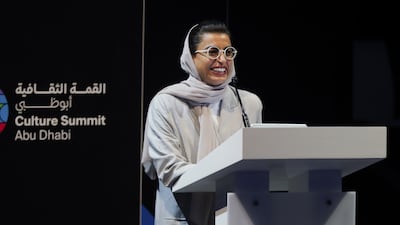
UAE Minister of Culture and Youth Noura Al Kaabi gives the keynote address. -
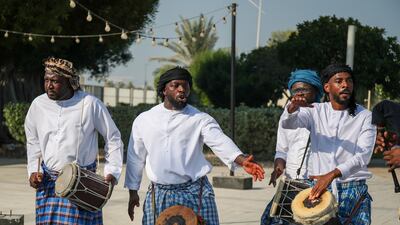
This year’s Culture Summit will be attended by 1,000 people while another 5,000 will take part online. -
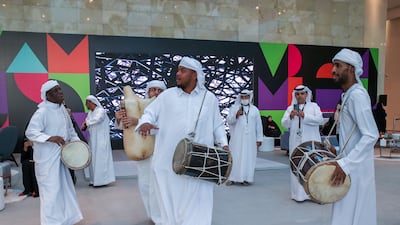
The summit seeks to identify ways in which culture can transform societies and communities around the globe. -
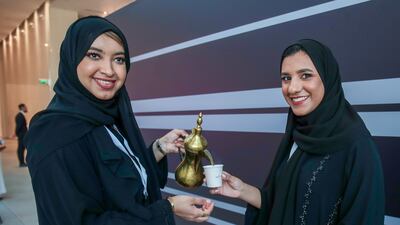
The conference brings together decision makers in culture, heritage, public policy and technology, as well as artists, thinkers and performers from around the world. -
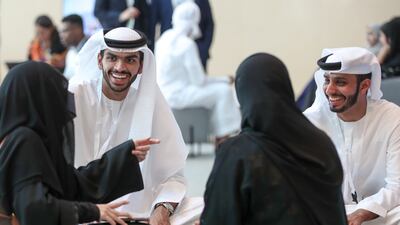
The summit is now in its fifth year. -
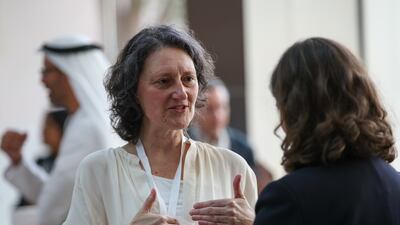
It is organised by Abu Dhabi's Department of Culture and Tourism. -
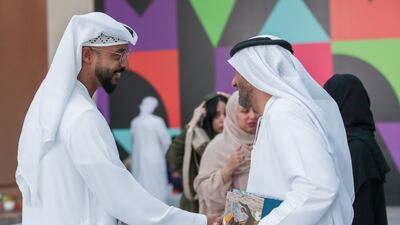
The theme of this year's event is 'A Living Culture'. -
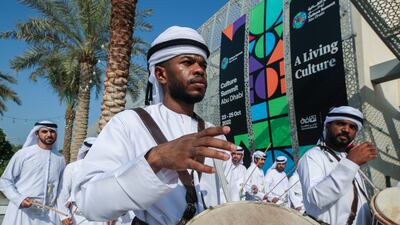
The summit has returned with a more extensive programme. -
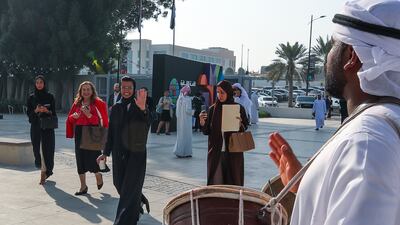
UAE Minister of Culture and Youth, Noura Al Kaabi at the summit. -

In-person attendance returned to the event after it moved online for two years owing to the Covid-19 pandemic. -
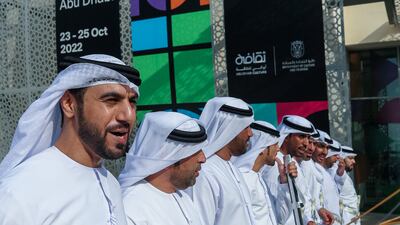
In only five years, the summit has grown from a noble idea into a staple of the international cultural calendar. -
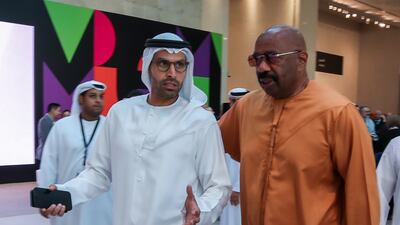
Mohamed Al Mubarak, chairman of DCT — Abu Dhabi, arrives with Steve Harvey. -
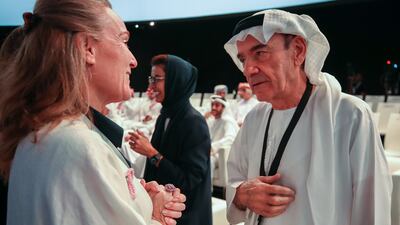
Zaki Nusseibeh, cultural adviser to the President, attends the event. -
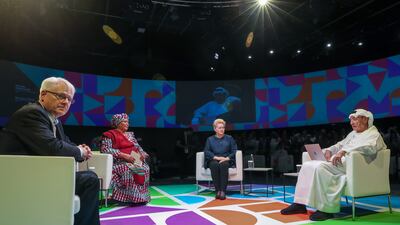
Mr Nusseibeh moderated a discussion on 'The role of culture in making resilient and shared societies', featuring former Lithuanian president Dalia Grybauskaite, former Malawian president Joyce Banda and former Croatian president Ivo Josipovic. -
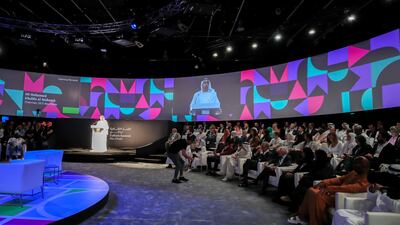
Mr Al Mubarak makes the welcome speech and opening remarks. -
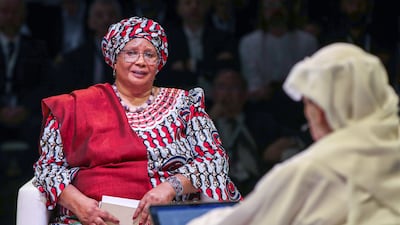
Ms Banda, former president of Malawi, takes part in the discussion moderated by Mr Nusseibeh.



