



The See Monster, a decommissioned offshore North Sea oil rig transformed into an art installation, will now welcome the public on board.
From Saturday, members of the public will have the opportunity to visit See Monster, which is located at the Tropicana, a multi-use indoor and outdoor event space on the Weston-super-Mare seafront.
The piece is one of the largest public art installations in the country and aims to start conversations about reuse, renewables and the British weather.
The project was commissioned as part of Unboxed: Creativity in the UK, a festival running until November that shares ideas and possibilities for the future as envisioned by creatives from the worlds of science, technology, engineering and the arts, in physical and digital spaces.
The See Monster is 35 metres tall and features four publicly accessible levels. It's animated by a 10-metre-high waterfall and a multi-level slide offers an alternative way through the 6,000-piece kinetic installation.
Behind the shimmering scales of the structure is a garden containing grasses, plants and trees that thrive in a seaside microclimate. The garden also features kinetic wind sculptures, artist-designed experiments in sustainable energy generation, a seated amphitheatre and, at its base, a broadcast suite.
Creative studio Newsubstance led the transformation of the industrial structure into a public installation, along with designers, artists and scientists who added engaging interactive elements for the public.
“See Monster is an incredibly unique project, made possible through cross-sector collaboration and the ambitious nature of the Unboxed commission,” says Patrick O’Mahony, creative director and founder of Newsubstance.
“We are incredibly excited to be the first people in the world to reuse a structure in this way, with its potential to provide a blueprint for future global reuse projects.”

The Garden Lab features nine-metre-high trees, plants and grasses, and is cooled through the See Monster’s waterfall, which continually recirculates through the pools at its base. Powering its irrigation system is a combination of art and renewable energy. WindNest, designed by artist Trevor Lee, comprises two rotating airborne pods that generate clean energy through wind and solar technology.
Two kinetic sculptures by artist Ivan Black are set in mesmerising motion by the wind. Made from aluminium and designed to withstand the elements, the sculptures, representing the sun and moon, are designed to be in constant graceful yet chaotic movement.
“We are thrilled that the public can now board See Monster, after witnessing its transformation over the past few months,” says O’Mahony.
“We hope this once-in-a-lifetime experience that started as an experiment in education and creativity in Weston-super-Mare will go on to have a much greater and long-lasting legacy.”
Twisting towers around the world — in pictures
-

From the elegant, unique and angular twisted towers are a dynamic structure to any cityscape. -
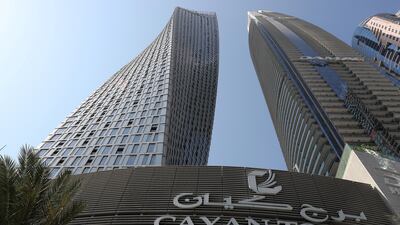
Cayan Tower, in Dubai, was the tallest building in the world with a twist of 90 degrees, when it was completed in 2013. Pawan Singh / The National -
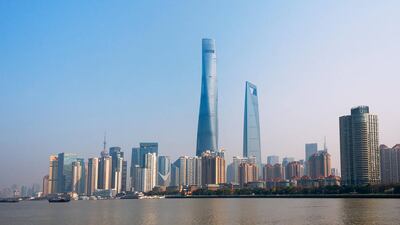
Shanghai Tower by China's Huangpu River is the world's third-tallest building. Photo: Alamy -
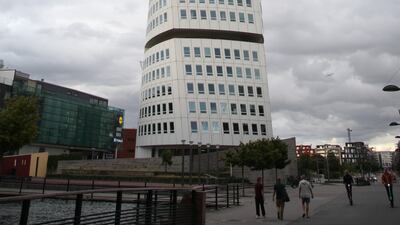
At 190 metres, the Turning Torso in Malmo, Sweden, is the tallest building in Scandinavia. Getty Images -
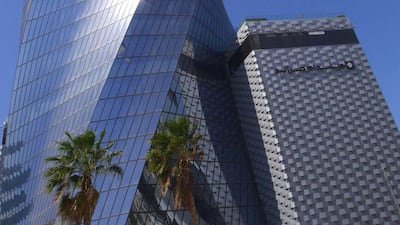
United Tower in the Kingdom of Bahrain sits atop an artificial island. Photo: Alamy -
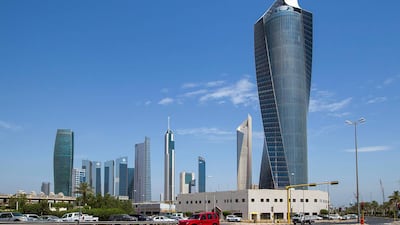
Al Tijaria Tower in Kuwait rotates by 80 degrees as it climbs from the ground level to the top floor. Photo: Alamy -
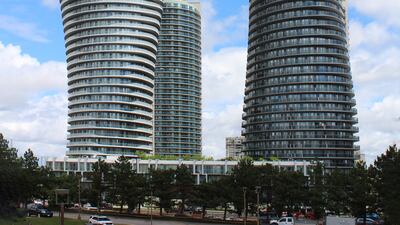
The Absolute World Towers, in Canada, are also known locally as the 'Marilyn Monroe Towers'. Photo: Wikipedia -
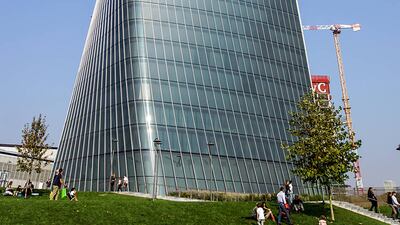
Milan's Generali Tower, also known as the 'The Twisted One' or 'Hadid Tower', was designed by Zaha Hadid. Photo: Alamy -
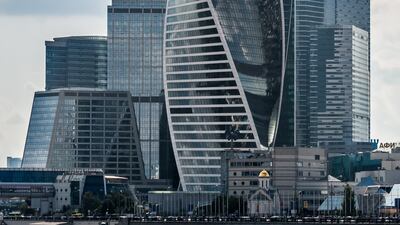
The 55-storey Evolution Tower in Moscow has a swirling structure. Photo: Wikipedia -
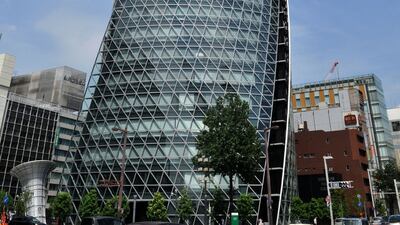
Japan's Mode Gakuen Spiral Towers feature a double-glassed air flow window system and a natural ventilation system. Getty Images -
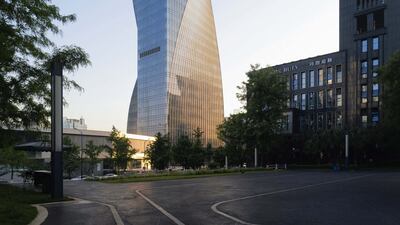
The architects behind China's Dance of Light tower say it is among the most twisted in the world. Photo: Aedas -

The F&F Tower, in Panama City's financial district, stands at 243 meters. Photo: Wikipedia



