


Museums are increasingly becoming the target of climate change protesters.
At the centre is Just Stop Oil, a group of environmental activists responsible for five recent demonstrations in UK museums and the subjects of several arrests owing to their activities.
In June, two campaigners glued themselves to Horatio McCulloch's painting My Heart’s in the Highlands (1860), at the Kelvingrove Art Gallery and Museum in Glasgow.
Also in June, two other activists glued themselves to the frame of Vincent van Gogh’s Peach Trees in Blossom (1889) at the Courtauld Gallery in London.
“I’m sorry everybody, we don’t want to be doing this. We’re here glued to this painting, this beautiful painting, because we’re terrified for our future," said Louis McKechnie, 21, one of the protesters with Just Stop Oil, which has received funding from US philanthropic organisation Climate Emergency Fund.
McKechnie also pointed out climate change is threatening the landscape depicted in Van Gogh’s painting of the countryside near Arles, southern France.
In July, two activists glued themselves to the frame of Tomson’s Aeolian Harp (1809), a painting by JMW Turner at the Manchester Art Gallery. In a statement on their website, Just Stop Oil said the piece depicts areas of London that could be underwater as early as 2030.
The following week saw two more protests by the non-violent group.
Two campaigners glued themselves to the frame of Hay Wain (1821) by John Constable at The National Gallery, London. They also covered the work with a reimagined version depicting how the continued use of oil will destroy the countryside. This version replaced the river with roads, filled the sky with aeroplanes and trees burning in wild fire.
Another demonstration was at the Royal Academy, London, which saw five protestors glue their hands to The Last Supper by Leonardo da Vinci.

“Leonardo da Vinci said out of all the sciences, art is the queen of communication,” said one of the protestors. “In this day and age, communication for truth of the experience of humanity during these times of catastrophic climate change is needed now more than ever.”
As part of their peaceful resistance, Just Stop Oil also spray-paint their logo on the floors or walls of the museum where a protest is taking place. In the Royal Academy, the words “No New Oil” were also spray-painted under the Renaissance masterpiece.
There have been other recent instances of protestors from other groups around Europe infiltrating museums, too..
In May, at the Louvre Museum in Paris, a man smeared cake over the glass shield protecting the Mona Lisa by Leonardo. As he was being escorted away, the protestor yelled he was acting against “people who were destroying the planet”.
More recently, protesters from the Ultima Generazione (Last Generation) group in Italy stuck their hands on Sandro Botticelli’s Primavera (meaning Spring) in the Uffizi Gallery in Florence, while holding a sign reading "Ultima Generazione, no gas, no carbon".
“Is it possible to see a spring as beautiful as this today?” Ultima Generazione said in a statement.
No harm came to the painting, it was reported in local press, as the group had consulted with art restoration experts beforehand. “In the same way that we defend our artistic heritage, we should be dedicated to the care and protection of the planet that we share with the rest of the world,” a statement on the Italian group’s website said.

While museums and galleries have a long history of being at the centre of political and social protests — such as artist Nan Goldin's protests against the Sackler family and America's opioid crisis — this is the first time activists have glued themselves to artworks, potentially damaging priceless masterpieces.
Minimal damage has been reported from museums, however, and solvents can be used to dissolve the glue without affecting the paintings. After all, the longevity of the artworks and art world depends on the longevity of our planet, say activists.
The main aim of Just Stop Oil is to stir up publicity, something they've successfully done. Yet, while many have applauded their efforts, others aren't impressed. Nadine Dorries, Britain’s culture minister, for example, tweeted the protesters were “attention seekers” who “aren’t helping anything other than their own selfish egos".
"Disrupting access to our fabulous cultural assets and putting them at risk of damage is unacceptable. These protestors should be removed and held responsible for the damage and disruption," she said.
The debate only serves to push the conversation forward, say activists who are urging organisations to take immediate action against environmentally unfriendly materials.
"Directors of art institutions should be calling on the government to stop all new oil and gas projects immediately," McKechnie said in a statement on Just Stop Oil's website. "We are either in resistance or we are complicit."
It is only one in a number of ways activist groups across the world are now trying to drive this message home.
10 little-known facts about world-famous artworks, from 'Mona Lisa' to 'The Scream' — in pictures
-

The background of Leonardo da Vinci's 'Mona Lisa' is as highly debated by scholars as the subject's enigmatic smile. Reuters -
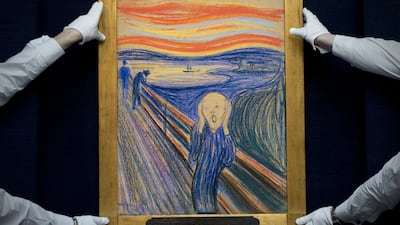
The red sky in Norwegian artist Edvard Munch's 1895 masterpiece 'The Scream' is, according to an astronomer in 2004, attributable to the effects of the Krakatoa volcano explosion in Indonesia in 1883 that lasted years. AFP -
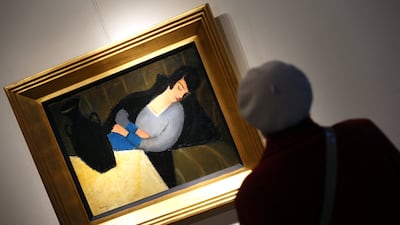
The survival of Hungarian artist Robert Bereny's lost 1928 painting 'Sleeping Woman with Black Vase' was confirmed after it appeared in the 1999 Hollywood film 'Stuart Little' and an art historian tracked it down. AFP -
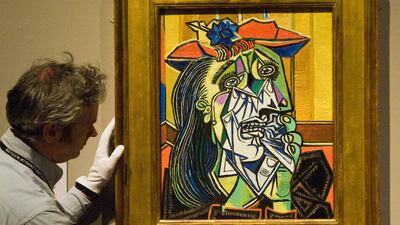
Pablo Picasso's 'Weeping Woman' was held to ransom in the mid-1980s by a group in Australia who demanded more funding for the arts. Getty -
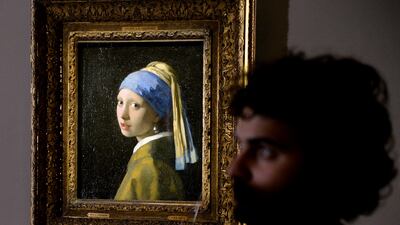
Debate continues in the art world as to whether the earring in Vermeer's 'Girl with a Pearl Earring' is really an earring. AFP -
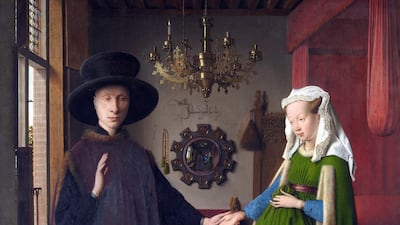
'The Arnolfini Portrait' by Jan van Eyck features the artist's personal tag in the background on the wall. Getty Images -
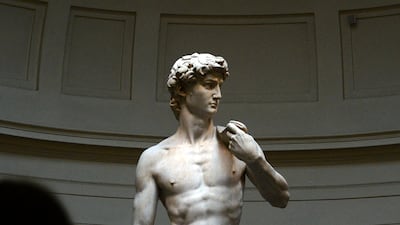
Michelangelo's 'David', created between 1501 and 1504, is more than a paean to youth and beauty — its stern gaze was interpreted as a warning against the ambitions of Rome from its native city state of Florence. AFP -
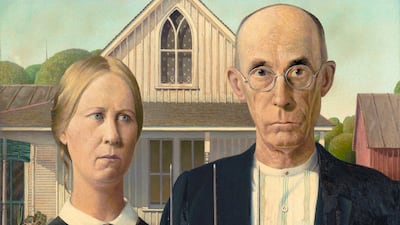
Artist Grant Wood asked his sister and his dentist to act as models for his masterpiece, 'American Gothic'. Getty -
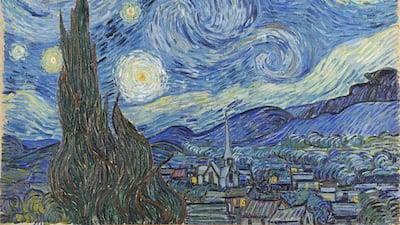
'The Starry Night' was the view from the window of the asylum Vincent van Gogh had admitted himself to. Getty -
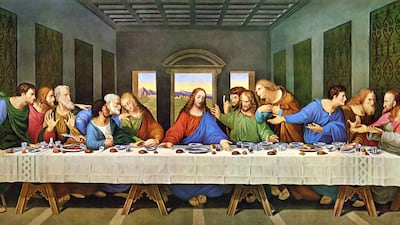
Leonardo da Vinci's 'The Last Supper' depicts the moment Jesus told his Disciples one of them would betray him. Photo: Wikimedia Commons



