


The photographers presenting their work at this year's Slidefest Palestine event in London offered a strongly-worded rebuke to western media outlets about the photojournalism they commission in Gaza and the West Bank.
Dubai’s Gulf Photo Plus launched the event on Wednesday at the University of Greenwich’s Stephen Lawrence Gallery, focusing on photographers from or working in Palestine: Tanya Habjouqa, Maen Hammad, PhotoKegham/Ozge Calafato, Samar Hazboun and Rehaf Batniji.
Habjouqa and Hammad, who shoot individual projects and freelance for western media outlets, highlighted the problems of media access and misrepresentation across Palestine.
Foreign reporters, as well as those from the West Bank, are effectively banned from Gaza. The images published in the media are mostly from local photographers, or stringers for newswires such as AP and Reuters. But Habjouqa, who lives in East Jerusalem, says that some media outlets have been shying away from using their work recently.
“I am extremely frustrated by the access to photographers in Gaza,” she says. “Many US outlets are not hiring because of what they call the ‘duty of care’ – they do not want to be responsible if something happens.”
Foreign media are allowed in the West Bank but coverage of the territory is often not a priority for media outlets. Israel is also seen to be actively containing the narratives emerging from Palestine. It shut down Al Jazeera’s Palestinian bureau last week, raiding its East Jerusalem offices, and the Israeli military often stages press events.
“Foreign journalists fly into Ramallah, and events are frequently misrepresented,” says Hammad, who splits his time between Washington DC and Ramallah. “But my role is not to take a photo and leave. I’m part of this community.”
The questions of press freedoms and the challenges faced by photojournalists in accurately depicting the region are by no means new to Slidefest, but they have achieved a crucial significance given the live nature of the conflict, and made the event particularly emotionally charged.
Gulf Photo Plus launched Slidefest Palestine in 2009 in Dubai, after they looked for a place for photographers to come together and present recent projects.

GPP’s director, Mohamed Somji, explains that the presentation format makes it more intimate than an exhibition, and usually entails around five photographers showing new work to an audience.
Since 2009 there have been more than 30 gatherings, mostly at Alserkal Avenue but also in sites abroad such as Cairo, Riyadh, Jeddah and Bahrain.
This year's event showed the breadth of work being produced in Palestine, from photojournalism to efforts to preserve historical archives, and included a tribute to the photographer Majd Arandas, who was killed by an Israeli air strike in November.
In one of the most harrowing accounts, Samar Hazboun from Bethlehem showed her project about women who are forced to give birth at checkpoints. This is often because something has gone wrong during their labour and they are delayed by the Israelis while trying to get to the hospital.
More often than not, they lose their babies. In other cases, the infants suffer complications with lasting effects on their development.
Often, the only proof the women have of the episodes are the baby clothes that they had prepared for their children, and in rarer cases, a death certificate.
-
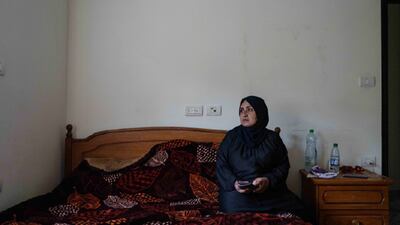
Umm Naim has been stuck in the West Bank since October 7, having travelled from Gaza for surgery for her fourth child. While there, she heard that her three other children were killed by an airstrike. From a series by Samar Hazboun. -
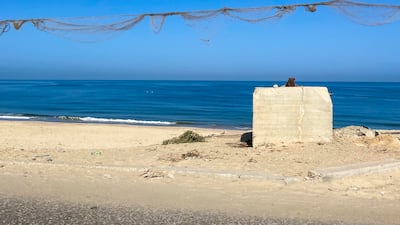
Rehaf Batniji took this image of Gaza on October 6. The still sky and sea give no sense of what is to come. -
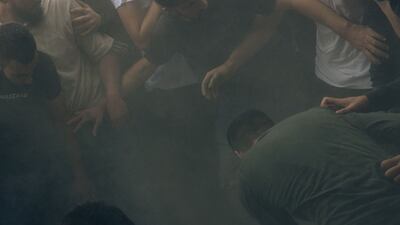
Maen Hammad took this image of a funeral procession in the West Bank commemorating a man shot by an IDF sniper. Courtesy the artist -

Photo Kegham, which opened in 1944 in Gaza, was the main studio for the Gazan people throughout most of the 20th century. Its archives were destroyed, and its archivist killed, in the current war. -
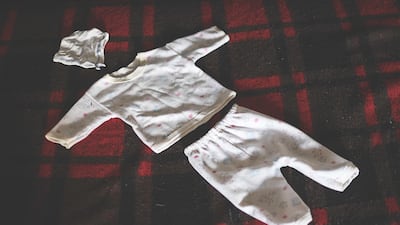
In the series Beyond Checkpoints, Samar Hazboun photographed mothers who were forced to give birth at checkpoints. Their babies often died as they did not make it to the hospital in time. -
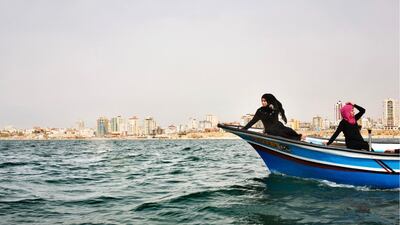
Tanya Habjouqa took this image of two women in Gaza celebrating their school graduation before the current war. Because of restrictions on how far at sea they could travel, their boat ride was joyous but short. -
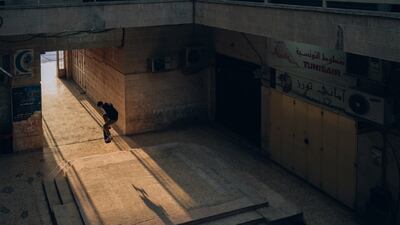
An image from Maen Hammad's project, Landing, which was presented at Slidefest Palestine at the University of Greenwich. Courtesy the artist


Hazboun is currently photographing Gazans who had travelled to the West Bank for medical care before October 7 and remained trapped there because the war has made their return impossible.
One woman is in the West Bank because her fourth child needed heart surgery. A few months ago she received the news that an air strike had killed her three older children in Gaza.
After Hazboun’s presentation, many audience members were in tears.
The Turkish media scholar Ozge Calafato presented the work Studio Kegham, which was set up in 1944 by the Armenian photographer Kegham Djeghalian and became the main photography studio for Gaza.
Armenians were prohibited by the Ottomans to take up many professions and many became chemists – and then, when the chemical processes of photography were introduced, ran most photography studios in the Ottoman Empire.
An air strike in October destroyed the archive and killed Marwan Tarazi, who had been looking after it. Since then, Kegham’s grandson, an artist, has taken over the project.
He now has only three small boxes left – which he discovered only recently by chance – and has put out a social media call to Gazans to help crowdsource images from their families that were taken at the studio.
The night closed on the work of Rehaf Batniji, a Palestinian photographer who was able to flee Gaza in December. Her work is also being shown in Alserkal Avenue’s current Venice exhibition, When Solidarity Is Not a Metaphor.
She presented images that she took on the day of October 6 showing the beaches of Gaza off Al Rashid Street. They show fishermen’s huts, cobbled together out of bits of corrugated metal and polyester blankets, and views on to the calm sea.
“Sometimes I see the blue sky and the blue beach and I can’t imagine that there is aggression and oppression elsewhere,” she said. “I will never post anything about the worst times and the bad things. I will only post things with positive vibes, because that is what we need to remember.”

