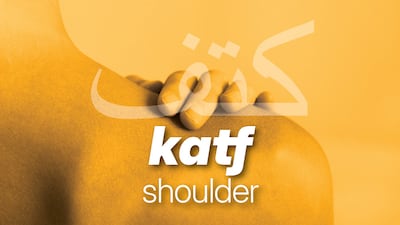

Our Arabic word of the week, katf, meaning shoulder, carries both a physical definition and a cultural meaning tied to support and responsibility. It refers to a part of the body, but in everyday speech it often signals something more.
The shoulder is closely linked to strength and movement. It bears weight, helps maintain balance and enables daily tasks. It is also a place of closeness. A child leaning against a parent, or a friend resting their head, reflects comfort and trust in a simple, familiar gesture.
Katf also extends into metaphor. To lean on someone’s shoulder suggests reliance, whether practical or emotional. Standing shoulder to shoulder conveys unity, often used to describe people facing a challenge together. The emphasis is on shared effort rather than individual strength, reinforcing a sense of collective support.

This layered meaning often puts in an appearance in Arabic poetry. The Egyptian poet Ahmed Shawqi writes: “They carried upon their shoulders a radiant majesty, leaving eyes envious of those very shoulders.” The image turns the act of carrying into a symbol of honour, where what rests on the shoulder reflects status as much as strength.
The shoulder also carries formal significance. In the military and police, ranks are displayed on it, marking authority, experience and duty. Positioned there, these insignia reflect the idea that responsibility is something borne. The higher the rank, the greater the weight carried, both in leadership and accountability.

In everyday language, to carry something on one’s shoulder can mean taking on a duty. It suggests resilience and readiness, a willingness to bear what is required. At the same time, the shoulder is what people turn to in moments of grief. It offers quiet reassurance, showing that support is not only about strength, but presence.
The word also appears in expressions of celebration. A phrase that translates to “we will carry you on our shoulders” is used to honour someone with pride. It evokes scenes of collective joy, where a person is lifted above a crowd in recognition of achievement or status. Here, the shoulder becomes a platform, not for burden but for tribute.
What gives katf its depth is this balance between the physical and the symbolic. It describes a body part while expressing how people depend on one another. In Arabic, the two meanings sit naturally together, linking action with connection, and turning a simple word into one that reflects both burden and belonging.

