


Turkish novelist Elif Shafak's book of essays, Black Milk, uses the idea of milk as a metaphor connected to postpartum depression. The title came from her grandmother, who warned her that if she cried too much, her milk would turn black and sour and she would not be able to feed her baby.
This week’s Arabic Word of the week, laban, has powerful resonance around the world as the first substance we consume after birth.
Laban in classical Arabic means milk. It is used across the Arab world and in various dialects as well as, sometimes, dairy products.
Laban comes from the verb labeena, derived from the three Arabic letters lam bah noon. As a verb, labeena has several meanings. Two of the most common meanings are connected to the process of presenting milk. The first refers to the process of any female mammal producing milk for her offspring. The other meaning refers to any person presenting or offering milk to someone else.
Laban can also refer to sap or liquid that comes from a tree, known as laban of the tree.
While laban refers to milk, colloquially in many Arabic dialects it can also refer to yogurt and other fermented milk products.
In the Levant region – in Syria, Lebanon, Jordan and some parts of Iraq – laban can refer to yogurt or labneh, the strained yogurt-like cheese. In North Africa, and specially in Morocco, it can refer to buttermilk. It is also pronounced in various ways including lban, lben and leben.
-
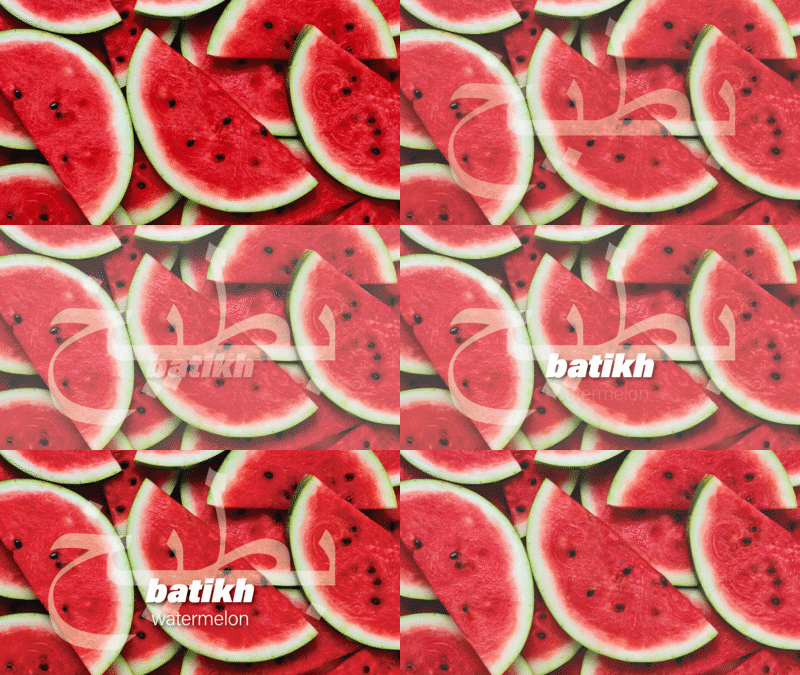
The Arabic word for watermelon, batikh, has become a symbol of Palestine. All photos: The National -

The Arabic word for union, etihad, is intrinsically connected to the UAE -

The Arabic for water, ma'a, is a universal symbol for rebirth -

The Arabic for echo, sada, is a literary device in poetry -

Aasal, the Arabic word for honey can also be used in a complimentary manner -

Jisim, the Arabic word for body extends across chemistry, medicine and aphorisms -

Jawab, the Arabic for answer resonates with knowledge -

Fikir is the Arabic word for think or to think -

The Arabic word for hissan or horse can have more than one origin -

The Arabic word shaghaf or passion refers to intense love -
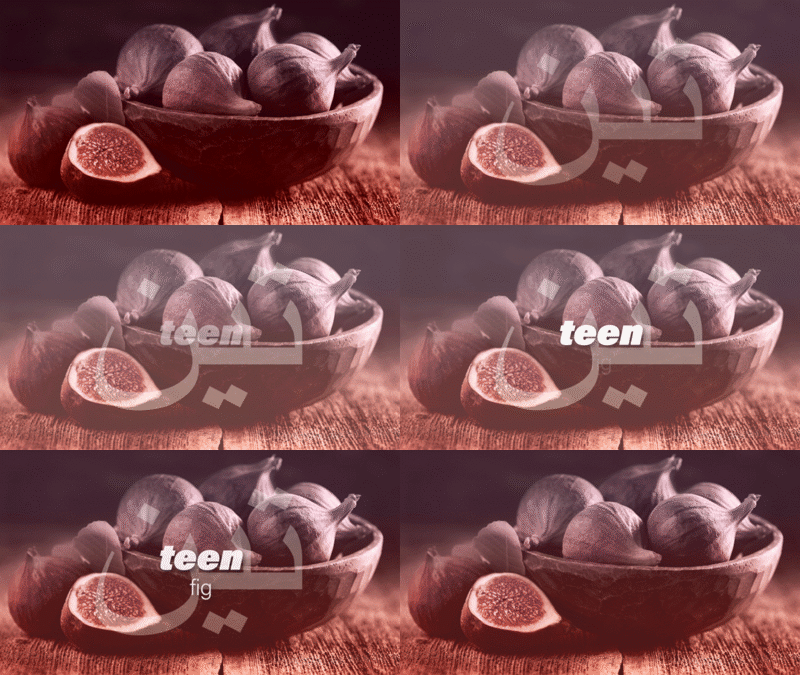
The Arabic word teen or onion doesn't have a clear Arabic source -

The Arabic word saraha means honesty -
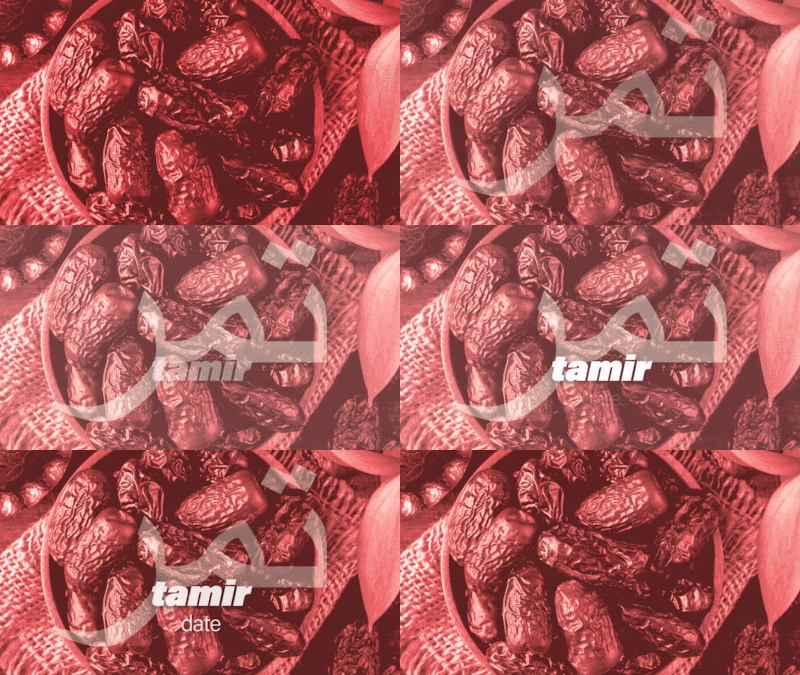
Tamir, the Arabic word for date is a fruit that has over 400 variations -

The Arabic word for tongue, lisan, is connected to the idea of truth -
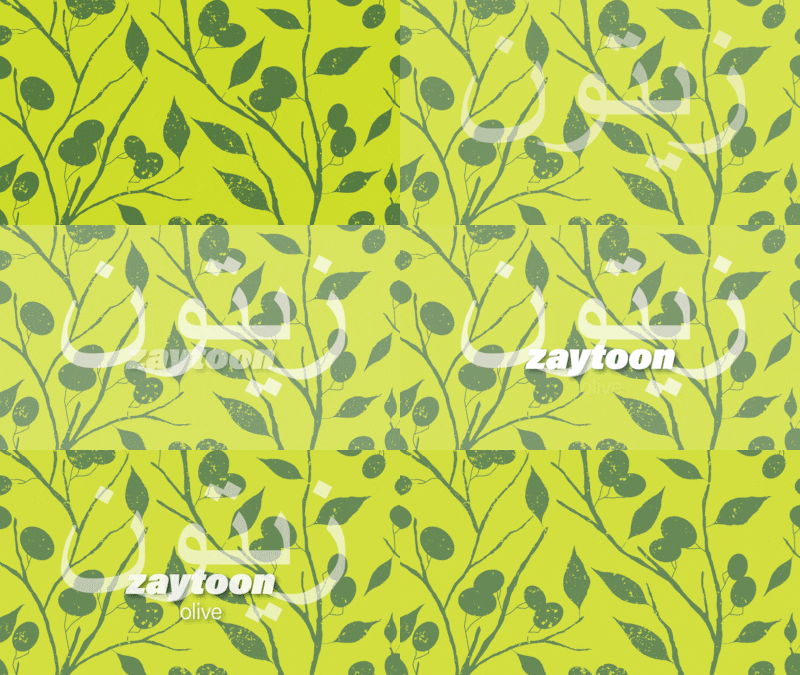
The Arabic word for olive, zaytoon, is also the word for olive tree -

The Arabic word for sign, alama, has several meanings


There is also the Arabic word, haleeb, which refers specifically to milk and not any other milk-based products. However, haleeb has a different linguistic source, halab, which means to express milk.
Laban is a staple in Arabic cuisine and has a rich history in the region’s culture. It is used as a base for sauces, dips, as a key ingredient in many drinks, as well as both savoury and sweet dishes. Some popular Arabic dishes that include laban are kibbeh labanieh, or meat dumplings in yogurt sauce; kousa bil laban, or zucchini in yogurt; fatteh, a layered dish with yogurt and shish barak, meat dumplings in yogurt.
Laban is also mentioned in the Quran. It is presented as a divine sign of purity with strong spiritual significance for its provision to humanity. The concept of milk is used to show God’s power and creation, highlighting how it is produced within mammals bodies', separate from other liquids.

