


The pandemic cost the global creative economy up to 40 per cent of lost revenue and more than 10 million jobs in 2020, according to a joint study by the Department of Culture and Tourism — Abu Dhabi and Unesco.
Launched on Monday at Manarat Saadiyat in Abu Dhabi, the report, titled Culture in Times of Covid-19: Resilience, Recovery and Revival, provides an overview of the pandemic's impact on the cultural and creative industries with policy suggestions for its recovery.
These findings will form part of the discussions that will take place during Culture Summit Abu Dhabi, which will run from October 23 to 25.
In addition to jobs and revenues lost, the report states that, in 2020, in-person cultural experiences declined in gross value added eight times greater than the global average for the whole economy, with some subsectors declining 25 per cent overall.
The report states that all regions were affected, with the Arab states experiencing a slow growth of 1.5 per cent over the period.

The job losses — with freelancers and those on short-term contracts hardest hit — was primarily due to the closure of cultural venues, the cancellation and postponement of events and social distancing measures put in place as a safety precaution against Covid-19.
"This is a massive number,” said Mohamed Khalifa Al Mubarak, Chairman of the Department of Culture and Tourism — Abu Dhabi, at the launch of the report. "These are 10 million people who, a year before that, were making some fantastic content.
“These individuals had something special that they gave to a wider audience and all of a sudden they had nothing left.
“And to make things worse, in certain places there was not the right policies to protect them. That's something that should be a wake-up call for all of us."
Also at Manarat Saadiyat was Unesco assistant director-general for culture Ernesto Ottone, who explained how the pandemic highlighted some of the structural problems within the creative and cultural sector.
"We were confronted during these two years of the pandemic with the technological divide around the world and how that affected digital learning in education, and also how that content was provided by the cultural sector," Ottone said.
"So the problem is we are tackling some issues that existed before Covid-19 placed them in our face. It was like a bomb that exploded and everyone was trying to find quick, short or some longer solutions, but without thinking of the whole ecosystem.”
A blueprint for the future
The report calls for a holistic approach when it comes to cultural policy-making in the wake of the pandemic and as a safeguard against future challenges.
"It is almost like our blueprint to make sure that whatever comes our way in the future, whether economic crises, recessions and pandemics, we are ready for them," Mubarak said.
"We want to make sure we have all the policies and tools to basically deter any difficulties we would face together.”
Some of the reforms identified in the report include addressing the technological divide and supporting struggling regions in making that digital transformation.
Cultural policies also need to be reshaped with a greater focus on collaboration between the government, private sector and civil society to ensure diversity of content and more sustainable initiatives.
Scroll through the gallery below for pictures from last year's Culture Summit Abu Dhabi
-

Noura Mohammed Al Kaabi, the UAE's Minister of Culture and Knowledge Development makes her keynote address at the Culture Summit 2019. Manarat Al Saadiyat, Abu Dhabi. All photos by Chris Whiteoak / The National -
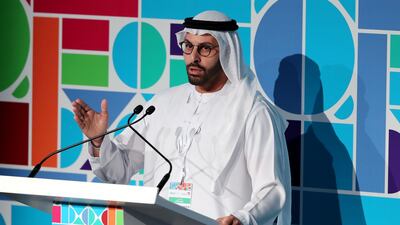
Mohamed Khalifa al Mubarak, Chairman, Department of Culture and Tourism makes his opening remarks at the Culture Summit. -
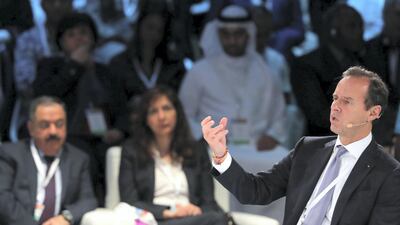
Jorge Fernando Quiroga, Former President of Bolivia, speaks on the topic of Cultural diplomacy and responsibility in the age of technology at the Culture Summit. -

Mina Al Oraibi, Editor in Chief of The National, speaks on the topic of How can the media survive the new age of technology at the Culture Summit. -
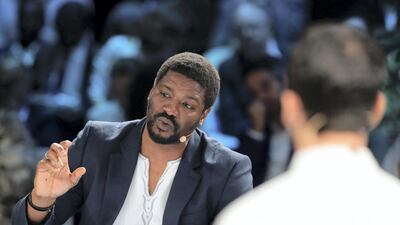
Artist Emeka Ogboh speaks on the topic of How museums can creatively embrace the digital age at the Culture Summit. -

Zaki Nusseibeh, UAE Minister of State speaks on the topic of Cultural diplomacy and responsibility in the age of technology at the Culture Summit. -
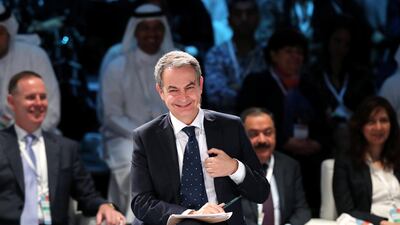
José Luis Rodríguez Zapatero, Former Prime Minister of Spain speaks on the topic of Cultural diplomacy and responsibility in the age of technology at the Culture Summit. -
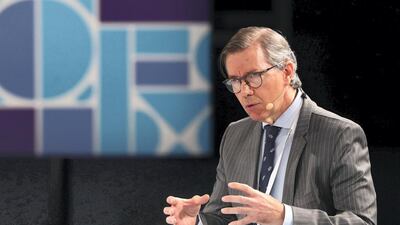
Bernardino Leon, Director General, Emirates Diplomatic Academy. speaks on the topic of Cultural diplomacy and responsibility in the age of technology at the Culture Summit. -
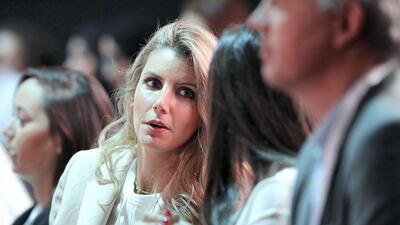
The crowd ask questions on the topic of Cultural diplomacy and responsibility in the age of technology at the Culture Summit. -
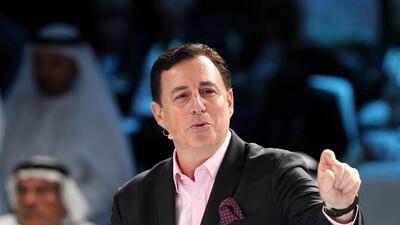
John Defterious, Emerging markets editor and host, Marketplace middle east CNN speaks on the topic of How can the media survive the new age of technology at the Culture Summit. -
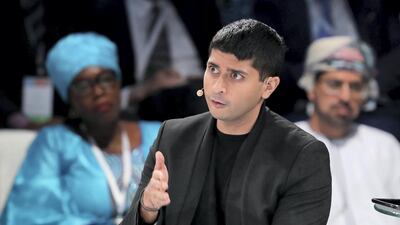
Shashi Menon, Founder and Chief Executive officer, Nervora speaks on the topic of How can the media survive the new age of technology at the Culture Summit. -
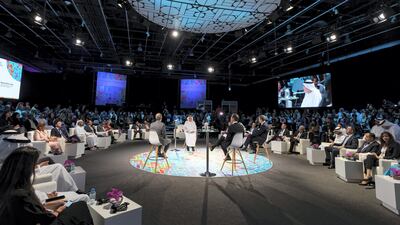
A panel discussion on the topic of Cultural diplomacy and responsibility in the age of technology at the Culture Summit. -

A performance by Marcos Lutyens at the Culture Summit. -

Kudo Takashi, teamLab, Artist collective/Digital Art Museum, Tokyo speaks on the topic of How museums can creatively embrace the digital age at the Culture Summit. -
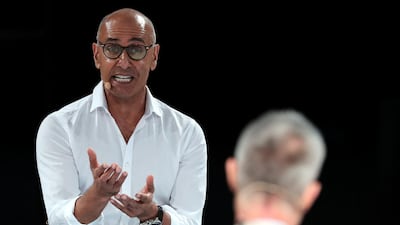
Farooq Chaudhry, Producer, Akram Khan Company speaks on How we define popularity v populism at the Culture Summit. -

Apian Poshyananda, Artistic director, Bangkok art Biennale speaks on the topic of How museums can creatively embrace the digital age at the Culture Summit. -
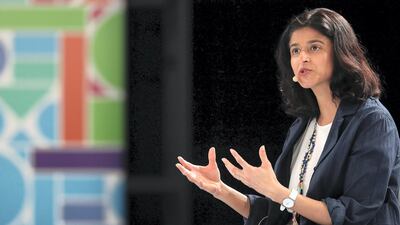
Munira Mirza, Executive Director, Culture, King's College London speaks on How we define popularity v populism at the Culture Summit.


A stronger case for the value of culture also needs to be made, the report states, by positioning its contribution “as a universal public good, ensuring cultural participation for all as a prerequisite for human dignity and well-being”.
Al Mubarak pointed to the UAE as a useful model on how the sector can be integrated within policy circles.
"I think the way we perceive culture, from a governmental perspective, is going to be very different.
“It is no longer going to be seen as an independent sort of entity; it is going to be linked with education, economy, finance, tourism and the list goes on.
“That in itself will provide us with a different view when making policy, moving forward."
More timely and accurate information on the sector’s health is key for better policy outcomes, and this joint report will be the first of more to come, Al Mubarak said.
"We need to make sure that we continuously enhance data and make it available for all regions around the world because the effect of one affects the other and we should never think otherwise.
"We need to continuously collaborate with more institutors around the world to make these reports more robust and attainable for people from all over the world.”
From falconry to sadu, the UAE has 12 traditions on Unesco's intangible heritage lists — in pictures
-

Arabic calligraphy is the latest addition from the UAE, among other countries, to Unesco's intangible cultural heritage lists. AFP -
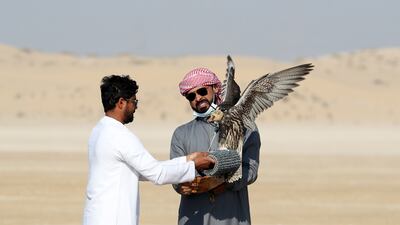
Falconry has been practised in the Arab region for 4,000 years, mainly by desert-dwelling Bedouins as an important form of hunting and fishing in a land with scarce natural resources. Pawan Singh / The National -
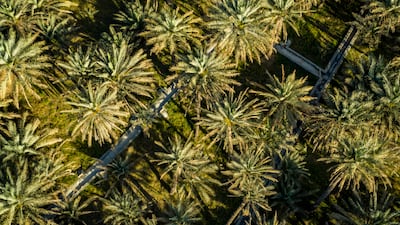
Learn more about al aflaj system in Al Ain in 'Emirates from Above', a National Geographic film. The traditional irrigation network system in the UAE has been added to Unesco's list. -
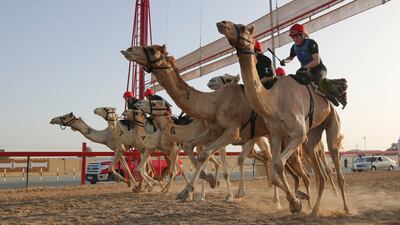
Camel racing, an age-old tradition in the region, is still as popular today. EPA -
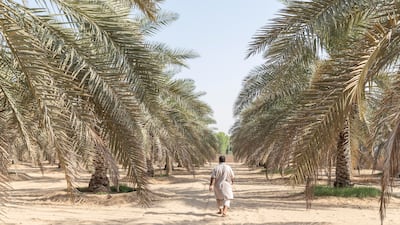
Date palms have been used for centuries for myriad purposes around the Gulf, including the UAE. It was added by Unesco in 2019. Antonie Robertson / The National -
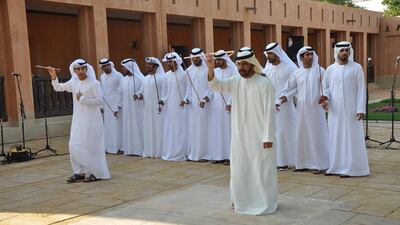
Al azi poetry has been offered protected status by Unesco to develop a clear national identity in the UAE. -
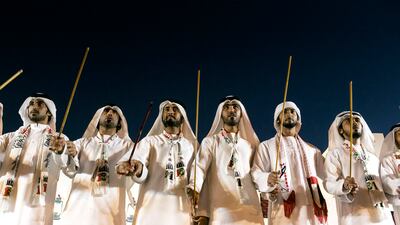
Al rafza is a traditional art form performed by men during special occasions, from weddings to national festivals. Reem Mohammed / The National -

The serving of Arabian coffee is a vital part of hospitality in the region and 'considered a ceremonial act of generosity', says the Unesco inscription. Khushnum Bhandari / The National -
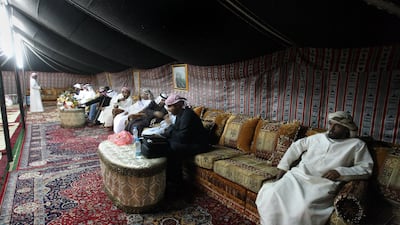
The majlis, a cultural and social space prevalent throughout the region, was added in 2015 on behalf of the UAE, Saudi Arabia, Oman and Qatar. Jaime Puebla / The National -
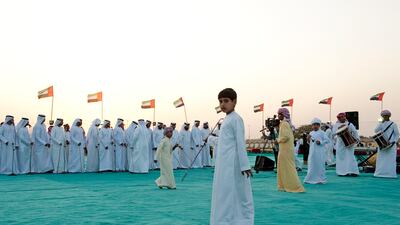
Al ayyala is a cultural performance practised in north-western Oman and throughout the UAE. It was added in 2014. -
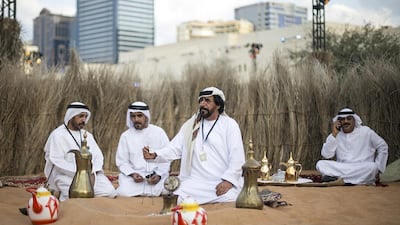
Al taghrooda, traditional Bedouin chanted poetry, was added in 2012. Mona Al Marzooqi / The National -
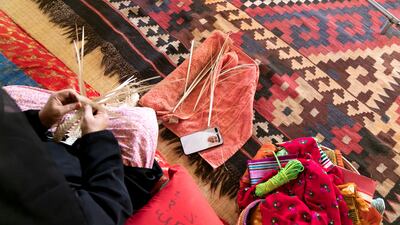
Sadu, a traditional weaving technique, is on the list twice, once for the UAE and once for Saudi Arabia and Kuwait. It was added for the UAE in 2011. Reem Mohammed / The National



