


British farmers are cashing in on soaring wheat prices by selling stored grain at higher rates, as Ireland urges its farmers to grow more and the G7 hosts an emergency meeting to tackle food security.
Irish dairy and beef farmers are being encouraged to start growing crops, while agriculture ministers from G7 countries including Britain’s George Eustice are set to meet on Friday to discuss grain shortages and food price volatility following Russia’s invasion of Ukraine.
Farmers in the UK who managed to store grain over the winter months are securing sky-high prices on grain they sell now, but challenges lie ahead as the cost of fertiliser needed to grow this year’s crops has also risen.
“I don't want to sound too enthusiastic because it's a terrible situation we're in at the minute, but the wheat price is really good. And luckily, we held a bit back in store to sell in the spring,” Richard Heady, a farmer who grows wheat, oats, barley and beans near Milton Keynes in Buckinghamshire, told the BBC.
“We find we can quite often get quite good prices by holding on to it quite late to the spring and it has definitely paid off this year. We've got £300 [$394] a tonne for that milling wheat at the moment, which is probably towards three times more than we've got a couple of years ago.”
Mr Heady said he was very “surprised” by how high the price of wheat is.
“We can often get perhaps a £20 premium by holding on to it. But this year, it's been a £150 premium by keeping hold of it,” he added.
-
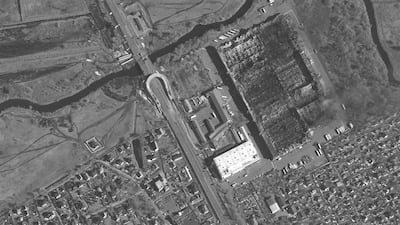
This satellite image provided by Maxar Technologies shows destroyed and burning warehouse buildings in Stoyanka, Ukraine, in the western Kyiv region, during the Russian invasion. AP -
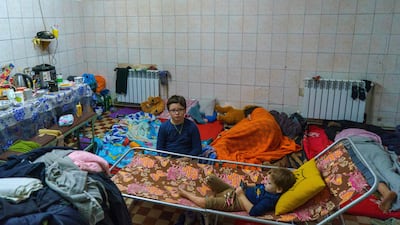
Children shelter in a metro station in Kharkiv. Moscow said on March 10, 2022, that it will open daily humanitarian corridors to allow civilians fleeing fighting in Ukraine to reach Russian territory, despite Kyiv insisting that no evacuation routes should lead to Russia. AFP -
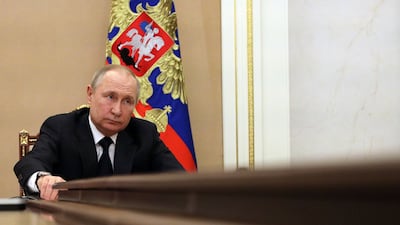
Russian President Vladimir Putin during a videoconference meeting with government members at the Kremlin in Moscow. The meeting focuses on minimising the effects of sanctions on the Russian economy. Russian troops entered Ukraine on February 24, prompting the country's president to declare martial law and triggering a series of severe economic sanctions imposed by western countries. EPA -
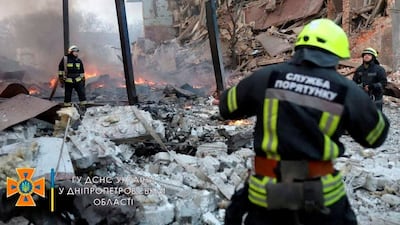
Rescuers work among remains of buildings damaged by an air strike in Dnipro, Ukraine, as Russia's attack on the country continues. Reuters -

Members of the National Guard of Ukraine, Oleksandr and Olena, listen to a priest at their wedding in Ukraine. Reuters -

People fleeing Russia's invasion of Ukraine warm up by a fire near the train station in Lviv, Ukraine. Reuters -
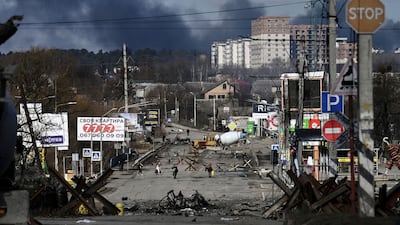
Russian forces rolled their armoured vehicles up to the northeastern edge of Kyiv, edging closer in their attempts to encircle the Ukrainian capital. AFP -
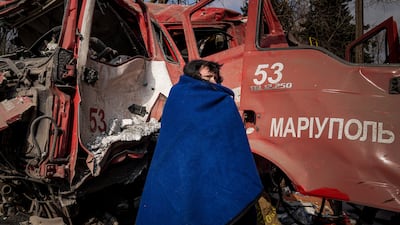
A woman covers herself with a blanket near a damaged fire truck after shelling in Mariupol, Ukraine. AP Photo -

A Ukrainian soldier hides from a helicopter air strike near Demydiv, Ukraine. Reuters -
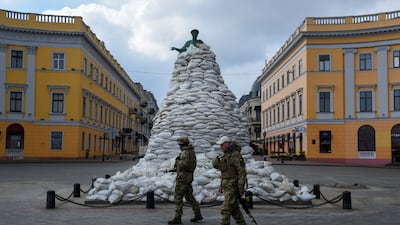
Ukrainian soldiers walk past a monument of the city founder Duke de Richelieu, covered with sand bags for protection, in Odessa, Ukraine. Reuters -
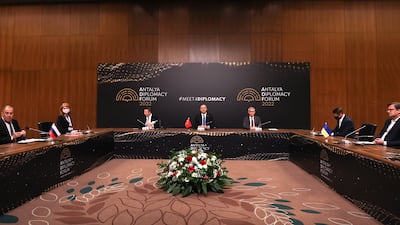
Russian Foreign Minister Sergey Lavrov, left, Turkish Foreign Minister Mevlut Cavusoglu, centre, and Ukranian Foreign Minister Dmytro Kuleba. EPA -
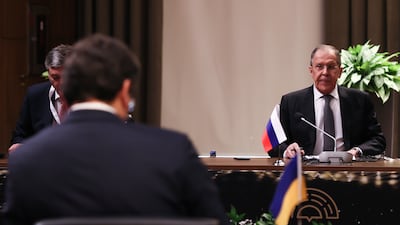
Russian Foreign Minister Sergey Lavrov in talks with Ukrainian counterpart Dmytro Kuleba during a tripartite meeting chaired by Turkish Foreign Minister Mevlut Cavusoglu, in Antalya, Turkey. AP -
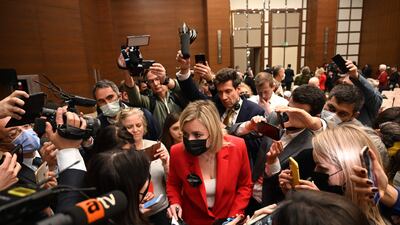
Russian Foreign Ministry spokeswoman Maria Zakharova speaks to the media as the foreign ministers of Ukraine, Russia and Turkey hold talks in Antalya, 15 days after Russia launched a military invasion on Ukraine. AFP -
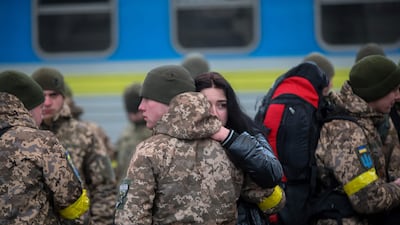
A Ukrainian serviceman says goodbye to his girlfriend before departing in the direction of Kyiv at the central train station in the western Ukrainian city of Lviv. AFP -

Valerii Sushkevych, president of the Ukraine National Paralympic Committee, and the Ukraine delegation raise their fists and pose with a banner at the Beijing 2022 Winter Paralympic Games. Reuters -

A member of the Ukrainian team cries during a moment of silence at the Zhangjiakou athletes village during the Beijing 2022 Winter Paralympic Games. AFP -
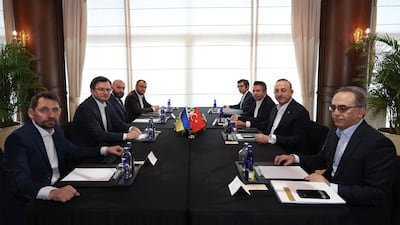
Turkish Foreign Minister Mevlut Cavusoglu, right, and Ukraine Foreign Minister Dmytro Kubela, second left, in Antalya, Turkey. AFP -
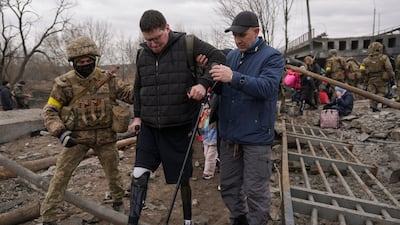
A man is supported after crossing the Irpin river while fleeing the town of Irpin, Ukraine. AP -
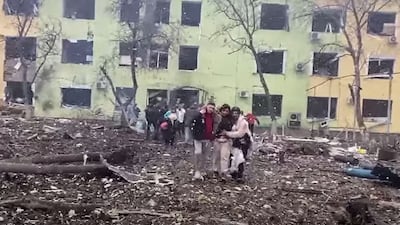
People are helped out of a damaged children's hospital following a Russian air strike in the southeastern city of Mariupol, Ukraine. AFP -

A man rides a bicycle in front of an apartment building that was damaged by shelling in Mariupol. AP -
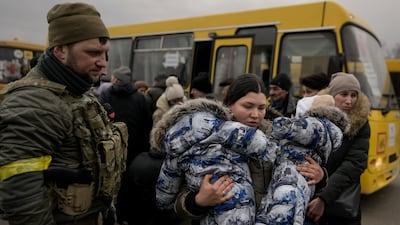
A woman carries two babies after arriving at a triage point in Kyiv, Ukraine. AP -
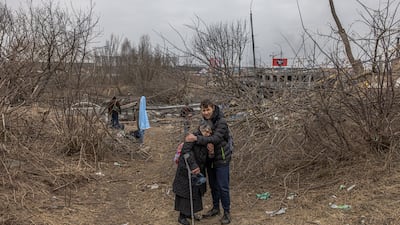
A man hugs an elderly woman after crossing a damaged bridge as they flee from the frontline town of Irpin, near the Ukrainian capital of Kyiv. EPA -
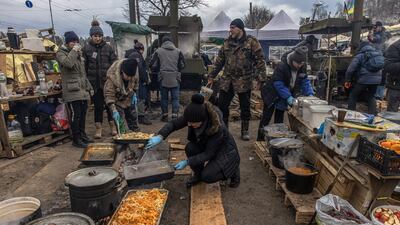
Local residents cook at a makeshift camp next to a checkpoint in Kyiv. EPA -
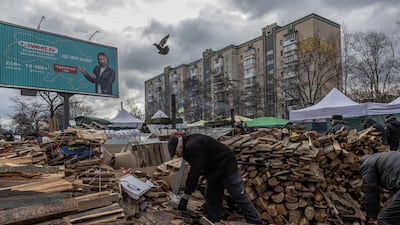
Ukrainian men chop wood at a makeshift camp next to a checkpoint in Kyiv. EPA -

A member of the Territorial Defence Forces learns how to use a Javelin missile during a training session in Kyiv. EPA -
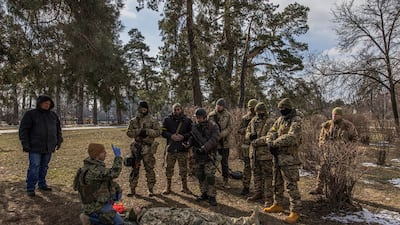
Members of the Territorial Defence Forces learn how to give first aid during the training session. EPA -
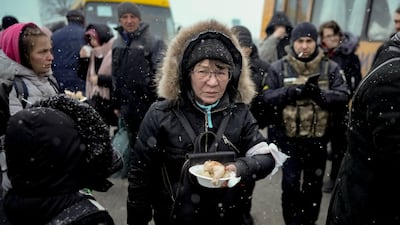
A woman rescued from the outskirts of Kyiv holds a plate of food after arriving at a triage point in the Ukrainian capital. AP -
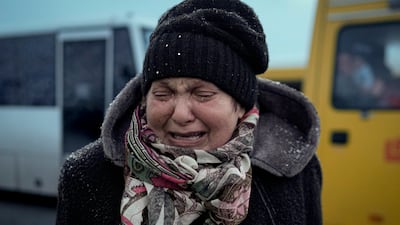
A woman cries after arriving at the triage point in Kyiv. AP -
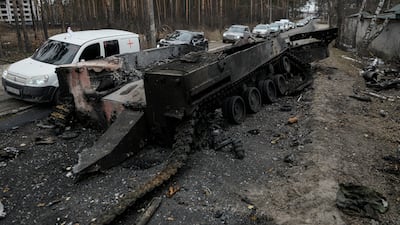
Civilian vehicles drive past a destroyed Russian tank as they leave Irpin. AP -
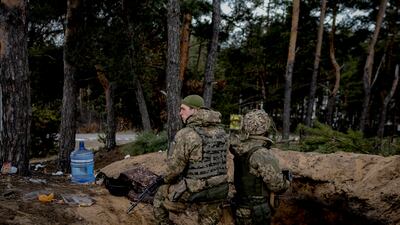
Ukrainian servicemen stand in a foxhole in Irpin. AP -
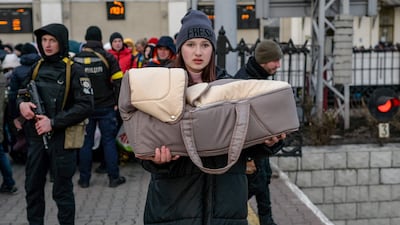
People gather on a platform to board a train leaving Odesa after the US said Russian troops are making preparations to attack the city. AFP -
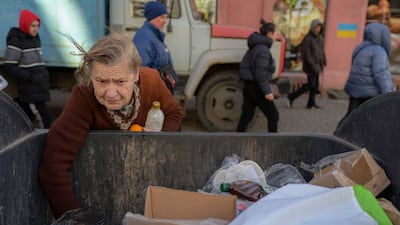
A Ukrainian woman looks for food in a bin in Odesa's city centre. AFP -
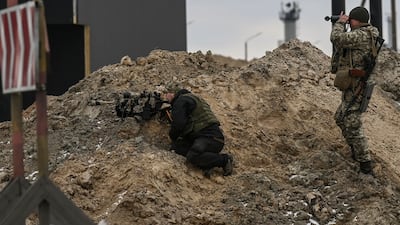
Ukrainian servicemen look towards Russian positions outside the city of Brovary, east of Kyiv. AFP -
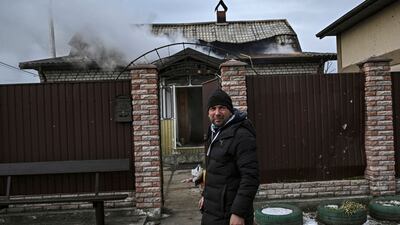
A man walks past a shelled house at the village of Velyka Dymerka, east of Kyiv. AFP -
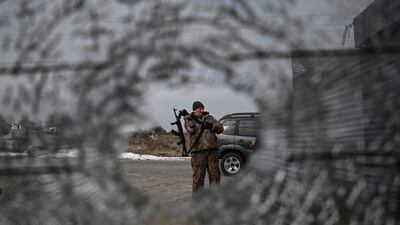
A Ukrainian serviceman stands at a check point in the vilage of Velyka Dymerka east of Kyiv. AFP -
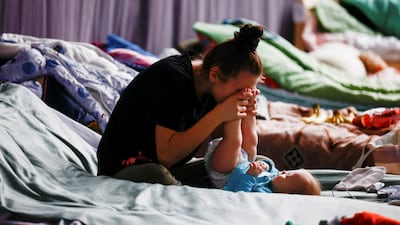
A Ukrainian woman plays with her child in a temporary refugee shelter in Przemysl, Poland. Reuters -

A woman waits outside a maternity and children's hospital damaged by shelling in Mariupol, Ukraine. AP -
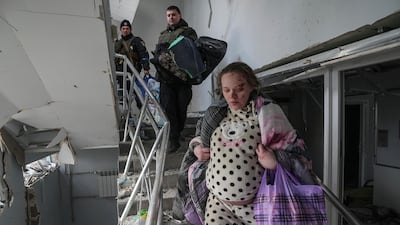
A pregnant woman leaves the hospital after she was wounded when it was bombed. AP -

A woman waits outside the damaged hospital in Mariupol. AP -

A man wounded by shelling in Mariupol. AP -
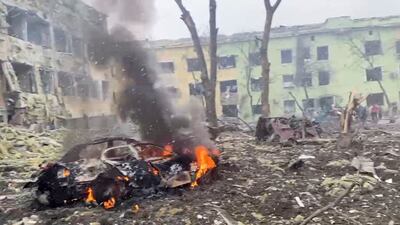
A car burns after the destruction of the children's hospital in Mariupol. Reuters -
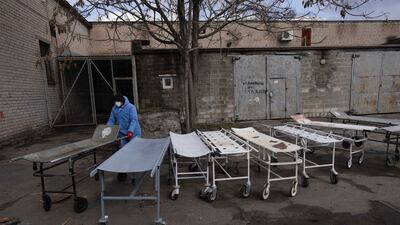
A mortuary worker wheels a stretcher used to move dead bodies before they are buried on the outskirts of Mariupol. AP


The cost of wheat along with other vital foodstuffs and metals has soared since the invasion, as Ukraine and Russia supply 30 per cent of global wheat and barley.
On Wednesday, Ukraine, once known as the breadbasket of Europe, said it was banning exports of rye, barley, buckwheat, millet, sugar, salt and meat for the rest of the year.
They are now fears of shortages not seen since the Second World War when consumers in Britain were encouraged to plant vegetables in gardens, yards and on rooftops.
Environment Secretary George Eustice told MPs on Thursday that the UK is “largely self-sufficient in wheat” but noted “we do import certain vegetable oils from Ukraine”.
“I will attend a special meeting of the G7 to discuss these issues further,” he said.
Ukraine supplies 20 per cent of the UK’s cereals, according to official data, with the price of wheat futures — grain to be bought on May 22 — hitting £306 a tonne on Thursday. On February 18, days before the war started, it was trading at £220 a tonne.
Prices are expected to remain elevated for as long as the conflict rages in Ukraine, according to the Economist Intelligence Unit, with wheat futures hitting a 14-year high on March 1 when panic buying set in.
“The conflict will have a significant impact on global grain supplies, especially as stocks are already low. The war in Ukraine will also affect the upcoming sowing of crops in the country, which in turn will lead to supply shortfalls next year,” said the EIU.
“Traders will look for alternative supplies from major producers such as the US, India and Argentina, but the necessary supply response will take time to materialise. We expect average grain prices to rise by almost a third this year, on top of the 40 per cent increase recorded in 2021.”
Irish farmers are already stepping up to the challenge of growing extra grain to help the country deal with supply line disruption from Ukraine, according to Agriculture Minister Charlie McConalogue.
Irish farming is dominated by beef and dairy producers and is heavily reliant on imported grain, with around 60 per cent of the 5.5 million tonnes used in the country every year sourced from overseas. It is used both in products for human consumption and for animal feed.
Russia also supplies more than 20 per cent of fertiliser used in the country.
The demand for Irish farmers to grow more crops this year mirrors measures introduced in the country during the Second World War.
While Mr McConalogue said he was confident farmers are responding positively to the call, farmers are urging the government to issue €2,000 (£1,670) vouchers to help them fertilise the land for crops and winter fodder.
“Food security is really important over the next number of weeks and months and it is something we have to work together on,” Mr McConalogue said
In the UK, Daniel Zeichner, shadow minister in the Department for Environment, Food and Rural Affairs said while growing more wheat may boost food stocks in the UK in the short term, the government must address food security issues for the long term.
“Making sure that we produce more food in Britain is a key part of Labour's plan for the future. So we'd be doing it anyway but in the light of the current uncertainties around the world, it makes it even more important that that is addressed quickly,” Mr Zeichner said.

Farmers must also face much higher fertiliser costs with prices hovering around £1,000 a tonne for ammonium nitrate fertiliser, compared with £647 in January this year and £245 in January 2021, according to the Agriculture and Horticulture Development Board.
While the UK produces about 40 per cent of its own fertiliser, Russia is the world’s largest exporter. Ukraine war is expected to have a big effect on the supply chain and place even more pressure on the cost of groceries.
Earlier this week, Svein Tore Holsether, the head of Norwegian fertiliser maker Yara, warned Russia’s invasion of Ukraine will deliver a catastrophic hit to global food supplies.
Kit Papworth, a contract farmer in Norfolk, said higher fertiliser prices will make it very hard for UK farmers to consider growing more wheat to offset the risk of food shortages.
“There is no bonanza for farmers,” he told The National, with farmers forced to make difficult decisions across the UK every day.
“I think the opposite will happen, where we actually are so worried about being able to grow and fertilise this crop that actually we plant less and thereby exacerbate the problem,” he said.
“So we put less wheat in the ground, we have less fertiliser and we have lower yield yields, and then we have less crop to sell. And the world has less food just at a time where we could really do with some more.”
The challenge for farmers right now, he added, is that the 2022 crop is already in the ground and growing away with the potential for it to be sold at a high price.
“But we only have the fertiliser we have already purchased, and we have no idea whether we will be able to purchase any more fertiliser. So do I now fertilise the crop I have in the ground with the fertiliser I have but run the risk of having no fertiliser at all?
“Or do I cut back on fertiliser this season to have some for next year thereby reducing my yield and not having as much grain to sell into this very high price?”
The other challenge, said Mr Papworth, is the huge diesel bills farmers have face to run their farming vehicles as prices rise ever higher amid the energy crisis.
“So the margins [on growing wheat] are only back where they were in 2018 and 19. It's just that the cash risk is so much greater,” Mr Papworth said.
The wider issue, he added, is food security not only for the UK but across the world “because it is not likely that British people are going to starve, but there are countries in the world that rely on wheat being cheap".
“If I was in Sudan right now I'd be really worried about wheat being £300 a tonne because they import mostly from the Black Sea. And even if they could find another place to buy it from they wouldn't be able to afford it and people will die as a result of this war who are nowhere near this war. They will die of starvation,” Mr Papworth said.
“And we will see riots and disruption in the same way as we saw with the Arab Spring - the last time prices were anything like this.”

