


View more galleries from The National:
Lebanon forces fire tear gas at protesters near US embassy
Al Jazira to face Real Madrid in Fifa Club World Cup semi-final
Star Wars: The Last Jedi premieres in LA - in pictures
_______________
Living with Gods exhibition raises questions of faith and humanity:
-
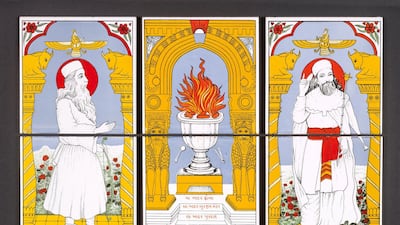
Set of Shrine tiles Mumbai, India, 1980s. Tiles from a Parsee household show the constantly burning fire representing Ahura Mazda, the Zoroastrian god. © Trustees of the British Museum -
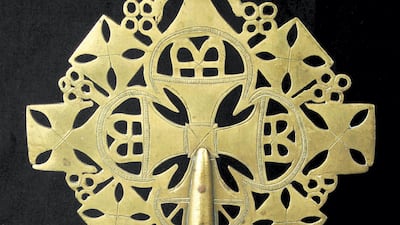
Processional Cross, Ethiopia, 19th century. © Trustees of the British Museum -
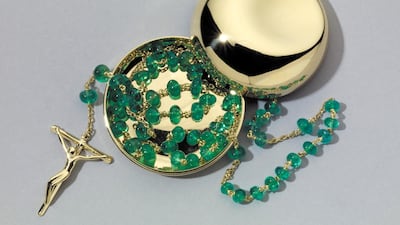
Christian rosary, Designed by Elsa Peretti for Tiffany & Co., Barcelona, Spain, 21st century. The 52 Indian emeralds are arranged in groups of 10 for the repeated words of the Hail Mary separated by single gems for the Lord’s Prayer. © the Trustees of the British Museum -
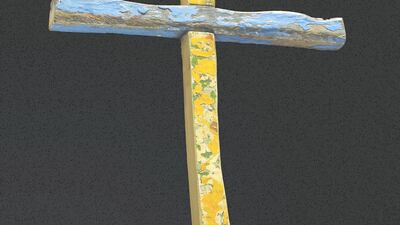
Lampedusa Cross by Francesco Tuccio Lampedusa, Italy, 2014. When a ship carrying refugees and migrants sank off the island of Lampedusa in October 2013, more than 300 Somali and Eritrean lives, both Muslim and Christian, were lost. Responding to the tragedy, Francesco Tuccio made small crosses, Christian symbols of hope and salvation, for the survivors and to engage people worldwide with the humanitarian disaster. © the Trustees of the British Museum -
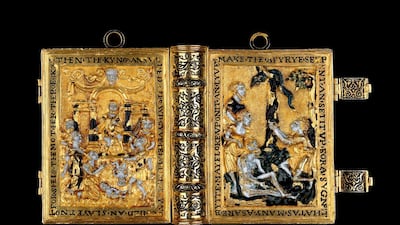
Miniature prayer book London, UK , 1540–76. This enamelled gold case contains a unique miniature printed book of morning and evening prayers, hymns, psalms and meditations. It was worn on a belt and may have belonged to Queen Elizabeth I. © the Trustees of the British Museum -
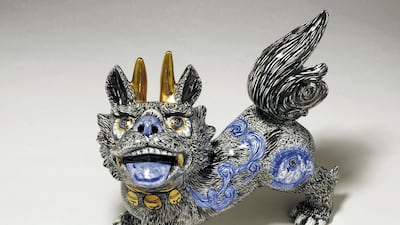
Guardian lion-dogs By Matsumoto Satoru and Komatsu Miwa Arita, Japan, 2015 Lion-dogs guard people, homes, temples and shrines in Japan, frightening away bad spirits. © the Trustees of the British Museum -
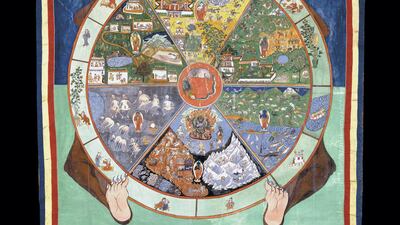
Painted cloth thangka Tibet, 1800–1900. This painted teaching or meditation aid, thangka, shows the wheel of life. The lives of humans and the gods are all held by Yama, Lord of Death, whose limbs represent the sufferings of birth, sickness, old age and death. © the Trustees of the British Museum -
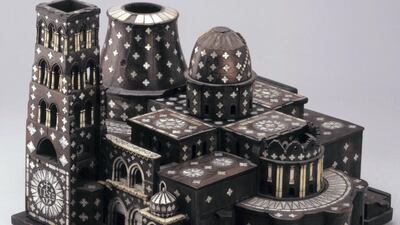
Model of the Church of the Holy Sepulchre Bethlehem, Palestine, 1600–1700 The Church of the Holy Sepulchre is one of the holiest places of Christianity and attracts many pilgrims. Souvenir models of the church are bought and taken all over the world. © the Trustees of the British Museum -
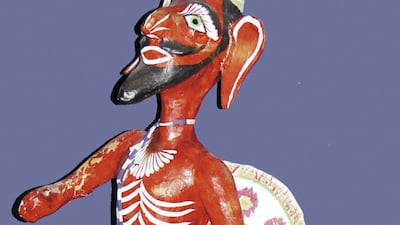
Judas-devil figure Mexico City, Mexico, late 20th century On 31 October every year, Mexicans remember the dead by staying at the graves of loved ones through the night. Theatrical processions symbolise fears and fantasies of the world of the dead. Judas, who denounced Christ to the Roman authorities, is displayed as a devil. Judas figures are also paraded and exploded on Easter Saturday. © the Trustees of the British Museum -
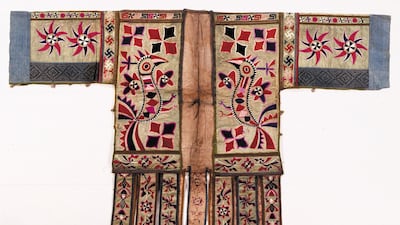
Festival coat Miao, south-west China, late 20th century The Miao people come together every 13 years to dance, eat, drink and honour their ancestors. Coats and aprons richly embroidered with birds and insects, as well as elaborate silver jewellery, are worn for these Guzhang festivals and for the celebration of New Year. © the Trustees of the British Museum -
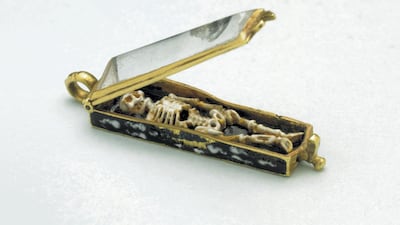
Memento mori pendant France, 1500–1600 In the late medieval period, reminders that everybody dies helped believers to think of their spiritual rather than worldly wealth. This memento mori pendant contains a tiny skeleton in an enamelled coffin decorated with tongues of fire. © the Trustees of the British Museum -
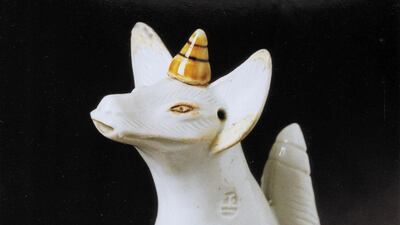
Fox shrine figure Mikawachi, Japan, 1826–75 The fox is a spirit messenger for Inari, the important Shinto deity for rice, harvests, trade and prosperity. © the Trustees of the British Museum



