


When Gavriel Kleinwaks was a child, she was captivated by the story of Jonas Salk, the vaccine pioneer who tested a potential polio shot on himself, his wife and children in 1953. Nationwide trials seen as the biggest public-health experiment ever later proved that it worked.
Now Ms Kleinwaks is signing up to take part in another high-stakes experiment. The doctoral student at the University of Colorado is one of almost 30,000 volunteers willing to deliberately expose themselves to the coronavirus to test a potential vaccine, should researchers decide to proceed.
With the world desperate to end the pandemic, the idea of purposely infecting people with a dangerous pathogen that has no cure is fuelling a debate over what kind of sacrifice is acceptable and the benefits such trials could bring. Known as human-challenge studies, these tests can hasten research by placing volunteers in the path of the virus, rather than waiting for accidental exposure.
The controversial approach may become necessary at some point as the disease ebbs in some cities, making it harder to evaluate shots in the more conventional way, according to Pascal Soriot, chief executive officer of drugmaker AstraZeneca Plc. The company is working with the University of Oxford on one of the most advanced vaccines against the virus.
The lack of a drug to save people who are seriously ill is one of the main ethical concerns about human-challenge trials, along with a lack of knowledge about a virus that’s killed almost half a million people in several months.
Ms Kleinwaks says she wrestled with doubts at first, but gradually grew more comfortable with the idea after assessing the risks. Fuelling her decision to volunteer, she says, is a lesson from the Talmud — saving one life is akin to saving the entire world — and a desire to help end the outbreak.
“We are all at risk of exposure every time we step out of our own home,” the 23-year-old engineering student said. “Nobody is guaranteed to be safe.”
A project focused on human challenge studies led by the University of Antwerp and the Free University of Brussels attracted 20 million euros ($22 million) in Belgian government funding, the institutions said. The initiative to establish a facility and labs to test vaccines has drawn interest from drug companies, according to the universities.
-
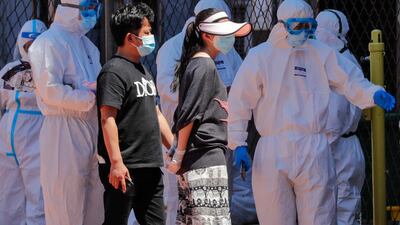
Workers in protective suits direct people living near the Xinfadi wholesale market to a stadium in Beijing for testing on June 14. The capital's biggest wholesale food market was shut down following a resurgence in local infections. AP Photo -
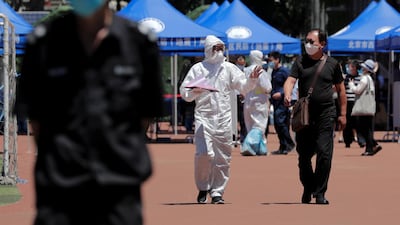
A worker in protective suit chats with a resident near the Xinfadi wholesale market on June 14. AP Photo -

Security guards set up barricades at a stadium in Beijing where residents are to be tested -
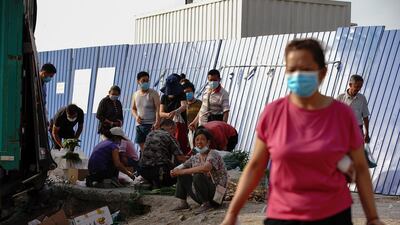
People wear protective masks at an open-air produce market in Beijing -
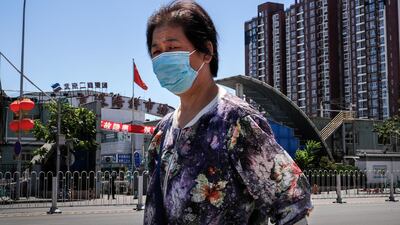
A woman wearing a protective face mask walks by the seafood wholesale market closed for inspection in Beijing. AP Photo -

This seafood wholesale market was closed for inspection in Beijing on June 14 as China recorded fresh cases. AP Photo -
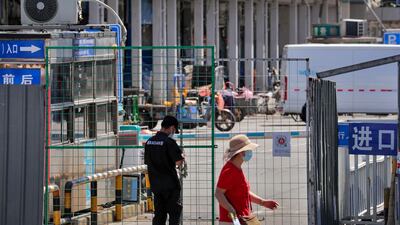
A security guard locks up the seafood market entrance. AP Photo -
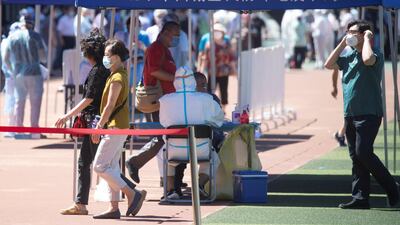
A medical worker in a protective suit conducts tests on residents at a sports stadium, after new cases of the novel coronavirus disease (COVID-19) were detected in Beijing, China. Reuters


Although the idea is gaining more attention, a partnership launched by the US National Institutes of Health isn’t planning to support human-challenge studies for Covid-19, the agency said in an email. There should be enough natural transmission of the virus in the US to carry out tests this summer, it said.
The way vaccines are usually tested is by inoculating a large number of people and comparing their infection rates to those from a population of unvaccinated volunteers. But waiting for both groups to become exposed to the illness in their regular daily lives to draw conclusions about whether the vaccine works can take months or even years.
The initiative that attracted Ms Kleinwaks is organised by 1DaySooner, a group that advocates on behalf of people who want to join challenge studies. The organisation has held discussions with potential partners and vaccine manufacturers in a bid to start production of the virus, said Josh Morrison, one of its founders.
More than a quarter of the volunteers are in Brazil, where the coronavirus is spreading fast. 1DaySooner has contacted vaccine developers planning final-stage studies there to suggest they consider people on its list for conventional studies, too, according to Mr Morrison.
Volunteers’ personal motivations vary, but many cite a sense of common good. Jason Crowell, a lawyer in London, even persuaded his reluctant wife to join him after watching the coronavirus claim the lives of more than 40,000 people in Britain, including one of his friends.
Gloria Lee, a violinist, found out about the opportunity to join the challenge trial movement after the pandemic forced organisers to cancel a recital set for early May at New York University, her debut solo in the city, along with other performances.
“I started to think about what I could do to feel useful and to hopefully be part of the effort to put this virus to rest,” she said. “It’s the most important thing I could do at this moment.”
Besides accelerating vaccine development, human-challenge studies could ultimately help make shots more effective, according to the World Health Organisation, which has outlined the criteria that would need to be met to carry out the tests. Proponents note that the approach was used safely for diseases such as malaria, typhoid, cholera as well as the flu.
Some experts are calling for a cautious approach. Rushing trials without fully considering the impact they could have in getting vaccines to the public more quickly would be a mistake, but "it is worth laying the groundwork now," Seema Shah, an ethics specialist at Northwestern University's Feinberg School of Medicine, wrote with others in the New York Times earlier this month.
“We have to know that volunteers were not exposed to risk in vain,” they wrote. “Public trust in vaccines and research depend on it.”

