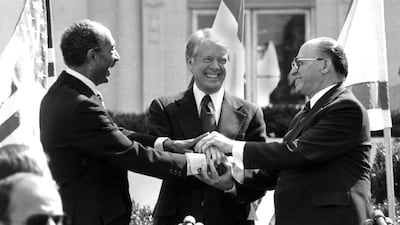
Egyptian President Anwar Sadat, left, Israeli Prime Minister Menachem Begin, right, and US President Jimmy Carter shake hands at the White House on September 17, 1978. AFP

A look at Jimmy Carter's devotion to the Middle East


Willy Lowry
  • English
  • Arabic

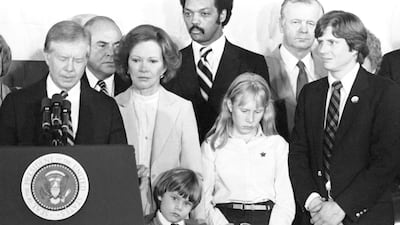
In March 1977, Jimmy Carter made an unexpected remark that continues to reverberate to this day. "There has to be a homeland provided for the Palestinian refugees who have suffered for many, many years,” Mr Carter said at a Massachusetts town hall, two months into his presidency.

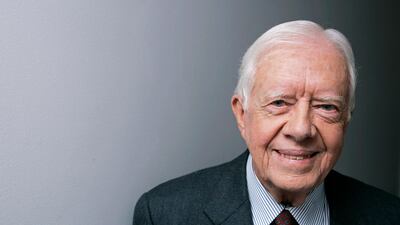
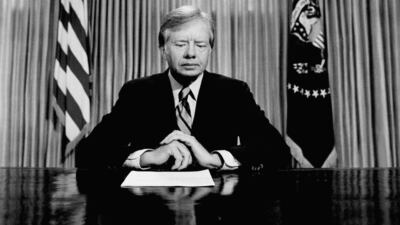
The former president, who was elected in 1976, died on Sunday, his family said. He was 100.

The comment was unprecedented for a US leader and caught his staff off guard, recalls William Quandt, who was on the White House National Security Council under Mr Carter and was his primary Middle East adviser from 1977 to 1979.

“He said that without anybody prompting him,” Mr Quandt told The National. “I think it had to do with a sense that there's a kind of injustice, that there is a party to this conflict that has no voice and nobody speaks for them.”

The next day, the headline of The Washington Post read: “A 'Homeland' for Palestinians Seen as a Noteworthy Shift of Language.”

That notion would become the foundation of the two-state solution, which is a cornerstone of long-term US policy for Israel and Palestine under President Joe Biden. The Biden administration says a credible pathway to a future Palestinian state is key to ending the Israel-Gaza war, which is by far the deadliest in the conflict's 76-year history.

Soon after the October 7 Hamas-led attacks, the Carter Centre defended Israel's right to defend itself but was quick to call for a ceasefire.

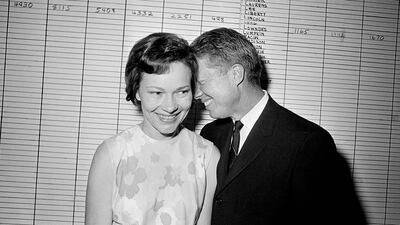
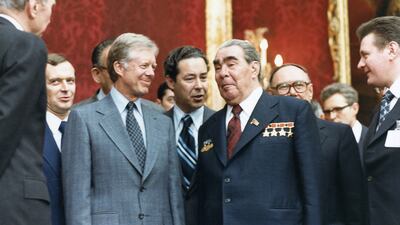
Jimmy Carter's life - in pictures

“Israeli forces moved into Gaza and intensified their devastating attacks. Israel, like all nations, has a right to defend itself; it also has the obligation of proportionality under international law. Violence will only beget more violence,” Mr Carter's organisation said.

Mr Carter never made much headway on the Israeli-Palestinian conflict during his single term in the Oval Office. His remarks on a Palestinian homeland, however, were decades before their time.

Instead of tackling Palestinian-Israeli relations, Mr Carter chose to pursue peace between Israel and Egypt. Mr Quandt believes that decision arose during a private meeting between Mr Carter and Egypt's then-president, Anwar Sadat, at Camp David. He remembers seeing Mr Carter's eyes light up as he began to formulate a way forward.

“I think this is the moment when Carter concluded that Sadat primarily cares about getting a bilateral agreement with Israel and maintaining a close relationship with the United States, and doesn't need much else in the way of covering for the Palestinians,” Mr Quandt recounted.

Shortly after that meeting, Mr Carter invited Israel's prime minister at the time, Menachem Begin, and Mr Sadat to Camp David, where over the course of several days, he brokered peace between Israel and Egypt, in an agreement that helped shape the region for decades to come.

“The peace treaty took a crucial bargaining chip off the table for Palestinians,” said Jeremy Pressman, director of Middle East Studies at the University of Connecticut. But he believes that despite this, Mr Carter moved the discussion on Palestinians forward.

“I think Carter even as president starts to break the rhetorical ice in United States discussion,” Mr Pressman told The National.

“He's clearly publicly, and definitely privately, more open to the possibility that Palestinians are not just a humanitarian refugee crisis – there's a political-national-territorial question there as well.”

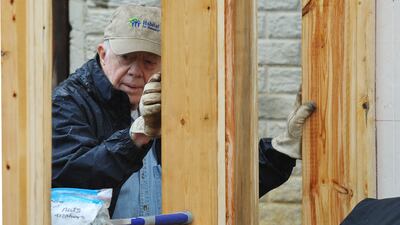
Mr Carter, a deeply religious man who had the longest post-presidential career in US history, devoted much of his retirement to conquering the Palestinian-Israeli conflict.

“I sensed it from time to time when I was with him,” said Mr Quandt. “He brought to this region a different sensitivity and that was as somebody who genuinely believed in the Bible, and the Holy Land, and the idea that he might make a contribution to peace in the Holy Land mattered to him.”

In his post-presidency years, he wrote several books on the region, including his seminal 2006 work Palestine: Peace not Apartheid, in which he criticised Israel for obstructing peace with its settlement activity in the West Bank.

Carter's legacy


Putting the word “apartheid” in the title, a term that has become a fairly common criticism of Israel, was hugely controversial in 2006 and he remains the only US president to have come close to suggesting that the situation could be viewed through such a lens.

“In the early 2000s, when Carter brought up the possible use of the term, I think it was sort of beyond the pale of the discussion,” explained Mr Pressman.

He said it is only in the past five or 10 years that the concept of apartheid – strenuously rejected by Israel – has come to form “part of the core of the public debate about the issue”.

Through words and deeds, Mr Carter remained devoted to the Palestinian people and the broader Middle East, leaving a lasting legacy in a region he cared deeply about.


Who's who in Yemen conflict

Houthis: Iran-backed rebels who occupy Sanaa and run unrecognised government

Yemeni government: Exiled government in Aden led by eight-member Presidential Leadership Council

Southern Transitional Council: Faction in Yemeni government that seeks autonomy for the south

Habrish 'rebels': Tribal-backed forces feuding with STC over control of oil in government territory

Company%20profile
%3Cp%3E%3Cbr%3E%3Cstrong%3EName%3A%3C%2Fstrong%3E%20Khodar%3Cbr%3E%3Cstrong%3EBased%3A%3C%2Fstrong%3E%20Cairo%20and%20Alexandria%2C%20in%20Egypt%3Cbr%3E%3Cstrong%3EFounders%3A%3C%2Fstrong%3E%20Ayman%20Hamza%2C%20Yasser%20Eidrous%20and%20Amr%20El%20Sheikh%3Cbr%3E%3Cstrong%3ESector%3A%3C%2Fstrong%3E%20agriculture%20technology%3Cbr%3E%3Cstrong%3EFunding%3A%3C%2Fstrong%3E%20%24500%2C000%3Cbr%3E%3Cstrong%3EInvestors%3A%3C%2Fstrong%3E%20Saudi%20Arabia%E2%80%99s%20Revival%20Lab%20and%20others%3Cbr%3E%3Cstrong%3EEmployees%3A%3C%2Fstrong%3E%2035%3C%2Fp%3E%0A
The%20Emperor%20and%20the%20Elephant
%3Cp%3E%3Cstrong%3EAuthor%3A%20%3C%2Fstrong%3ESam%20Ottewill-Soulsby%3C%2Fp%3E%0A%3Cp%3E%3Cstrong%3EPublisher%3A%20%3C%2Fstrong%3EPrinceton%20University%20Press%3C%2Fp%3E%0A%3Cp%3E%3Cstrong%3EPages%3A%20%3C%2Fstrong%3E392%3C%2Fp%3E%0A%3Cp%3E%3Cstrong%3EAvailable%3A%20%3C%2Fstrong%3EJuly%2011%3C%2Fp%3E%0A
Islamic%20Architecture%3A%20A%20World%20History
%3Cp%3E%3Cstrong%3EAuthor%3A%3C%2Fstrong%3E%20Eric%20Broug%3Cbr%3E%3Cstrong%3EPublisher%3A%3C%2Fstrong%3E%20Thames%20%26amp%3B%20Hudson%3Cbr%3E%3Cstrong%3EPages%3A%3C%2Fstrong%3E%20336%3Cbr%3E%3Cstrong%3EAvailable%3A%3C%2Fstrong%3E%20September%3C%2Fp%3E%0A
How it works

A $10 hand-powered LED light and battery bank

Device is operated by hand cranking it at any time during the day or night 

The charge is stored inside a battery

The ratio is that for every minute you crank, it provides 10 minutes light on the brightest mode

A full hand wound charge is of 16.5minutes 

This gives 1.1 hours of light on high mode or 2.5 hours of light on low mode

When more light is needed, it can be recharged by winding again

The larger version costs between $18-20 and generates more than 15 hours of light with a 45-minute charge

No limit on how many times you can charge


Meg%202%3A%20The%20Trench
%3Cp%3E%3Cstrong%3EDirector%3A%20%3C%2Fstrong%3EBen%20Wheatley%3Cbr%3E%3Cstrong%3EStars%3A%20%3C%2Fstrong%3EJason%20Statham%2C%20Jing%20Wu%2C%20Cliff%20Curtis%2C%20Page%20Kennedy%2C%20Cliff%20Curtis%2C%20Melissanthi%20Mahut%20and%20Shuya%20Sophia%20Cai%3Cbr%3E%3Cstrong%3ERating%3A%20%3C%2Fstrong%3E2%2F5%3C%2Fp%3E%0A
SPEC%20SHEET%3A%20SAMSUNG%20GALAXY%20Z%20FOLD5
%3Cp%3E%3Cstrong%3EMain%20display%3A%3C%2Fstrong%3E%207.6%22%20QXGA%2B%20Dynamic%20Amoled%202X%2C%20Infinity%20Flex%2C%202176%20x%201812%2C%2021.6%3A18%2C%20374ppi%2C%20HDR10%2B%2C%20up%20to%20120Hz%3C%2Fp%3E%0A%3Cp%3E%3Cstrong%3ECover%20display%3A%3C%2Fstrong%3E%206.2%22%20HD%2B%20Dynamic%20Amoled%202X%2C%202316%20x%20904%2C%2023.1%3A9%2C%20402ppi%2C%20up%20to%20120Hz%3C%2Fp%3E%0A%3Cp%3E%3Cstrong%3EProcessor%3A%3C%2Fstrong%3E%20Qualcomm%20Snapdragon%208%20Gen%202%2C%204nm%2C%20octa-core%3B%20Adreno%20740%20GPU%3C%2Fp%3E%0A%3Cp%3E%3Cstrong%3EMemory%3A%3C%2Fstrong%3E%2012GB%3C%2Fp%3E%0A%3Cp%3E%3Cstrong%3ECapacity%3A%3C%2Fstrong%3E%20256%2F512GB%20%2F%201TB%20(online%20exclusive)%3C%2Fp%3E%0A%3Cp%3E%3Cstrong%3EPlatform%3A%3C%2Fstrong%3E%20Android%2013%2C%20One%20UI%205.1.1%3C%2Fp%3E%0A%3Cp%3E%3Cstrong%3EMain%20camera%3A%3C%2Fstrong%3E%20Triple%2012MP%20ultra-wide%20(f%2F2.2)%20%2B%2050MP%20wide%20(f%2F1.8)%20%2B%2010MP%20telephoto%20(f%2F2.4)%2C%20dual%20OIS%2C%203x%20optical%20zoom%2C%2030x%20Space%20Zoom%2C%20portrait%2C%20super%20slo-mo%3C%2Fp%3E%0A%3Cp%3E%3Cstrong%3EVideo%3A%3C%2Fstrong%3E%208K%4024fps%2C%204K%4060fps%2C%20full-HD%4060%2F240fps%2C%20HD%40960fps%3B%20slo-mo%4060%2F240%2F960fps%3B%20HDR10%2B%3C%2Fp%3E%0A%3Cp%3E%3Cstrong%3ECover%20camera%3A%3C%2Fstrong%3E%2010MP%20(f%2F2.2)%3C%2Fp%3E%0A%3Cp%3E%3Cstrong%3EInner%20front%20camera%3A%3C%2Fstrong%3E%20Under-display%204MP%20(f%2F1.8)%3C%2Fp%3E%0A%3Cp%3E%3Cstrong%3EBattery%3A%3C%2Fstrong%3E%204400mAh%2C%2025W%20fast%20charging%2C%2015W%20wireless%2C%204.5W%20reverse%20wireless%3C%2Fp%3E%0A%3Cp%3E%3Cstrong%3EConnectivity%3A%3C%2Fstrong%3E%205G%3B%20Wi-Fi%2C%20Bluetooth%205.3%2C%20NFC%20(Samsung%20Pay)%3C%2Fp%3E%0A%3Cp%3E%3Cstrong%3EI%2FO%3A%3C%2Fstrong%3E%20USB-C%3C%2Fp%3E%0A%3Cp%3E%3Cstrong%3ECards%3A%3C%2Fstrong%3E%20Nano-SIM%20%2B%20eSIM%3B%20dual%20nano-SIMs%20%2B%20eSIM%3C%2Fp%3E%0A%3Cp%3E%3Cstrong%3EColours%3A%3C%2Fstrong%3E%20Cream%2C%20icy%20blue%2C%20phantom%20black%3B%20online%20exclusives%20%E2%80%93%20blue%2C%20grey%3C%2Fp%3E%0A%3Cp%3E%3Cstrong%3EIn%20the%20box%3A%3C%2Fstrong%3E%20Fold5%2C%20USB-C-to-USB-C%20cable%3C%2Fp%3E%0A%3Cp%3E%3Cstrong%3EPrice%3A%3C%2Fstrong%3E%20Dh6%2C799%20%2F%20Dh7%2C249%20%2F%20Dh8%2C149%3C%2Fp%3E%0A

Mercer, the investment consulting arm of US services company Marsh & McLennan, expects its wealth division to at least double its assets under management (AUM) in the Middle East as wealth in the region continues to grow despite economic headwinds, a company official said.

Mercer Wealth, which globally has $160 billion in AUM, plans to boost its AUM in the region to $2-$3bn in the next 2-3 years from the present $1bn, said Yasir AbuShaban, a Dubai-based principal with Mercer Wealth.

Within the next two to three years, we are looking at reaching $2 to $3 billion as a conservative estimate and we do see an opportunity to do so,” said Mr AbuShaban.

Mercer does not directly make investments, but allocates clients’ money they have discretion to, to professional asset managers. They also provide advice to clients.

“We have buying power. We can negotiate on their (client’s) behalf with asset managers to provide them lower fees than they otherwise would have to get on their own,” he added.

Mercer Wealth’s clients include sovereign wealth funds, family offices, and insurance companies among others.

From its office in Dubai, Mercer also looks after Africa, India and Turkey, where they also see opportunity for growth.

Wealth creation in Middle East and Africa (MEA) grew 8.5 per cent to $8.1 trillion last year from $7.5tn in 2015, higher than last year’s global average of 6 per cent and the second-highest growth in a region after Asia-Pacific which grew 9.9 per cent, according to consultancy Boston Consulting Group (BCG). In the region, where wealth grew just 1.9 per cent in 2015 compared with 2014, a pickup in oil prices has helped in wealth generation.

BCG is forecasting MEA wealth will rise to $12tn by 2021, growing at an annual average of 8 per cent.

Drivers of wealth generation in the region will be split evenly between new wealth creation and growth of performance of existing assets, according to BCG.

Another general trend in the region is clients’ looking for a comprehensive approach to investing, according to Mr AbuShaban.

“Institutional investors or some of the families are seeing a slowdown in the available capital they have to invest and in that sense they are looking at optimizing the way they manage their portfolios and making sure they are not investing haphazardly and different parts of their investment are working together,” said Mr AbuShaban.

Some clients also have a higher appetite for risk, given the low interest-rate environment that does not provide enough yield for some institutional investors. These clients are keen to invest in illiquid assets, such as private equity and infrastructure.

“What we have seen is a desire for higher returns in what has been a low-return environment specifically in various fixed income or bonds,” he said.

“In this environment, we have seen a de facto increase in the risk that clients are taking in things like illiquid investments, private equity investments, infrastructure and private debt, those kind of investments were higher illiquidity results in incrementally higher returns.”

The Abu Dhabi Investment Authority, one of the largest sovereign wealth funds, said in its 2016 report that has gradually increased its exposure in direct private equity and private credit transactions, mainly in Asian markets and especially in China and India. The authority’s private equity department focused on structured equities owing to “their defensive characteristics.”

Chelsea 2 Burnley 3
Chelsea
 Morata (69'), Luiz (88')
Burnley Vokes (24', 43'), Ward (39')
Red cards Cahill, Fabregas (Chelsea)

Our legal consultants

Name: Hassan Mohsen Elhais

Position: legal consultant with Al Rowaad Advocates and Legal Consultants.

The%C2%A0specs%20
%3Cp%3E%3Cstrong%3EEngine%3A%3C%2Fstrong%3E%20Dual%20synchronous%20electric%20motors%20%20%0D%3Cbr%3E%3Cstrong%3EPower%3A%20%3C%2Fstrong%3E646hp%0D%3Cbr%3E%3Cstrong%3ETorque%3A%20%3C%2Fstrong%3E830Nm%0D%3Cbr%3E%3Cstrong%3ETransmission%3A%20%3C%2Fstrong%3ETwo-speed%20auto%20(rear%20axle)%3B%20single-speed%20auto%20(front)%20%0D%3Cbr%3E%3Cstrong%3EPrice%3A%20%3C%2Fstrong%3EFrom%20Dh552%2C311%3B%20Dh660%2C408%20(as%20tested)%0D%3Cbr%3E%3Cstrong%3EOn%20sale%3A%20%3C%2Fstrong%3Enow%3C%2Fp%3E%0A
Updated: December 30, 2024, 7:59 AM