


Florida Governor Ron DeSantis, expected to run for president in the 2024 election, has been accused of knowing about torture and abuse at Guantanamo Bay during his time as a US Navy lawyer.
Two former detainees, released without being charged with a crime, claimed in interviews with The Miami Herald that Mr DeSantis had witnessed forced-feeding sessions in his six months at the US detention camp in Cuba.
The Republican governor was working at the facility as it was addressing a hunger strike that involved hundreds of inmates.
Ahmed Abdel Aziz, a Yemeni citizen now living in Mauritania, and Mansoor Adayfi, another Yemeni detained for 14 years, both said Mr DeSantis was present during instances of abuse.
Mr Adayfi told the Herald and publisher McClatchy that he believes Mr DeSantis watched him being force-fed.
“Ron DeSantis was there watching us. We were crying, screaming. We were tied to the feeding chair. And he was watching. He was laughing,” he claimed in a November interview with Eyes Left, an anti-war military podcast hosted by veterans.
More than a dozen former naval officers and lawyers told the Herald that the office where Mr DeSantis had worked was often in contact with detainees and would have known what was taking place.
In addition, Mr Adayfi alleged that Mr DeSantis had interviewed detainees and used answers to worsen conditions in the camp.
“In 2006, when DeSantis was there, it was one of the worst times at Guantanamo,” he said.
Mr DeSantis rarely discusses his time in Cuba but mentioned it in his recently published book, The Courage to be Free, in which he wrote about making “an impact” there.
-
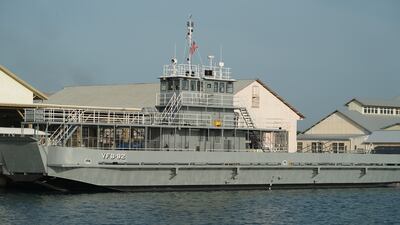
A passenger barge docked at US Naval Station Guantanamo Bay, on the south-east coast of Cuba. All photos: Willy Lowry / The National -
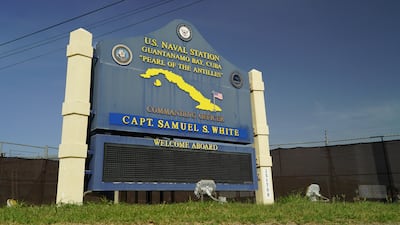
A welcome sign at US Naval Station Guantanamo Bay. -
A US Naval Station sign at Guantanamo Bay. -
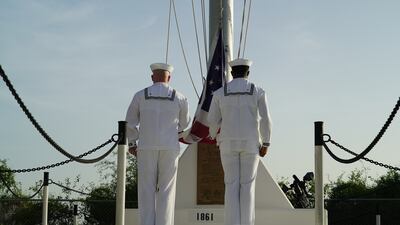
Two US Navy sailors stand at attention as they raise the American Flag at US Naval Station Guantanamo Bay. -
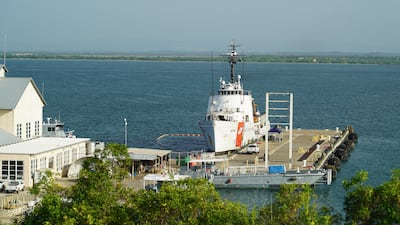
A US Navy cutter shipped docked at Guantanamo Bay. -
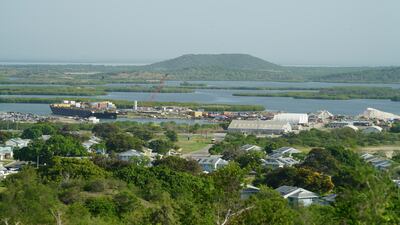
A view of US Naval Station Guantanamo Bay and the surrounding countryside. -
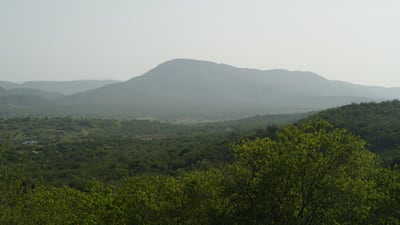
Hilly landscape surrounding Guantanamo Bay. -
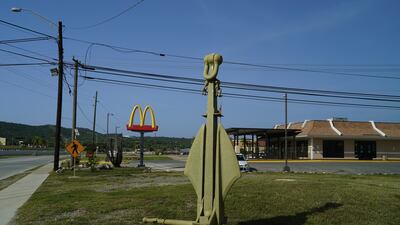
A McDonald's arch at US Naval Station Guantanamo Bay. -
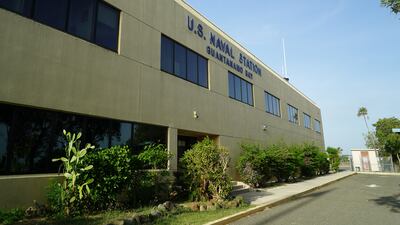
The exterior of a building at the US Naval Station at Guantanamo Bay -
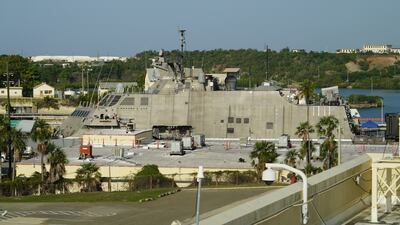
The 'USS Billings', a littoral combat ship, docked at US Naval Station Guantanamo Bay.


His clearest statements about Guantanamo were during a 2016 House subcommittee hearing, during which he advocated the military site remaining open and commended conditions at the facility.
“I was honestly shocked, because as a lawyer — as someone who worked at Guantanamo, who watched everything — as a lawyer he should know better than anyone that Guantanamo shouldn’t exist in the first place,” Mr Abdel Aziz said to the Herald.
“It's not about prisoners. It’s about us as humans.”
Forced feeding is not an act of torture, according to US courts, but the international medical community and the UN have recognised it as such.

