


Amman is gathering regional and international support for an Arab-led political process to end the war in Syria, Jordan's Deputy Prime Minister and Minister of Foreign Affairs Ayman Safadi told The National.
The push for an Arab initiative to end the 11-year-old conflict comes as the US dials back its condemnation of governments normalising relations with Syrian President Bashar Al Assad, whose grip on power was cemented by Russia’s military intervention, and as Syria’s neighbours engage with Damascus on the issue of sending refugees home.
Jordan is advocating “a collective Arab role to bring about an end to that crisis, in co-ordination with our friends and partners", Mr Safadi said in an exclusive interview on the sidelines of the UN General Assembly in New York.
Mr Safadi said Arabs must pursue a "step-by-step approach" and lead in resolving the Syrian conflict.
“We've got, as Arabs, to assume our role in efforts to bring an end to the Syrian catastrophe," he said.
"There's been no real process to address that crisis in the past few years, it's been status quo politics, and we cannot live with status quo politics."
Jordan hosts about 760,000 Syrian refugees, the UN reported, and its efforts to find a mechanism for a voluntary safe return have been unsuccessful.
“The devastating consequences of the Syrian crisis continues ... Refugees are not going back, the economy is suffering and millions of Syrians are living under the poverty line,” Mr Safadi said.
-
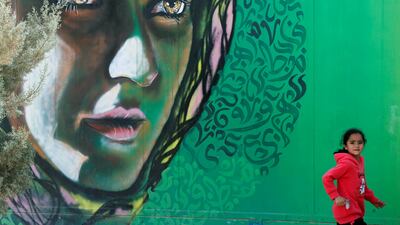
A Syrian child passes a mural at Al Zaatari refugee camp, which is near the Jordanian city of Mafraq, close to the border with Syria. Reuters -

Syrian children at Al Zaatari refugee camp, Jordan. EPA -
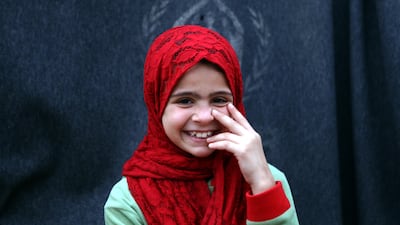
A Syrian refugee at Al Zaatari refugee camp. EPA -
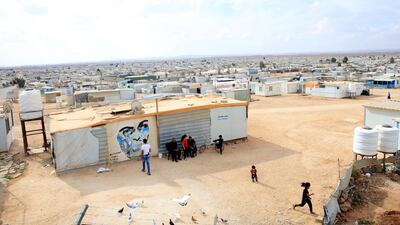
Al Zaatari refugee camp. EPA -
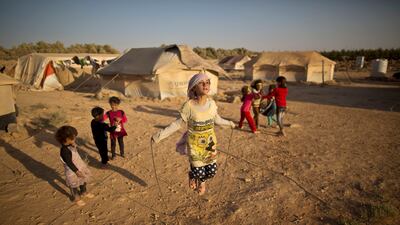
Syrian refugee Zubaida Faisal, 10, skipping rope at an informal tented settlement near the Syrian border on the outskirts of Mafraq, Jordan. AP Photo -
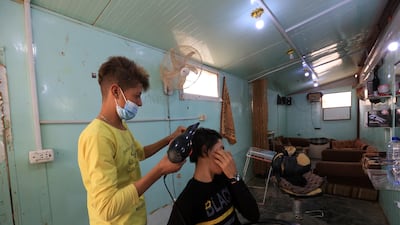
A barber shop at the refugee camp. EPA


An Arab-led process would include Saudi Arabia and other nations, he explained, and would be based on UN Resolutions 2254 and 2642, which lay out a road map for a negotiated settlement as well as authorisations for the monitoring and delivery of humanitarian aid to Syria.
“We want to see under 2642 how we can really accelerate the early recovery projects. We’re extremely concerned with the situation in the south [of Syria, bordering Jordan]. We need stability in the south, and the drug trafficking threat is a major threat to us,” Jordan’s top diplomat said.
Asked about the impact of US sanctions and Washington's views on an Arab-led a process, Mr Safadi appeared cautiously optimistic that such hurdles can be overcome.
“I can safely say that everybody wants to see an end to this crisis. And everybody is open to any mechanism that can deliver an end to this crisis,” he said.
In an interview with The National last week, Lebanese Foreign Minister Abdullah Bou Habib said that unlike in the past, the US during this year's General Assembly did not raise objections to normalisation efforts with the Assad regime.
Mr Safadi, who visited Washington this month, is expected to return to the US capital to discuss a memorandum of understanding between the US and Jordan.
Amman has also been helping to mediate in the war in Yemen, where a fragile truce is set to expire on Sunday.
-
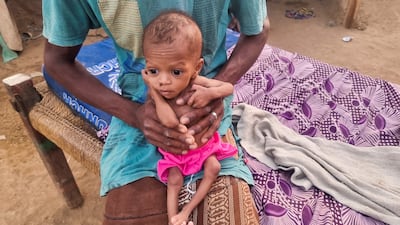
The father of malnourished boy Jiad Muhammad Jalal, 1, holds him at a camp for internally displaced people in Hajjah, Yemen. All photos: Reuters -
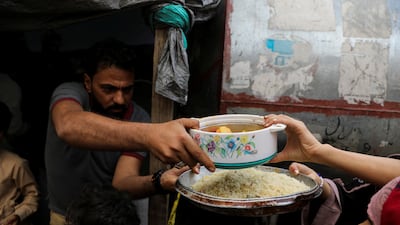
A volunteer gives a meal to a woman at a charity kitchen in Sanaa. -
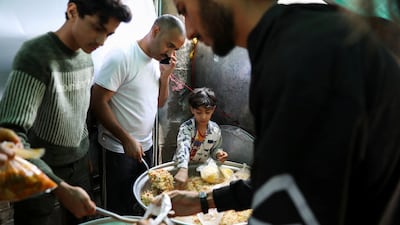
About 17.4 million people need food aid as funding dries up, the UN has said. -
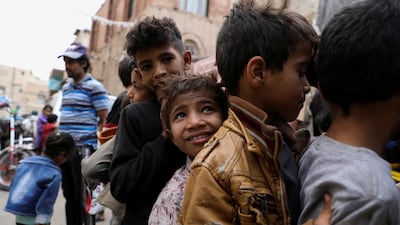
Boys stand in line as they wait to receive meals from a charity kitchen in Sanaa. -
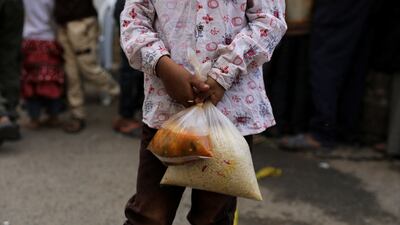
Children have been particularly affected by the conflict in Yemen, UN figures show, with 2.2 million youngsters acutely malnourished. -
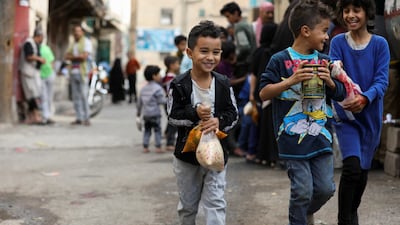
Boys leave after receiving meals from a charity kitchen in Sanaa. -
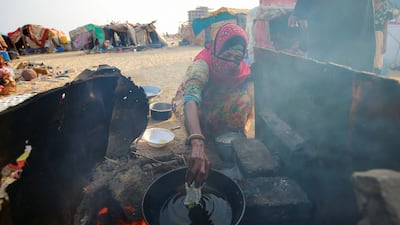
A woman cooks a meal at a camp for displaced people in Al Ghaidha. -

A girl picks food prepared by her mother at a camp for displaced people in Al Ghaidha. -

UN Secretary General Antonio Guterres has said Yemen and other vulnerable nations are being hit hard by the economic fallout from Russia’s invasion of Ukraine. -

Internally displaced people collect food aid distributed by a charity in Taez.


“We are hopeful that the truce will be renewed — and must be renewed — because the cost of not renewing it will be disastrous for the Yemeni people,” Mr Safadi said.
But, he noted, any renewal is in the hands of the Houthi rebels, who should “deliver on their commitments and to show goodwill".
On the Palestinian-Israeli conflict, Mr Safadi said Amman is concerned about the risks of a collapse of the Palestinian Authority (PA) in the West Bank, where the economy is sputtering and the security situation is deteriorating.
“We are extremely worried about the situation there," Mr Safadi said, as the PA "is facing tremendous challenges".
"We are focusing on maintaining calm and we're engaging with all parties and with the Americans to minimise friction points."
While at the General Assembly, Jordan participated in a Saudi-led ministerial meeting with European and US delegates to jump-start the Arab Peace Initiative.
The 2002 plan calls for peace with Israel, but only after it agrees to the creation of a Palestinian state and withdraws from land captured during the Six Day War of 1967.
“It's been 20 years since this initiative was put on the table. We believe the Arab Peace Initiative was the most comprehensive offer for the achievement of comprehensive peace," Mr Safadi said.
"The meeting was a message that we are still as Arabs committed to comprehensive and lasting peace."
He also welcomed Israeli Prime Minister Yair Lapid's apparent embrace of a two-state-solution during his address to the General Assembly.
“It is a change - this is the first Israeli prime minister since 2017 to speak publicly on the two-state-solution,” he said.
Asked about Israeli elections on November 1 — the country's fifth in three years — and if the potential return of Benjamin Netanyahu and his Likud Party is a concern for Jordan, Mr Safadi said Amman will pursue a realistic approach.
“Setbacks have always been a part of the [Palestinian-Israeli] process. We'll deal with whatever realities emerge in Israel, but what will not change is our position,” he said.
On Iran, Mr Safadi echoed comments from other diplomats, saying any new nuclear deal is "stuck for now".
The “big question is, how much of an impact it [any future deal] will have on regional stability", he said.
Mr Safadi said he had met Iranian Foreign Minister Hossein Amirabdollahian and brought up the issue of drug smuggling into Jordan from Syria, an activity reportedly conducted by pro-Iranian militias.
“The issue of drug smuggling from Syria to Jordan is a major challenge,” he said.
Asked about Jordan’s and Egypt’s talks with Lebanon to ship gas and electricity via Syria, Mr Safadi said an agreement has been completed but they are waiting for US sanctions clearance and Beirut agreeing to World Bank reforms.

