


Jordan’s Deputy Prime Minister and Minister of Foreign Affairs Ayman Safadi celebrated in Washington on Friday the signing of an “extremely important” agreement with the US.
Washington and Amman signed their fourth such agreement, which sealed the administration of US President Joe Biden's July announcement of $1.45 billion worth of aid for Jordan over five years starting in 2023.
Mr Safadi spoke on the signing at the Wilson Centre think tank during a discussion focused on Jordan-US relations, the Middle East Peace Process and the effect of the Ukraine conflict on Jordan.
He heralded the agreement's potential to help refugees in Jordan while highlighting the increased stress brought on the country by the Russian invasion of Ukraine.
“Refugees are an integral component of the population of the region,” said Mr Safadi.
“They need a dignified life and if we equip them with education, with hope, with opportunity, they will be positive members in the communities … but if we abandon them to ignorance, despair and bitterness, then we'll be dooming the future of the whole region to more conflict and more stress and more crisis.”
For Jordan, one of the world's most refugee-stressed countries, Russia's invasion of Ukraine further exacerbated an already strained reality.
Jordan hosts the second-largest share of refugees per capita in the world, with the vast majority — about 83 per cent — integrated into urban areas outside of refugee camps.
“There is an alarming decrease in international support to refugees,” Mr Safadi said.
“To our European partners who are concerned with migration, if refugees have a shot at a dignified life in our part of the world, they're not going to try to adventure to go to Europe.”
Merissa Khurma, director of the Wilson Centre's Middle East Programme, said the world is focused on Ukrainian refugees and ignoring the refugee issue in other parts of the globe.
Syrian refugees in Jordan — in pictures
-

A Syrian child passes a mural at Al Zaatari refugee camp, which is near the Jordanian city of Mafraq, close to the border with Syria. Reuters -

Syrian children at Al Zaatari refugee camp, Jordan. EPA -
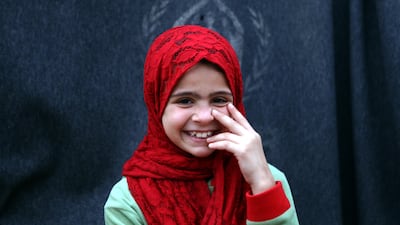
A Syrian refugee at Al Zaatari refugee camp. EPA -
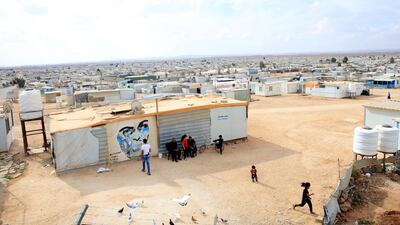
Al Zaatari refugee camp. EPA -
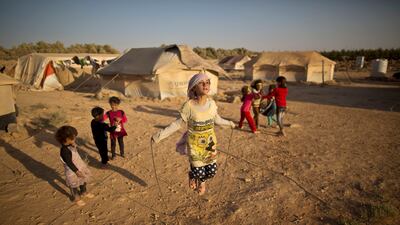
Syrian refugee Zubaida Faisal, 10, skipping rope at an informal tented settlement near the Syrian border on the outskirts of Mafraq, Jordan. AP Photo -
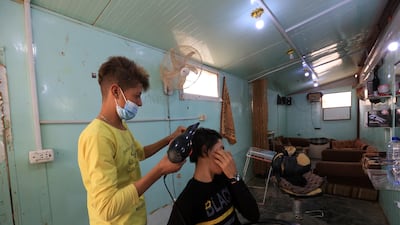
A barber shop at the refugee camp. EPA


That shift in attention away from Jordan is “drying out the already dried-out funding for the Jordanian government, and for Jordanian institutions, in addressing the Syrian refugee challenge”, Ms Khurma told The National.
In a 2022 report on the Ukraine war's impact on the global food crisis, the World Food Programme said its funding needs and resources were rapidly dwindling and that without additional resources, it “will be forced to continue drastic prioritisation in many of our countries of operations”.
“The Ukrainian refugees deserve all the help that they can get,” said Mr Safadi.
“All of us must do what we can to support them, but it's not mutually exclusive. Because yes, you do have new needs emerging out of the conflict in Ukraine, but there is also the outcome of conflicts in the [Middle East] region that have not yet been resolved, particularly in terms of refugees.”
Mr Safadi also acknowledged the anniversary of the Abraham Accords, reinforced the need to focus on “the core issue” of the Palestinian-Israeli conflict and reiterated Jordan's commitment to a two-state solution.
“Everything that's positive is good. And we need to have an economic environment that's better not as an alternative to a political solution but as an enabler to that political solution right now,” he said.
“We certainly encourage every positive corporation that can make life better for everybody. But we remain cognisant of the fact that unless the Palestinians are part of the process, the region will not realise its potential … once that happens, I think the sky's the limit as to how much co-operation there can be regionally and that co-operation is definitely needed.”
Deputy Prime Minister and Minister of Foreign Affairs of Jordan
For Ms Khurma, Jordan's relationship to the Abraham Accords has been a “pragmatic” one that recognises a new reality in the region, particularly on Iran and climate change issues.
“This new development is a reflection of changes in the neighbourhood. I think one thing that happened this year that is testament to the pragmatic approach is the Jordan, Israel, UAE agreement around solar, energy and water,” said Ms Khurma.
Both the Emirati and Egyptian ambassadors to Washington attended the discussion.
In November, the UAE, Jordan and Israel signed a major energy and water deal that includes Emirati company Masdar construct a large solar power facility in Jordan.
The electricity will be sold to Israel for $180 million per year and Masdar would split the proceeds with Jordan.
In return, Israel has committed to providing desalinated water to water-stressed Jordan.
“The fact that Jordan, the UAE and Israel came together to address a climate change concern and an economic issue is testimony to Jordan's pragmatism in this regard,” Ms Khurma added.
Many Jordanians are opposed to the deal, however, and continue to regard Israel as the top threat to their country, Washington Institute for Near East Policy polls have shown.
For Mr Safadi, the Abraham Accords, along with recent regional summits with the GCC, are part of a broader regional realisation that co-operation is key.
“The frequency of meetings that you're seeing among our leaders all speak to the fact that there's a growing recognition that we all need to come and work together,” he said.
“Jordan has been a strong advocate of this mechanism, and times have changed. I think we all see that we do better if we work together. It's win-win for everybody.”
US Secretary of State Antony Blinken pointed to Jordan's “pragmatic” regional positioning as part of the reason Washington felt confident signing the deal with Amman.
“It reflects a shared interest in a more stable, safe and prosperous Middle East,” Mr Blinken said.
“We can make investments like these with confidence because we’re building on more than six decades of close co-operation between our governments, between our peoples and between our diplomats.”
Emiratis on Abraham Accords — in pictures
-
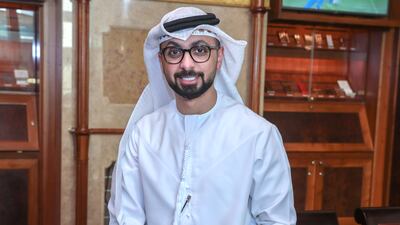
Emirati Majed Al Seyabi is keen to be a part of building ties with the Israeli people and companies as part of the Abraham Accords. Victor Besa / The National -

Emirati engineer Reem Al Musabbeh visited Israel and wants to replicate a successful ecosystem to grow start-ups in the UAE. Antonie Robertson / The National -
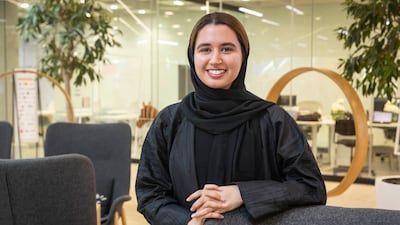
Emirati engineer Reem Al Musabbeh is working to build partnerships with technology companies in Israel. Antonie Robertson / The National -
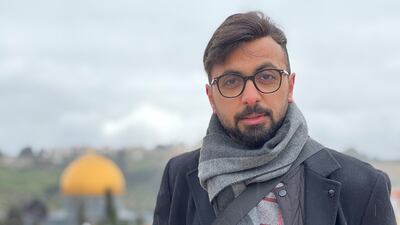
Emirati Majed Al Seyabi during a visit to Jerusalem earlier this year. Photo: Majed Al Seyabi -
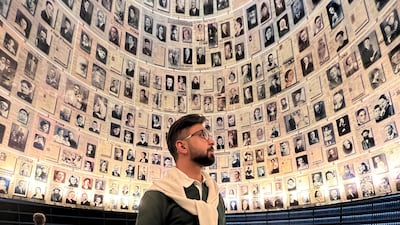
Emirati Majed Al Seyabi at the holocaust memorial museum in Jerusalem. The Abu Dhabi resident believes wants to initiate deeper ties with the Jewish community. Photo: Majed Al Seyabi -

Former Israeli prime minister Benjamin Netanyahu, former US president Donald Trump, Bahrain Foreign Minister Abdullatif Al Zayani and UAE Minister of Foreign Affairs and International Co-operation Abdullah bin Zayed Al Nahyan at the White House after the signing of the Abraham Accords in Washington on September 15, 2020. AFP



