Woolly Mammoths - in pictures
-
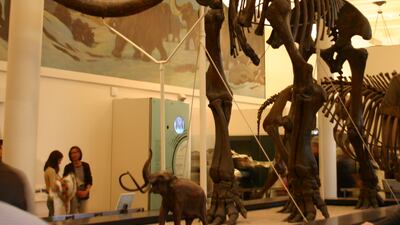
This specimen at the American Museum of Natural History in New York is believed to be a hybrid between Columbian and woolly mammoths. Photo: Ryan Somma -
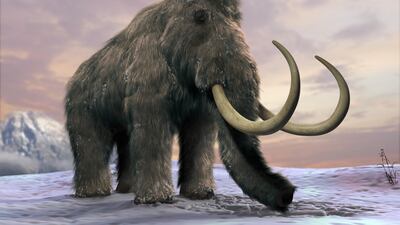
Ivory from woolly mammoth tusks has been used for various creations for centuries. Getty Images -

A skull of a woolly mammoth discovered by fishermen in May 1999 in the Netherlands. Photo: Celtic and Prehistoric Museum -
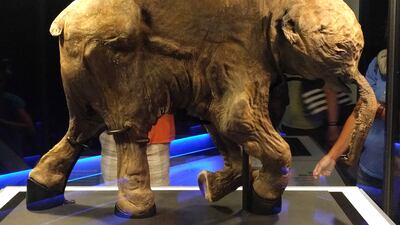
A woolly calf displayed at the Royal British Columbia Museum. Photo: Ruth Hartnup -
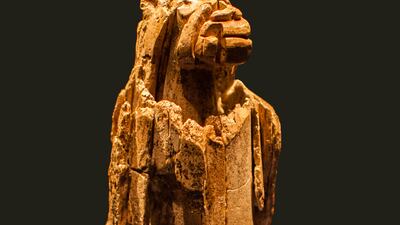
This artefact made from woolly mammoth ivory called the Lion-Man was found in the Hohlenstein-Stadel Cave, Germany. Photo: Dagmar Hollmann -
A mammoth tusk with carvings made in the 19th century in Yukon, Alaska, on display at the De Young Museum in San Francisco, California. Photo: BrokenSphere -

Venus of Brassempouy, a carving from mammoth ivory, on display at the Musee d'Archeologie Nationale in Saint-Germain-en-Laye, France. Photo: Dagmar Hollman -
A frozen calf named Yuka. Photo: Cyclonaut -
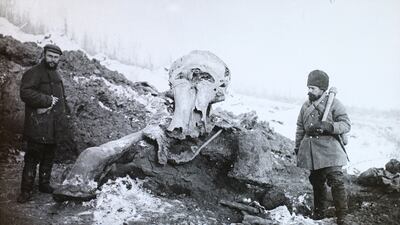
The Berezovka mammoth during excavation in 1901. Photo: Museum of Zoology in St Petersburg -
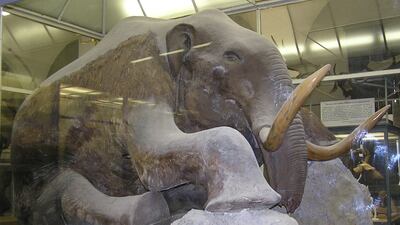
A model of the Berezovka mammoth partially covered by its skin at the Museum of Zoology in St Petersburg, Russia. Photo: Andrew Butko -

A leg with the skin and fur of a mammoth on display at the Museum of Natural History in Paris, France. Photo: Matt Mechtley -
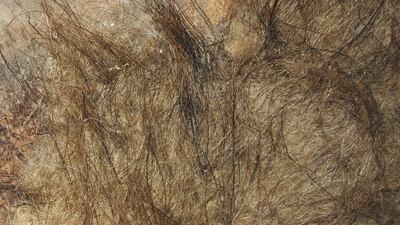
A close-up of preserved woolly mammoth fur on display at the Natural History Museum in Vienna, Austria. Photo: Tommy Arad -
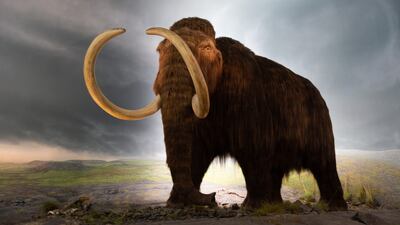
A recreation of a woolly mammoth at the Royal Victoria Museum, Victoria, British Columbia, Canada. Photo: Thomas Quine -
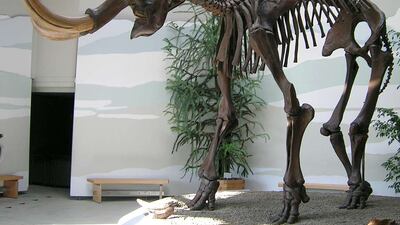
Mammoth remains on display at the Siegsdorf Natural History and Mammoth Museum in Siegsdorf, Germany. Photo: Lou Gruber -
A cast of remains at the State Museum of Natural History in Stuttgart, Germany. Photo: Ghedoghedo -
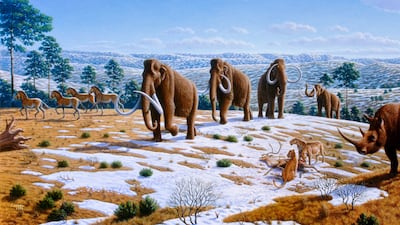
The image depicts a late Pleistocene landscape in northern Spain with woolly mammoths, equids, a woolly rhinoceros and European cave lions with a reindeer carcass. Photo: Mauricio Anton -
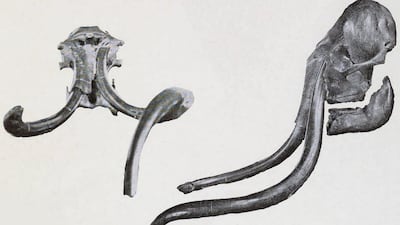
A woolly mammoth skull from Bzianka, Poland, with one downward spiralling tusk. Photo: Henryk Ferdynand Hoyer -
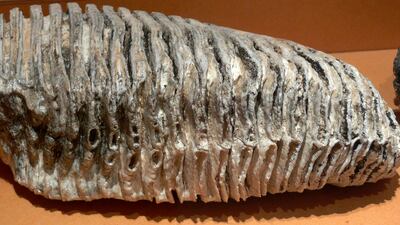
A mammoth molar featured in a display of artefacts at the Georges-Garret Museum in Vesoul, France. Photo: Remi Mathis -
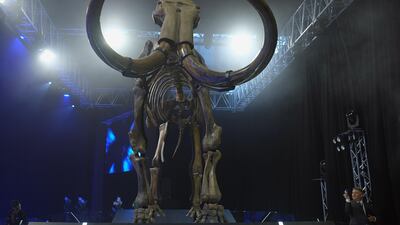
In 2015, a 15,000-year-old woolly mammoth was unveiled at Marina Mall in Abu Dhabi. Delores Johnson / The National -
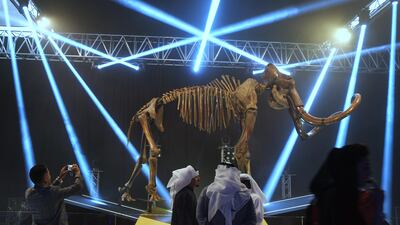
The woolly mammoth was roughly the same size as modern African elephants. Delores Johnson / The National -
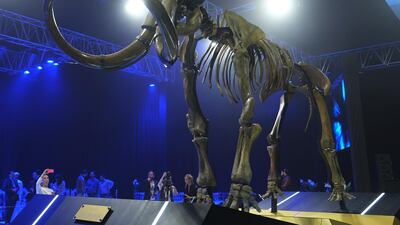
The woolly mammoth coexisted alongside early humans. This one lives in a mall. Delores Johnson / The National -
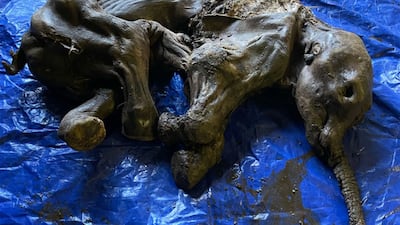
Miners in the Klondike gold fields of Canada's far north discovered the mummified remains of a baby woolly mammoth. Government of Yukon / AFP -
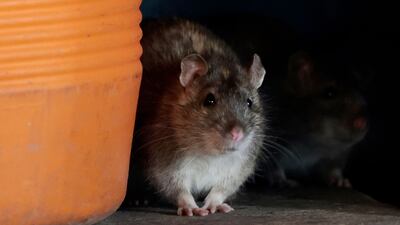
While some scientists are trying to bring the woolly mammoth back, others have studied how using gene editing can resurrect extinct animals such as the Christmas Island rat. Getty Images / AFP -
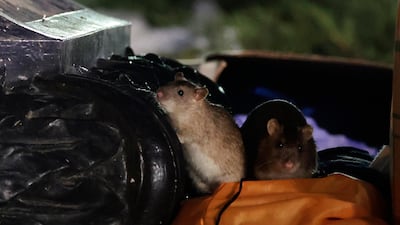
The team found they could reconstruct 95 per cent of the Christmas Island rat genome. Getty Images / AFP -
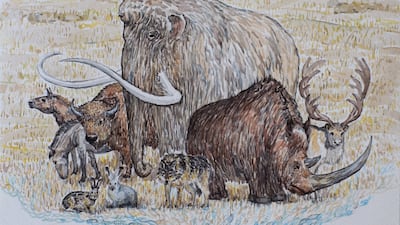
Climate change, not humans, caused the extinction of woolly mammoths. PA -
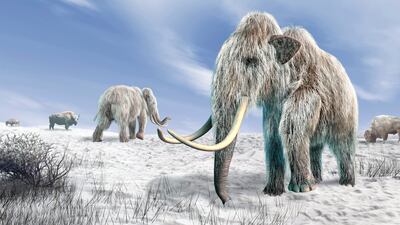
When icebergs melted, it became too wet for the mammoths to survive because their food source was wiped out. PA -
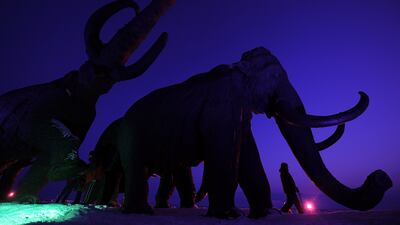
Giant bronze sculptures of mammoths on display during the World Biathlon Championships in the Siberian city of Khanty-Mansiysk. AFP -

An imagined woolly mammoth on display at the University of Alaska Museum of the North in Fairbanks, Alaska. The Havens Studio / Reuters -
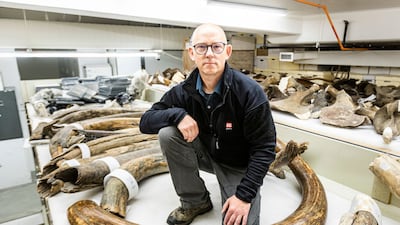
Mat Wooller, director of the Alaska Stable Isotope Facility, kneels among a collection of mammoth tusks at the University of Alaska Museum of the North. University of Alaska Fairbanks / AFP -

These woolly mammoth remains are a huge attraction at the Marina Mall in Abu Dhabi. Delores Johnson / The National -
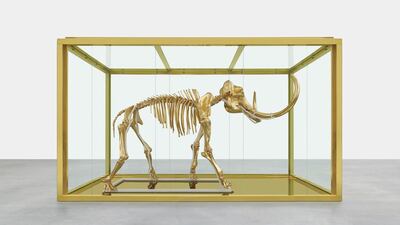
A gilded woolly mammoth skeleton was created to benefit the amfAR Cinema Against Aids in Cap d’Antibes, southern France. Prudence Cuming Associates / Damien Hirst / AP


Most popular today
7

