


Robert Malley, the US special envoy for Iran, said on Tuesday that Tehran has enough highly enriched uranium to make a nuclear bomb.
“It would take them a matter of weeks” to build a bomb, he said, but added that “this would be something that [the US government] would know, we would see, and to which we would react quite forcefully, as you could imagine.”
Speaking to National Public Radio (NPR), he confirmed his belief that Iran has enough material to develop a nuclear weapon, while lamenting the failure of the last round of talks with Iran in Doha, calling it a “wasted occasion”.
The European negotiators, he explained, invited both the US and Iran to Qatar “in the hope that the Iranians would show something, some willingness to get to yes, but they seem, at this point, not capable of providing an answer”.
He argued, however, that there is still time to resolve the issue if Tehran were to make a decision.
“Whether [the Iranians] are interested [in a deal] or not, they’re going to have to decide sooner or later because at some point, the deal will be a thing of the past … There still is time to resolve this.”
He assessed that Iran has yet to make a decision over whether to return to the 2015 nuclear deal that the US abandoned in 2018.
-
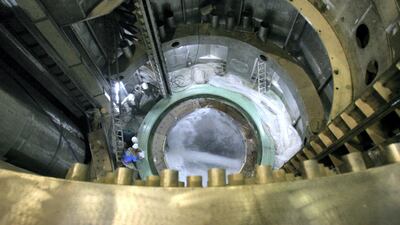
Russian contractors work at the Bushehr nuclear reactor site in 2007. The plant opened four years later. Bloomberg -
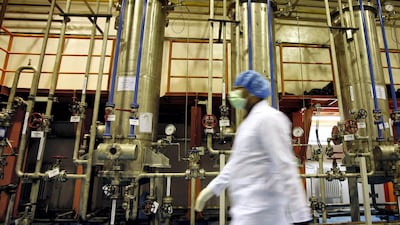
An Iranian technician at the International Atomic Energy Agency inspects the country's Isfahan plant in 2007. Tehran is no longer co-operating with the agency at nuclear sites across the country. EPA -

Workers wait to begin constructing a second reactor at the Bushehr nuclear power plant in 2019. AFP -
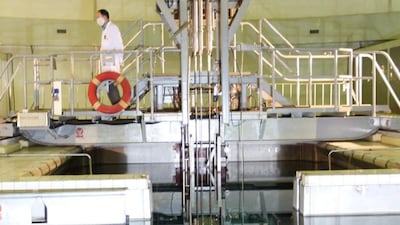
A metal-encased rod with 20 per cent enriched nuclear fuel is inserted into a reactor in Tehran in 2012. AFP -
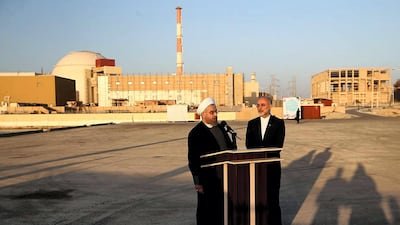
Fomer Iranian President Hassan Rouhani and the country's Atomic Energy Organisation chief Ali Akbar Salehi speak at the Bushehr nuclear site in 2015. AFP -
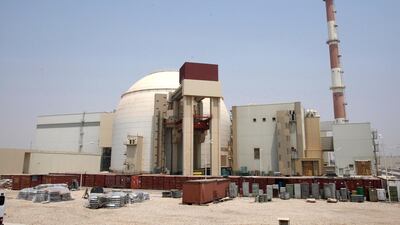
Iran's Bushehr nuclear plant has been restarted. EPA -
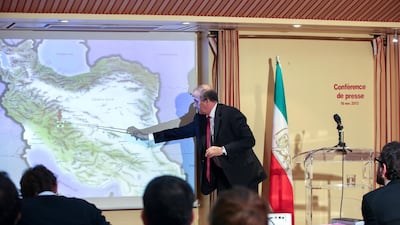
Mehdi Abrichamtchi, chairman of the Peace and Security Committee at the National Council of Resistance of Iran, shows journalists the location of a secret nuclear site in Iran in 2013. AFP -
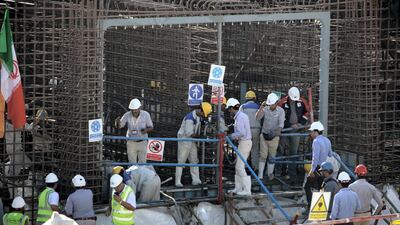
Workers prepare to begin the construction of a second reactor at the Bushehr site. AFP


Mr Malley also said Iran is much closer to “having enough fissile material for a bomb”.
“To our knowledge, they have not resumed their weaponisation programme, which is what they would need to develop [a bomb].”
He reiterated the alarm the US and its partners feel over the progress Iran has made in uranium enrichment.
“Getting back to the deal is in our non-proliferation interest. We think it's their interest because they'd get sanctions lifted. But of course, that's an assessment that they don't have to make,” Mr Malley said.
President Joe Biden's administration has engaged in eight rounds of indirect talks with Iran in Vienna to resurrect that deal, formally known as Joint Comprehensive Plan of Action (JCPOA), which is designed to cap Tehran’s nuclear activities and prevent it from developing a nuclear weapon.

