

Parents paying the full cost of Ivy League tuition bills are getting a little relief — and they can thank inflation.
The cost to attend an elite school in the coming academic year is poised to fall by an average of about 5 per cent, when adjusted for the rate of price increases in the broader economy, a Bloomberg analysis of tuition data showed.

That’s the biggest drop in at least a dozen years.
The decline is being driven by a quirk of the economy: sticker prices at schools are rising less than the general rate of inflation. The eight Ivy League schools, as well as Stanford University and MIT, are planning to raise tuition an average of 3.3 per cent for the 2022-2023 school year. By contrast, inflation is running at 8.5 per cent.
Among those schools, Yale plans the largest tuition increase, at 4.3 per cent. Factoring in inflation, that works out to a drop of 4.2 per cent. The figures exclude other expenses such as room and board.
For decades, tuition has risen faster than prices, making college costs a flashpoint. Harvard tuition has surged 56 per cent since the 2009-2010 year, and the coming school year will cost undergraduates almost $53,000.
Even so, few parents pay full price at these schools, which are among the most generous in offering financial aid. Harvard points out that about 55 per cent of students receive need-based scholarships and 20 per cent pay nothing to attend.
-
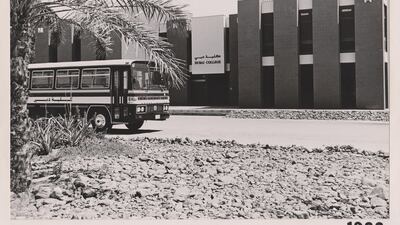
Dubai College's reception building in 1988. All photos: Dubai College -
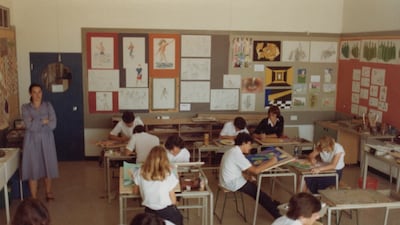
Pupils during art class in the 1980s. -
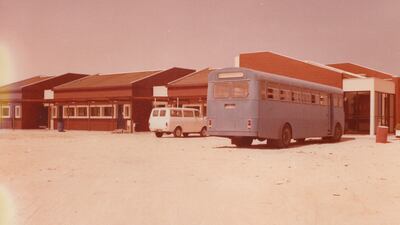
The school's first bus pictured in 1980. Dubai College is one of the city’s oldest schools. -
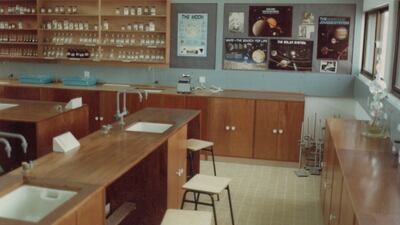
The science room in the 1980s. -
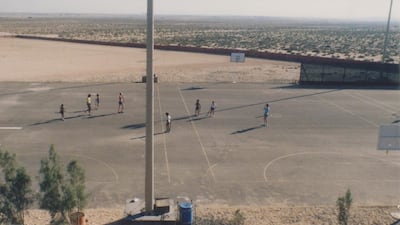
The old sports court in 1983. -

Pupils conduct experiments in a science class. -

Plot B141 in Umm Suqeim pictured in 1980. -
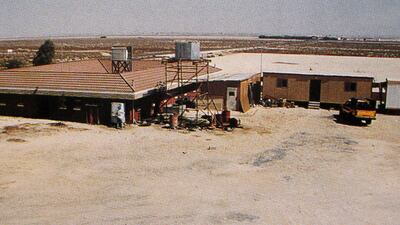
Staff quarters on campus under construction. -
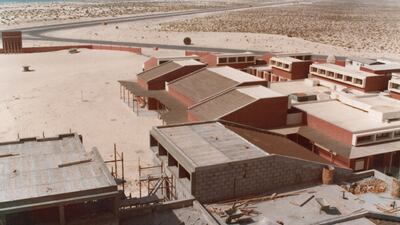
The beach road outside campus in Umm Suqeim in 1980. -
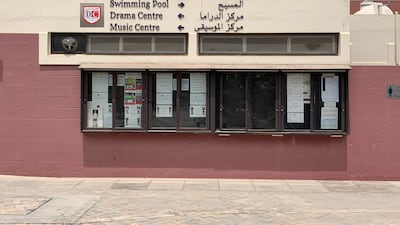
The physical education changing room block, in 1989. -
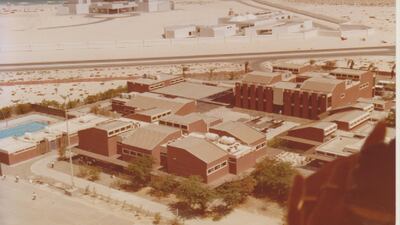
The campus in 1994 after extensions in previous years. -
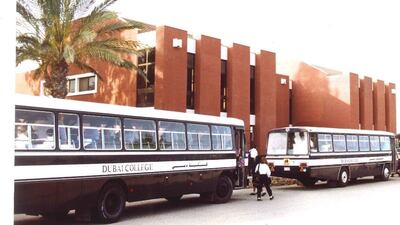
The school's buses in the 1980s. -
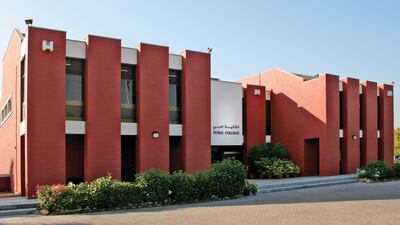
Dubai College's entrance in 2000. -
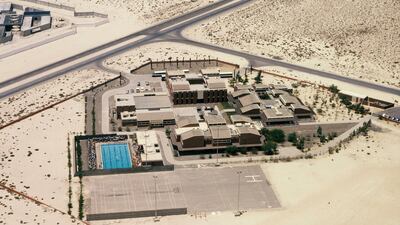
The swimming pool on campus in 1984. -
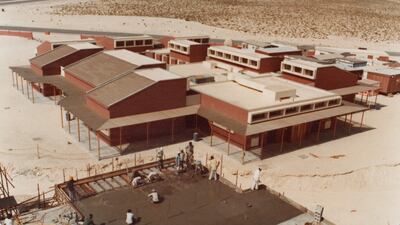
Foundations of the new campus block in 1982. -

Dubai College as seen from above in 1982. -
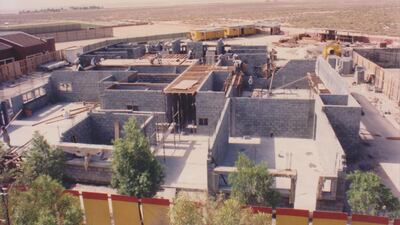
The Sixth Form Centre under construction in 1991.


A Bloomberg survey forecasts inflation will fall to 5.7 per cent in the fourth quarter of this year, a hefty drop from the current rate but still well above pre-pandemic levels.
Should inflation prove sticky, schools could come under pressure from faculty and staff to increase wages so that their pay keeps up with rising costs. That would cut at the heart of what colleges spend their money on, said Phillip Levine, an economist at Wellesley College.
“If we observe over the course of the next year that wage pressure expands, that will drive up university costs and then they’ll have to start increasing tuition at a faster rate,” said Mr Levine, whose recent book, A Problem of Fit, focuses on the complexity of college pricing.
Which means families probably shouldn’t rest easy.

