


An agreement between world powers and Iran to restore the 2015 nuclear deal is expected within days, US officials and experts say, barring any last-minute miscalculations from either side.
“We can and should reach an understanding on a mutual return to full implementation of the JCPOA in the coming days,” a US State Department official told The National, referring to the deal's official name of Joint Comprehensive Plan of Action.
An agreement, or an agreement in principle, would cap 11 months of negotiations that President Joe Biden's administration pursued indirectly with Iran, in a bid to revive the major deal that former president Donald Trump withdrew from in 2018.
The US official stressed the urgency of reaching an agreement, saying that the pace of Iran’s nuclear advances leaves “very little time” before Tehran reaches “breakout” capability to build a nuclear weapon.
US officials have put that time window at matter of “weeks” and not months.
Washington has also intensified regional diplomacy in anticipation of a deal.
The White House co-ordinator for the Middle East and North Africa, Brett McGurk, recently returned from a trip to the Gulf in which he discussed Iran with regional leaders.
US Secretary of State Antony Blinken has held calls with his Qatari, Turkish, Emirati and Saudi counterparts in the last two weeks and is planning a trip to the region following an agreement, The National confirmed.
-
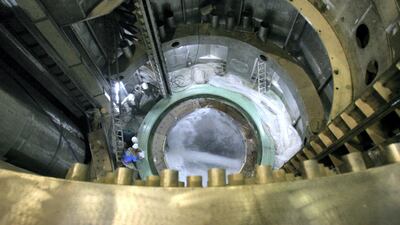
Russian contractors work at the Bushehr nuclear reactor site in 2007. The plant opened four years later. Bloomberg -
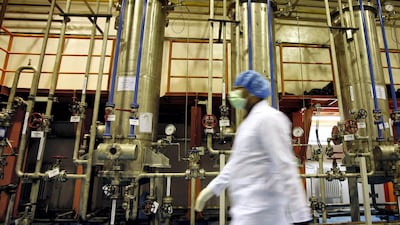
An Iranian technician at the International Atomic Energy Agency inspects the country's Isfahan plant in 2007. Tehran is no longer co-operating with the agency at nuclear sites across the country. EPA -

Workers wait to begin constructing a second reactor at the Bushehr nuclear power plant in 2019. AFP -
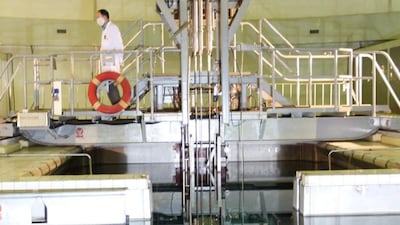
A metal-encased rod with 20 per cent enriched nuclear fuel is inserted into a reactor in Tehran in 2012. AFP -
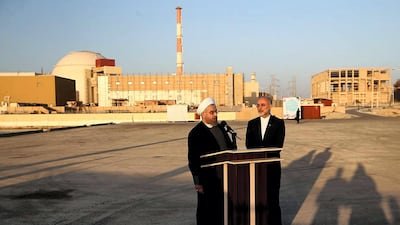
Fomer Iranian President Hassan Rouhani and the country's Atomic Energy Organisation chief Ali Akbar Salehi speak at the Bushehr nuclear site in 2015. AFP -
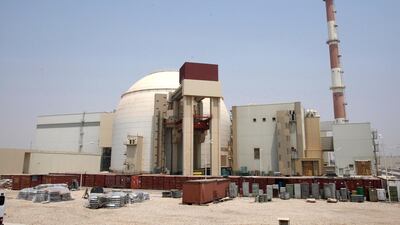
Iran's Bushehr nuclear plant has been restarted. EPA -
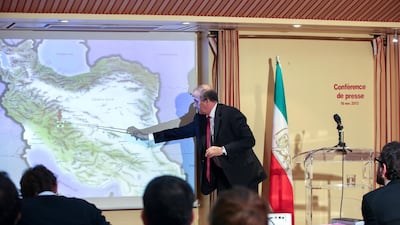
Mehdi Abrichamtchi, chairman of the Peace and Security Committee at the National Council of Resistance of Iran, shows journalists the location of a secret nuclear site in Iran in 2013. AFP -
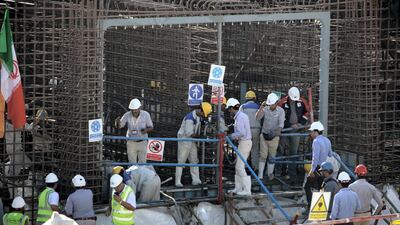
Workers prepare to begin the construction of a second reactor at the Bushehr site. AFP


An important hurdle was cleared this week as Russia stepped back from its opposition, following US guarantees that Moscow's nuclear projects with Iran will not be subject to sanctions imposed after its invasion of Ukraine.
“We would of course not sanction Russian participation in nuclear projects that are part of resuming full implementation of the JCPOA,” State Department spokesman Ned Price said.
Russia was one of the original signatories to the Iran deal, along with the US, UK, France, China and Germany.
In another sign of progress, Tehran on Wednesday freed two British Iranians from years of detention after the UK government confirmed it had paid a long-standing debt over a cancelled defence contract.
At least five US citizens remain detained in Iran and the US official called for their immediate release.
“Securing their release is one of our utmost priorities. We call upon Iran to make urgent progress towards the release of wrongfully detained US citizens,” the State Department official said.
Ali Vaez, director of the Iran programme at the International Crisis Group, said negotiations are at a critical juncture, with several important issues still needing to be finalised.
“Each side is hoping that the other would blink on the remaining issues,” Mr Vaez, who travelled to Vienna in recent months to follow the talks, told The National.
The outstanding issues relate to the scope of sanctions relief and economic guarantees.
Mr Vaez predicted a deal would be done, saying it was “too big to fail”, but said that “both sides are also prone to miscalculation at the 11th hour".
Analyst Henry Rome of the Eurasia group said the remaining issues are unlikely to be deal-breakers.
-
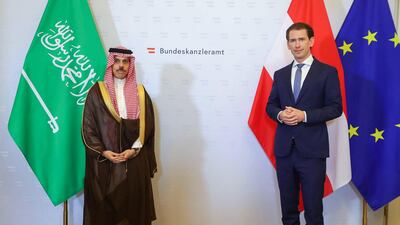
Saudi Arabia's Foreign Minister Prince Faisal bin Farhan with the Chancellor of Austria Sebastian Kurz. SPA -

Wang Qun, China's ambassador to the UN, waits for the start of talks on reviving the 2015 Iran nuclear deal in Vienna. Reuters -

European External Action Service deputy secretary general, Enrique Mora, and Iranian Deputy Foreign Minister, Abbas Araghchi, attend the summit in Vienna. Reuters -
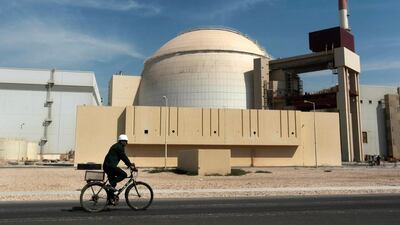
The Bushehr nuclear power plant in Iran. AP Photo -
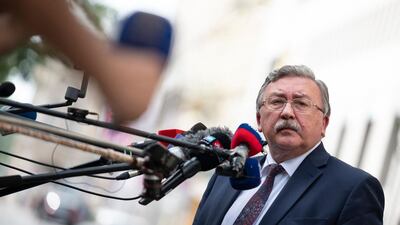
Russia's governor to the International Atomic Energy Agency, Mikhail Ulyanov, updates journalists outside the Grand Hotel Wien after a round of closed-door nuclear talks in Vienna. AFP -
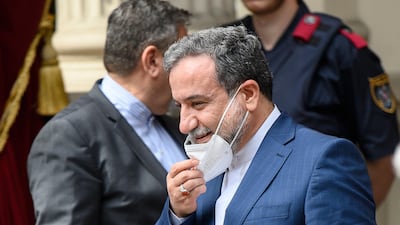
Abbas Araghchi after negotiations come to nothing. EPA -
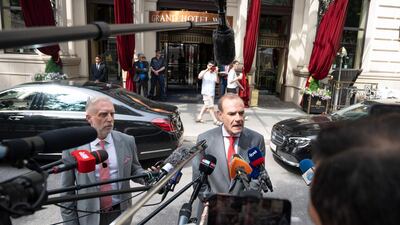
Enrique Mora speaks to the press outside the Grand Hotel Wien where talks were held. AFP -
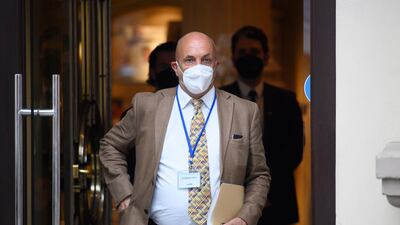
Stephan Klement, EU Ambassador and Special Adviser on Iran Nuclear Issue, attended the talks aimed at reviving the 2015 nuclear deal. EPA -
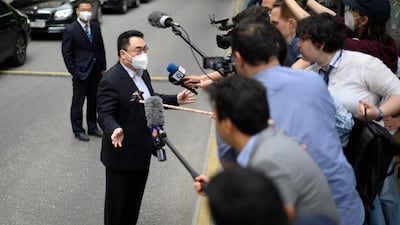
Qun Wang addresses the media in Vienna. EPA -
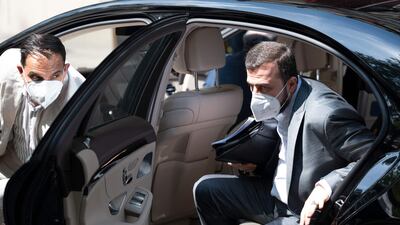
Iran's Governor to the International Atomic Energy Agency (IAEA), Kazem Gharib Abadi is returning to the 'Grand Hotel Wien' during the closed-door nuclear talks in Vienna. AFP -
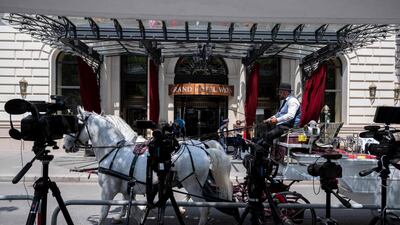
The Grand Hotel Wien held a series of negotiations designed to revive the 2015 nuclear pact. AFP


“The remaining disputes are between Washington and Tehran and pertain mostly to sanctions-related issues, such as the final decision regarding whether the Islamic Revolutionary Guard Corps remains on the Foreign Terrorist Organisation list. But these are unlikely to prove insurmountable,” Mr Rome wrote.
“Both the US and Iran want a deal,” he added, putting the chances of reaching an agreement at 80 per cent.
Any agreement, however, would face criticism from Congress.
A bipartisan group of 21 House members, including 11 Democrats, sent a letter to Mr Biden voicing concerns about a potential deal.
“Without adequately addressing Iran’s role as the world’s leading state sponsor of terror — which was noticeably absent from the 2015 JCPOA — and simultaneously providing billions of dollars in sanctions relief, the United States would be providing a clear path for Iranian proxies to continue fuelling terrorism,” the letter said.

