



The US West’s megadrought deepened so much last year that it is now the driest in at least 1,200 years and is a worst-case climate change scenario playing out live, a new study finds on Monday.
A dramatic drying in 2021 — about as dry as 2002 and one of the driest years ever recorded for the region — pushed the 22-year drought past the previous record-holder for megadroughts in the late 1500s and shows no signs of easing in the near future, according to a study published in the journal Nature Climate Change.
The study calculated that 42 per cent of this megadrought can be attributed to human-caused climate change.
“Climate change is changing the baseline conditions toward a drier, gradually drier state in the West and that means the worst-case scenario keeps getting worse,” said study lead author Park Williams, a climate hydrologist at UCLA.
“This is right in line with what people were thinking of in the 1900s as a worst-case scenario. But today I think we need to be even preparing for conditions in the future that are far worse than this.”
Mr Williams studied soil moisture levels in the West — a box that includes California, Wyoming, Utah, Nevada, Arizona, most of Oregon and Idaho, much of New Mexico, western Colorado, northern Mexico, and the southwest corners of Montana and Texas — using modern measurements and tree rings for estimates that go back to the year 800.
That’s about as far back as estimates can reliably go with tree rings.
A few years ago, Mr Williams studied the current drought and said it qualified as a lengthy and deep “megadrought” and that the only worse one was in the 1500s. He figured the current drought wouldn’t surpass that one because megadroughts tended to peter out after 20 years. And, he said, 2019 was a wet year so it looked like the western drought might be coming to an end.
But the region dried up in late 2020 and 2021.
All of California was considered in official drought from mid-May until the end of 2021, and at least three-quarters of the state was at the highest two drought levels from June through Christmas, according to the US drought monitor.
“For this drought to have just cranked up back to maximum drought intensity in late 2020 through 2021 is a quite emphatic statement by this 2000s drought saying that we’re nowhere close to the end,”Mr Williams said. This drought is now 5 per cent drier than the old record from the 1500s, he said.
The drought monitor says 55 per cent of the US West is in drought with 13 per cent experiencing the two highest drought levels.
This megadrought really kicked off in 2002 — one of the driest years ever, based on humidity and tree rings, Mr Williams said.
“I was wondering if we’d ever see a year like 2002 again in my life and in fact, we saw it 20 years later, within the same drought,” Mr Williams said. The drought levels in 2002 and 2021 were a statistical tie, though still behind 1580 for the worst single year.
Climate change from the burning of fossil fuels is bringing hotter temperatures and increasing evaporation in the air, scientists say.
-
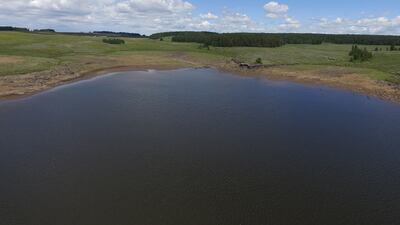
An aerial shot of a depleted reservoir on Grand Mesa outside Grand Junction, Colorado. Janie VanWinkle relies on the reservoir to feed her cattle. -

An aerial view of Frank Nieslanik’s farm. On one side of the road, the fields have been irrigated. On the other, they haven’t. -
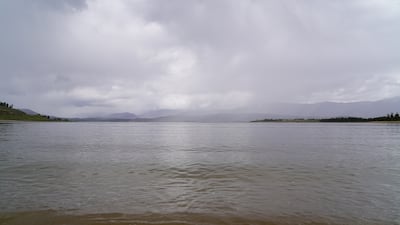
Lake Granby in Colorado is part of the headwaters that feed the Colorado River. -
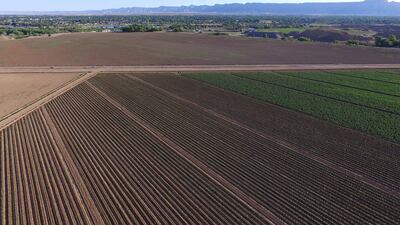
An aerial view of Frank Nieslanik’s farm in Grand Junction, Colorado. -

An aerial shot of Janie VanWinkle’s ranch shows how dry conditions have become. Down the hill, where the grass is green, shows the difference irrigation makes. -

Frank Nieslanik poses next to produce grown on his farm. He’s farmed the land for 30 years and has never seen it so dry. -

An aerial view of an irrigation canal on Frank Nieslanik’s farm shows the difference water makes to crops. -

Farm workers sow a field at Frank Nieslanik’s farm in Grand Junction, Colorado. The Colorado River has been in a drought for 22 years, putting stress on the state’s farmers. -
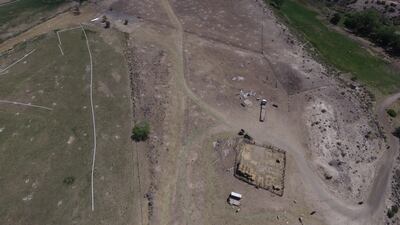
An aerial shot of Janie VanWinkle’s ranch outside Grand Junction, Colorado, shows how dry conditions have become. -
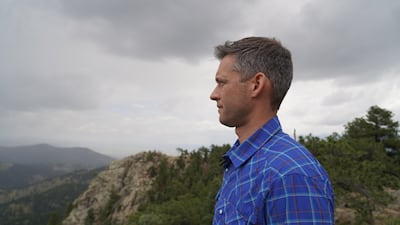
Keith Musselman, a scientist at the University of Colorado’s Institute of Arctic and Alpine Research, looks out towards the continental divide. -
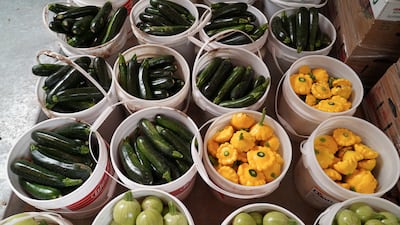
Produce from Frank Nieslanik’s farm in Grand Junction, Colorado. The Colorado River has been in a drought for 22 years, putting stress on the state’s farmers. -
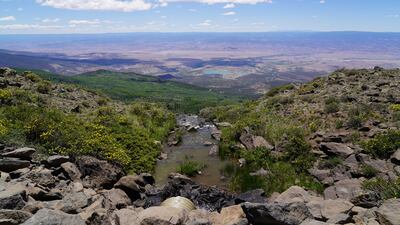
A view from the top of Grand Mesa overlooking the dry Western Slope of Colorado. In July, the state’s governor declared a drought emergency. -

Janie VanWinkle drives a tractor as she collects hay for her cows. The drought has meant she needs more hay than usual to keep her cattle healthy. -

Snow still graces the top of a peak in the Rocky Mountains of Colorado. Snowpack from the mountains is vital to the health of the Colorado River, which provides water to 40 million people in the American South-West and Mexico. -
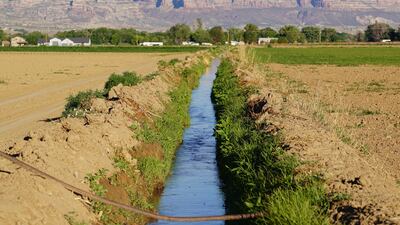
An irrigation canal runs through a farm in Grand Junction, Colorado. The area is famous for its cattle and produce. -

A view of Frank Nieslanik’s farm. On one side of the road, the fields have been irrigated. On the otherside, they haven’t. -
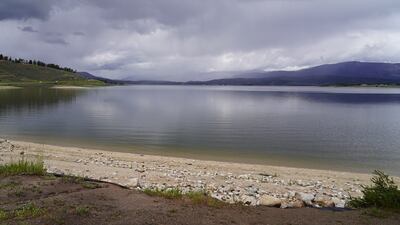
Lake Granby in Colorado is part of the headwaters that feed the Colorado River. -
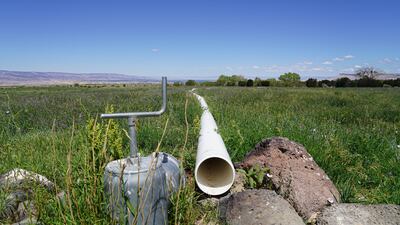
An untapped irrigation pipe at one of the tracts of land Janie VanWinkle and her family graze their cattle on. -

Janie Van Winkle’s husband, Howard, drives a tractor as she collects hay for her cows. The drought has meant she needs more hay than usual to keep her cattle healthy. -
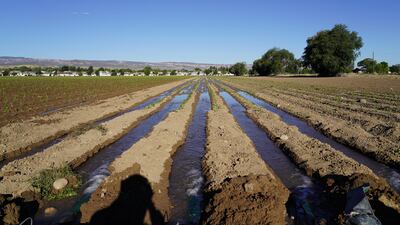
A field is irrigated at Frank Nieslanik’s farm in Grand Junction, Colorado. The Colorado River has been in a drought for 22 years, putting stress on the state’s farmers. -

A winding portion of the Colorado River. -

A depleted reservoir high on top of Grand Mesa near Grand Junction, Colorado. -
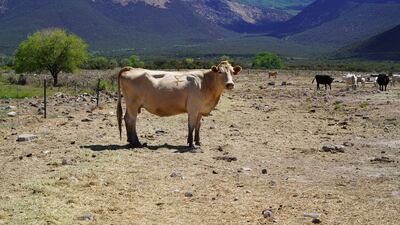
A cow stands on a dry patch of grass on one of the tracts of land Janie VanWinkle and her family use to graze them on. -
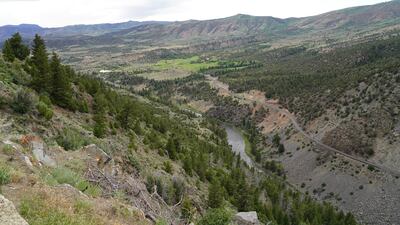
A stretch of the Colorado River, near the river’s headwaters.


Mr Williams used 29 models to create a hypothetical world with no human-caused warming then compared it to what happened in real life — the scientifically accepted way to check if an extreme weather event is due to climate change. He found that 42 per cent of the drought conditions are directly from human-caused warming.
Without climate change, he said, the megadrought would have ended early on because 2005 and 2006 would have been wet enough to break it.
The study “is an important wake-up call,” said Jonathan Overpeck, dean of environment at the University of Michigan, who wasn’t part of the study.
“Climate change is literally baking the water supply and forests of the Southwest, and it could get a whole lot worse if we don’t halt climate change soon.”
Mr Williams said there is a direct link between drought and heat and the increased wildfires that have been devastating the West for years. Fires need dry fuel that drought and heat promote.
Eventually, this megadrought will end by sheer luck of a few good rainy years, Mr Williams said. But then another one will start.
Daniel Swain, a UCLA climate scientist who wasn’t involved in the study, said climate change is likely to make megadrought “a permanent feature of the climate of the Colorado River watershed during the 21st century"

