


UN Secretary General Antonio Guterres has expressed alarm over several women activists who have gone “missing” or “disappeared” in Afghanistan in recent weeks and urged the Taliban to ensure their safety.
Mr Guterres said on social media he was “increasingly concerned” about the whereabouts of the campaigners amid a crackdown on opponents by the Taliban, who swept back to power last August.
“I am increasingly concerned about the well-being of missing women activists in Afghanistan. Several have ‘disappeared’, some not heard from in weeks,” Mr Guterres posted late on Wednesday.
-

Zakia, an economics student who had to abandon her studies when the Taliban took control of Afghanistan in August, at her home in the capital Kabul, where women are coming together to stand against the hardline regime. All photos: AFP -
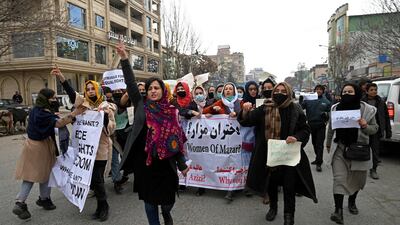
She is part of a growing group that started with 15 activists, mostly women in their 20s who already knew each other. Now a network of dozens of women work in secret to organise protests. -
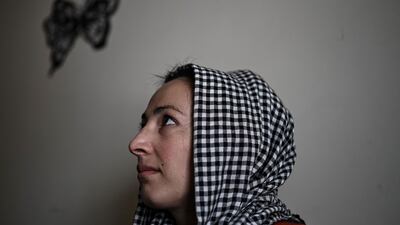
Hoda Khamosh, a published poet and former NGO worker who organised workshops to help empower women, vets newcomers to the group to ensure they can be trusted. -
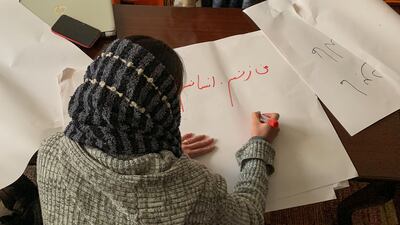
One test she sets is to ask them to prepare banners or slogans at short notice - she can sense passion for the cause from women who deliver quickly. -

Other tests yield even clearer results. Hoda says one potential recruit was given a fake date and time for a demonstration. The Taliban turned up ahead of the supposed protest, and all contact was cut with the woman suspected of tipping off officials. -

A core group of the activists use a dedicated phone number to co-ordinate on the day of a protest. That number is later disconnected to ensure it is not being tracked. -
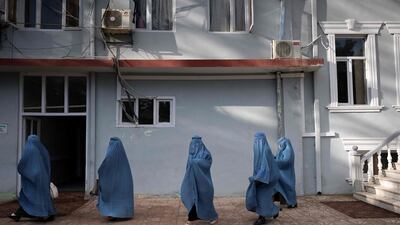
"We usually carry an extra scarf or an extra dress. When the demonstration is over, we change our clothes so we cannot be recognised," says Hoda. -

She has changed her phone number several times and her husband has received threats. "We could still be harmed, it's exhausting. But all we can do is persevere," she says.


“I strongly urge the Taliban to ensure their safety so that they can return home.”
A Taliban spokesman did not immediately answer The National’s request for comment.
The UN’s human rights team in Geneva this week raised concerns about four Afghan women activists and their relatives who were detained or abducted in Kabul after a series of women’s rights protests.
Parwana Ibrahim Khil and Tamana Paryani were abducted with their relatives on January 19 after taking part in a protest in the capital Kabul on January 16, the UN says.
Mursal Ayar and Dr Zahra Mohammadi were detained at the start of February.
Shortly before she was taken, footage of Ms Paryani was shared online showing her alarmed, warning of Taliban fighters at her door.
Women have staged small protests in Kabul and other Afghan cities since the Taliban swept back to power, complaining about curbs on women’s freedoms, school closures and fewer job opportunities.
Some have described being threatened and harassed by Taliban militants; others have gone into hiding.
When the Taliban last governed Afghanistan from 1996 and 2001, they were notorious for rights abuses and restrictions on women’s clothing and when they could leave their homes.
Despite promising softer rule, they are again curbing women's freedoms, including segregating workplaces and shuttering girls' secondary schools.

