

The US envoy for the Horn of Africa, Jeffrey Feltman, will depart for Sudan this week in the hopes of boosting the civilian wing of Khartoum’s transitional government and prepare for Sudanese Prime Minister Abdalla Hamdok’s trip to the White House, expected to occur next month.
Mr Feltman’s visit comes days after Khartoum foiled an attempted coup by army officers and civilians loyal to the regime of ousted dictator Omar Al Bashir.
Last Friday, US National Security Adviser Jake Sullivan called Mr Hamdok and said “any attempt by military actors to undermine the spirit and agreed benchmarks of Sudan’s constitutional declaration would have significant consequences for the US-Sudan bilateral relationship and planned assistance.”
Mr Sullivan invited Mr Hamdok to the White House for a meeting with President Joe Biden. This visit is expected to occur next month, sources tell The National, but its full scope and the timing are still being discussed.
Before the thwarted coup, leaders in Washington and Khartoum were planning to host an official ceremony for the signing the Abraham Accords, which Sudan quietly signed on to with Israel in January.
But with the threat of instability in Sudan, the US is now focusing its efforts on boosting civilian leadership before wading into regional files.
Cameron Hudson, a senior fellow with the Atlantic Council's Africa Centre, sees the diplomatic visits as coming at a critical moment in Sudan's transition.
“It is critical that Washington not allow an ounce of daylight between itself and Sudan's civilian leaders. The military is looking for any signal that we would acquiesce to their subversion of the transition process,” Mr Hudson said.
Both Mr Feltman’s visit and the White House's invitation to Mr Hamdok “send a clear message that the benefits that Washington has offered only come if and when Sudan genuinely reforms,” he said.
Mr Hudson also said that he thinks the White House realises that reform cannot wait for the signing of the Accords.
“This visit is now very time-sensitive, much more so than the signing of the accords,” Mr Hudson said.
For now, the “US must make clear that all its support, goodwill and assistance is entirely conditioned upon this transition remaining civilian-led and that under no circumstances should the military think that the US would accept a return to a pre-revolution status quo in Sudan,” he added.
Sudanese Foreign Minister Mariam Sadiq Al Mahdi told The National that there are no normalisation talks with Israel.
“There are no talks at any official level,” Ms Al Mahdi said. “Abolishing a law on boycotting Israel does not mean that we are considering opening an Israeli embassy in Khartoum.”
Sudan’s signing on to the Abraham Accords this year came after the Donald Trump administration removed Sudan from the US state sponsors of terrorism list — in exchange for Khartoum paying $335 million to compensate the victims of Al Qaeda’s 1998 attacks on the US embassies in Kenya and Tanzania and its involvement in the 2000 bombing of the USS Cole.
-
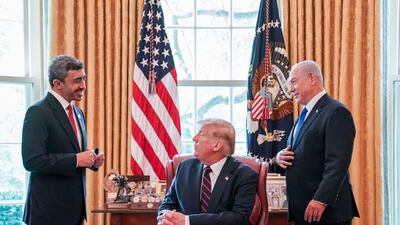
Sheikh Abdullah bin Zayed, UAE Minister of Foreign Affairs and International Co-operation, speaks to Donald Trump, US president at the time, and Israeli Prime Minister Benjamin Netanyahu in the Oval Office in September 2020. Ministry of Foreign Affairs and International Co-operation -
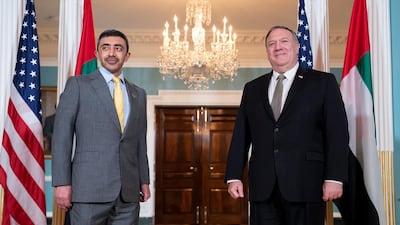
Sheikh Abdullah bin Zayed, UAE Minister of Foreign Affairs and International Co-operation, meets Mike Pompeo, US secretary of state at the time. Wam -
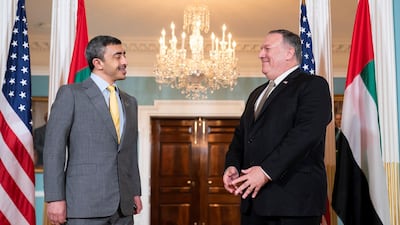
Sheikh Abdullah and Mr Pompeo in Washington. Wam -
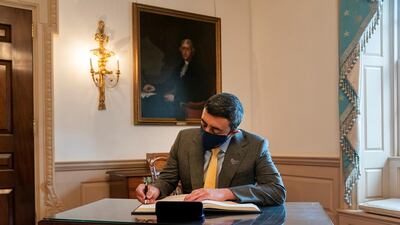
Sheikh Abdullah visits Washington in September last year. Wam -
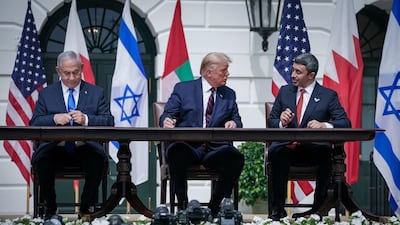
Sheikh Abdullah, UAE Minister of Foreign Affairs and International Co-operation, US President Donald Trump, centre, and Israeli Prime Minister Benjamin Netanyahu sign the Abraham Accord at the White House South Lawn. MOFAIC -
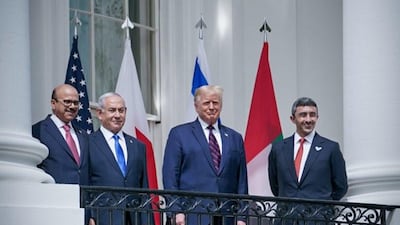
Sheikh Abdullah and, from left, Bahrain's Foreign Minister Abdullatif Al Zayani, Israeli Prime Minister Benjamin Netanyahu and US President Donald Trump at the White House. MOFAIC -
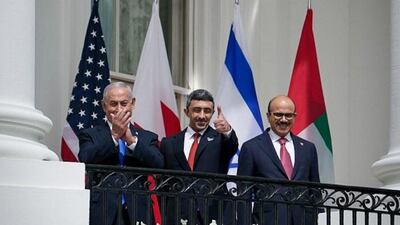
Sheikh Abdullah, Mr Al Zayani and Mr Netanyahu at the White House during the Abraham Accord signing ceremony. MOFAIC -
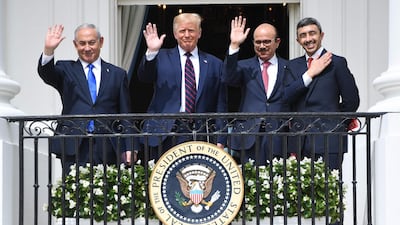
Sheikh Abdullah and, from left, Mr Netanyahu, Mr Trump and Mr Al Zayani wave from the Truman Balcony at the White House. AFP -
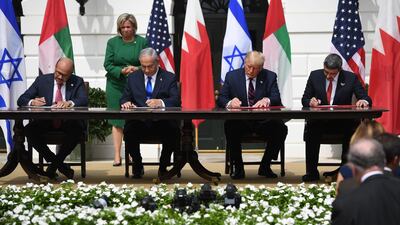
Sheikh Abdullah and, from left, Mr Al Zayani, Mr Netanyahu and Mr Trump sign the Abraham Accord. AFP -
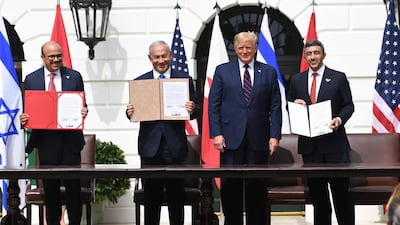
Sheikh Abdullah and, from left, Mr Al Zayani, Mr Netanyahu and Mr Trump after the signing ceremony. AFP -
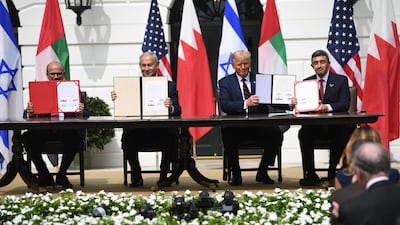
Sheikh Abdullah and, from left, Mr Al Zayani, Mr Netanyahu and Mr Trump after the signing ceremony. AFP -
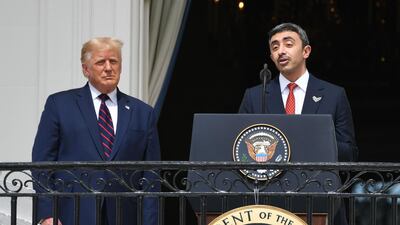
Sheikh Abdullah speaks from the Truman Balcony at the White House during the signing ceremony of the Abraham Accord. AFP -
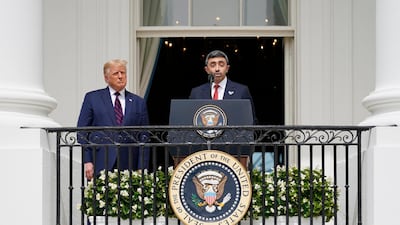
Sheikh Abdullah speaks as Mr Trump looks on before the signing of Abraham Accord on the South Lawn of the White House. AP -
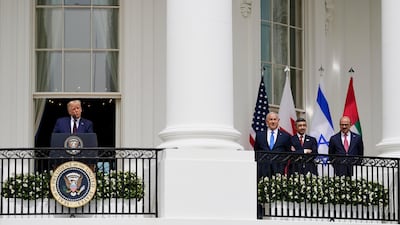
Sheikh Abdullah looks on from the White House as Mr Trump speaks at the Abraham Accord signing ceremony, also attended by Mr Al Zayani and Mr Netanyahu. AP -

Sheikh Abdullah bin Zayed, UAE Minister of Foreign Affairs and International Co-operation, Israeli Prime Minister Benjamin Netanyahu, left, and Bahraini Foreign Minister Abdullatif Al Zayani stand on the Blue Room Balcony during the signing ceremony. AP -
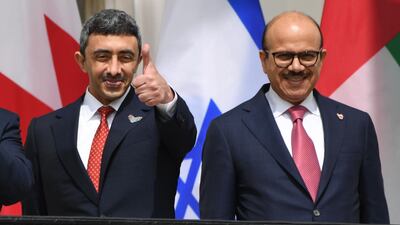
Sheikh Abdullah and Mr Al Zayani shortly before participating in the signing of the Abraham Accord. AFP -
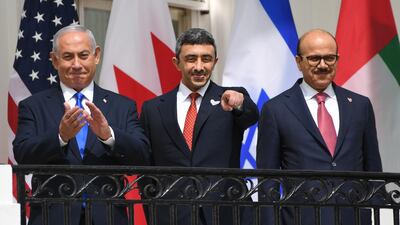
Sheikh Abdullah, with Mr Netanyahu, left, and Mr Al Zayani at the signing of the Abraham Accord on the South Lawn of the White House. AFP -
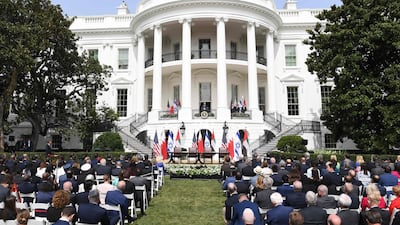
US President Donald Trump speaks from the Truman Balcony at the White House during the signing ceremony of the Abraham Accord. AFP -
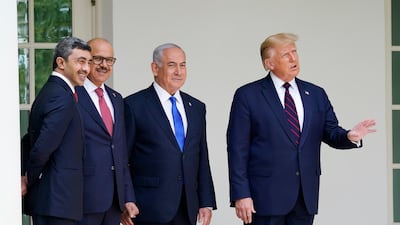
President Donald Trump walks to the Abraham Accord signing ceremony at the White House with Sheikh Abdullah bin Zayed, UAE Minister of Foreign Affairs and International Co-operation, Israeli Prime Minister Benjamin Netanyahu, and Bahrain's Foreign Minister Abdullatif Al Zayani. AP -
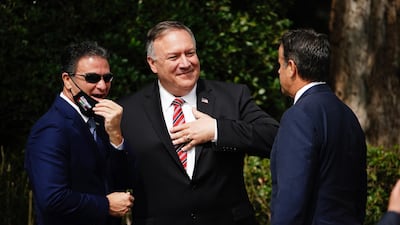
US Secretary of State Mike Pompeo arrives at the White House to attend the Abraham Accord signing ceremony hosted by President Donald Trump. EPA -
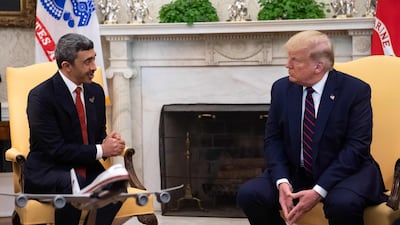
Sheikh Abdullah bin Zayed, UAE Minister of Foreign Affairs and International Co-operation, meets US President Donald Trump in the Oval Office of the White House before the signing of Abraham Accord. AFP -
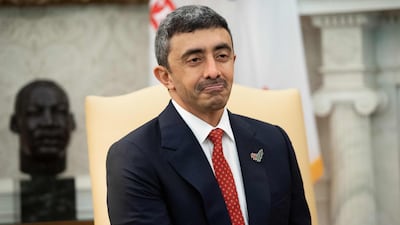
Sheikh Abdullah bin Zayed, UAE Minister of Foreign Affairs and International Co-operation, in the Oval Office. AFP -
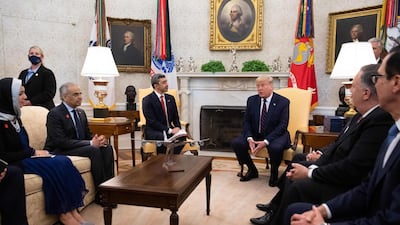
Sheikh Abdullah bin Zayed, UAE Minister of Foreign Affairs and International Co-operation, meets US President Donald Trump in the Oval Office of the White House. AFP -
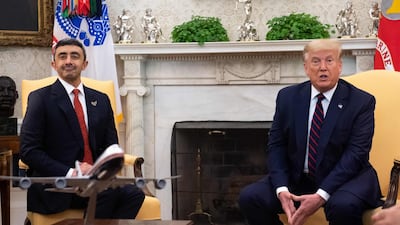
Sheikh Abdullah with Mr Trump in the Oval Office. AFP -
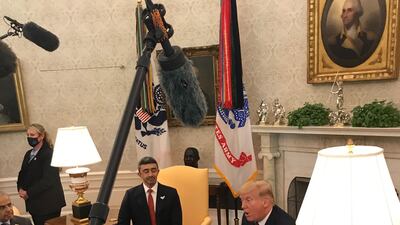
Sheikh Abdullah bin Zayed, UAE Minister of Foreign Affairs and International Co-operation, with by President Donald Trump at the White House. Mustafa Alrawi / The National -
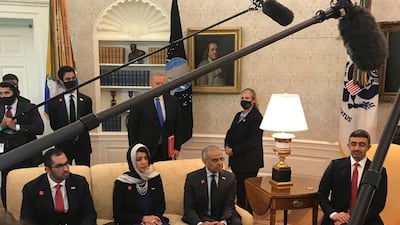
The UAE delegation led by Sheikh Abdullah bin Zayed, Minister of Foreign Affairs and International Co-operation, with US President Donald Trump at the White House. Mustafa Alrawi / The National -
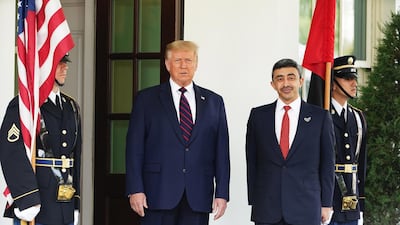
Sheikh Abdullah bin Zayed, UAE Minister of Foreign Affairs and International Co-operation, is welcomed to the White House by US President Donald Trump. EPA -
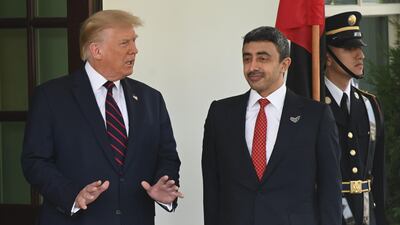
Sheikh Abdullah and Mr Trump outside the White House. AFP -
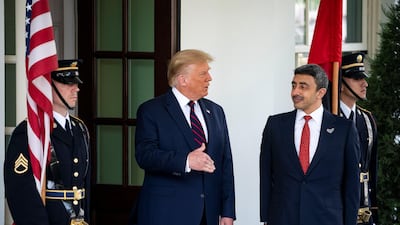
Sheikh Abdullah bin Zayed speaks to Mr Trump after arriving at the White House. Reuters -
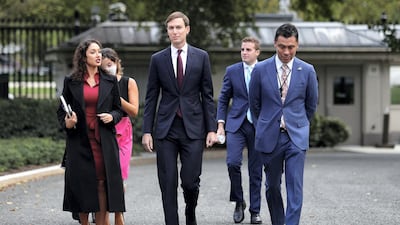
White House Senior Adviser Jared Kushner walks away following a television interview on the North Lawn at the White House in Washington. Reuters -
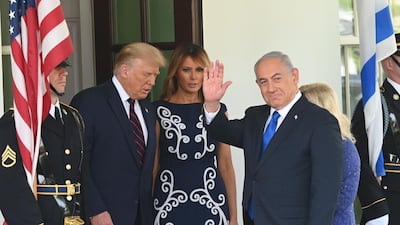
US President Donald Trump and First Lady Melania Trump welcome the arrival of Prime Minister of Israel Benjamin Netanyahu and his wife Sara on the North Lawn of the White House in Washington DC. AFP -
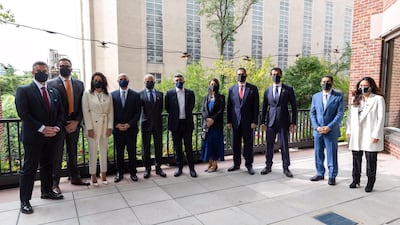
A delegation of senior UAE officials led by Sheikh Abdullah bin Zayed, UAE Minister of Foreign Affairs and International Co-operation, prepares to depart for the White House to sign the Abraham Accord. MOFAIC -
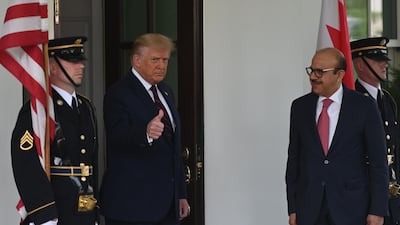
US President Donald Trump welcomes Bahraini Foreign Minister Abdullatif Al Zayani. AFP -

Bahraini Foreign Minister Abdullatif Al Zayani arrives at the White House in Washington DC. AFP -
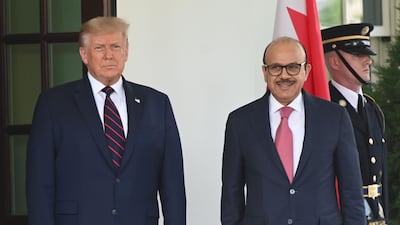
US President Donald Trump welcomes Bahraini Foreign Minister Abdullatif Al Zayani on the North Lawn of the White House in Washington, DC. AFP -
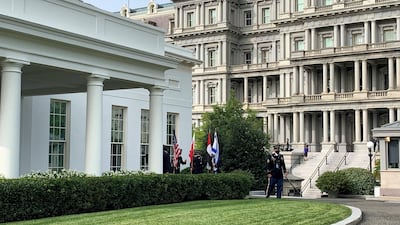
Preparations at the White House for the signing of the Abraham Accord. -
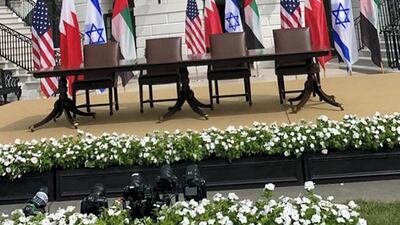
Preparations under way at the White House for the signing of the Abraham Accord. -
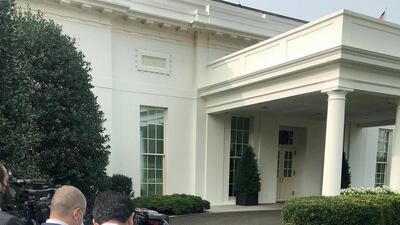
Preparations under way at the White House for the signing of the Abraham Accord. -

Preparation at the White House for the signing of the Abraham Accord. The National


The designation had prevented the US from delivering development and humanitarian aid to the country.
This year alone, the US Agency for International Development (USAID) has provided more than $284m in humanitarian aid to Sudan with the removal.
But that funding could be in jeopardy should a coup against Sudan’s transitional government eventually succeed, according to US laws.
Last week’s failed coup spotlighted the ruptures that have developed between Sudan’s civilian interim government and the military, which joined forces in a power-sharing deal following the 2019 removal of Mr Al Bashir.
But it is unclear how much support Sudan’s civilian leaders could muster, as the country’s deteriorating economic condition has significantly diminished public enthusiasm for the interim government.
A debate over whether to turn Mr Al Bashir over to the International Criminal Court has further stoked tension between Sudanese civilian and military leaders, Ms Al Mahdi said in her interview with The National.
“The citizens on the street will never allow any coup against their revolution,” she said.
“On Sudan, I do believe the US officials when they say they are fully supporting our transition towards democracy. This is not a mere wish but an objective talk as Sudan’s stability is pivotal for East Africa and the entire region.”

