


A new forum has been launched to enhance the Labour Party‘s engagement with the Middle East and improve the party’s relationship with the region.
With the opposition riding high in the polls before this year's general election, the Labour Middle East Council seeks input into future British foreign policy that enhances the UK’s engagement with the Middle East and North Africa.
“The geopolitical significance of the Middle East is immense,” said Sir William Patey, co-chair of the Labour Middle East Council and former British ambassador to Saudi Arabia and Afghanistan.
“The region is a mosaic of diverse cultures, religions and political landscapes, each with unique challenges and opportunities.
“From the delicate sectarian balance in Iraq, the intricate tribal dynamics of Afghanistan, to the evolving social reforms in Saudi Arabia, each country presents a unique set of challenges and opportunities."
Labour says it is keen to achieve regional stability to protect Britain’s national security and immigration policies during the Israel-Hamas conflict, Syrian civil war and Iran's regional ambitions.
“The future of British foreign policy, especially in relation to the Middle East, is more than a matter of international relations – it's a reflection of our global commitments and values,” Sir William said.
“Re-establishing the UK as a leader in global diplomacy and co-operation under Labour is not just a strategic necessity but a moral imperative.”
Britain's Labour Party through the years - in pictures
-
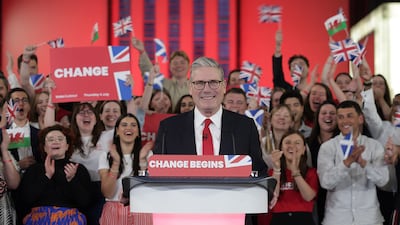
Labour leader Keir Starmer celebrates winning the UK general election with a speech at Tate Modern in central London in July. All photos: Getty Images -
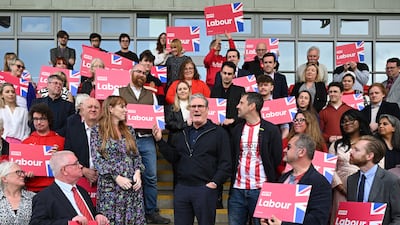
Deputy Labour leader Angela Rayner, and Mr Starmer meet party supporters in Harlow in May -
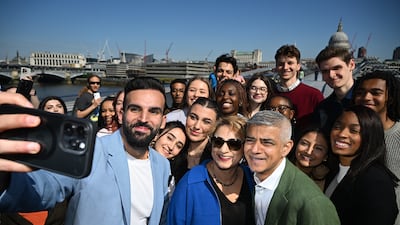
London Mayor and Labour incumbent Sadiq Khan, and his wife Saadiya Khan, pose with supporters after Mr Khan was re-elected in May -
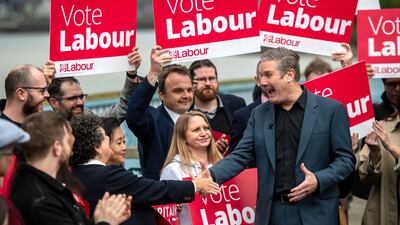
Mr Starmer meets and greets supporters in Chatham in 2023 -
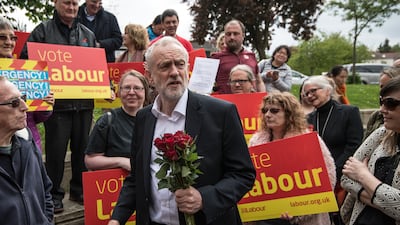
Then-party leader Jeremy Corbyn during a 2017 visit to Oxford -
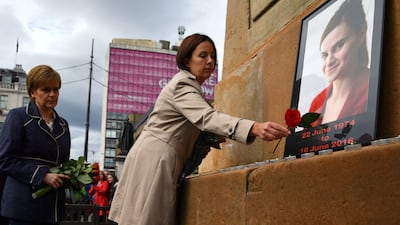
First minister of Scotland Nicola Sturgeon, left, and leader of Scottish Labour Kezia Dugdale place roses at a memorial for murdered Labour MP Jo Cox, in Glasgow in 2016 -
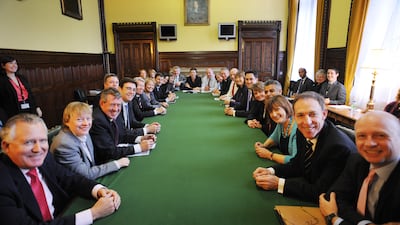
Labour leader Ed Miliband, sixth right, holds his first shadow cabinet meeting at the House of Commons in 2010 -
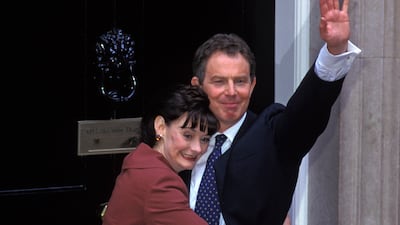
Newly elected Labour prime minister Tony Blair stands on the steps of No 10 Downing Street with his wife Cherie in 1997 -
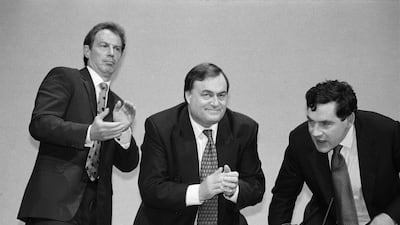
Mr Blair, John Prescott and Gordon Brown at the Labour Party Conference in 1997 -
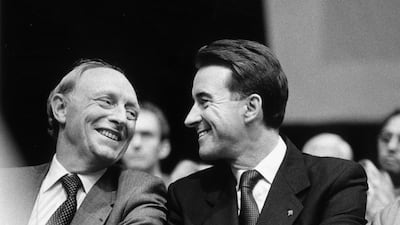
Former leader Neil Kinnock, left, shares a joke with Peter Mandelson, a key figure behind the party's 1997 general election landslide victory, at the party conference in 1997 -
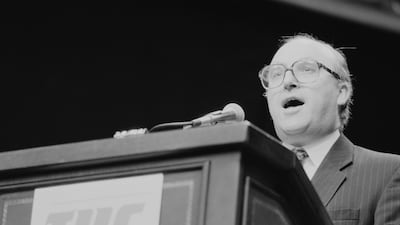
Leader John Smith addresses a miners' rally in Hyde Park, London, in 1992 -

Mr Kinnock with a group of youngsters publicising Labour's jobs And industry campaign in 1985 -
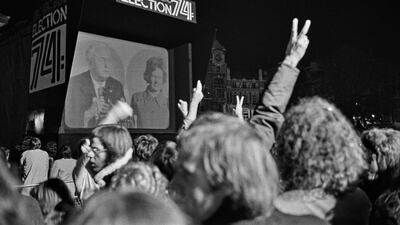
BBC TV coverage of the October 1974 general election, with Labour prime minister Harold Wilson and his wife Mary visible on a screen in London -
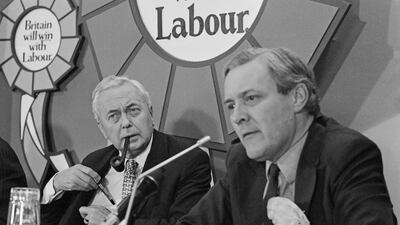
Mr Wilson, left, and Labour politician Tony Benn speaking at a press conference during the 1974 general election campaign -
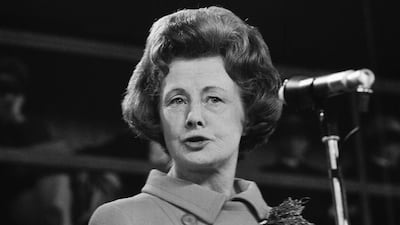
Barbara Castle speaking at the Labour Party Conference in 1969 -

Mr Wilson waving outside No 10 in 1964 -
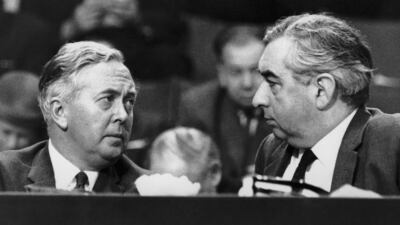
Mr Wilson, left, with deputy leader George Brown in 1963 -
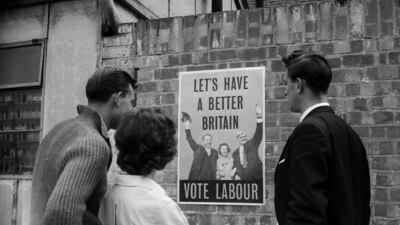
A campaign poster issued by the Labour Party depicting leader Hugh Gaitskell arm-in-arm with Barbara Castle and Aneurin Bevan in 1959 -
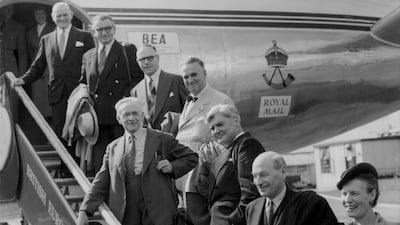
Party leader Clement Attlee with a Labour delegation, boarding a plane on their way to China in 1954 -
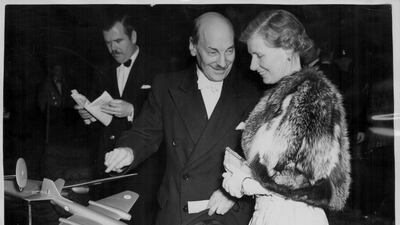
Mr Attlee and his wife Violet attending a film premiere in London in 1952 -

Members of the Labour cabinet at No 10 in 1929: Clockwise from top left: Tom Shaw, Arthur Greenwood, Noel Buxton, Sidney Webb, Arthur Henderson and prime minister Ramsay MacDonald -
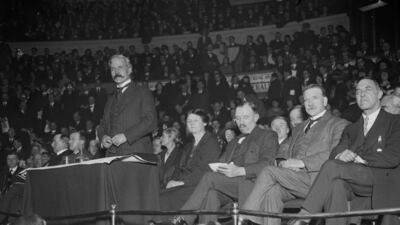
Mr MacDonald addressing a Labour victory meeting at the Royal Albert Hall, London, in 1924 -

From left, Mr Henderson, William Brace, William Adamson, Vernon Hartshorn and James Henry Thomas outside Unity House during a coal workers' strike, in London, 1920 -
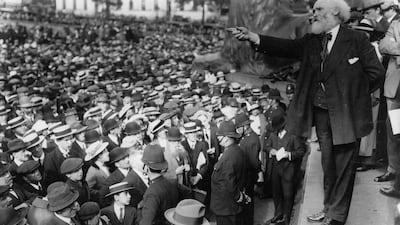
Scottish Labour politician James Keir Hardie addressing a peace meeting in Trafalgar Square, London, in 1914 -
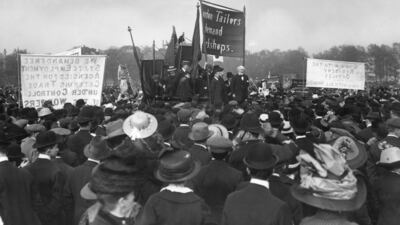
Mr Hardie speaks at a tailors' rally on May Day in Hyde Park, London, in 1912


In line with shadow foreign secretary’s David Lammy's vision of a “Britain reconnected", the approach recognises the interdependence of nations and the importance of constructive engagement in shared global challenges.
UK policy to the Middle East extends beyond conflict resolution to include partnerships in emerging sectors.
“Acknowledging the region's strides in technology and climate innovation – exemplified by the UAE's ambitious space endeavours, Saudi’s 2030 Vision, and Morocco's renewable energy projects – is crucial,” Sir William said.
Recent Cop conferences in Cairo and Dubai also underscore the region's potential in addressing climate change, offering opportunities for collaborative, sustainable development, Labour said.
Sir William said that by aligning Labour's commitment to social justice and equality with these progressive projects, the UK can play a significant role in global challenges, contributing to prosperity domestically and internationally.
“By fostering informed dialogue, nurturing strategic partnerships and advocating policies rooted in mutual respect and shared progress, we are committed to turning this vision into a tangible reality, reinforcing the UK's role as a dynamic and responsible leader in international relations,” he said.

