


Rishi Sunak set out five key pledges for his premiership in a speech last year, promising to halve inflation, grow the economy, reduce debt, cut National Health Service waiting times and stop small boat crossings in the Channel.
With his party flagging in the opinion polls, pressure is growing on the Prime Minister to deliver substantial results ahead of a potential general election.
As Mr Sunak clocks up a year as Prime Minister, The National takes a look at how he has done on delivering on his promises.
Halve inflation
The Prime Minister is probably on course to meet his pledge to halve inflation this year, which currently stands at 6.7 per cent
Figures published in November are expected to show a significant fall, thanks to a reduction in the energy price cap.
Bank of England Governor Andrew Bailey said the current figure was “not far off what we were expecting” and pointed to the small decline in core inflation as “encouraging”.
Mr Sunak needs inflation to fall to 5.3 per cent to meet his target, and while this is not guaranteed, it appears well within reach in the remaining months of the year.
“Tackling inflation remains my number one priority as Prime Minister,” Mr Sunak wrote on social media earlier this month.
“We’ve made great progress, but I know there is still a way to go”.
Grow the economy
Mr Sunak also appears on course to meet this pledge, although growth has been weak.
According to the Office for National Statistics’ latest figures, gross domestic product has grown by about 0.5 per cent over the past year, and most forecasts indicate growth for the whole of 2023 to be around that figure.
The Prime Minister is therefore technically likely to be able to claim success on this pledge, even if growth remains slow compared with many other G7 nations.
“People doubted the strength of the UK economy – today’s data proves them wrong,” he wrote on X, formerly Twitter, last month in response to ONS figures showing that the economy had grown 0.2 per cent in April to June.
Reduce debt
Provisional figures for August, the latest available, suggest the total national debt stands at 97.8 per cent, higher than it was in both September 2022 and March 2023.
But the figure is still lower than it was at the end of 2022, when total net debt was 99.5 per cent of GDP.
However, there is a further complication in that the UK government usually uses a different figure – public sector net debt excluding the Bank of England.
Once this figure is used, total debt is higher than it was at the end of 2022, rising slightly from 88 per cent of GDP to 89.3 per cent.
Mr Sunak therefore seems unlikely to be able to claim a straightforward victory on this target, although some measures may allow him to do so.
Earlier this month, Chancellor of the Exchequer Jeremy Hunt said that the UK had spent twice as much on interest this year compared with last year, which he said was “unsustainable”.
Cut NHS waiting times
On current measures, it appears as if the Prime Minister will fail to meet this target.
The total number of people waiting for NHS treatment reached 7.75 million in August, a record figure and about 10 per cent higher than a year ago.
But Mr Sunak may still be able to claim some success as the number of people waiting for very long periods has declined over the past year.
The number waiting more than two years for treatment has fallen by 90 per cent since August 2022, while waiting lists of more than 18 months and 15 months have reduced over the same period.
During his Tory Party conference speech, Mr Sunak said that his government had made “reasonable” pay offers to NHS staff and urged doctors and nurses to return to work to reduce waiting times.
Rishi Sunak's first year as Prime Minister – in pictures
-
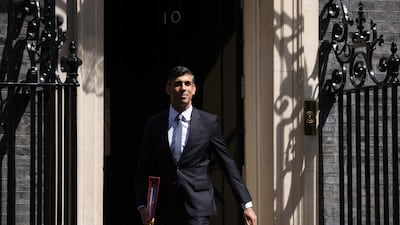
Rishi Sunak has been British Prime Minister for one year. Here The National looks back at his time in No 10 Downing Street. Getty Images -
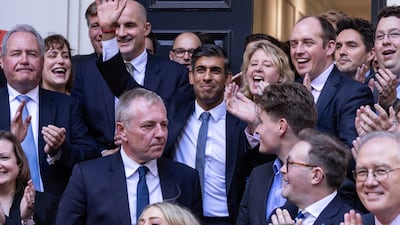
Mr Sunak after being announced as winner of the Conservative Party leadership contest on October 24. Getty Images -
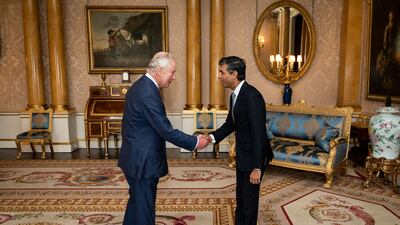
King Charles III welcomes Mr Sunak to Buckingham Palace where he invited him to become Prime Minister. Getty Images -
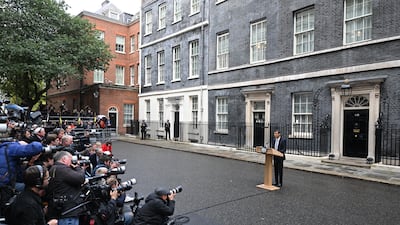
The new Prime Minister makes a speech outside No 10. Getty Images -
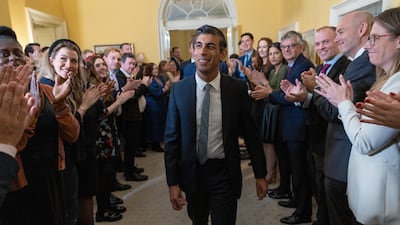
Mr Sunak arrives at No 10 for the first time as Prime Minister. Photo: Simon Walker/ No 10 Downing Street -
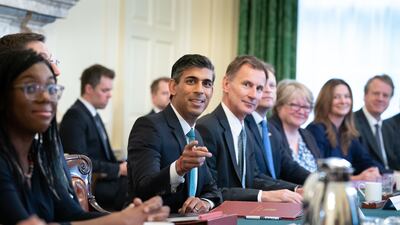
Mr Sunak holds his first cabinet meeting. Getty Images -
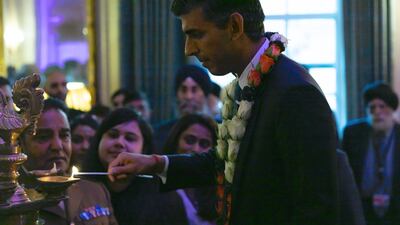
Mr Sunak hosts a reception to celebrate Diwali at No 10. Photo: Simon Walker / No 10 Downing Street -
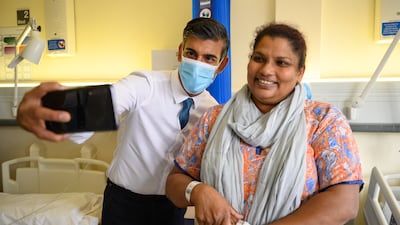
A visit to Croydon University Hospital, south London. Getty Images -
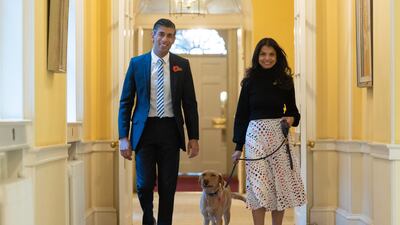
Mr Sunak and his wife Akshata Murty with Nova, their pet Labrador. Photo: Simon Walker / No 10 Downing Street -
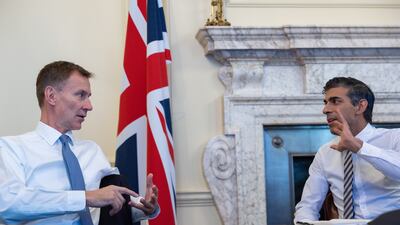
The Prime Minister with Chancellor Jeremy Hunt in the Cabinet Room at No 10. Photo: Simon Walker / No 10 Downing Street -
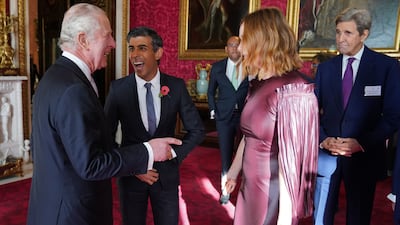
King Charles, Mr Sunak, fashion designer Stella McCartney and US climate envoy John Kerry at Buckingham Palace before Cop27. Getty Images -

French President Emmanuel Macron and Mr Sunak at Cop27 in Sharm El Sheikh, Egypt. Getty Images -
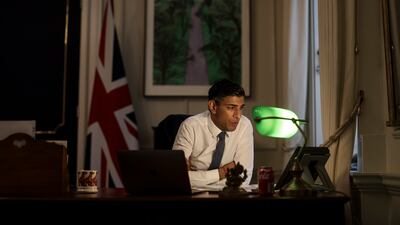
Mr Sunak during a call to Ukraine President Volodymyr Zelenskyy from his office. Photo: Simon Dawson / No 10 Downing Street -
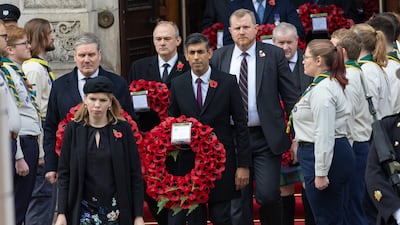
On Remembrance Sunday at the Cenotaph in London. Photo: Simon Walker / No 10 Downing Street -
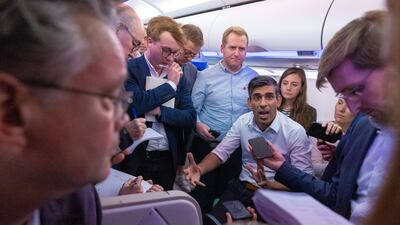
Mr Sunak with journalists on a flight to Bali for the G20 summit. Photo: Simon Walker / No 10 Downing Street -

With Saudi Arabia's Crown Prince Mohammed bin Salman during a meeting at the G20 in Nusa Dua, Indonesia. Getty Images -
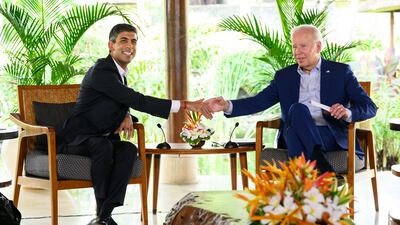
Mr Sunak with US President Joe Biden at the G20 summit. Getty Images -
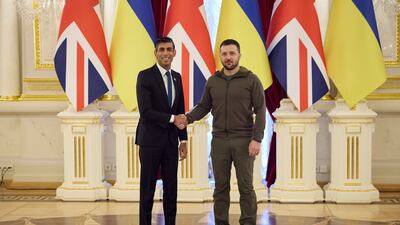
Mr Sunak and Ukrainian President Volodymyr Zelenskyy. Getty Images -

Mr Sunak meets rescue teams during his visit to Ukraine. Photo: No 10 Downing Street -
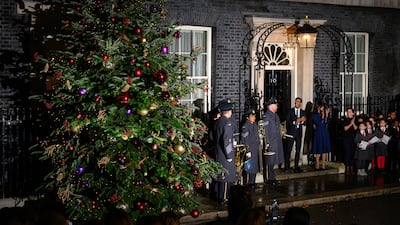
Mr Sunak and his wife outside No 10 as the Christmas lights are turned on. Getty Images -

With youth footballers from Wales and England to watch the World Cup match between the two nations. Photo: Simon Walker / No 10 Downing Street -
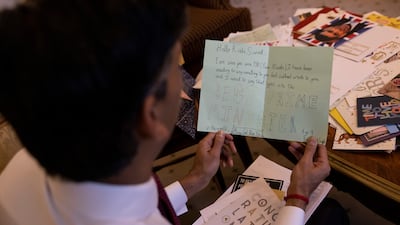
Reading congratulations cards from members of the public after being appointed. Photo: Simon Dawson / No 10 Downing Street -

At RAF Coningsby in Lincolnshire after the announcement that Britain will develop next-generation fighter jets with Italy and Japan. Getty Images -
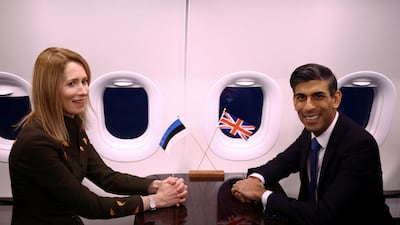
Mr Sunak and Estonian Prime Minister Kaja Kallas on a plane to Tallinn. Getty Images -
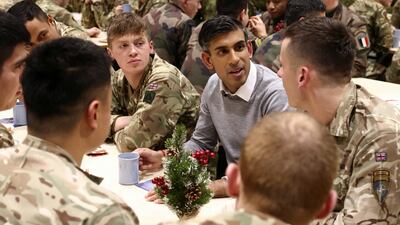
The Prime Minister with troops at the Tapa military base, Estonia. Getty Images -

The photo on Mr Sunak's official Christmas card. Photo: Simon Walker / No 10 Downing Street -
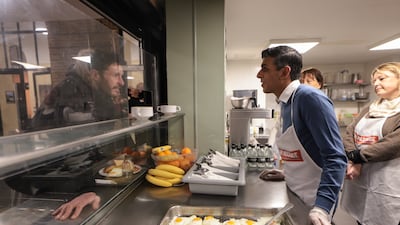
Serving breakfast on a visit to The Passage homeless shelter in London just before Christmas. Photo: Simon Dawson / No 10 Downing Street -
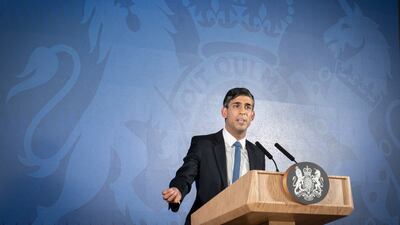
Making his first major domestic speech of the year. Getty Images -
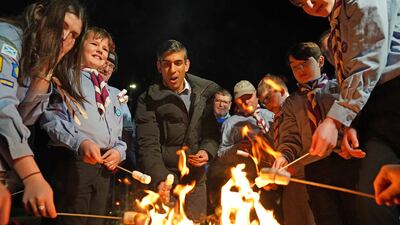
Toasting marshmallows on a visit to the Sea Scouts community group in Muirtown near Inverness. Getty Images -
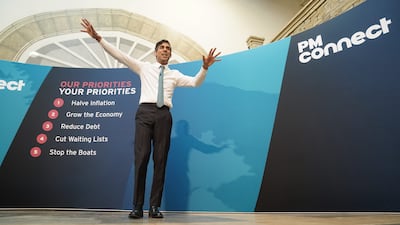
A Q&A session at The Platform in Morecambe, Lancashire, after a community visit to the Eden Project North. Getty Images -
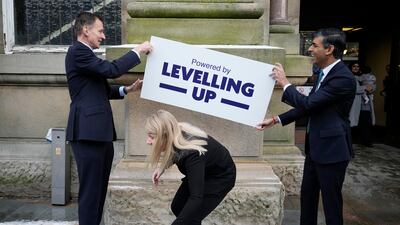
Mr Sunak and Mr Hunt at Accrington Market Hall with local MP Sara Britcliffe to announce projects under the levelling-up fund. Getty Images -
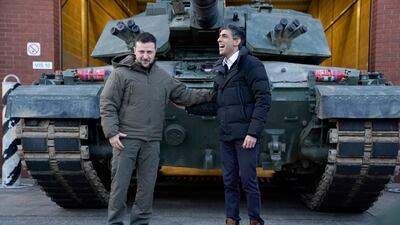
Mr Sunak and Mr Zelenskyy meet Ukrainian troops being trained to command Challenger 2 tanks at a military facility in Lulworth, Dorset. Getty Images -
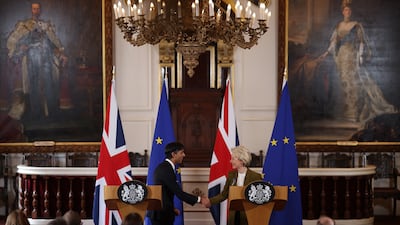
With EU Commission President Ursula von der Leyen at a press conference at Windsor Guildhall. Getty Images -
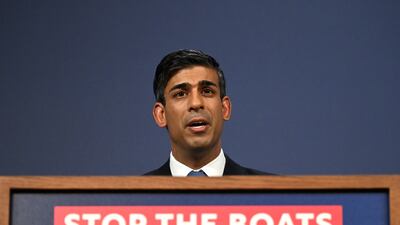
Speaking at a press conference following the launch of new legislation on migrant channel crossings at Downing Street. Getty Images -
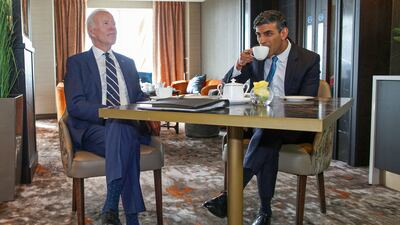
Mr Biden meets Mr Sunak during the 25th anniversary commemorations of the "Good Friday Agreement" in Belfast, Northern Ireland. Getty Images -
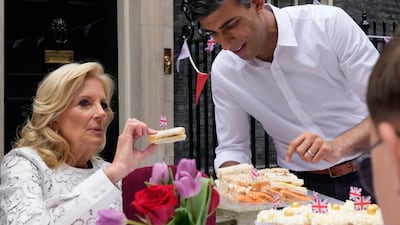
Mr Sunak holds a plate of sandwiches for US First Lady Jill Biden at Downing Street to celebrate King Charles' coronation. Getty Images -
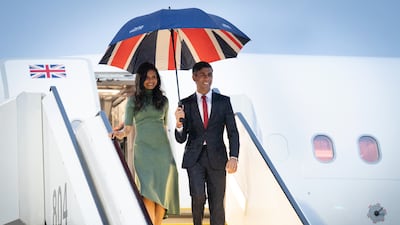
Mr Sunak and his wife Mrs Murty ahead of the G7 Summit, in Hiroshima, Japan. Getty Images -
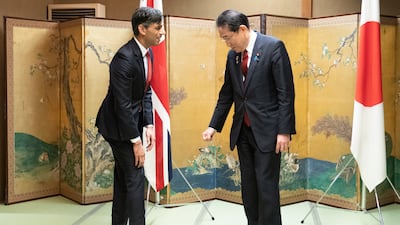
Mr Sunak with Japanese Prime Minister Fumio Kishida during their bilateral meeting in Hiroshima ahead of the G7 Summit. Getty Images -
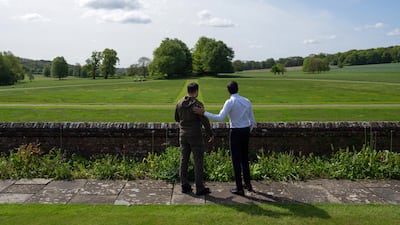
Mr Sunak and Mr Zelenskyy look out towards trees planted by Winston Churchill as they walk in the garden at Chequers. Getty Images -
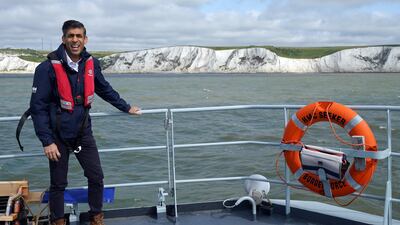
Mr Sunak onboard Border Agency cutter HMC Seeker during a visit to Dover. Getty Images -
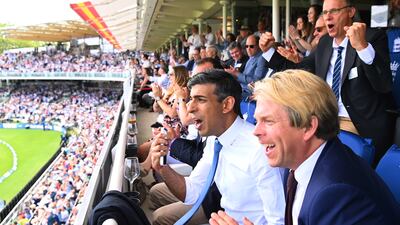
Mr Sunak cheers during the Ashes Test match between England and Australia at Lord's Cricket Ground. Getty Images -
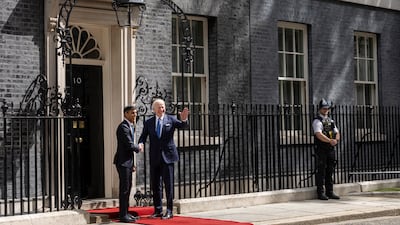
Mr Sunak welcomes Mr Biden at 10 Downing Street. Getty Images -
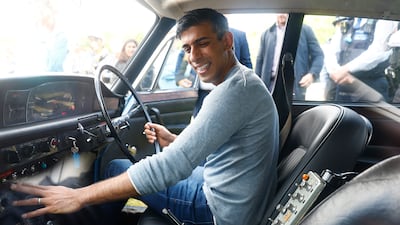
In a Special Branch police vehicle used to transport former Prime Minister, Margaret Thatcher, in Bexley. Getty Images -
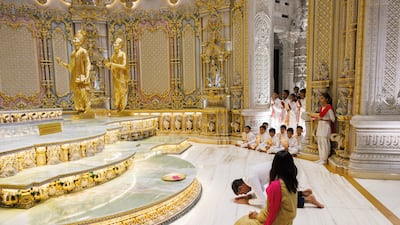
Mr Sunak and his wife Mrs Murty offer prayers as they visit the Akshardham Hindu Temple in New Delhi, India. Getty Images -

Mr Sunak meets the Prime Minister of Israel Benjamin Netanyahu. No 10 Downing Street


Stop the boats
Channel crossings have declined since the introduction of the Illegal Migration Act in July.
So far, about 26,000 people have been detected crossing the Channel in small boats this year, compared to 37,000 in the same period last year.
There is some debate over to whether this is down to new legislation, better enforcement or simply worse weather, but whatever the cause, there is still a long way to go before Mr Sunak can claim victory.
“Small boat crossings are for the first time since the phenomenon began down 20 per cent this year,” the Prime Minister told the Tory Party conference.
“We are by no means where we want to be but don’t let anyone tell you we aren’t making progress – we are and we will get there.”

