
British Airways will launch daily flights to Abu Dhabi next year, following a four-year hiatus.
The route will begin operating on April 20, 2024, serving the UAE’s capital on a year-round basis from London Heathrow and is available to book from today. It will fly in to the new terminal at Abu Dhabi airport which opens in November.
The new flight will be operated by a Boeing 787-9 aircraft. It will boost connectivity to the UAE as it joins flights to neighbouring Dubai which operate up to three times a day from Heathrow.
During summer 2024, the flight BA73 will depart from London Heathrow (LHR) at 10.25pm local time and arrive at Abu Dhabi International Airport (AUH) at 8:30am local time the next day. The flight BA72 will depart AUH at 10:10am local time and arrive at LHR at 3:20pm.
During the winter, the flight will depart from LHR at 10:25pm local time and arrive at AUH at 9:30am local time the next day. Flight BA72 will depart from AUH at 11:10am local time and arrive at LHR at 3:20pm local time.
British Airways is offering celebrating the launch with a range of promotional fares.
“Abu Dhabi is a unique destination that is making a very welcome return to our network,” Neil Chernoff, British Airways’ Director of Network and Alliances, said.
“With a blend of beach, city and desert, it has everything our customers are looking for in a Middle Eastern trip, and we look forward to welcoming them back on board as we grow our footprint in the UAE.”
10 UAE desert adventures – in pictures
-

Hatta is Platinum Heritage conservation guide Karel Claassen's favourite place for off-roading. Photo: Platinum Heritage -
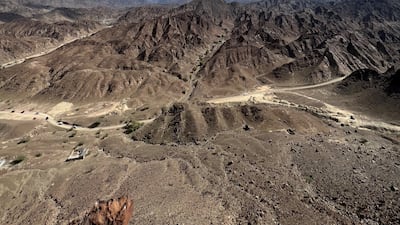
March or April is a great time to visit Hatta, where there are numerous hiking trails, says Claassen. Photo: Platinum Heritage -
Gabriel Gutsa, recreation manager of The Ritz-Carlton Ras Al Khaimah, Al Wadi Desert, says fat biking is a great way to explore the desert and dunes. Photo: The Ritz Carlton Al Wadi Desert -

For Anshar Hamza, tour guide and managing director of Desert Rose Tourism, nothing is more spectacular than a sunset camel ride. Photo: Desert Rose Tourism -
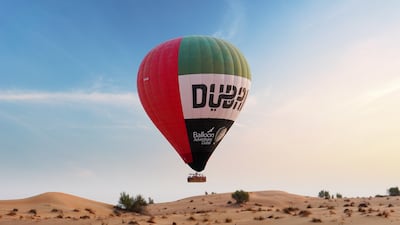
Platinum Heritage runs hot air balloon flights with Balloon Adventures until the end of May. Photo: Balloon Adventures -

Enjoy the UAE desert from above on a hot air balloon. Photo: Balloon Adventures Dubai -

Hamza loves dune bashing in Al Khatim Desert. Photo: Desert Rose Tourism -

Dune bashing is one of the UAE's most popular pasttimes. Photo: Desert Rose Tourism -

The Ritz-Carlton Ras Al Khaimah, Al Wadi Desert hosts guided nature walks. Photo: The Ritz-Carlton Al Wadi Desert -

Get up close with indigenous creates on a nature walk. Photo: The Ritz-Carlton Al Wadi Desert -
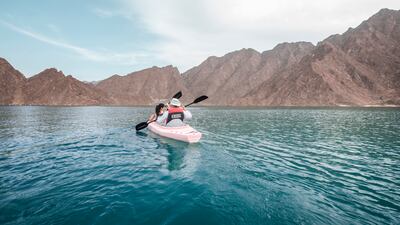
Kayaking at the Hatta Dam is a popular activity at this time of year. Photo: Platinum Heritage -
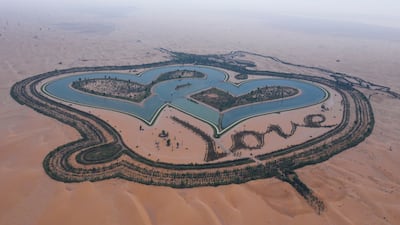
Love Lake in Al Qudra is a great place to relax at and enjoy desert vistas. Photo: Platinum Heritage -

Hamza recommends sandboarding at Al Khatib Desert. Photo: Desert Rose Tourism -

Try stargazing in Al Wadi Desert or Sharjah's Mleiha Archaeological Centre. Photo: The Ritz-Carlton Al Wadi Desert
“We’re delighted to welcome British Airways back to Abu Dhabi International Airport, adding to the growing list of leading carriers set to use Terminal A as their operational base in Abu Dhabi,” Maureen Bannerman, Abu Dhabi Airports Chief Commercial Officer, said.
“A luxurious new gateway to Abu Dhabi, Terminal A will open to the public from November 1st, offering state-of-the-art facilities for both passengers and airlines.”
British Airways through the years – in pictures
-

British Airways has been flying for over 100 years. It was founded as Aircraft Transport and Travel Limited in 1919. All photos: Getty Images -
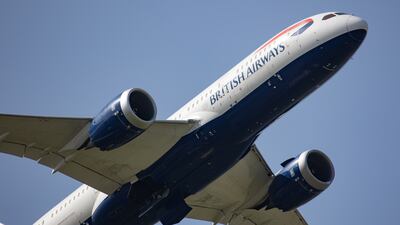
A British Airways Boeing 787 Dreamliner aircraft taking off in 2021 -
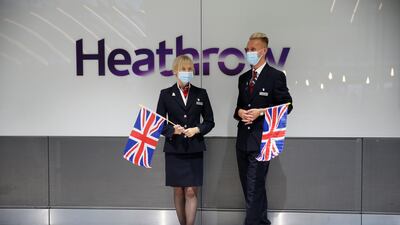
British Airways employees welcome Olympians returning from the Tokyo Olympics at Heathrow Airport in August 2021 -
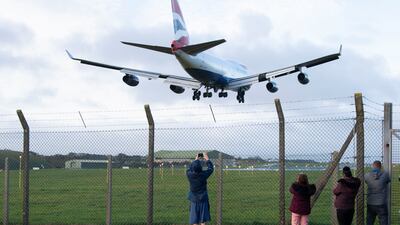
A British Airways Boeing 747-400 aircraft arrives at St Athan Airport in Wales in 2020, after setting off for its last flight -
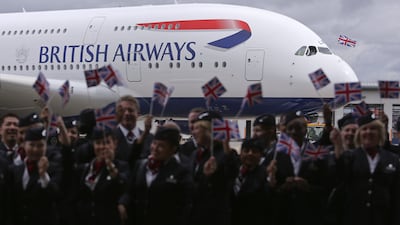
A British Union flag flies from the cockpit of a new Airbus A380 aircraft after landing at Heathrow Airport in 2013 -

Spectators watch as the last Concorde lands at Heathrow Airport in 2003 -

British Airways Concordes at Glasgow Airport in 1983 -
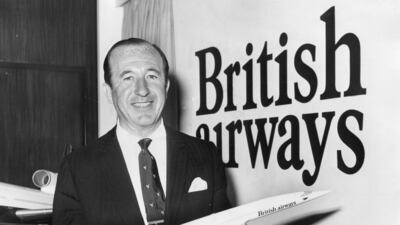
David Nicholson, the first chairman of British Airways after the merger of a number of UK airlines, proudly displays a model of the Concorde in 1973 -

The first Boeing 747 to be operated by the British Overseas Airways Corporation arrives at Heathrow Airport in May 1970 -

Hawker Siddeley HS 121 Trident 1C medium-range commercial jets for British European Airways at de Havillands Hatfield Aerodrome in 1963 -

A British Overseas Airways Corporation Comet III aircraft on display at Farnborough in 1954. The British Overseas Airways Corporation was formed in April 1940 -
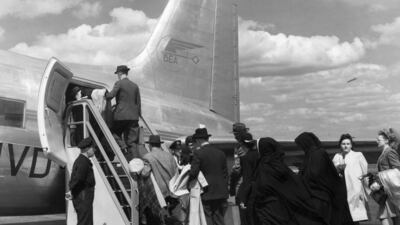
Passengers queuing to board a British European Airways Vickers Viking aircraft in 1950 -
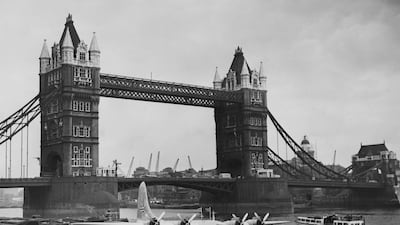
The British Overseas Airways Corporation Short Solent passenger flying boat docks at her new berth near Tower Bridge in London in 1949 -

A British Overseas Airways Corporation air stewardess brings a tray of coffee to passengers during a Second World War flight in 1945 -
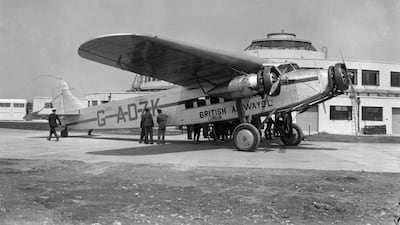
A British Airways passenger aircraft at Gatwick Airport in 1936 -
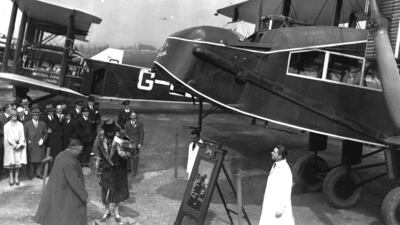
Four Handley Page W10 and one Handley Page W9 Hampstead aircraft operated by Imperial Airways are christened by Lady Maud Hoare, Viscountess Templewood, at Croydon Aerodrome in 1926. Imperial Airways was created in 1924
Key findings
- Over a period of seven years, a team of scientists analysed dietary data from 50,000 North American adults.
- Eating one or two meals a day was associated with a relative decrease in BMI, compared with three meals. Snacks count as a meal. Likewise, participants who ate more than three meals a day experienced an increase in BMI: the more meals a day, the greater the increase.
- People who ate breakfast experienced a relative decrease in their BMI compared with “breakfast-skippers”.
- Those who turned the eating day on its head to make breakfast the biggest meal of the day, did even better.
- But scrapping dinner altogether gave the best results. The study found that the BMI of subjects who had a long overnight fast (of 18 hours or more) decreased when compared even with those who had a medium overnight fast, of between 12 and 17 hours.
Roll%20of%20Honour%2C%20men%E2%80%99s%20domestic%20rugby%20season
Results
6.30pm: The Madjani Stakes (PA) Group 3 Dh175,000 (Dirt) 1,900m
Winner: Aatebat Al Khalediah, Fernando Jara (jockey), Ali Rashid Al Raihe (trainer).
7.05pm: Maiden (TB) Dh165,000 (D) 1,400m
Winner: Down On Da Bayou, Royston Ffrench, Salem bin Ghadayer.
7.40pm: Maiden (TB) Dh165,000 (D) 1,600m
Winner: Dubai Avenue, Fernando Jara, Ali Rashid Al Raihe.
8.15pm: Handicap (TB) Dh190,000 (D) 1,200m
Winner: My Catch, Pat Dobbs, Doug Watson.
8.50pm: Dubai Creek Mile (TB) Listed Dh265,000 (D) 1,600m
Winner: Secret Ambition, Tadhg O’Shea, Satish Seemar.
9.25pm: Handicap (TB) Dh190,000 (D) 1,600m
Winner: Golden Goal, Pat Dobbs, Doug Watson.
More from Neighbourhood Watch:
How to apply for a drone permit
- Individuals must register on UAE Drone app or website using their UAE Pass
- Add all their personal details, including name, nationality, passport number, Emiratis ID, email and phone number
- Upload the training certificate from a centre accredited by the GCAA
- Submit their request
What are the regulations?
- Fly it within visual line of sight
- Never over populated areas
- Ensure maximum flying height of 400 feet (122 metres) above ground level is not crossed
- Users must avoid flying over restricted areas listed on the UAE Drone app
- Only fly the drone during the day, and never at night
- Should have a live feed of the drone flight
- Drones must weigh 5 kg or less
The Indo-Pacific
Rashmee Roshan Lall: US-India chemistry can no longer be dismissed
Brahma Chellaney: South China Sea has become Asean's Achilles heel
Brahma Chellaney: Trump's unpredictability is making China great again
Mercer, the investment consulting arm of US services company Marsh & McLennan, expects its wealth division to at least double its assets under management (AUM) in the Middle East as wealth in the region continues to grow despite economic headwinds, a company official said.
Mercer Wealth, which globally has $160 billion in AUM, plans to boost its AUM in the region to $2-$3bn in the next 2-3 years from the present $1bn, said Yasir AbuShaban, a Dubai-based principal with Mercer Wealth.
“Within the next two to three years, we are looking at reaching $2 to $3 billion as a conservative estimate and we do see an opportunity to do so,” said Mr AbuShaban.
Mercer does not directly make investments, but allocates clients’ money they have discretion to, to professional asset managers. They also provide advice to clients.
“We have buying power. We can negotiate on their (client’s) behalf with asset managers to provide them lower fees than they otherwise would have to get on their own,” he added.
Mercer Wealth’s clients include sovereign wealth funds, family offices, and insurance companies among others.
From its office in Dubai, Mercer also looks after Africa, India and Turkey, where they also see opportunity for growth.
Wealth creation in Middle East and Africa (MEA) grew 8.5 per cent to $8.1 trillion last year from $7.5tn in 2015, higher than last year’s global average of 6 per cent and the second-highest growth in a region after Asia-Pacific which grew 9.9 per cent, according to consultancy Boston Consulting Group (BCG). In the region, where wealth grew just 1.9 per cent in 2015 compared with 2014, a pickup in oil prices has helped in wealth generation.
BCG is forecasting MEA wealth will rise to $12tn by 2021, growing at an annual average of 8 per cent.
Drivers of wealth generation in the region will be split evenly between new wealth creation and growth of performance of existing assets, according to BCG.
Another general trend in the region is clients’ looking for a comprehensive approach to investing, according to Mr AbuShaban.
“Institutional investors or some of the families are seeing a slowdown in the available capital they have to invest and in that sense they are looking at optimizing the way they manage their portfolios and making sure they are not investing haphazardly and different parts of their investment are working together,” said Mr AbuShaban.
Some clients also have a higher appetite for risk, given the low interest-rate environment that does not provide enough yield for some institutional investors. These clients are keen to invest in illiquid assets, such as private equity and infrastructure.
“What we have seen is a desire for higher returns in what has been a low-return environment specifically in various fixed income or bonds,” he said.
“In this environment, we have seen a de facto increase in the risk that clients are taking in things like illiquid investments, private equity investments, infrastructure and private debt, those kind of investments were higher illiquidity results in incrementally higher returns.”
The Abu Dhabi Investment Authority, one of the largest sovereign wealth funds, said in its 2016 report that has gradually increased its exposure in direct private equity and private credit transactions, mainly in Asian markets and especially in China and India. The authority’s private equity department focused on structured equities owing to “their defensive characteristics.”
Director: Laxman Utekar
Cast: Vicky Kaushal, Akshaye Khanna, Diana Penty, Vineet Kumar Singh, Rashmika Mandanna
Rating: 1/5
10 tips for entry-level job seekers
- Have an up-to-date, professional LinkedIn profile. If you don’t have a LinkedIn account, set one up today. Avoid poor-quality profile pictures with distracting backgrounds. Include a professional summary and begin to grow your network.
- Keep track of the job trends in your sector through the news. Apply for job alerts at your dream organisations and the types of jobs you want – LinkedIn uses AI to share similar relevant jobs based on your selections.
- Double check that you’ve highlighted relevant skills on your resume and LinkedIn profile.
- For most entry-level jobs, your resume will first be filtered by an applicant tracking system for keywords. Look closely at the description of the job you are applying for and mirror the language as much as possible (while being honest and accurate about your skills and experience).
- Keep your CV professional and in a simple format – make sure you tailor your cover letter and application to the company and role.
- Go online and look for details on job specifications for your target position. Make a list of skills required and set yourself some learning goals to tick off all the necessary skills one by one.
- Don’t be afraid to reach outside your immediate friends and family to other acquaintances and let them know you are looking for new opportunities.
- Make sure you’ve set your LinkedIn profile to signal that you are “open to opportunities”. Also be sure to use LinkedIn to search for people who are still actively hiring by searching for those that have the headline “I’m hiring” or “We’re hiring” in their profile.
- Prepare for online interviews using mock interview tools. Even before landing interviews, it can be useful to start practising.
- Be professional and patient. Always be professional with whoever you are interacting with throughout your search process, this will be remembered. You need to be patient, dedicated and not give up on your search. Candidates need to make sure they are following up appropriately for roles they have applied.
Arda Atalay, head of Mena private sector at LinkedIn Talent Solutions, Rudy Bier, managing partner of Kinetic Business Solutions and Ben Kinerman Daltrey, co-founder of KinFitz



