A Kalibr missile is launched by a Russian submarine. Moscow's Kalibr missiles have increased by 81 to 140 since January. AP

Russia hoards missile stocks as it prepares for major autumn strike


Thomas Harding
  • English
  • Arabic

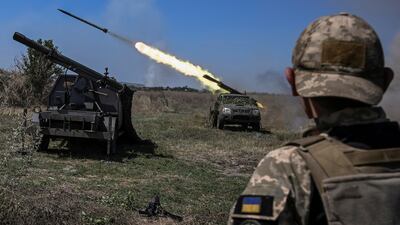
Russia has reduced its long-range missile strikes to rebuild its stockpile for a major offensive to damage Ukrainian infrastructure next month, one of Kyiv's intelligence chiefs has said.

Moscow’s planners are also “meticulously” gathering intelligence on Ukraine’s missile defence systems to allow their cruise missiles to by-pass them.

Despite strict sanctions on technology imports, the Russians are still able to produce an estimated 100 missiles a month of all types, said Maj Gen Vadym Skibitskyi, deputy chief of the Military Intelligence Directorate, or GUR.

He estimated that Russia has 585 missiles with a range of more than 500km range, with some launched from aircraft and others from vessels in the Black Sea.

The total number of Kalibr sea-launched missiles now stands at 140, an increase of 81 since January. Similarly, Iskander ballistic and cruise missiles have increased by 126 to 270 in total.

The total number of hypersonic air-launched Kinzhal ballistic missiles is now 75, an increase of 22 since January. There are a further 250 cruise missile of various types that have decreased slightly in number.

Ukraine intelligence now believes that Russia will use its arsenal to strike critical infrastructure this autumn although it does not have enough missiles to attack on the scale it did last winter.

“Such massive attacks as those of last October, November and December, when the Russians launched 70 to 100 missiles at a time, are unlikely to happen again,” Maj Gen Skibitskyi told the RBK-Ukraine outlet.

A Zircon hypersonic cruise missile launched by the Russian navy. AP

“The Russians are aware that they may not achieve their goal but, instead, they just deplete their reserves as they did last year.”

Russia is expected to develop a new tactic of using its production of Iran-designed Shahed kamikaze drones to act as a screen for the deadlier cruise missiles.

It was also improving its ability to hit targets and its decision-making speed, as well as carefully selecting targets while meticulously searching for flight routes to bypass Ukrainian air defence systems, Major Gen Skibitskyi said.

He suggested that Russia would strike with between 10 to 30 missiles, accompanied by many more Shahed drones that could make it difficult for Ukraine’s air defences.

Since May, Russia has launched near-continuous air strikes but with fewer missiles, allowing them to replenish stocks.

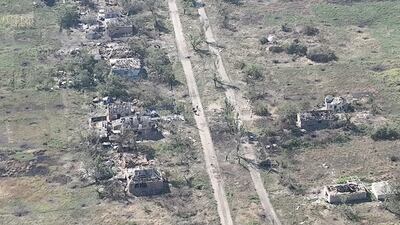
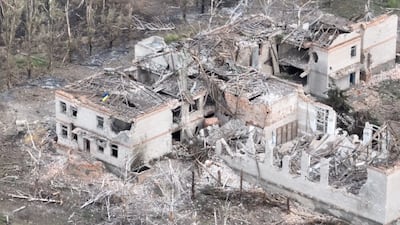
The UN has stated that at least 9,511 civilians have been killed since the invasion began in February last year, with most of the deaths caused by air strikes.

While Maj Gen Skibitskyi said Russia was struggling to make a number of different types of missiles due to foreign component shortages as a result of sanctions, it has previously been reported that 81 per cent of parts have originated in America.

On Monday, Russia launched four Kalibr cruise missiles from the Black Sea and two from aircraft towards the city of Kryvyi Rih, with all but two intercepted, which later struck a civilian industrial plant.

Meanwhile, Ukrainian Security Services sources informed RBK-Ukraine that an airfield drone strike near Kursk in Russia on Sunday had damaged five fighters, a radar, as well as a Pantsir and S-300 air defence systems.

The results were denied by Russian authorities who claimed the drones hit an apartment block.

_________________________________________

Russia summons forces as Ukraine breaches front line - in pictures

Specs

Engine: 51.5kW electric motor

Range: 400km

Power: 134bhp

Torque: 175Nm

Price: From Dh98,800

Available: Now

UAE currency: the story behind the money in your pockets
Dengue%20fever%20symptoms
%3Cul%3E%0A%3Cli%3EHigh%20fever%3C%2Fli%3E%0A%3Cli%3EIntense%20pain%20behind%20your%20eyes%3C%2Fli%3E%0A%3Cli%3ESevere%20headache%3C%2Fli%3E%0A%3Cli%3EMuscle%20and%20joint%20pains%3C%2Fli%3E%0A%3Cli%3ENausea%3C%2Fli%3E%0A%3Cli%3EVomiting%3C%2Fli%3E%0A%3Cli%3ESwollen%20glands%3C%2Fli%3E%0A%3Cli%3ERash%3C%2Fli%3E%0A%3C%2Ful%3E%0A%3Cp%3EIf%20symptoms%20occur%2C%20they%20usually%20last%20for%20two-seven%20days%3C%2Fp%3E%0A
NO OTHER LAND

Director: Basel Adra, Yuval Abraham, Rachel Szor, Hamdan Ballal

Stars: Basel Adra, Yuval Abraham

Rating: 3.5/5

The burning issue

The internal combustion engine is facing a watershed moment – major manufacturer Volvo is to stop producing petroleum-powered vehicles by 2021 and countries in Europe, including the UK, have vowed to ban their sale before 2040. The National takes a look at the story of one of the most successful technologies of the last 100 years and how it has impacted life in the UAE.

Part three: an affection for classic cars lives on

Read part two: how climate change drove the race for an alternative 

Read part one: how cars came to the UAE

Who's who in Yemen conflict

Houthis: Iran-backed rebels who occupy Sanaa and run unrecognised government

Yemeni government: Exiled government in Aden led by eight-member Presidential Leadership Council

Southern Transitional Council: Faction in Yemeni government that seeks autonomy for the south

Habrish 'rebels': Tribal-backed forces feuding with STC over control of oil in government territory

Mercer, the investment consulting arm of US services company Marsh & McLennan, expects its wealth division to at least double its assets under management (AUM) in the Middle East as wealth in the region continues to grow despite economic headwinds, a company official said.

Mercer Wealth, which globally has $160 billion in AUM, plans to boost its AUM in the region to $2-$3bn in the next 2-3 years from the present $1bn, said Yasir AbuShaban, a Dubai-based principal with Mercer Wealth.

Within the next two to three years, we are looking at reaching $2 to $3 billion as a conservative estimate and we do see an opportunity to do so,” said Mr AbuShaban.

Mercer does not directly make investments, but allocates clients’ money they have discretion to, to professional asset managers. They also provide advice to clients.

“We have buying power. We can negotiate on their (client’s) behalf with asset managers to provide them lower fees than they otherwise would have to get on their own,” he added.

Mercer Wealth’s clients include sovereign wealth funds, family offices, and insurance companies among others.

From its office in Dubai, Mercer also looks after Africa, India and Turkey, where they also see opportunity for growth.

Wealth creation in Middle East and Africa (MEA) grew 8.5 per cent to $8.1 trillion last year from $7.5tn in 2015, higher than last year’s global average of 6 per cent and the second-highest growth in a region after Asia-Pacific which grew 9.9 per cent, according to consultancy Boston Consulting Group (BCG). In the region, where wealth grew just 1.9 per cent in 2015 compared with 2014, a pickup in oil prices has helped in wealth generation.

BCG is forecasting MEA wealth will rise to $12tn by 2021, growing at an annual average of 8 per cent.

Drivers of wealth generation in the region will be split evenly between new wealth creation and growth of performance of existing assets, according to BCG.

Another general trend in the region is clients’ looking for a comprehensive approach to investing, according to Mr AbuShaban.

“Institutional investors or some of the families are seeing a slowdown in the available capital they have to invest and in that sense they are looking at optimizing the way they manage their portfolios and making sure they are not investing haphazardly and different parts of their investment are working together,” said Mr AbuShaban.

Some clients also have a higher appetite for risk, given the low interest-rate environment that does not provide enough yield for some institutional investors. These clients are keen to invest in illiquid assets, such as private equity and infrastructure.

“What we have seen is a desire for higher returns in what has been a low-return environment specifically in various fixed income or bonds,” he said.

“In this environment, we have seen a de facto increase in the risk that clients are taking in things like illiquid investments, private equity investments, infrastructure and private debt, those kind of investments were higher illiquidity results in incrementally higher returns.”

The Abu Dhabi Investment Authority, one of the largest sovereign wealth funds, said in its 2016 report that has gradually increased its exposure in direct private equity and private credit transactions, mainly in Asian markets and especially in China and India. The authority’s private equity department focused on structured equities owing to “their defensive characteristics.”

Ad Astra

Director: James Gray

Stars: Brad Pitt, Tommy Lee Jones

Five out of five stars 

What vitamins do we know are beneficial for living in the UAE

Vitamin D: Highly relevant in the UAE due to limited sun exposure; supports bone health, immunity and mood.Vitamin B12: Important for nerve health and energy production, especially for vegetarians, vegans and individuals with absorption issues.Iron: Useful only when deficiency or anaemia is confirmed; helps reduce fatigue and support immunity.Omega-3 (EPA/DHA): Supports heart health and reduces inflammation, especially for those who consume little fish.

The%20Specs%20
%3Cp%3E%3Cstrong%3ELamborghini%20LM002%3C%2Fstrong%3E%3Cbr%3E%3Cstrong%3EEngine%3A%3C%2Fstrong%3E%205.2-litre%20V12%3Cbr%3E%3Cstrong%3EPower%3A%3C%2Fstrong%3E%20450hp%20at%206%2C800rpm%3Cbr%3E%3Cstrong%3ETorque%3A%20%3C%2Fstrong%3E500Nm%20at%204%2C500rpm%3Cbr%3E%3Cstrong%3ETransmission%3A%20%3C%2Fstrong%3EFive-speed%20manual%3Cbr%3E%3Cstrong%3E0-100kph%3A%3C%2Fstrong%3E%209%20seconds%20(approx)%3Cbr%3E%3Cstrong%3ETop%20speed%3A%3C%2Fstrong%3E%20210kph%20(approx)%3Cbr%3E%3Cstrong%3EYears%20built%3A%3C%2Fstrong%3E%201986-93%3Cbr%3E%3Cstrong%3ETotal%20vehicles%20built%3A%3C%2Fstrong%3E%20328%3Cbr%3E%3Cstrong%3EValue%20today%3A%3C%2Fstrong%3E%20%24300%2C000%2B%3Cbr%3E%3C%2Fp%3E%0A
Updated: August 29, 2023, 1:44 PM