


Wet weather, industrial action on the railways and high inflation meant the number of shoppers on the UK's high streets fell in July for the first time in 14 years.
The number of customers in Britain's stores dropped by 0.3 per cent month-on-month in July, said retail analysis company Springboard.
That means that for the first time since Springboard began compiling the figures in 2009, there were more shoppers in June than in July.
The figures came as the Bank of England was expected to increase its interest rate for the 14th time in a row on Thursday.
High streets took the brunt of the fall, with a month-on-month drop of 1.7 per cent.
Footfall at shopping centres, which are often covered and more easily accessible by car, was 1.7 per cent higher, but this was still lower than the previous average rise of around 2.5 per cent between June and July.
'Harsh reality'
Aside from the wet weather, shoppers have been reluctant to part with their cash as household budgets are squeezed by high inflation and rising interest rates.
High street footfall in July was also hit by disruption from industrial action on the railways, as people opted to work from home on strike days.
“July appeared to demonstrate the harsh reality of the impact of interest rate rises on consumers, combined with rain and a rail overtime ban on several days in the month,” said Diane Wehrle, marketing and insights director at MRI Springboard.
Ms Wehrle added that said high streets in UK's coastal towns were particularly badly affected, with footfall falling by 4.6 per cent, as the damp July weather put people off going to the beach.

Last month was Britain's sixth wettest July on record, with an average of 5.5 inches of rain, according to the Met Office.
The decline in footfall comes after consumer confidence was shown to have dropped in July, for the first time in six months.
The consumer confidence index, a measure of how Britons view their personal finances and wider economic prospects, fell six points to minus 30 in July compared with the previous month, according to research group GfK.
Mortgage and borrowing rates have surged in recent months as the Bank of England has aggressively increased interest rates in its continuing battle with “sticky inflation”, which remains nearly four times above the Bank's two per cent target.
Economists were forecasting that the Bank would raise interest rates by 0.25 percentage points to 5.25 per cent on Thursday, and the outlook for many retailers for the rest of the year seems gloomy at best.
“It is inevitable that consumers’ attention will now turn towards planning for Christmas spending, which may well dampen footfall further in the latter part of the summer,” Ms Werhle said.
Wet weather across the UK - in pictures
-
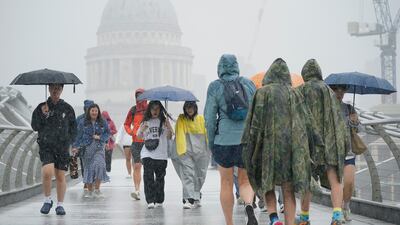
People make their way across the Millennium Bridge during a downpour in London. All photos: PA -

Rainwater is bailed out of punts on the River Cam in Cambridge -
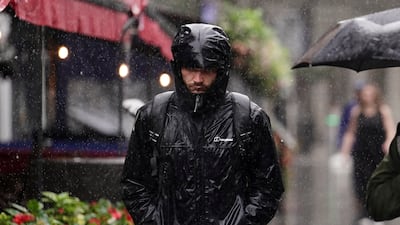
Londoners get a soaking in Leicester Square -
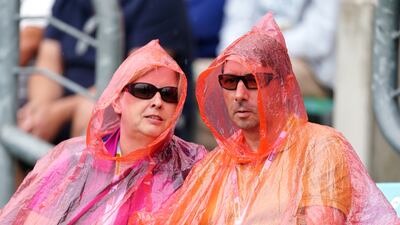
Spectators keep themselves dry during the fifth Ashes Test at The Kia Oval in London -

Two men play amongst the breakers on Chiswell Beach in Dorset -
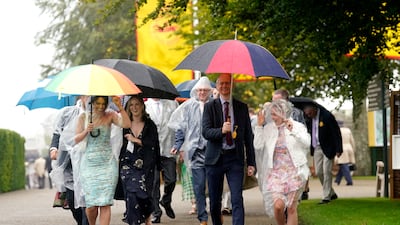
Racegoers accessorise with umbrellas and rain capes on day two of 'Glorious Goodwood' in West Sussex -
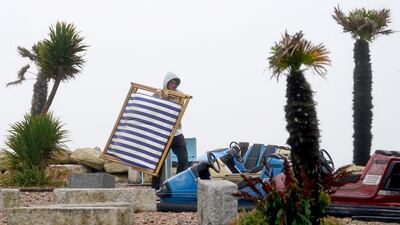
A deckchair attendant battles the wind on the deserted beach at Folkestone in Kent -

Punt passengers shelter from the drizzle on the River Cam in Cambridge



