


The Home Office is paying for thousands of empty hotel beds to avoid overcrowding at migrant processing centres, MPs were told on Monday.
The government department keeps a “buffer” of about 5,000 beds across the country in case of a sudden influx of Channel crossings, the House of Commons public accounts committee was told.
The figure was revealed by Home Office second permanent secretary Simon Ridley when questioned by MPs on Monday.
The Home Office was “making sure we’ve got a buffer that is close to 5,000 beds … so we’re carrying a large number of empty beds in order to let us move people out (of Manston),” Mr Ridley told the committee.
He had been asked how the department was making sure migrants are processed quickly and within legal time limits on arrival in the UK.
“We have got excess beds that we are paying for that we can move people into immediately,” he said, to which MPs expressed surprise at the number set aside.
Home Office permanent secretary Matthew Rycroft said: “We have to have a buffer somewhere because if we don’t, we know what happens, we have people for more than 24 hours in Manston.
“I hope the committee would support the suggestion of having a buffer, can have an argument about how big the buffer should be …”
UK government unveils 'robust' bill to stop migrant Channel crossings - in pictures
-
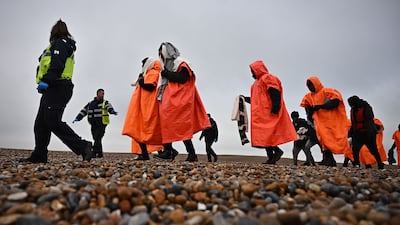
The UK's Home Secretary Suella Braverman has unveiled new legislation to address small boats carrying migrants across the English Channel. AFP -
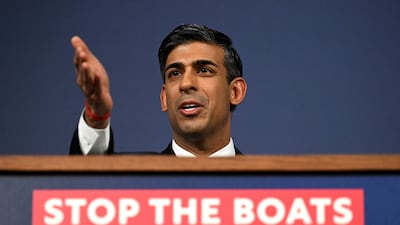
British Prime Minister Rishi Sunak unveiled the plans for new laws to curb crossings. PA -

Migrants housed at Napier Barracks in Folkestone, Kent. Almost 3,000 migrants have made unauthorised crossings of the English Channel this year. PA -

Ms Braverman said not responding to the problem would be to 'betray the will of the people we were elected to serve'. AFP -
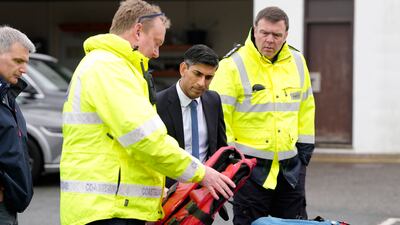
Mr Sunak met teams at the Home Office Joint Control Room in Dover, Kent. Getty Images -
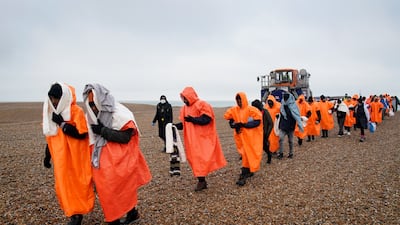
Critics have warned that the proposals are 'unworkable' and will leave thousands of migrants in limbo by banning them from claiming British citizenship. PA -
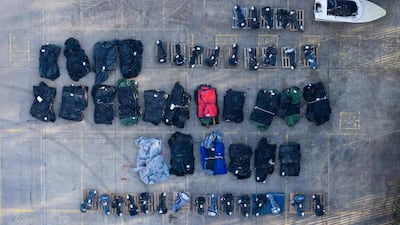
Inflatable dinghies and outboard engines, stored in a Port Authority yard in Dover. AFP -

People gather in central Dover to attend a 'Refugees Welcome' rally. AFP -
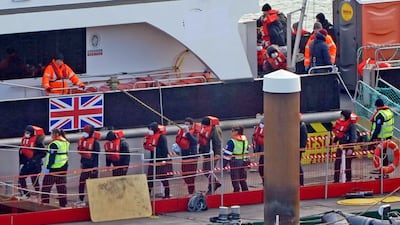
Ms Braverman said the UK's asylum system has been 'overwhelmed', with almost £7 million ($8.4 million) a day being spent on hotels to house people while their claims are processed. PA


Home Secretary Suella Braverman wants to use barges and sites including converted military bases to house asylum seekers and reduce the £6 million ($7.7 million) daily cost of hotel accommodation while people await a decision on their status.
The Home Office hopes to stop using hotels “as soon as possible”, Mr Rycroft said, without giving the committee a target date.
But he insisted the department was “on track” to meet Prime Minister Rishi Sunak’s target of cutting part of the backlog of asylum cases by the end of the year.
Meanwhile Abi Tierney, head of passports, visas and immigration, said the Home Office was “confident” it would have 2,500 caseworkers in September to hasten decisions.
Ms Tierney said about 1,700 asylum decisions were being made by the Home Office each week and it was on track to increase that to 2,500 by the end of July.
Earlier, Downing Street said the number of migrants risking their lives to cross the Channel is “still too large” and could increase further over the summer.
Mr Sunak promised to “stop the boats” as one of his main policy priorities, but so far this year 12,772 people have been detected making the journey, including 1,339 in the past three days.
About 686 migrants were detected on Friday, the highest daily total this year, followed by 384 on Saturday and 269 on Sunday, with crossings continuing on Monday.
The provisional total for 2023 so far is about 4 per cent lower than this time last year when about 13,200 crossings were recorded.
Meanwhile the government’s efforts to tackle the issue remain mired in difficulties.
The Illegal Migration Bill returns to the Commons on Tuesday after being hindered in the Lords, where peers defeated the government 20 times to rewrite the legislation.
The government is expected to seek to overturn many of the changes, although it may be forced to offer concessions to get the Bill back on track.
Efforts to house asylum seekers on a barge moored in Portland, Dorset, have also been delayed.
Five weeks after Ms Braverman promised MPs it would be in place within a fortnight, the Bibby Stockholm vessel was still in Cornwall where it had been undergoing refurbishment.
And the government’s policy of sending some asylum seekers on a one-way trip to Rwanda is set for a legal battle in the Supreme Court.
“I think we always knew that, as we move into the summer months, crossings will escalate," Mr Sunak's official spokesman said.
“We are continuing to stop significant numbers of crossings.
“I still believe that you are more likely to be stopped and turned back than to make the crossing, and that’s because of the work with our French counterparts and the extra support that we have put in.
“But clearly the numbers making the journeys are still too large and that’s why we need the other elements of our ‘stop the boats’ package,” which includes the Rwanda deal and the Illegal Migration Bill.

