


UK consumers are being warned about the most convincing scams Which? has seen so far in 2023.
A range of sophisticated scams are circulating, the consumer group said.
“It’s appalling that 2023 has seen scammers continuing to thrive, as a new wave of convincing scams bombards consumers from every direction," Lisa Barber, Which? tech editor, said.
“Consumers can help protect themselves from scams by accessing the wide range of free, expert advice on Which?’s website, from signing up to our scam alerts service to getting answers on how to get their money back if they do fall victim to fraud," she added.
Earlier this month, the UK government published a new fraud strategy, to include banning cold calls on all financial products, such as those relating to insurance or sham cryptocurrency schemes.
The government also plans to work with Ofcom to use new technology to further clamp down on number “spoofing”, so fraudsters cannot impersonate legitimate UK phone numbers.
Under the plans, banks will be allowed to delay payments from being processed for longer to allow for suspect payments to be investigated.
Here is Which?’s list of scams to watch out for:
Romance fraud
These scams have been given their name by fraudsters because they “fatten up” the victim by forming a romantic connection before executing the investment part of the scam.
The scammer and victim typically meet on a dating site and the victim is “love-bombed” for some time by someone who appears to take a great interest in their life. The scammer will often encourage their victim to move from the dating platform to a private messaging service, thus removing them from any protections the dating website might offer.
When the victim is sufficiently groomed, the scammer claims they have been having success investing – typically in property or cryptocurrency – and they offer to invest some of the victim’s money. If the victim consents, they are sometimes shown a crypto trading platform controlled by the scammers, and encouraged to sign up and begin depositing funds. One UK victim lost £107,000 to such a scam, believing she was investing in retirement apartments overseas, Which? said.
How criminals use technology to scam victims - in pictures
-
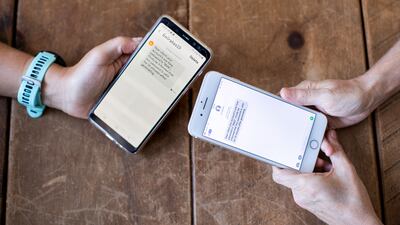
The use of technology in everyday lives has led to growth in scams and fraud. Reem Mohammed / The National -

Phishing is one of the most common methods used by fraudsters and it involves sending an unsolicited email that appears to be from a financial institution or online retailer. The National -
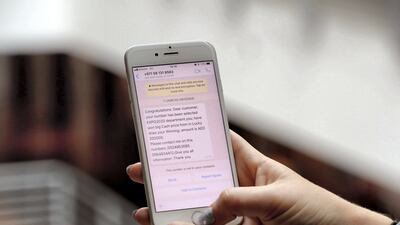
Smishing — the SMS equivalent of phishing — is where fraudsters falsify the telephone number so it appears to be a genuine text from a bank or well-known company. Chris Whiteoak / The National -

Vishing is the telephone equivalent of phishing and smishing. Fraudsters may pose as bank staff, police or government officials. Getty Images -

SIM swap involves fraudsters duplicating the SIM of your mobile number without your knowledge or authorisation, allowing them to conduct financial transactions with your bank. AP -

Identity theft is where someone illegally obtains your confidential information, through various ways such as theft of your wallet, bank and utility bill statements, computer intrusion and social networks. Getty Images -

Prize scams involve fraudsters claiming to represent well-known organisations. They contact victims to tell them they have won a cash prize and request them to share confidential banking details to transfer the prize money. -
Instagram influencer Ramon Abbas, known as Hushpuppi, used a technique known as business email compromise. -

The tax authority said some bank customers in the UAE have received phishing emails impersonating financial institutions. EPA -

Jenny Ross, Which? Money editor, says: ‘Scammers are relentless when it comes to wanting our personal information and ultimately our money.’ PA -

Netflix's The Tinder Swindler tells the story of three women who say they were conned out of $500. Photo: @simon_leviev_official via Instagram


Fake missing person appeals
People are being asked to share fake online posts about missing people more widely.
Which? said its experts know they are fake because there are near-identical posts in community pages across the world, simply with the location being changed.
Comments are turned off on the posts to avoid people pointing out the inconsistencies, Which? said.
After the post has gained a large number of likes, the contents are edited into something completely different, such as a straightforward investment scam.
The large number of likes and shares that stay on the post lends credibility to the fraud.
Which? said the “despicable” scam relies on responsible citizens liking and sharing posts in an attempt to help, which they do, in large numbers.
Some missing person posts are genuine but Which? said it can sometimes be difficult to tell.
To avoid perpetuating a scam or unwittingly participating in stalking or harassment, Which? suggests only sharing official posts, posted by organisations such as the police or the Missing People charity.
PayPal scams
People will receive a “money request” from a genuine PayPal email address. This might seem above board but scammers may send out fake payment requests, often for high-value items, or posing as HMRC to demand “overdue” tax payments, Which? said.
In some versions of the scam, the fake invoice states the victim’s PayPal account has been compromised and urges them to call a fake fraud hotline.
People should never pay PayPal invoices they do not recognise, or call phone numbers in those invoices, the consumer group said.
Fake app alert
Some apps can install malware on phones, steal data and perpetuate scams, Which? warned.
It said app stores do take steps to crack down on the problem but threats can remain.
When installing an app, click on the developer’s name and check what other apps it has made to see if these seem legitimate, Which? suggested.
It also said people should remember that app reviews can be faked. The app will likely ask users for permissions – to use the camera, for example. These need to be relevant and proportionate to the functions of the app, Which? said.
People who believe they may have been scammed should contact their payment provider immediately and report it to Action Fraud.

