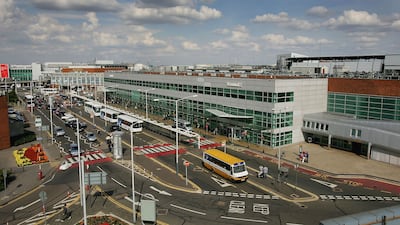
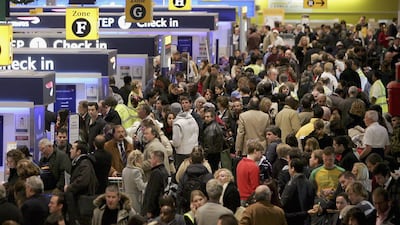
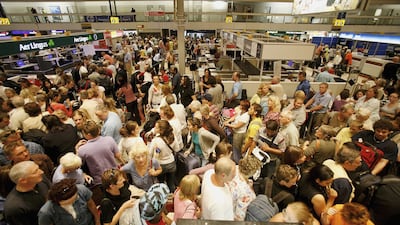
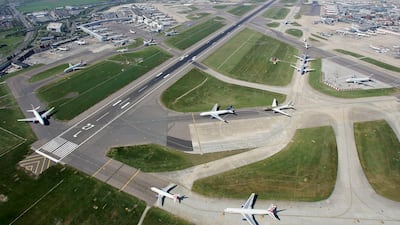
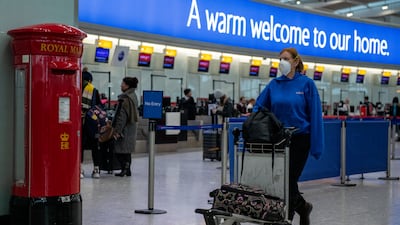
Passengers from international flights arrive at Heathrow Airport. Reuters

Heathrow Airport warns passenger growth is levelling off


Paul Carey
  • English
  • Arabic

Heathrow Airport has warned that the return of passengers through its terminals may already be levelling off, rather than overtaking pre-pandemic numbers.

Demand for air travel surged after the UK’s travel rules were scrapped but it has flatlined compared with pre-virus levels in recent months.

Some 6.4 million passengers travelled through the airport in April.

Heathrow said: “There are early indications that passenger growth may be levelling off, with recovery now stable at 93 per cent - 95 per cent of 2019 levels across each of the first four months of this year.”

It said that during the Easter and coronation getaways, more than 90 per cent of passengers travelled through security

Heathrow chief executive John Holland-Kaye, who will step down later this year after nine years as the boss of Britain's biggest aviation hub, said: “It is only 12 months since all international travel restrictions in the UK were lifted, and we have made tremendous progress. I am proud that colleagues across Heathrow have shown Britain at its best for visitors arriving for the coronation.”

Security guards at the airport are holding a series of strikes after talks over pay broke down.

Unite union's 1,400 members working at Terminal 5 and in campus security walked out earlier this week and will strike once more on May 25-27. The airport says it has introduced contingency plans to minimise disruption to passengers.

In April, Heathrow announced it made a loss in the first quarter, blaming fees set by the regulator as it posted a 74 per cent annual increase in passenger traffic.

It recorded 16.9 million passengers in the first three months of the year, a substantial increase over last year’s pandemic-affected numbers.

Yet it posted a £139 million ($173 million) adjusted loss, saying fees had been set “too low”. It has launched an appeal against the passenger fees, which it had been ordered to lower for airlines using the UK airport.

Decades of flight: Heathrow through the years - in pictures

  • Heathrow Airport in London, the UK's busiest, has been a travel hub for decades. Here The National takes a look back at Heathrow through the years. All photos: Getty Images
    Heathrow Airport in London, the UK's busiest, has been a travel hub for decades. Here The National takes a look back at Heathrow through the years. All photos: Getty Images
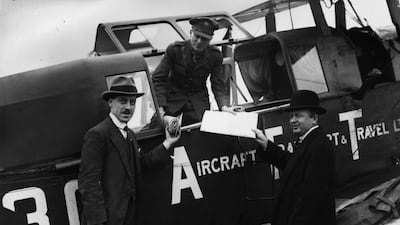
  • An Airco De Havilland biplane of the British airline, Aircraft Transport and Travel Limited, about to leave on the company’s inaugural flight from Hounslow Heath Aerodrome, later known as Heathrow, to Le Bourget, Paris, in August 1919
    An Airco De Havilland biplane of the British airline, Aircraft Transport and Travel Limited, about to leave on the company’s inaugural flight from Hounslow Heath Aerodrome, later known as Heathrow, to Le Bourget, Paris, in August 1919
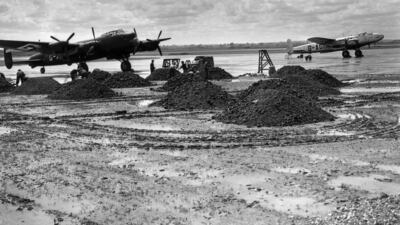
  • Waterlogged runways at London Airport - Heathrow's original name - one week before it became Britain's main aerial gateway to the US in 1946
    Waterlogged runways at London Airport - Heathrow's original name - one week before it became Britain's main aerial gateway to the US in 1946
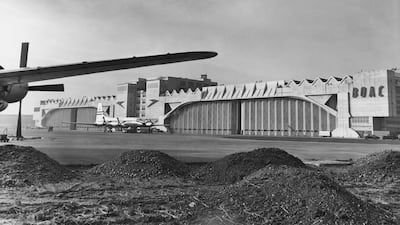
  • The new BOAC maintenance headquarters at London Airport circa 1955
    The new BOAC maintenance headquarters at London Airport circa 1955
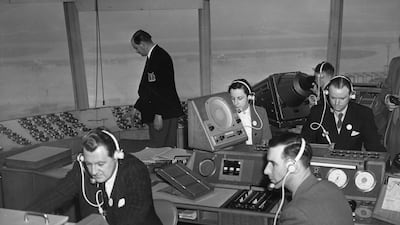
  • The air traffic control room at the airport's new terminal in 1955
    The air traffic control room at the airport's new terminal in 1955
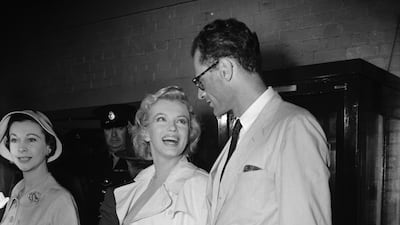
  • US film star Marilyn Monroe with her husband, playwright Arthur Miller, after arriving at the airport in July 1956
    US film star Marilyn Monroe with her husband, playwright Arthur Miller, after arriving at the airport in July 1956
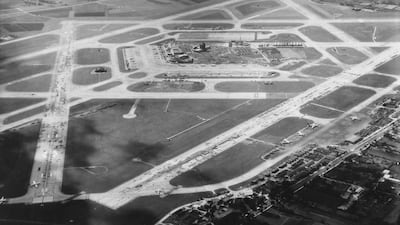
  • An aerial view showing the runways in 1958
    An aerial view showing the runways in 1958
  • The arrivals and departures board in 1960
    The arrivals and departures board in 1960
  • A new airport gift shop, selling items by Chanel, Wedgwood and Pringle of Scotland, in 1961
    A new airport gift shop, selling items by Chanel, Wedgwood and Pringle of Scotland, in 1961
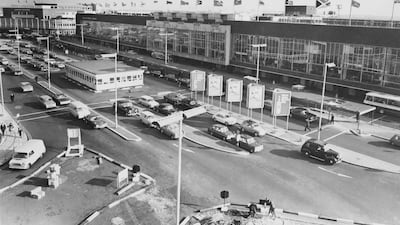
  • The Queen's Building and the No. 1 Building Europa at Heathrow in 1965
    The Queen's Building and the No. 1 Building Europa at Heathrow in 1965
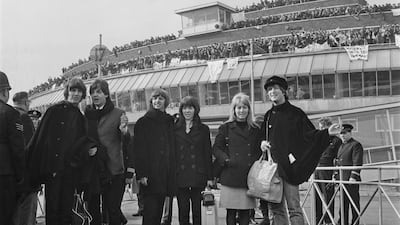
  • The Beatles leave Heathrow for Salzburg in Austria, to resume filming of the movie Help!, in 1965
    The Beatles leave Heathrow for Salzburg in Austria, to resume filming of the movie Help!, in 1965
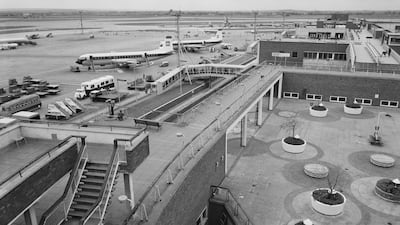
  • Passenger terminal gates at Heathrow in 1966
    Passenger terminal gates at Heathrow in 1966
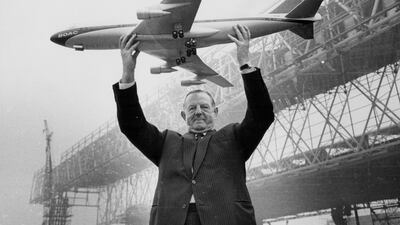
  • Keith Granville, managing director of BOAC, holding up a model of the Boeing 747 jet, with the new aircraft hangars under construction in the background, at Heathrow in 1969
    Keith Granville, managing director of BOAC, holding up a model of the Boeing 747 jet, with the new aircraft hangars under construction in the background, at Heathrow in 1969
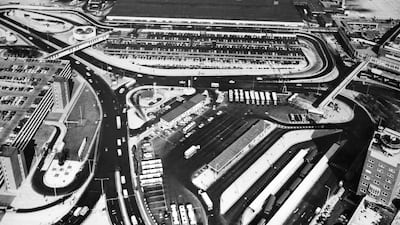
  • An aerial view of Heathrow in 1970
    An aerial view of Heathrow in 1970
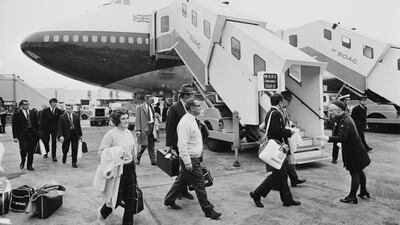
  • Passengers boarding the first BOAC Jumbo Jet 747 used for a commercial flight, from London Heathrow to New York, in 1971
    Passengers boarding the first BOAC Jumbo Jet 747 used for a commercial flight, from London Heathrow to New York, in 1971
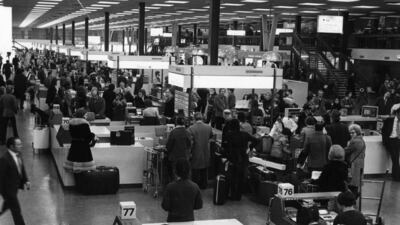
  • Passengers going through the departure lounge at Heathrow in 1973
    Passengers going through the departure lounge at Heathrow in 1973
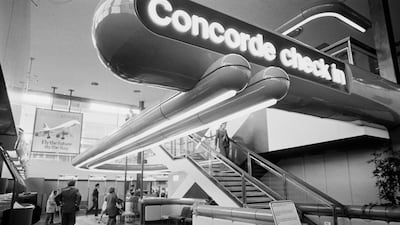
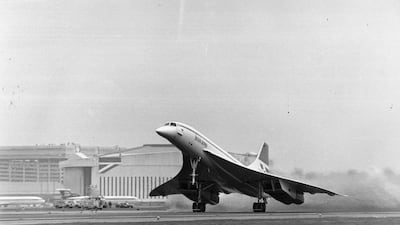
  • Concorde takes off from Heathrow on her first commercial flight for British Airways in 1976
    Concorde takes off from Heathrow on her first commercial flight for British Airways in 1976
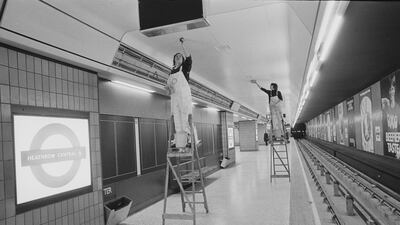
  • Men at work finalising the Heathrow Central underground station before its opening in 1977
    Men at work finalising the Heathrow Central underground station before its opening in 1977
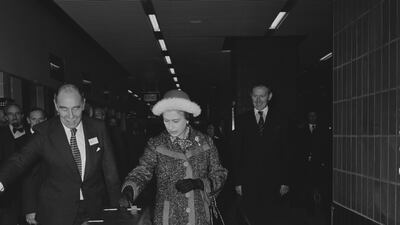
  • Queen Elizabeth II passing though the Tube gates at Heathrow Central station on its opening in 1977
    Queen Elizabeth II passing though the Tube gates at Heathrow Central station on its opening in 1977
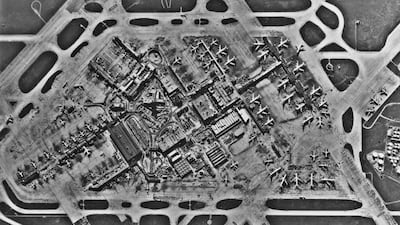
  • An aerial view of Heathrow in 1978
    An aerial view of Heathrow in 1978
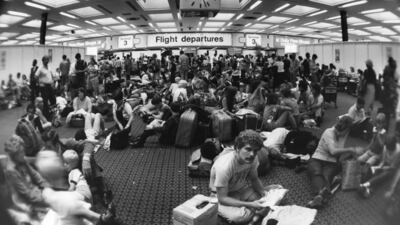
  • Passengers waiting near a departures board in 1979
    Passengers waiting near a departures board in 1979
  • Holidaymakers waiting in the departure lounge at Terminal 3 of Heathrow in 1981
    Holidaymakers waiting in the departure lounge at Terminal 3 of Heathrow in 1981
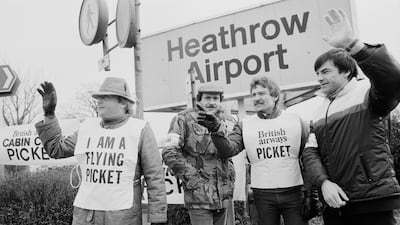
  • British Airways employees protesting at Heathrow in 1984
    British Airways employees protesting at Heathrow in 1984
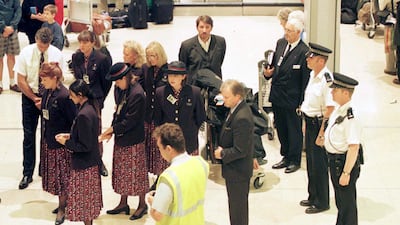
  • Passengers and staff observe a silence in Heathrow's Terminal One to mark the beginning of the funeral of Diana, Princess of Wales, in 1997
    Passengers and staff observe a silence in Heathrow's Terminal One to mark the beginning of the funeral of Diana, Princess of Wales, in 1997
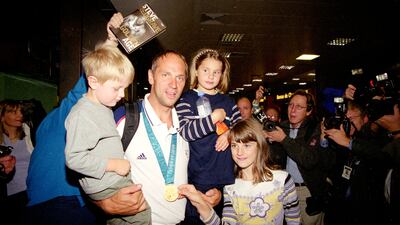
  • Rower Steve Redgrave at Heathrow with daughters Sophie and Natalie and son Zak after returning from the Sydney 2000 Olympic Games with his gold medal
    Rower Steve Redgrave at Heathrow with daughters Sophie and Natalie and son Zak after returning from the Sydney 2000 Olympic Games with his gold medal
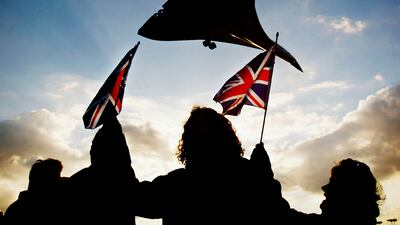
  • Spectators watch the last Concorde land at Heathrow in 2003
    Spectators watch the last Concorde land at Heathrow in 2003
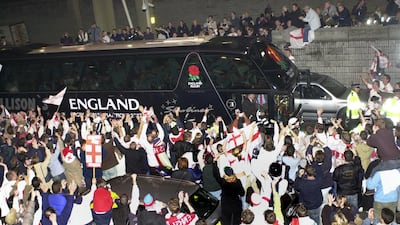
  • Fans surround the coach carrying the England rugby team at Heathrow, as they arrived from Sydney after winning the World Cup in 2003
    Fans surround the coach carrying the England rugby team at Heathrow, as they arrived from Sydney after winning the World Cup in 2003
  • Heathrow's Terminal 2 in 2004
    Heathrow's Terminal 2 in 2004
  • Passengers queue to check in at Terminal 1 of Heathrow Airport during the Christmas 2006 and New Year period
    Passengers queue to check in at Terminal 1 of Heathrow Airport during the Christmas 2006 and New Year period
  • Passengers wait at Terminal 1 on August 10, 2006, after airport security was raised to critical when a terrorist plot to blow up planes in mid-flight from the UK to the US was disrupted by police
    Passengers wait at Terminal 1 on August 10, 2006, after airport security was raised to critical when a terrorist plot to blow up planes in mid-flight from the UK to the US was disrupted by police
  • Planes queueing to take off at Heathrow in 2007
    Planes queueing to take off at Heathrow in 2007
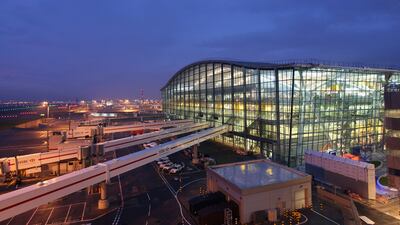
  • The new Terminal 5 at Heathrow in 2008
    The new Terminal 5 at Heathrow in 2008
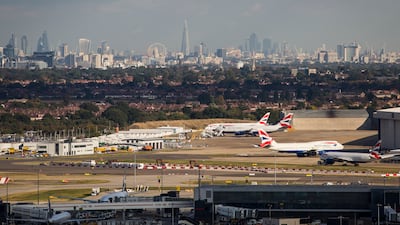
  • Aircraft at Heathrow Airport in front of the London skyline in 2016
    Aircraft at Heathrow Airport in front of the London skyline in 2016
  • Members of Team GB arrive from Rio de Janeiro at Heathrow, after returning from the 2016 Olympics, which saw Great Britain's strongest performance at the Games in over a century
    Members of Team GB arrive from Rio de Janeiro at Heathrow, after returning from the 2016 Olympics, which saw Great Britain's strongest performance at the Games in over a century
  • A composite photo shows planes taking off from Heathrow in November 2016. Forty-two planes were captured between 10.17am and 11.17am and a montage was created from those single images
    A composite photo shows planes taking off from Heathrow in November 2016. Forty-two planes were captured between 10.17am and 11.17am and a montage was created from those single images
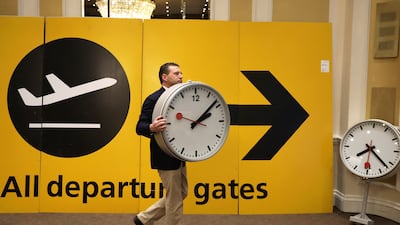
  • Items are arranged during an auction preview at Heathrow in 2018. The contents of Terminal 1, which closed in 2015, were being sold
    Items are arranged during an auction preview at Heathrow in 2018. The contents of Terminal 1, which closed in 2015, were being sold
  • An airline passenger wearing a face mask pushes her bags through Heathrow's Terminal 5 during the coronavirus pandemic in 2020
    An airline passenger wearing a face mask pushes her bags through Heathrow's Terminal 5 during the coronavirus pandemic in 2020
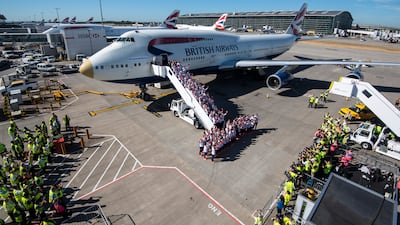
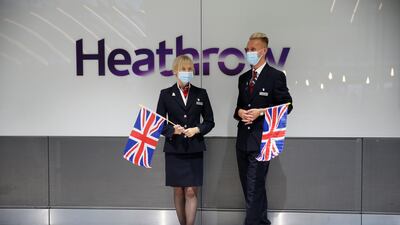
  • British Airways employees welcome Olympians returning from the Tokyo Olympics in 2021
    British Airways employees welcome Olympians returning from the Tokyo Olympics in 2021
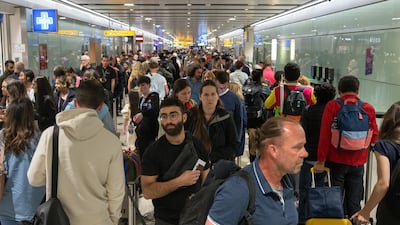
  • Travellers wait in a long queue to pass through the security check in 2022
    Travellers wait in a long queue to pass through the security check in 2022
Ten tax points to be aware of in 2026

1. Domestic VAT refund amendments: request your refund within five years

If a business does not apply for the refund on time, they lose their credit.

2. E-invoicing in the UAE

Businesses should continue preparing for the implementation of e-invoicing in the UAE, with 2026 a preparation and transition period ahead of phased mandatory adoption. 

3. More tax audits

Tax authorities are increasingly using data already available across multiple filings to identify audit risks. 

4. More beneficial VAT and excise tax penalty regime

Tax disputes are expected to become more frequent and more structured, with clearer administrative objection and appeal processes. The UAE has adopted a new penalty regime for VAT and excise disputes, which now mirrors the penalty regime for corporate tax.

5. Greater emphasis on statutory audit

There is a greater need for the accuracy of financial statements. The International Financial Reporting Standards standards need to be strictly adhered to and, as a result, the quality of the audits will need to increase.

6. Further transfer pricing enforcement

Transfer pricing enforcement, which refers to the practice of establishing prices for internal transactions between related entities, is expected to broaden in scope. The UAE will shortly open the possibility to negotiate advance pricing agreements, or essentially rulings for transfer pricing purposes. 

7. Limited time periods for audits

Recent amendments also introduce a default five-year limitation period for tax audits and assessments, subject to specific statutory exceptions. While the standard audit and assessment period is five years, this may be extended to up to 15 years in cases involving fraud or tax evasion. 

8. Pillar 2 implementation 

Many multinational groups will begin to feel the practical effect of the Domestic Minimum Top-Up Tax (DMTT), the UAE's implementation of the OECD’s global minimum tax under Pillar 2. While the rules apply for financial years starting on or after January 1, 2025, it is 2026 that marks the transition to an operational phase.

9. Reduced compliance obligations for imported goods and services

Businesses that apply the reverse-charge mechanism for VAT purposes in the UAE may benefit from reduced compliance obligations. 

10. Substance and CbC reporting focus

Tax authorities are expected to continue strengthening the enforcement of economic substance and Country-by-Country (CbC) reporting frameworks. In the UAE, these regimes are increasingly being used as risk-assessment tools, providing tax authorities with a comprehensive view of multinational groups’ global footprints and enabling them to assess whether profits are aligned with real economic activity. 

Contributed by Thomas Vanhee and Hend Rashwan, Aurifer

%E2%80%98White%20Elephant%E2%80%99
%3Cp%3E%3Cstrong%3EDirector%3A%3C%2Fstrong%3E%20Jesse%20V%20Johnson%3Cbr%3E%3Cstrong%3EStars%3A%3C%2Fstrong%3E%20Michael%20Rooker%2C%20Bruce%20Willis%2C%20John%20Malkovich%2C%20Olga%20Kurylenko%3Cbr%3E%3Cstrong%3ERating%3A%3C%2Fstrong%3E%203%2F5%3C%2Fp%3E%0A

Mercer, the investment consulting arm of US services company Marsh & McLennan, expects its wealth division to at least double its assets under management (AUM) in the Middle East as wealth in the region continues to grow despite economic headwinds, a company official said.

Mercer Wealth, which globally has $160 billion in AUM, plans to boost its AUM in the region to $2-$3bn in the next 2-3 years from the present $1bn, said Yasir AbuShaban, a Dubai-based principal with Mercer Wealth.

Within the next two to three years, we are looking at reaching $2 to $3 billion as a conservative estimate and we do see an opportunity to do so,” said Mr AbuShaban.

Mercer does not directly make investments, but allocates clients’ money they have discretion to, to professional asset managers. They also provide advice to clients.

“We have buying power. We can negotiate on their (client’s) behalf with asset managers to provide them lower fees than they otherwise would have to get on their own,” he added.

Mercer Wealth’s clients include sovereign wealth funds, family offices, and insurance companies among others.

From its office in Dubai, Mercer also looks after Africa, India and Turkey, where they also see opportunity for growth.

Wealth creation in Middle East and Africa (MEA) grew 8.5 per cent to $8.1 trillion last year from $7.5tn in 2015, higher than last year’s global average of 6 per cent and the second-highest growth in a region after Asia-Pacific which grew 9.9 per cent, according to consultancy Boston Consulting Group (BCG). In the region, where wealth grew just 1.9 per cent in 2015 compared with 2014, a pickup in oil prices has helped in wealth generation.

BCG is forecasting MEA wealth will rise to $12tn by 2021, growing at an annual average of 8 per cent.

Drivers of wealth generation in the region will be split evenly between new wealth creation and growth of performance of existing assets, according to BCG.

Another general trend in the region is clients’ looking for a comprehensive approach to investing, according to Mr AbuShaban.

“Institutional investors or some of the families are seeing a slowdown in the available capital they have to invest and in that sense they are looking at optimizing the way they manage their portfolios and making sure they are not investing haphazardly and different parts of their investment are working together,” said Mr AbuShaban.

Some clients also have a higher appetite for risk, given the low interest-rate environment that does not provide enough yield for some institutional investors. These clients are keen to invest in illiquid assets, such as private equity and infrastructure.

“What we have seen is a desire for higher returns in what has been a low-return environment specifically in various fixed income or bonds,” he said.

“In this environment, we have seen a de facto increase in the risk that clients are taking in things like illiquid investments, private equity investments, infrastructure and private debt, those kind of investments were higher illiquidity results in incrementally higher returns.”

The Abu Dhabi Investment Authority, one of the largest sovereign wealth funds, said in its 2016 report that has gradually increased its exposure in direct private equity and private credit transactions, mainly in Asian markets and especially in China and India. The authority’s private equity department focused on structured equities owing to “their defensive characteristics.”

Updated: May 11, 2023, 8:55 AM